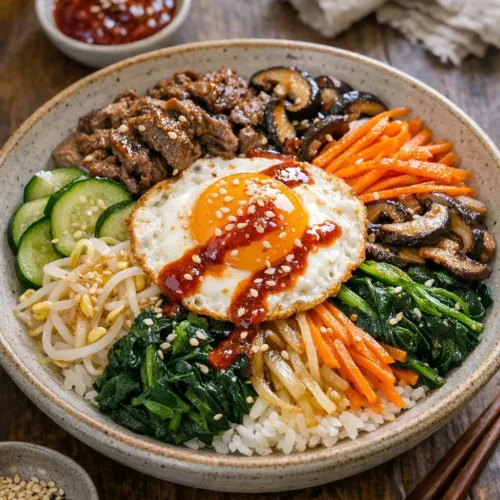
Korean Bibimbap Made Simple: Colorful Bowls, Big Flavor

Bibimbap is a build-it-your-way Korean rice bowl with warm rice, crisp-tender vegetables, savory beef, and a runny egg, brought together with a spicy-sweet gochujang sauce.
Equipment
- Medium pot
- Skillet
- Nonstick pan
- Mixing bowl
- Rice cooker or saucepan with lid
- Cast-iron skillet (optional, for crisped rice)
- Sheet pan (optional, to dry rice)
Ingredients
Rice bowl components
- 1 1/2 cups short-grain white rice about 300 g; cook a touch drier
- 8 oz beef sirloin or flank thinly sliced (about 225 g)
- 1 tbsp soy sauce for beef marinade (tamari works)
- 2 tsp sugar or honey for marinade
- 2 tsp toasted sesame oil plus more to finish
- 1 tsp garlic minced
- 1 tbsp neutral oil for sautéing
- 5 oz bean sprouts mung or soybean (about 140 g)
- 5 oz spinach about 140 g
- 1 small zucchini julienned (about 7 oz/200 g)
- 1 medium carrot julienned (about 4 oz/115 g)
- 4 oz shiitake or cremini mushrooms sliced (about 115 g)
- 1/2 small cucumber thinly sliced (or use lettuce)
- 2–4 large eggs sunny-side-up or to preference
- 1 tsp sesame seeds
- kosher salt to season each component
- black pepper to season each component
Gochujang sauce
- 3 tbsp gochujang (Korean chili paste)
- 1–2 tbsp warm water to thin
- 2 tsp sugar or honey adjust to taste
- 1 tsp rice vinegar or cider vinegar
- 1 tsp toasted sesame oil
Instructions
- Cook the rice: Rinse the short-grain rice until water runs mostly clear. Cook using your usual method but with 2–3 tablespoons less water than normal so the grains stay separate. Keep warm, lid on; rice should be tender with slight surface dryness.
- Marinate the beef (5–20 minutes): In a small bowl, mix soy sauce, sugar, 1 tsp sesame oil, garlic, and a few grinds of pepper. Toss with the sliced beef and set aside while you prep vegetables.
- Blanch and season spinach and sprouts: Bring a medium pot of salted water to a boil. Blanch bean sprouts 60–90 seconds, scoop out, rinse briefly under cold water, drain well, then season with a pinch of salt, 1/2 tsp sesame oil, and a few sesame seeds. In the same pot, blanch spinach 20–30 seconds; rinse cold, squeeze out excess water, then season with a pinch of salt, optional tiny dab of garlic, and 1/2 tsp sesame oil.
- Salt the cucumber (optional): Sprinkle sliced cucumber with a pinch of salt. Let sit 10 minutes, then gently squeeze to remove excess water.
- Sauté the vegetables: Heat 1 tsp neutral oil in a skillet over medium-high. Sauté carrots with a pinch of salt 1–2 minutes until just pliable; remove. Add another 1 tsp oil; sauté zucchini 1–2 minutes; remove. Add another drizzle of oil if needed and sauté mushrooms with a pinch of salt and pepper 3–4 minutes until they release moisture and reabsorb it.
- Cook the beef fast: Return skillet to high heat with a thin film of oil. Spread marinated beef in a single layer and sear 1–2 minutes total, just until no longer pink and edges caramelize. Transfer to a plate.
- Fry the eggs: In a clean nonstick pan, add a few drops of oil and heat until shimmering. Crack in eggs and cook sunny-side-up until whites set and edges are lacy, 2–3 minutes. For firmer yolks, cover for the last 30–60 seconds.
- Make the gochujang sauce: Whisk gochujang, warm water, sugar, vinegar, and sesame oil until smooth and spoonable. Taste and fine-tune.
- Assemble and mix: Divide hot rice among bowls. Arrange vegetables and beef over the rice and add an egg on top. Drizzle 1–2 teaspoons sesame oil and spoon on 1–2 tablespoons sauce to start. At the table, mix thoroughly from the bottom up; add more sauce to taste.
- Optional dolsot-style crisped rice (no stone pot): Heat a well-seasoned cast-iron skillet over medium with 1 tsp sesame oil. Add a packed layer of cooked rice and press gently. Arrange toppings and warm 3–5 minutes until you hear faint crackling and smell toasty rice; serve straight from the skillet and mix at the table.
Nutrition
Calories: 620kcalCarbohydrates: 78gProtein: 32gFat: 20gSaturated Fat: 5gCholesterol: 215mgSodium: 980mgPotassium: 850mgFiber: 5gSugar: 10gVitamin A: 4500IUVitamin C: 18mgCalcium: 120mgIron: 5.5mg
Tried this recipe?Let us know how it was!
