
Italian Tiramisu is the kind of dessert that rewards a little planning with a lot of payoff. You’ll find it on café menus, at family gatherings, and at the end of celebratory meals year-round. It’s no-bake, slices neatly after a chill, and feels special without requiring pastry-school skills.
This version uses a gently cooked egg-yolk custard (zabaglione) folded into mascarpone and whipped cream for structure, so it suits cautious cooks and busy parents who want reliability without fuss. Expect pronounced coffee notes, a cool and creamy middle, and a dusting of bittersweet cocoa on top.
The ladyfingers soften to a tender, cake-like texture but still hold their layers, making clean squares possible if you chill long enough. If you prefer alcohol-free or decaf options, those are easy swaps. Below, you’ll find practical checkpoints and guardrails at every step so your pan turns out beautifully on the first try.
INGREDIENTS
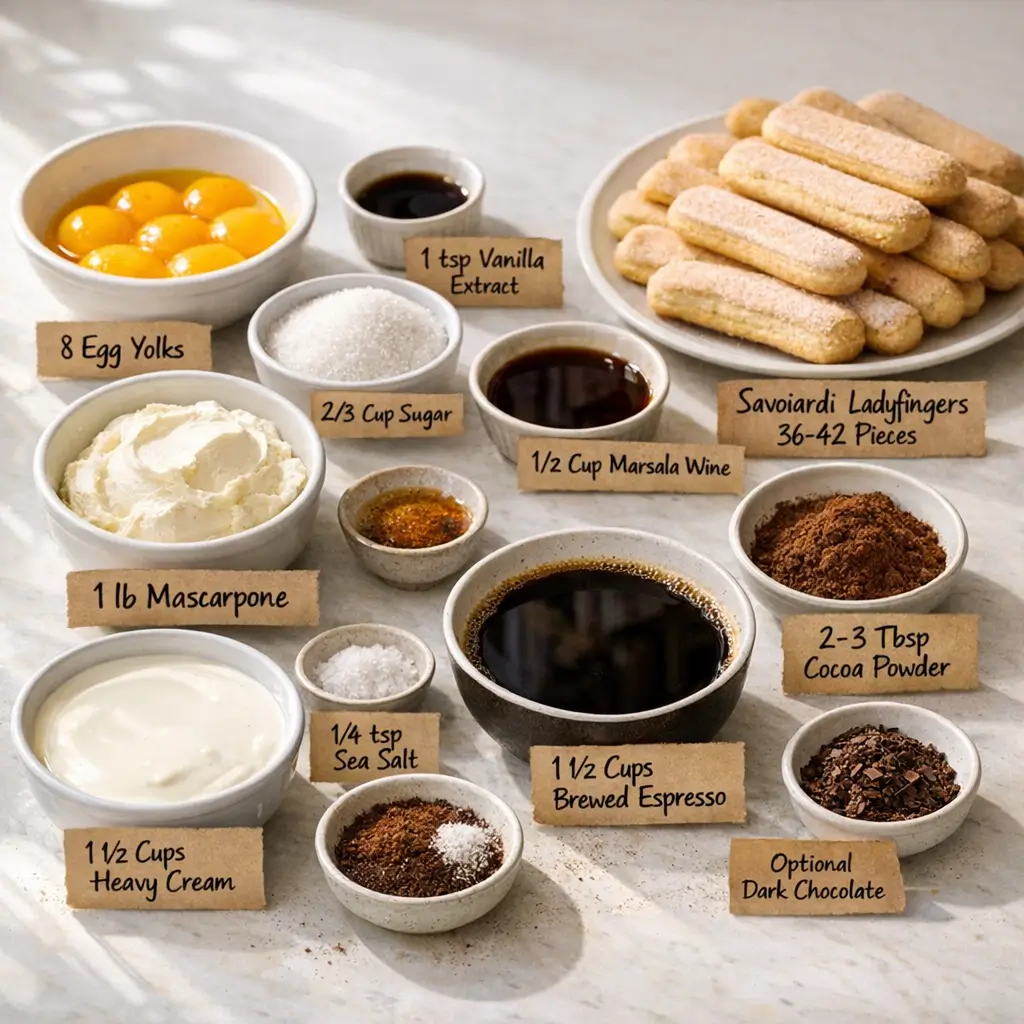
- 8 large egg yolks (about 150–160 g) — enriches the custard and helps it set
- 2/3 cup (135 g) granulated sugar — sweetens and stabilizes the zabaglione
- 1/2 cup (120 ml) dry Marsala wine, divided — classic aromatic lift; sub: dark rum, brandy, or omit for alcohol-free
- 1 pound (454 g) mascarpone cheese, cold but pliable — the signature creamy base; do not substitute with cream cheese unless noted below
- 1 teaspoon (5 ml) vanilla extract — rounds out the dairy
- 1/4 teaspoon fine sea salt — balances sweetness
- 1 1/2 cups (360 ml) heavy cream — whipped for lightness; look for 36–40% milk fat
- 1 1/2 cups (360 ml) strongly brewed espresso or coffee, cooled — dipping liquid; decaf is fine
- 36 to 42 crisp ladyfingers (about 14 oz/400 g) — choose the dry, crunchy style labeled “savoiardi”
- 2 to 3 tablespoons unsweetened cocoa powder — finish for subtle bitterness
- Optional: 1 to 2 ounces (30–60 g) dark chocolate, finely shaved, for garnish
Pan and tools
- 9×13-inch (23×33 cm) baking dish for traditional yield; or 8×8-inch (20×20 cm) for a taller, smaller batch
- Heatproof bowl + medium saucepan (makeshift double boiler)
- Hand mixer or stand mixer
- Fine-mesh strainer for cocoa
Ingredient notes and practical substitutions
- Mascarpone: For the texture you expect in tiramisu, mascarpone is important. In a pinch, blend 12 oz (340 g) mascarpone + 4 oz (115 g) full-fat brick cream cheese until smooth to make up the pound; expect a slightly tangier note.
- Marsala vs. rum: Dry Marsala lends a nutty, raisin-like aroma. Dark rum or brandy works too; the flavor will be a touch sharper.
- Ladyfingers: Use the crisp kind. The soft, cake-like versions will over-saturate and muddy the layers.
- Coffee: Espresso delivers intensity, but a strong French press or moka pot coffee works. Avoid thin, watery drip coffee.
STEP-BY-STEP INSTRUCTIONS
- Brew and cool the coffee. Make 1 1/2 cups (360 ml) espresso or very strong coffee. Stir in 1/4 cup (60 ml) of the Marsala (or chosen spirit), if using. Set aside to cool completely. Hot coffee will make the cookies fall apart.
- Set up a gentle double boiler. Fill a saucepan with about an inch of water and bring it to a bare simmer. Nest a heatproof bowl over (not touching) the water. Add the egg yolks, sugar, and the remaining 1/4 cup (60 ml) Marsala to the bowl.
- Cook the zabaglione. Whisk constantly over the steam until the mixture is thick, pale, and tripled in volume, 5 to 7 minutes. You’re aiming for ribbons to fall off the whisk and briefly sit on the surface. If the bowl gets too hot or steam sputters, lift it off for a few seconds. This step goes fast—stay with it.
- Cool the custard. Remove the bowl from heat and whisk for 30 seconds off the heat to prevent scrambling at the edges. Let it cool to just warm, 5 to 10 minutes. (Speed this along by setting the bowl over a second bowl of ice for 1 to 2 minutes, stirring.)
- Smooth the mascarpone. In a separate bowl, beat the mascarpone with vanilla and salt on medium-low just until no lumps remain, 30 to 60 seconds. Do not overbeat—overmixing can turn mascarpone grainy.
- Whip the cream. In a clean, cold bowl, whip the heavy cream to stiff peaks. The cream should stand up straight on the whisk without drooping. If it looks curdled or slightly separated, you’ve gone too far; whisk in a tablespoon more liquid cream to bring it back.
- Combine the filling without deflating. Fold the mascarpone mixture into the whipped cream with a spatula until nearly blended. Then fold in the cooled zabaglione in two additions, turning the bowl as you go. Stop as soon as it’s uniform. Overmixing here collapses the air you just built.
- Quick-dip the ladyfingers. Pour the cooled coffee mixture into a shallow dish. Working one or two at a time, dip each ladyfinger 1 second per side. Aim for “moist but still firm,” not soaked. If your cookies are thinner, make the dip even quicker.
- Build the first layer. Arrange a snug layer of dipped ladyfingers in the bottom of a 9×13-inch (23×33 cm) pan. Trim a few to fit if needed—gaps are okay but avoid big empty spots.
- Spread the cream. Spoon half of the cream mixture over the cookies and coax it into the corners with an offset spatula. Smooth the surface.
- Repeat. Add a second quick-dipped layer of ladyfingers and top with the remaining cream. Smooth again. Cover the dish tightly (lid, plastic wrap, or foil).
- Chill to set. Refrigerate at least 4 to 6 hours, preferably overnight (8 to 24 hours). The longer rest allows the cookies to soften evenly and the layers to slice cleanly. This wait is the difference between spoonable and sliceable.
- Finish and serve. Right before serving, dust the surface evenly with cocoa powder using a fine strainer. Add chocolate shavings if you like. Cut with a warmed, dry knife for tidy squares, wiping the blade between cuts.
Beginner safeguards
- Keep heat gentle during the zabaglione stage; vigorous boiling water can curdle the yolks.
- Don’t over-dip ladyfingers. If you can squeeze a dipped cookie and it leaks coffee, it’s oversaturated.
- Chill fully. If you cut early, expect soft scoops rather than clean slices—still tasty, just messier.
WHAT TO EXPECT: Italian Tiramisu
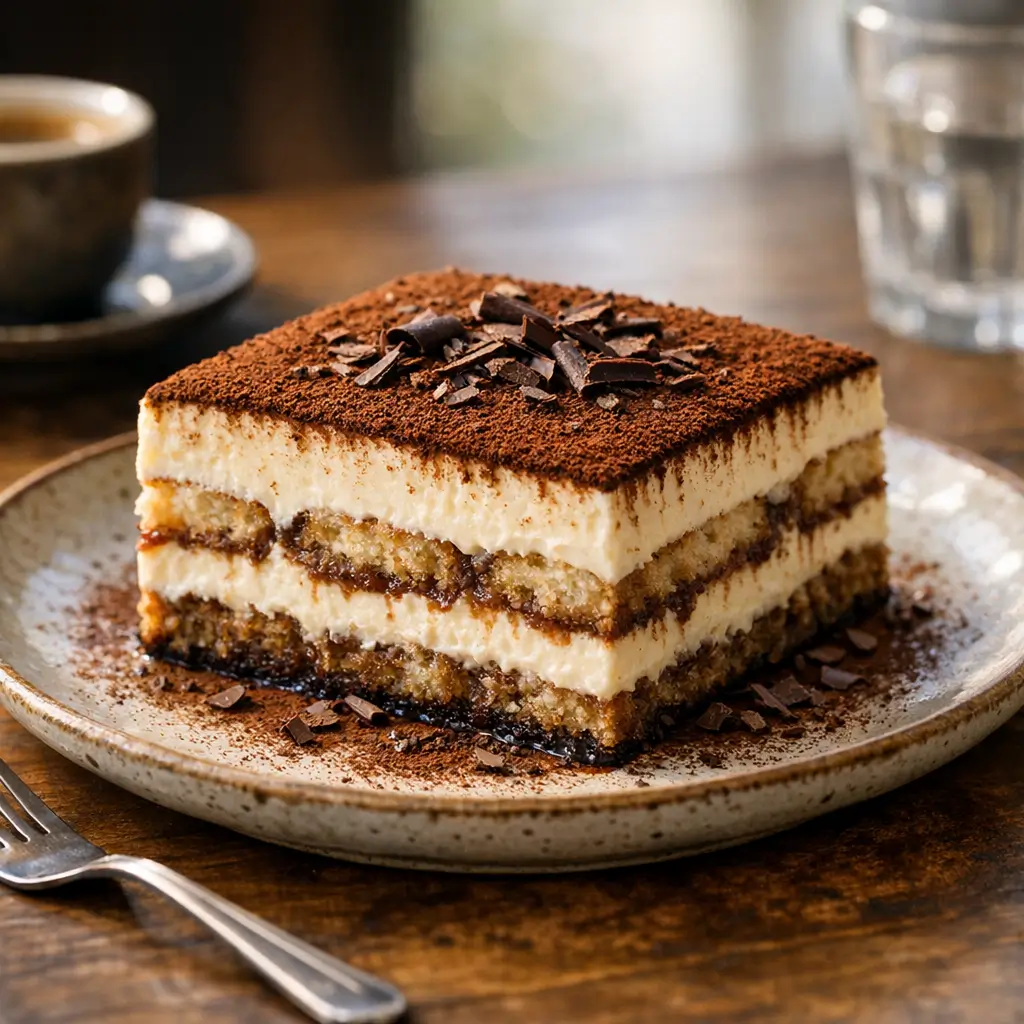
Texture: The top should be velvety and mousse-like, the ladyfingers tender and cake-like without dissolving. After an overnight chill, slices stand up on a plate but feel light on the fork.
Flavor: Coffee-forward and slightly boozy if you used Marsala or rum, balanced by dairy richness and a gentle cocoa bitterness. Sweetness is present but not cloying; cocoa reins it in.
Visuals: Edges may not be perfectly sharp, and that’s normal. A faint mottling at the sides where coffee meets cream is expected. Cocoa may darken as it absorbs surface moisture—dust just before serving for the cleanest look.
Variability you might see
- Ladyfinger type: Crisp savoiardi give defined layers. Softer, sponge-style fingers blur layers and shorten the chill window—okay in a pinch, but reduce dipping time.
- Coffee strength: Stronger brews make a more assertive dessert; mild coffee tastes flatter. If your brew is weak, dust with a bit more cocoa and add a few chocolate shavings for contrast.
- Dish size: A 9×13 yields classic proportions. An 8×8 makes a taller, more dramatic slice but may need an extra 1 to 2 hours of chilling.
WAYS TO CHANGE IT UP
- Vegetarian or vegan-adapted: Use crisp vegan ladyfingers (or plain, dry vegan tea biscuits) and swap mascarpone/cream for a plant-based alternative. Blend 300 g chilled vegan cream cheese with 300 ml cold coconut cream and 75 g powdered sugar until smooth, then fold in 1 teaspoon vanilla. Use strong coffee and finish with cocoa. Trade-off: the set is softer and the flavor profile is less dairy-rich.
- Spicier or milder: For a bolder, “spicier” profile, stir 1/4 teaspoon ground cinnamon or freshly grated nutmeg into the cocoa and use dark rum instead of Marsala. For milder flavor, use decaf coffee and skip alcohol entirely; the cream and cocoa still carry the dessert.
- Faster, simplified version: Skip the zabaglione and whisk 1/2 cup (100 g) sugar directly into the mascarpone, then fold into 1 1/2 cups (360 ml) whipped cream with vanilla and salt. Layers assemble the same way and chill for 3 to 4 hours. Trade-off: slightly less depth and stability, but it shaves off stovetop time and bowl washing.
SERVING AND STORAGE
Serving ideas
- Serve cold, in neat squares. A fine dusting of cocoa is plenty; chocolate curls add a bakery finish.
- Pair with espresso, amaro, or black tea. For a lighter ending, add fresh berries on the side rather than on top (berries can bleed onto the cocoa).
Portions
- A 9×13-inch pan yields about 12 generous servings or up to 16 smaller squares. For a dinner party, plan on 12.
Storage
- Refrigerate, covered, up to 3 days. Cocoa topping will darken as it hydrates—cosmetic only.
- Freeze up to 3 months, tightly wrapped. Thaw overnight in the refrigerator. Dust with fresh cocoa after thawing, not before freezing, to avoid blotches.
- Avoid room-temperature holding beyond 1 hour due to dairy and eggs.
Leftover refresh
- If slices weep a little at the edges on day 3, a brief 15-minute chill in the coldest fridge zone helps firm them for serving.
CULTURAL CONTEXT
Tiramisu is widely associated with Italy’s Northeast, particularly the Veneto region and the city of Treviso, and it rose to popularity in the late 20th century. Accounts of its origin differ, and pastry chefs continue to debate details such as whether the earliest versions included alcohol. For a neutral overview of the dessert’s background and its name—often translated as “pick me up”—see the Encyclopaedia Britannica entry on tiramisu, which outlines its modern rise and components. Reading broadly about Italian sweets helps place tiramisu alongside other layered or spoonable desserts that rely on simple techniques and quality dairy. For those exploring culinary history, this context enriches the experience beyond the recipe. Encyclopaedia Britannica: Tiramisu
COMMON QUESTIONS AND TROUBLESHOOTING
- Why is my cream loose or runny? The two common causes are under-whipped cream or over-warmed custard. Whip the cream to stiff peaks before folding and be sure the zabaglione is no warmer than room temp when you combine. If the mixture loosens, a short chill (10–15 minutes) firms it before layering.
- My mascarpone turned grainy—what happened? Overbeating can cause the fat to separate. Beat just until smooth, and if it starts to look curdled, stop and gently fold in a tablespoon or two of cold cream to help it come back together.
- The ladyfingers got soggy and the layers collapsed. What can I do next time? Shorten the dip to about 1 second per side, use colder coffee, and confirm you’re using crisp savoiardi. Also, avoid pressing down hard when spreading the cream; let it settle naturally.
- Can I make it without alcohol or with different alcohol? Yes. Omit alcohol entirely for a family-friendly version, or substitute dark rum, brandy, or coffee liqueur for Marsala. Keep total liquid the same to prevent soggy layers.
- I don’t have an espresso machine—will strong coffee work? Absolutely. Use a moka pot, French press, or instant espresso powder mixed to the package’s “strong” ratio. Avoid weak drip coffee; it can make the dessert taste watered down.
- How long must it chill to slice cleanly? Plan on at least 6 hours. Overnight (8–24 hours) is better, especially if your kitchen runs warm or you used a smaller, taller pan.
- Can I use soft, cake-style ladyfingers? You can, but reduce dipping time to a brief swipe and consider a shorter chill (4–6 hours). Expect a softer, more pudding-like set.
- Is it safe if I used raw eggs? This recipe cooks the yolks. If you use a raw-yolk or raw-white method, choose pasteurized eggs and understand that the texture may be lighter but less stable.
CONCLUSION
If you make this, leave a comment with how long you chilled it, the coffee you used, and any tweaks that helped—especially your dip timing and pan size. Those details help other home cooks succeed, and they’re exactly where tiramisu goes from good to great. I’d love to hear how you adapted the alcohol (or skipped it), whether you dusted with cocoa or added chocolate shavings, and how the slices behaved the next day.



Leave a Reply