
If dinner needs to be fast, comforting, and irresistibly bold, this bowl delivers. Think silky noodles coated in a glossy, spicy‑sweet gochujang‑butter sauce that clings to every strand. The heat is gentle but present, balanced by butter and a touch of acidity, and the whole thing comes together on the stovetop while the pasta boils.
Here’s the hook for busy weeknights: minimal chopping, pantry-friendly ingredients, and reliable results in about 30 minutes. You can keep it meatless, add a fried egg, or toss in shrimp or rotisserie chicken without changing the base method.
You’ll spot this kind of fusion pasta on weeknight tables and casual menus because it’s simple yet big on umami. It works for anyone who enjoys a little spice and appreciates clear, repeatable steps. Expect springy noodles, a shiny sauce, and balanced flavor—no fussy techniques.
If you’re new to gochujang, it’s a Korean fermented red chile paste that brings savory depth and a hint of sweetness. We’ll show you how to control the spice and keep the sauce creamy, not greasy or clumpy.
INGREDIENTS — gochujang butter noodles
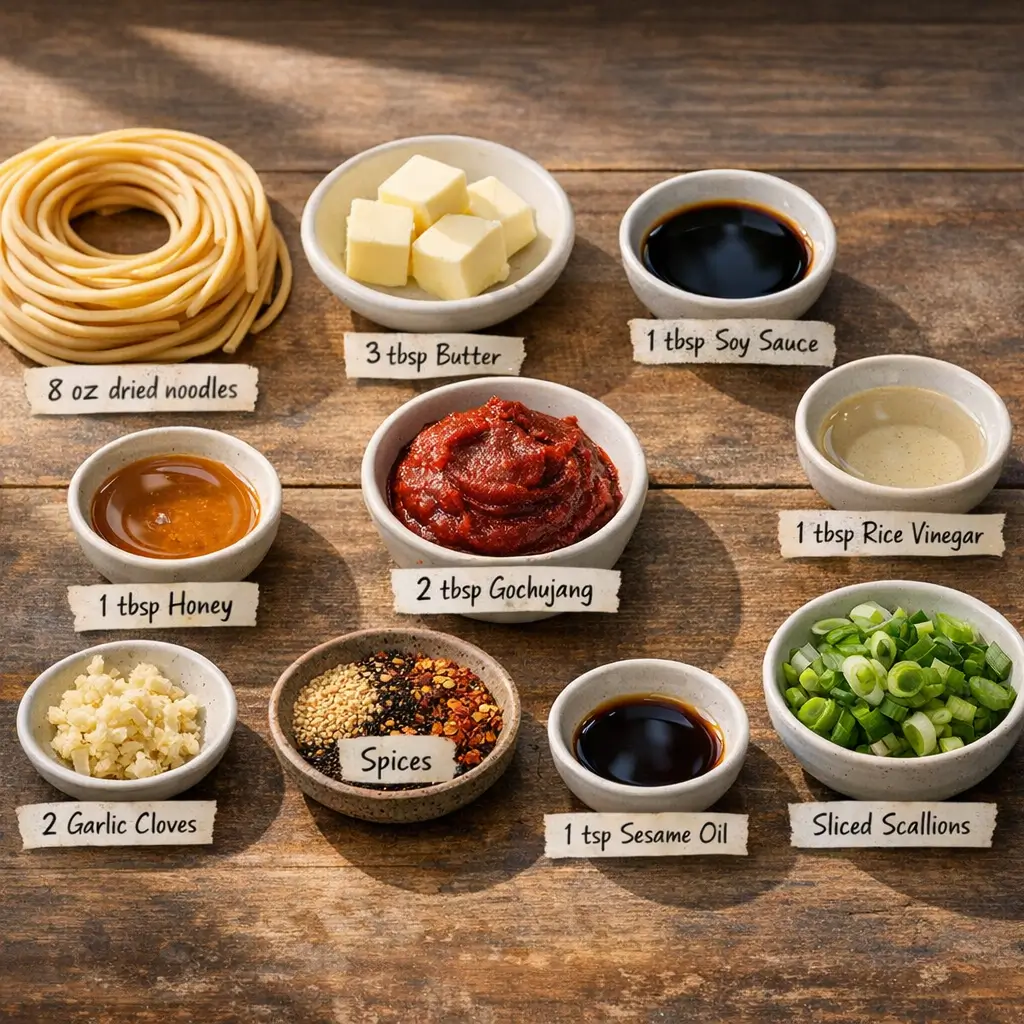
Serves 2 to 3
- 8 oz (225 g) dried long noodles, such as spaghetti or bucatini
Sub: 2 bricks fresh or instant ramen, or 10 oz (280 g) fresh udon. - 3 tbsp (42 g) unsalted butter, divided
Purpose: creates the glossy emulsion and softens heat. - 2 tbsp (30 g) gochujang (Korean red chile paste)
Purpose: spicy‑sweet umami backbone. - 2 cloves garlic, finely minced or grated
Purpose: aromatic depth without extra steps. - 1 tbsp (15 ml) low‑sodium soy sauce
Purpose: salt/umami balance. Sub: tamari for gluten‑free. - 1 tbsp (15 ml) rice vinegar
Purpose: brightness to balance butter and heat. Sub: apple cider vinegar or 2 tsp lemon juice; start small and adjust. - 1 tbsp (15 ml) honey or maple syrup
Purpose: rounds out heat and acidity. - 1 tsp (5 ml) toasted sesame oil
Purpose: nutty aroma at the end. Optional but recommended. - 1/2–3/4 cup (120–180 ml) reserved pasta cooking water
Purpose: starchy liquid to emulsify the sauce. - 2 scallions, thinly sliced, for garnish
Sub: chives or a small handful of cilantro. - 1–2 tsp toasted sesame seeds, for garnish
Ingredient notes and smart swaps
- Gochujang heat varies by brand. If unsure, start with 1½ tbsp (22 g) and add more to taste.
- If you prefer a deeper garlic note without risk of browning, use a microplane to grate the cloves so they soften quickly.
- To add protein without complicating the method, top each portion with a fried or jammy egg, or toss in 8 oz (225 g) cooked shrimp during the final toss.
STEP-BY-STEP INSTRUCTIONS
- Boil the noodles. Bring a large pot of well‑salted water to a boil. Cook pasta until just shy of al dente; it should still have a slight bite when you taste it. Timing varies by noodle type and brand.
- Reserve the starchy water. Before draining, scoop out 1 cup (240 ml) pasta water and keep it nearby. Drain the noodles but don’t rinse; surface starch helps the sauce cling.
- Start the base. In a 12‑inch skillet over medium‑low heat, melt 2 tbsp (28 g) butter. Add the garlic and cook 30–60 seconds, stirring, until fragrant. Do not brown the garlic; reduce heat if it sizzles aggressively.
- Build the sauce. Whisk in the gochujang until smooth and brick‑red, about 30 seconds. Stir in soy sauce, honey, and rice vinegar. Increase heat to medium and cook 1–2 minutes. The sauce will look thick and glossy; if it sputters, your heat is a bit high.
- Emulsify with pasta water. Add 1/4 cup (60 ml) pasta water and whisk until the sauce loosens and becomes shiny. You should be able to drag a spatula through and see the pan briefly before it flows back.
- Coat the noodles. Add the drained noodles to the skillet. Toss vigorously with tongs for 1–2 minutes, adding more pasta water a splash at a time until each strand is evenly coated and saucy, not soupy.
- Finish with butter and sesame. Off the heat, toss in the remaining 1 tbsp (14 g) butter and the sesame oil. This final butter gives a satiny finish that helps the sauce cling.
- Taste and adjust. If it needs more salt, add a dash of soy sauce. For extra sweetness, drizzle in a tiny bit more honey. If heat is too intense, mix in a teaspoon of butter or a splash of pasta water to soften it.
- Plate and garnish. Twirl into bowls and top with scallions and sesame seeds. Serve immediately while the sauce is at its glossiest.
Safeguards for success
- Watch the garlic. It goes from fragrant to bitter quickly in butter; keep heat moderate and stir.
- Add pasta water gradually. Too much thins the sauce and prevents that clingy finish.
- Keep the final toss short. Overcooking in the sauce makes noodles swollen and mushy.
WHAT TO EXPECT — gochujang butter noodles
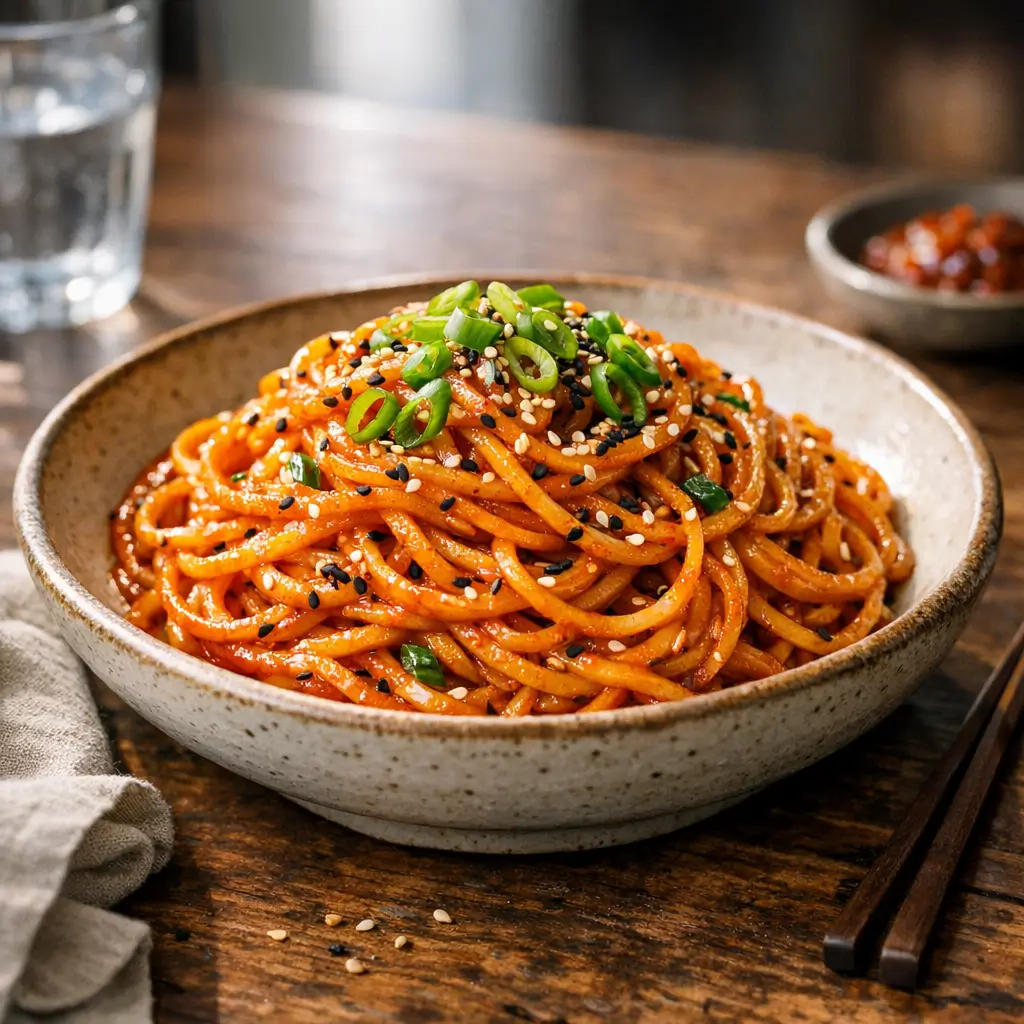
Texture: springy noodles coated in a slick, glossy sauce that lightly stains the pasta orange‑red. The sauce should cling without pooling at the bottom of the bowl.
Flavor: savory and buttery with a gentle, building heat. Honey balances the spice, while vinegar keeps it bright so the butter doesn’t feel heavy.
Variability: stronger burners may reduce the sauce faster, so keep an eye on thickness. Gochujang brands range from mild to fiery; adjust the amount and sweetness to match yours.
WAYS TO CHANGE IT UP
- Vegetarian/vegan adapted: Use plant‑based butter and maple syrup, and swap soy sauce for tamari if needed. Many gochujang brands contain wheat or barley; look for a gluten‑free version if you need it, and check labels for honey if strictly vegan. Add crisp tofu cubes or sautéed mushrooms for protein and texture.
- Spicier or milder: For more heat, add 1/2–1 tsp gochugaru (Korean red pepper flakes) or a pinch of crushed red pepper in step 4. To dial it down, use 1½ tbsp (22 g) gochujang, add an extra teaspoon of butter at the end, and a squeeze of lemon to brighten without spice.
- Faster or simplified: Cook instant ramen or fresh udon directly, then toss with a premixed sauce made by stirring gochujang, melted butter, soy, vinegar, and honey together in a heatproof bowl. The residual heat will warm it enough for a quick lunch. Expect a slightly looser sauce since you’ll add less pasta water.
- Add‑ins that stay friendly to the base: Toss in 1 cup (150 g) thinly sliced snap peas or spinach during the final minute for a fresh crunch. A quick‑seared shrimp, rotisserie chicken, or a runny fried egg turns it into a complete meal without changing ratios.
Trade‑offs to note
- More butter creates extra gloss but can mute the chili; taste before adding more.
- Extra vinegar sharpens the finish but can thin the sauce; add in drops and re‑toss.
SERVING AND STORAGE
Serve hot in warmed bowls so the buttered sauce doesn’t seize. A wedge of lime or lemon on the side is optional but brightens rich bites.
What pairs well: crisp cucumbers, quick‑pickled carrots, or a simple green salad. For protein, top with a jammy 7‑minute egg or pile on sliced grilled chicken. A sprinkle of nori strips adds a savory edge.
Leftovers keep up to 3 days in an airtight container in the refrigerator. Reheat gently on the stovetop with 2–3 tbsp (30–45 ml) water to re‑emulsify, tossing until glossy again. Microwave in 30‑second bursts with a splash of water, stirring between bursts. Not ideal for freezing; the sauce can split and noodles turn mushy once thawed.
CULTURAL CONTEXT
Gochujang is a fermented Korean chile paste made from red pepper powder, fermented soy, and rice or barley, known for its layered heat and savory sweetness. It’s a staple in many Korean dishes, from bibimbap to stews and marinades. For an educational overview of its history and production, see the encyclopedia entry from Britannica and the background on fermentation and ingredients outlined on Wikipedia. These resources offer context for the ingredient’s cultural significance without prescribing how it must be used outside of Korean cuisine: Gochujang.
This recipe applies those flavors to pasta using familiar weeknight techniques (boil, toss, finish with butter), a style seen in many home kitchens today without claiming any traditional standing.
COMMON QUESTIONS AND TROUBLESHOOTING
- My sauce looks greasy, not glossy. What happened?
Likely too much heat or not enough starchy water to emulsify. Reduce heat, whisk in a splash of pasta water, and toss until the sauce looks cohesive and shiny. - It’s too spicy. How can I fix it?
Add another teaspoon of butter and a small drizzle of honey, then toss with a bit more pasta water. Acid (a squeeze of lemon) can also soften perceived heat. - Can I use different noodles?
Yes. Spaghetti clings well, but ramen, udon, rice noodles, or soba work. Adjust pasta water use: wheat noodles release more starch than rice noodles, so you may need a bit more water with rice noodles to get the same gloss. - I don’t have rice vinegar. What’s the best swap?
Use apple cider vinegar or lemon juice. Start with 2 tsp (10 ml) and add to taste—these can taste sharper than rice vinegar. - Can I make it gluten‑free?
Use gluten‑free noodles (such as rice noodles) and tamari. Choose a gochujang labeled gluten‑free; some brands include wheat or barley. - How do I add protein without changing the sauce?
Top each serving with a fried egg, or toss in cooked shrimp or shredded rotisserie chicken during the final toss to warm through. - The sauce thickened too much while waiting for guests. Now what?
Reheat gently with 2–4 tbsp (30–60 ml) hot water, tossing until glossy again. Taste for salt; dilution can mute seasoning. - Can I double the recipe?
Yes, but use a wider skillet and toss in batches so the sauce can emulsify properly. Overcrowding leads to steaming and a thinner coating.
CONCLUSION
If you make this, leave a comment with what brand of gochujang you used and how spicy you went. Share your tweaks—different noodles, added veggies, or a protein topper—so other home cooks can learn from your version. Your notes help make this weeknight dish even more reliable for the next person.



Leave a Reply