
If takeout-style dinners appeal but time is tight, this Pork Egg Roll in a Bowl brings the familiar, savory flavors of an egg roll to your stove in one pan. You’ll brown ground pork (or beef), toss in a bag of coleslaw mix, then season with garlic, ginger, soy sauce, and sesame oil. The result is a crisp‑tender, saucy skillet meal with no wrapping or frying.
It’s ideal for weeknights, meal prep, or anyone who wants big flavor with minimal chopping. Expect savory pork, a gentle gingery kick, and cabbage that’s soft at the edges but still has some crunch. Serve it over rice, tuck it into lettuce leaves, or eat straight from the skillet. Dinner, done.
INGREDIENTS — Pork Egg Roll in a Bowl
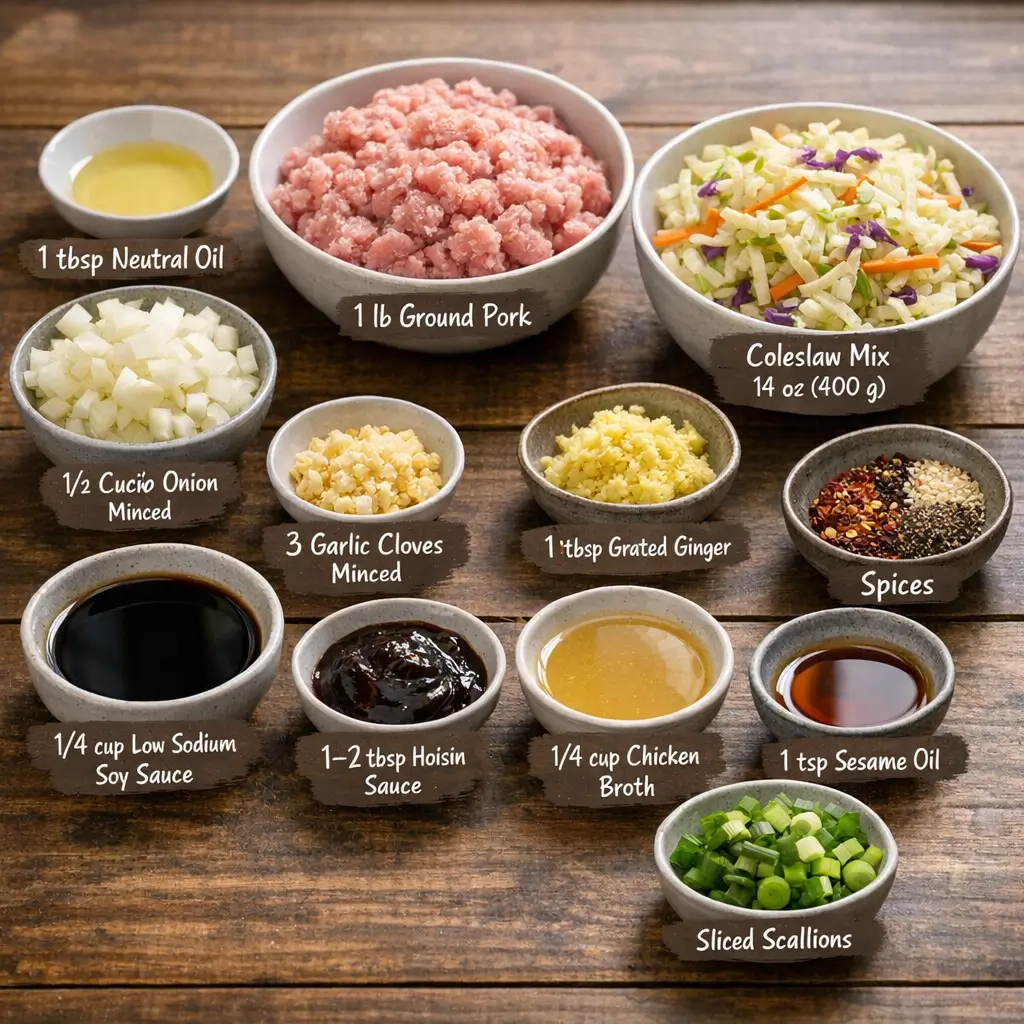
- 1 tbsp (15 ml) neutral oil (avocado, canola, or light olive oil; for browning)
- 1 lb (450 g) ground pork (or ground beef; pork tastes closest to classic egg roll filling)
- 1/2 medium yellow onion, finely diced (about 75 g) — optional but adds depth
- 3 garlic cloves, minced (about 9–12 g)
- 1 tbsp (10 g) fresh ginger, finely grated
- 1 (14–16 oz / 400–450 g) bag coleslaw mix (or ~6 cups shredded green cabbage + 1 cup matchstick carrots)
- 1/4 cup (60 ml) low‑sodium soy sauce
- 1–2 tbsp (15–30 ml) hoisin sauce — for subtle sweetness and body; start with 1 tbsp and adjust
- 1/4 cup (60 ml) unsalted chicken broth or water — helps distribute seasonings
- 1 tsp (5 ml) toasted sesame oil — finish for aroma
- 1/2–1 tsp crushed red pepper flakes or sriracha, to taste — optional heat
- 4 scallions, thinly sliced (separate white and green parts)
- 1 tsp toasted sesame seeds — optional garnish
- Freshly ground black pepper, to taste
Notes and realistic substitutions:
- Gluten‑free: use tamari or certified gluten‑free soy sauce; skip hoisin or use a GF version.
- No coleslaw mix? Use shredded green cabbage and carrots. Purple cabbage is fine but can tint the sauce.
- Lean meat option: Ground turkey or chicken works; add 1 tsp oil if the pan looks dry.
- Sweeter profile: Add 1 tsp honey as in some one‑pan versions.
- Thicker, glossy sauce: Stir 1/2–1 tsp cornstarch into the cold broth/soy mixture before adding to the pan.
STEP-BY-STEP INSTRUCTIONS
1) Mix the sauce. In a small bowl or measuring cup, stir together the soy sauce, hoisin (start with 1 tbsp), broth or water, and red pepper flakes or sriracha, if using. For a thicker finish, whisk in cornstarch now so it fully dissolves. Keep near the stove.
2) Brown the pork. Heat a large 12‑inch skillet or wok over medium‑high heat. Add the neutral oil, then the ground pork. Cook 5–7 minutes, breaking it up with a spatula, until no longer pink and lightly browned. If there’s a lot of rendered fat, spoon off a tablespoon or two so the pan isn’t greasy. Season with a few grinds of black pepper.
3) Aromatics go in. Add the diced onion (if using) and the white parts of the scallions. Cook 2–3 minutes until slightly softened. Stir in the garlic and ginger and cook 30–45 seconds, just until fragrant. Avoid letting the garlic brown—turn the heat down a notch if needed.
4) Wilt the slaw. Add the coleslaw mix and toss with tongs. Cook 3–5 minutes, stirring often, until the cabbage is wilted at the edges but still crisp in the core. If your pan is small, add the slaw in two batches; it shrinks quickly.
5) Sauce and simmer. Pour in the soy mixture and toss to coat. Let it bubble 1–2 minutes, stirring, until the liquid lightly clings to the meat and vegetables. If you used cornstarch, simmer until the sauce looks glossy and slightly thickened.
6) Finish and taste. Turn off the heat. Stir in the toasted sesame oil and half the scallion greens. Taste and adjust: add a splash more soy for salt, a touch more hoisin for sweetness, or more chili for heat.
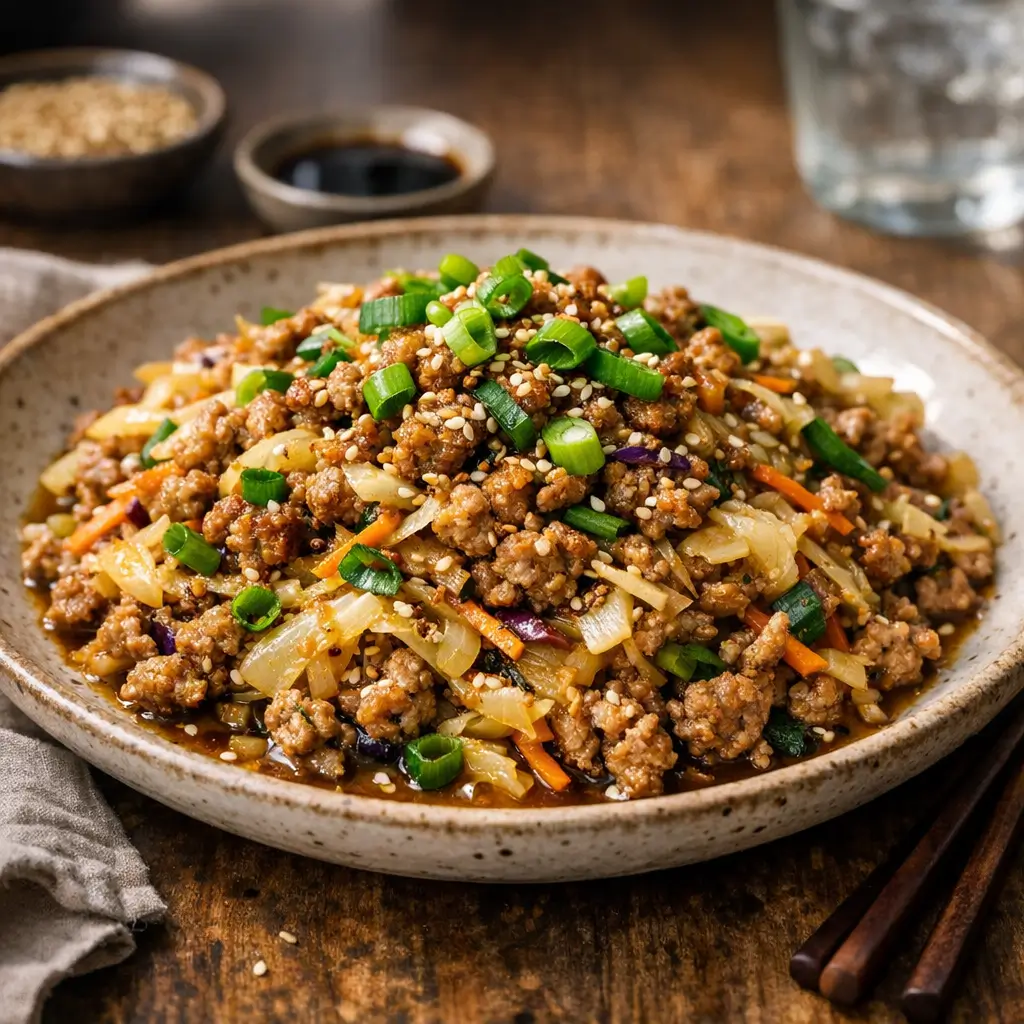
7) Serve. Scoop into bowls and top with remaining scallion greens and sesame seeds. Enjoy as‑is or over hot rice, cauliflower rice, or tucked into crisp lettuce leaves.
Practical safeguards:
- Keep the heat moderate once aromatics go in; garlic scorches fast and turns bitter.
- Cabbage releases moisture. If the skillet looks watery, let it cook 1–2 extra minutes or increase the heat to evaporate.
- If using ground beef, drain excess fat so the sauce doesn’t taste greasy.
WHAT TO EXPECT
- Texture: The cabbage should be tender at the edges with a gentle bite in the center—think sautéed, not stewed. The sauce is light and coats the ingredients rather than pooling.
- Flavor: Savory soy and pork lead, supported by ginger and garlic. Hoisin adds a hint of sweetness; sesame oil supplies a toasty aroma. It’s satisfying without being heavy.
- Variability: Sodium levels differ by soy sauce brand; start with low‑sodium and season at the end. Bagged slaw varies in water content—more moisture may mean a minute longer on the heat. A carbon steel wok will evaporate faster than a nonstick skillet.
WAYS TO CHANGE IT UP
- Vegetarian/vegan: Swap the pork for extra‑firm tofu (pressed and crumbled) or finely chopped mushrooms. Add 1–2 tsp soy sauce during browning to season the tofu/mushrooms. Finish with the sesame oil as written. Trade‑off: slightly less richness than pork; add 1 tsp neutral oil if it seems dry.
- Spicier or milder: For heat lovers, add 1–2 tsp chili‑garlic sauce or a sliced fresh chili with the aromatics. For mild palates, omit chili entirely and keep hoisin at 1 tbsp. Trade‑off: more heat can overshadow the ginger; adjust to taste.
- Faster/simpler: Use a full bag of coleslaw mix and skip the onion. Make a quick sauce of just 1/4 cup soy sauce + 1 tbsp hoisin + 1/4 cup water. Trade‑off: fewer layers of flavor but still weeknight‑friendly and very good.
- Extra protein option: Many cooks like to scramble in eggs. Push the stir‑fry to one side, add 2 lightly beaten eggs to the empty side, scramble until just set, then combine. This softens the texture and stretches servings without changing the core method.
SERVING AND STORAGE
- How to serve: Spoon into bowls and top with scallion greens and sesame seeds. Add chili oil for spice or crispy wonton strips for crunch. It’s great over steamed rice, brown rice, or cauliflower rice. Lettuce cups make a fresh, hand‑held option.
- What pairs well: Simple sides like sliced cucumbers with rice vinegar, steamed edamame, or a quick miso soup balance the savory bowl. A citrusy seltzer or unsweet iced tea keeps the meal light.
- Storage: Cool completely, then refrigerate in an airtight container up to 4 days. Cabbage softens over time but stays tasty.
- Reheating: Rewarm in a skillet over medium heat 2–3 minutes, stirring, to re‑crisp the cabbage slightly and evaporate excess liquid. Microwave in 45‑second bursts, stirring between rounds.
- Freezing: Not ideal because cabbage can turn very soft. If you must freeze, under‑cook the slaw by a minute, cool quickly, and freeze up to 2 months. Thaw overnight and reheat in a hot skillet to drive off moisture.
CULTURAL CONTEXT
Egg rolls, as recognized in the United States, are part of Chinese‑American restaurant culture rather than a direct translation of a single regional Chinese dish. The crispy, wrapper‑based appetizer became popular in the mid‑20th century and evolved alongside other Chinese‑American staples. For an overview of that culinary history, see the Smithsonian National Museum of American History’s “Sweet and Sour” collection on Chinese food in the U.S. (Smithsonian NMAH). A concise description of egg rolls, including regional variations and how they differ from spring rolls, is available here (Wikipedia: Egg roll).
COMMON QUESTIONS AND TROUBLESHOOTING
- Why is my bowl watery? Cabbage naturally releases liquid. Use a wide pan so moisture evaporates, cook over medium‑high heat, and simmer an extra minute after adding the sauce. If needed, remove the lid (if you used one) and let steam escape.
- It tastes too salty—how can I fix it? Switch to low‑sodium soy sauce next time. For now, add a handful of unsalted shredded cabbage or a splash of water, then simmer 1–2 minutes. A tiny drizzle of honey can balance saltiness without making the dish sweet.
- Can I use only green cabbage? Yes. Use about 6 cups thinly shredded cabbage and 1 cup matchstick carrots (or skip carrots). Add 1 minute to the wilting time if the shreds are thicker than bagged slaw.
- Pork vs. beef—any changes? Beef can render more fat; drain a bit so the sauce isn’t greasy. Flavor will be slightly more robust. Keep the rest of the method the same.
- Can this be gluten‑free? Use tamari or a certified gluten‑free soy sauce and a gluten‑free hoisin (or omit hoisin). Serve with rice or lettuce cups.
- Is sesame oil for cooking or finishing? Toasted sesame oil is most aromatic as a finisher. Brown meat in neutral oil, then add sesame oil at the end for flavor.
- Meal prep tips? Portion into containers with rice, keep garnishes separate, and reheat uncovered so steam doesn’t sog out the cabbage.
CONCLUSION
This skillet keeps the spirit of an egg roll while skipping the deep‑fryer and the wrapping step. If you try it, leave a comment with how you served it—over rice, in lettuce cups, or straight from the pan—and any tweaks that worked for your kitchen. Your notes help other home cooks get dinner on the table with fewer surprises.



Leave a Reply