
You know those days when lunch needs to be warm, fast, and genuinely satisfying? This Salmon Rice Bowl hits that exact spot. Flaked leftover salmon meets steamed rice, gets a quick microwave revive, then is finished with soy sauce, Kewpie mayo, and a small streak of sriracha.
Expect a comforting bowl that’s creamy, savory, and a little spicy, with optional avocado, kimchi, and nori for crunch.
It’s a weeknight staple inspired by Japanese rice-bowl sensibilities, perfect for solo lunches, after‑school meals, or light dinners. Newer cooks will appreciate the minimal steps; experienced cooks will love how customizable it is. The texture is forgiving—think warm sushi‑roll flavors without any rolling.
INGREDIENTS
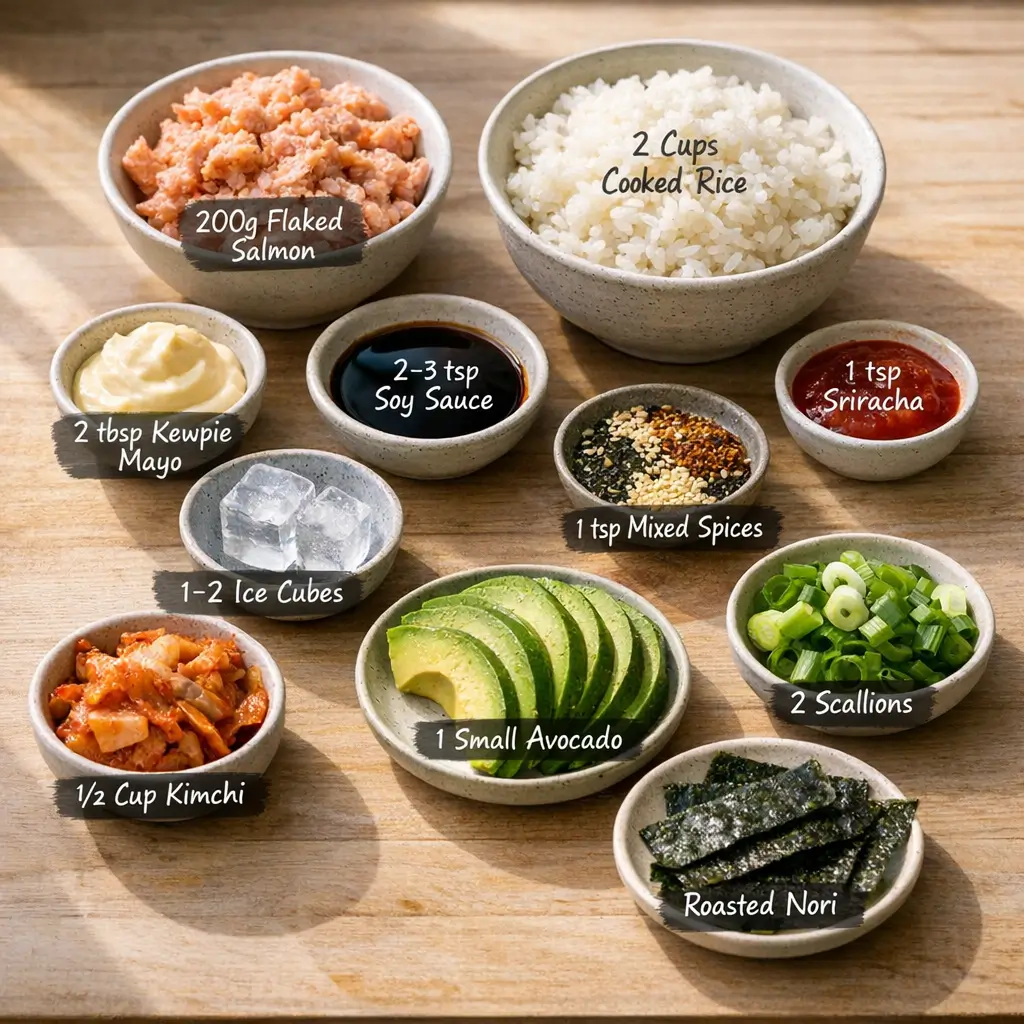
- 200–250 g (7–9 oz) cooked salmon, skin removed and flaked (leftover is ideal)
- Purpose: protein and umami; flaking blends it with rice so every bite tastes seasoned.
- Substitute: canned salmon (drained) or cooked trout; for pescatarians avoiding salmon, try cooked shrimp.
- 2 cups (about 300 g) cooked short‑grain or medium‑grain white rice, cold from the fridge
- Purpose: base starch; short grain gives the clingy texture that mixes well with sauce.
- Substitute: freshly cooked rice or a microwave rice pouch; brown rice works but will be chewier.
- 1–2 ice cubes OR 1–2 tbsp (15–30 ml) water
- Purpose: adds steam to re‑hydrate chilled rice; water works if you prefer not to use ice.
- 2–3 tsp (10–15 ml) soy sauce
- Purpose: salt and savoriness.
- Substitute: tamari or coconut aminos for gluten‑free.
- 1½–2 tbsp (20–30 g) Kewpie mayonnaise
- Purpose: creamy body and slight sweetness; helps sauces cling.
- Substitute: regular mayonnaise plus a tiny splash of rice vinegar and a pinch of sugar.
- 1–2 tsp (5–10 ml) sriracha, to taste
- Purpose: mild heat and garlic‑chili flavor.
- Substitute: chili‑garlic sauce, gochujang thinned with a little rice vinegar, or chili crisp.
- 1 tsp toasted sesame oil (optional)
- Purpose: nutty aroma; a few drops go a long way.
- 1 small avocado, sliced (optional)
- ½ cup (70 g) kimchi (optional)
- 2 scallions, thinly sliced (optional)
- 1 tsp toasted sesame seeds (optional)
- Roasted seaweed snacks or 1 sheet nori, cut into strips, for serving
STEP-BY-STEP INSTRUCTIONS
- Flake the salmon.
- Use a fork to gently flake the cooked salmon into bite‑size pieces. Remove any pin bones or gray skin. Spread it in an even layer in a wide, microwave‑safe bowl.
- Sensory cue: it should look like canned salmon—moist shreds, not paste.
- Add the rice on top.
- Break up clumps of cold rice with clean fingers and mound it over the salmon. This layering protects the fish from drying while the rice steams.
- Tip: if the rice is very hard or clumpy, sprinkle a few drops of water over the clumps to help them loosen.
- Re‑hydrate and reheat.
- Place 1–2 ice cubes on the rice and cover the bowl with a piece of parchment or a microwave‑safe silicone lid. Microwave for 60–90 seconds (1000‑W microwave). If using water instead, sprinkle 1–2 tbsp evenly over the rice before covering.
- Check and stir. If the rice isn’t hot and fluffy yet, microwave in 15–30 second bursts until steaming.
- Safety note: avoid plastic wrap touching food; if you use it, leave headspace so it doesn’t melt onto the rice.
- Expectation: the ice may not fully melt; that’s okay. Remove any remaining ice.
- Sauce and mix.
- Drizzle the hot bowl with 2 tsp soy sauce, 1½ tbsp Kewpie mayo, and 1 tsp sriracha to start. Add a few drops of sesame oil if using. Fold gently until the salmon, rice, and sauces look creamy and evenly tinted.
- Sensory cue: the mixture should be glossy and lightly orange‑pink from the mayo and chili, with steam rising and a savory aroma.
- Taste and adjust.
- Add the remaining 1 tsp soy or ½–1 tsp sriracha if you want more salt or heat. Kewpie is flavorful, so build gradually to avoid an overly salty bowl.
- Add toppings and serve.
- Finish with scallions and sesame seeds. Add avocado slices and kimchi on the side. Eat with roasted seaweed—either crush it over the bowl or use pieces to scoop up bites.
- Serve immediately while warm for the best texture.
Beginner safeguards:
- Rice dries out if reheated uncovered. Always cover to trap steam.
- Start with less sauce than you think; you can add more but can’t take it out.
- If using canned salmon, drain well to avoid a watery bowl.
Timing variability:
- 700‑W microwaves will need closer to 90–120 seconds initially.
- Cold, day‑old rice revives faster than very firm, two‑day‑old rice. Add a splash more water if still stiff after the first heat.
WHAT TO EXPECT (Salmon Rice Bowl)
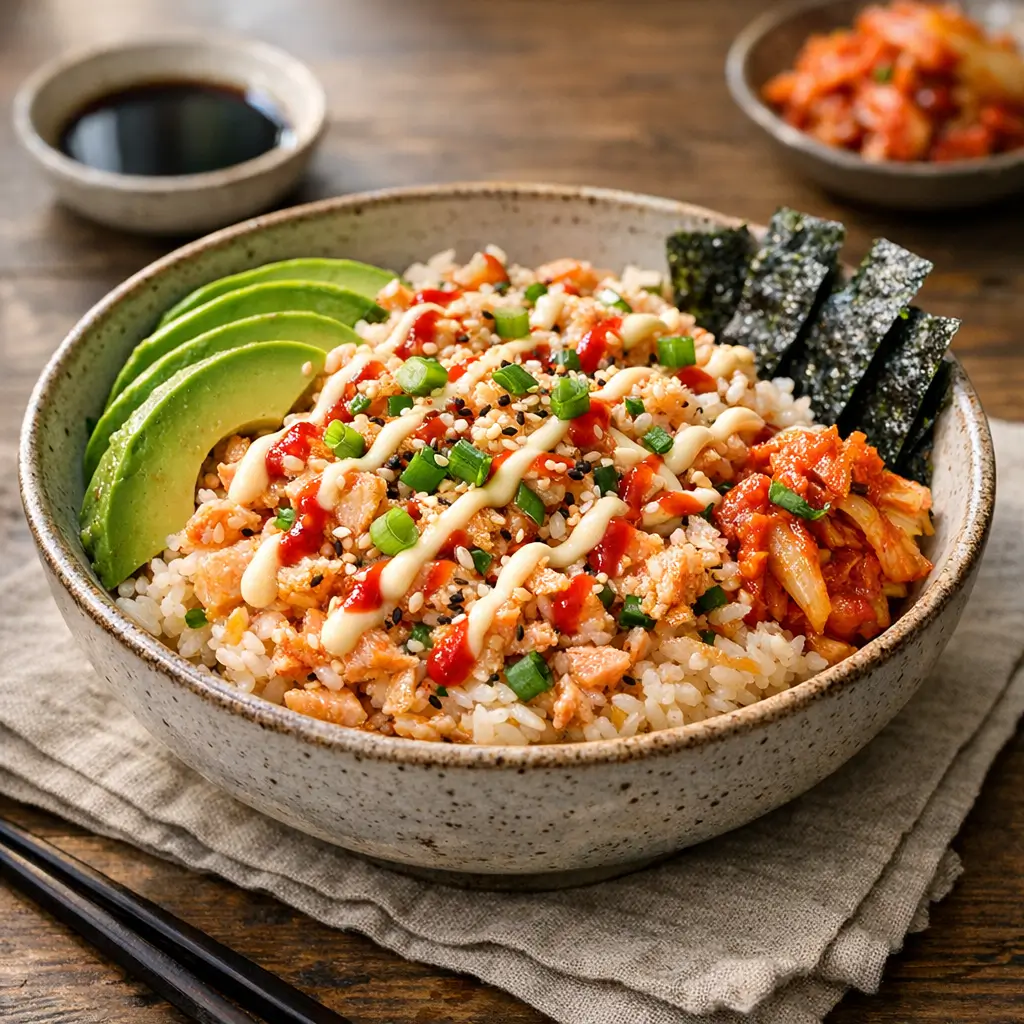
Texture should be soft and spoonable, not soupy. The rice becomes fluffy again, while mayo creates a creamy coating that clings to the grains.
Flavor leans savory with a gentle sweetness from Kewpie and a balanced chili kick from sriracha. Soy sauce brings salinity and a little depth; sesame oil perfumes without overpowering.
If you add avocado and kimchi, expect contrast: cool and rich next to warm and tangy heat. Nori adds a crisp snap and ocean aroma that makes each bite feel like a deconstructed spicy salmon roll.
Different brands and tools influence results. Some Kewpie versions in the U.S. taste slightly less MSG‑forward than bottles from Japan; you may need a touch more soy to compensate. Microwaves also vary widely—heat just until steaming to avoid drying.
WAYS TO CHANGE IT UP
-
Vegetarian or vegan twist
-
Replace salmon with firm tofu cubes pan‑seared until golden, or 1 cup (165 g) canned chickpeas warmed and lightly smashed. Use vegan mayo and keep the soy and chili. Nori still delivers that briny note. Trade‑off: you’ll miss salmon’s natural oils, so add a little extra sesame oil for richness.
-
Spicier or milder
-
For more heat: swirl in an extra ½–1 tsp sriracha, a spoon of gochujang thinned with rice vinegar, or a drizzle of chili crisp. Trade‑off: more chili can mask subtler flavors of Kewpie and salmon.
-
For less heat: skip the sriracha and add a pinch of sugar and rice vinegar to the mayo‑soy mix for balance. Trade‑off: the bowl will taste creamier and sweeter, with less punch.
-
Faster, five‑minute version
-
Use a microwave rice pouch and canned salmon. Reheat the rice per package, warm the salmon separately for 20–30 seconds, then combine with sauces. Trade‑off: canned salmon is softer and more uniform in texture; the flavor is still satisfying but less flaky.
-
Heartier add‑ins
-
Stir in cucumber matchsticks, steamed edamame, or shredded carrots for crunch. A fried or jammy egg on top turns it into a bigger meal. Trade‑off: more ingredients mean slightly longer prep.
-
Different grains
-
Brown rice brings chew and a nuttier flavor. Quinoa or farro work, but the bowl will feel less “sushi‑roll‑like” because they don’t clump as willingly.
SERVING AND STORAGE
Serve this bowl warm, right after mixing, when the rice is fluffy and glossy. Offer nori on the side for scooping and kimchi or quick cucumbers for contrast.
What pairs well:
- Miso soup or a simple broth.
- Crisp vegetables—cucumber, radish, or a light slaw.
- Pickles such as takuan or quick‑pickled carrots.
Storage and reheating:
- Best practice is to store components separately. Keep cooked salmon refrigerated up to 3 days, cooked rice up to 4 days (cool it quickly and cover), and sauces/toppings chilled.
- Once mixed with mayo and soy, the bowl is at its peak immediately. Leftovers can be eaten cold or gently rewarmed at 50% power in short bursts, but the mayo may split and the rice may dry. Expect softer, less fluffy texture.
- Food‑safety note: rice can harbor spores if left at room temp too long. Refrigerate promptly after cooking and reheat until steaming.
CULTURAL CONTEXT
Rice bowls (donburi) are a wide family of Japanese meals built around hot rice and savory toppings. This quick bowl borrows that idea but keeps the method extremely simple, using leftovers and pantry condiments.
The combination of creamy mayo and chili reflects modern Japanese home cooking too. Kewpie mayonnaise has been a pantry staple in Japan since 1925, when the company launched its egg‑yolk‑rich formula; you can read a concise company history here: Kewpie – Company History.
The reheating step—reviving rice with a little moisture—is also in the spirit of dishes like ochazuke, where hot tea or broth restores leftover rice. For background on ochazuke’s place in everyday eating, this short feature offers helpful context: The Japan Times: Ochazuke.
COMMON QUESTIONS AND TROUBLESHOOTING
-
My rice stayed hard and clumpy. What went wrong?
-
Cold rice needs moisture and coverage. Add 1–2 tbsp water (or an ice cube) and cover tightly before microwaving. Break up clumps with a fork midway. Very dry, two‑day‑old rice may need another splash and 15–30 seconds more heat.
-
I don’t have Kewpie. Can I still make this?
-
Yes. Use regular mayo with ½ tsp rice vinegar and a tiny pinch of sugar per tablespoon. The texture will be close; you’ll miss some umami but it’s still delicious.
-
No sriracha in my pantry—what’s the best swap?
-
Chili‑garlic sauce, sambal oelek plus a touch of sugar, or ½ tsp gochujang thinned with rice vinegar replicate the heat and tang.
-
Is the ice‑cube trick necessary?
-
It’s just one way to add moisture. Sprinkling water evenly over the rice works as well and can hydrate more uniformly. Covering is non‑negotiable.
-
Can I use canned salmon?
-
Absolutely. Drain it well and flake gently. Skin and bones are edible in many canned versions; mash them in for extra calcium or remove if you prefer a smoother texture.
-
How do I make it gluten‑free?
-
Use tamari instead of soy sauce and verify that your mayo and sriracha are gluten‑free. Nori is naturally gluten‑free.
-
How do I scale this up for family dinner?
-
Reheat rice on a rimmed sheet pan in a 300°F (150°C) oven covered with foil and sprinkled with a few tablespoons of water until hot and steamy, 10–12 minutes. Warm salmon separately, then combine and season in a large bowl so the sauces distribute evenly.
-
Why is my bowl too salty or too bland?
-
Kewpie and soy both bring salt. Start with the lower amounts and taste as you go. If bland, add a few drops more soy or a pinch of salt; if salty, mix in a little more plain rice or a squeeze of lemon.
-
Is it safe to reheat mayo?
-
Yes, but prolonged high heat can cause it to separate. Keep reheating gentle and brief, or enjoy leftovers cold.
CONCLUSION
When you keep a little cooked rice in the fridge and a packet of nori in the pantry, this bowl turns into a reliable 10‑minute meal. If you try it, leave a comment with how you seasoned yours—extra sesame, more heat, or a veggie add‑in—and rate the recipe so other home cooks know what worked. Your tweaks help make this weeknight favorite even more flexible for busy kitchens.



Leave a Reply