
If you crave a fast dinner with big personality, this Szechuan Tofu Stir-Fry brings crisp tofu, juicy bell peppers, and a glossy, numbing-spicy sauce to the table in under 30 minutes. You’ll get that signature ma la tingle from Sichuan peppercorns and a deep savory backbone from chili bean paste.
It’s a great fit for busy weeknights, meatless Mondays, or anytime you want a colorful skillet meal over rice. The method suits newer cooks who want guidance and experienced stir-fry fans who appreciate tight, repeatable steps.
Expect lightly crisp tofu edges, tender peppers with bite, and a balanced heat you can dial up or down. The sauce clings, not pools, so every piece tastes seasoned without being soupy.
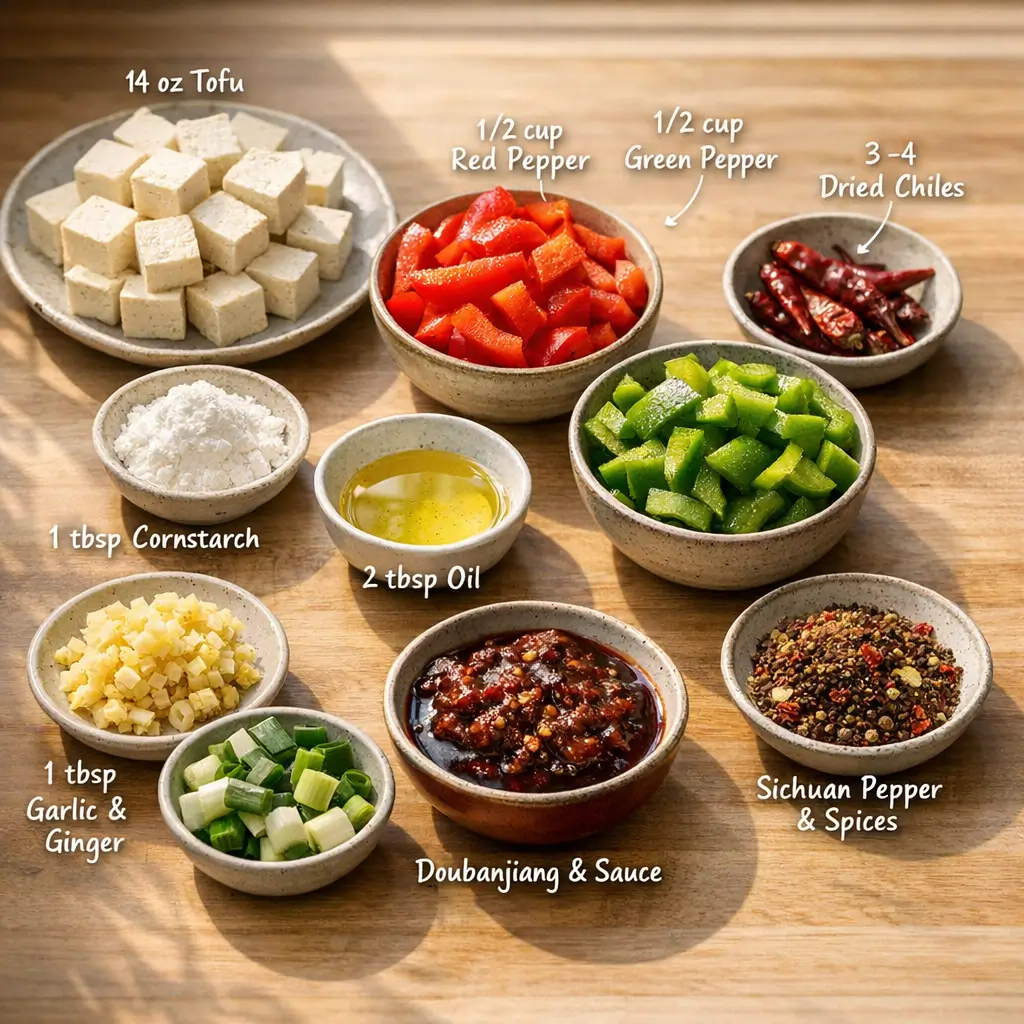
INGREDIENTS
- 14 oz (400 g) extra-firm tofu, drained and patted very dry — main protein
- Sub: firm tofu works; press longer. Avoid silken.
- 2 tbsp (30 ml) cornstarch, divided — for crisping tofu and thickening sauce
- Sub for thickening: potato or tapioca starch.
- 2–3 tbsp (30–45 ml) neutral oil (canola, peanut, or avocado) — high-heat cooking
- 1 medium red bell pepper (about 6 oz/170 g), sliced into ½-inch strips — color and sweetness
- 1 medium green bell pepper (about 6 oz/170 g), sliced into ½-inch strips — contrast and crunch
- 3–4 dried red chiles, whole — optional smoky heat
- Sub: ½–1 tsp crushed red pepper flakes.
- 1 tsp (2 g) whole Sichuan peppercorns, lightly toasted and ground — numbing aroma
- If unavailable: ½ tsp ground black pepper + ½ tsp very finely grated lemon zest for citrusy aroma (not the same effect, but brightens).
- 3 cloves garlic, finely chopped (about 1 tbsp/9 g)
- 1 tbsp (8 g) fresh ginger, finely chopped
- 3 scallions, whites and greens separated, cut into 1-inch (2.5 cm) pieces
Sauce
- 1½ tbsp (25 g) doubanjiang (Sichuan chili bean paste) — savory heat and color
- If needed: 1 tbsp chili-garlic sauce + 1 tsp white or yellow miso; or 1 tbsp black bean garlic sauce + ½ tsp chili oil.
- 1 tbsp (15 ml) light soy sauce (or low-sodium)
- 1 tbsp (15 ml) Shaoxing wine — depth and aroma
- Sub: dry sherry; or 1 tbsp water + ½ tsp rice vinegar if avoiding alcohol.
- 1 tsp (4 g) sugar — balances heat
- 2 tsp (10 ml) rice vinegar — brightness
- ¼ cup (60 ml) water or unsalted vegetable stock
- 1 tsp (3 g) cornstarch mixed with 1 tbsp (15 ml) water — final slurry
To finish (optional but nice)
- 1 tsp (5 ml) toasted sesame oil — aromatic finish
- Extra ground Sichuan pepper to taste
STEP-BY-STEP INSTRUCTIONS
-
Prep first. Stir-fries move quickly. Measure sauces, chop aromatics, and slice peppers before turning on the heat. Place the sauce ingredients (doubanjiang, soy sauce, Shaoxing wine, sugar, rice vinegar, ¼ cup water) in a small bowl and whisk to combine.
-
Dry and cut the tofu. Pat the block extremely dry with paper towels. Slice into ¾-inch (2 cm) cubes or ½-inch (1.25 cm) thick rectangles. Moisture is the enemy of crisping.
-
Dust for crisp edges. In a bowl, toss tofu gently with 1 tbsp (8 g) cornstarch and a small pinch of salt. The surface should look matte, not gummy. If it looks wet, sprinkle the remaining 1 tbsp (8 g) in light passes.
-
Toast the peppercorns. Warm a dry wok or large skillet over medium heat. Add whole Sichuan peppercorns and toast 60–90 seconds until fragrant and lightly darkened, shaking the pan. Transfer to a mortar or spice grinder; grind to a coarse powder. Wipe out the pan to remove husks.
-
Heat the wok. Set the wok over medium-high heat until a wisp of smoke appears. Add 2 tbsp (30 ml) oil, swirl to coat. This hot pan–cold oil approach helps reduce sticking.
-
Fry the tofu until golden. Add tofu in a single layer. Don’t crowd; work in batches if needed. Cook 3–5 minutes undisturbed until the underside is deeply golden, then turn and cook 2–3 minutes more. Adjust heat to medium if browning too fast. Transfer to a plate. Add extra oil if the pan looks dry for the next batch.
-
Bloom the dried chiles and aromatics. Return the wok to medium heat with a thin film of oil. Add dried chiles and stir 20–30 seconds until they darken slightly and smell smoky—avoid blackening. Add garlic, ginger, and scallion whites; stir-fry 30–45 seconds until fragrant. If the pan is scorching, lower the heat briefly.
-
Cook the peppers. Add red and green bell peppers and ¼ tsp salt. Stir-fry 2–3 minutes until bright and barely tender; they should still be crisp at the edges. Timing varies by pan size and heat output.
-
Fry the paste. Push peppers to the sides, creating a hot spot in the center. Add doubanjiang and let it sizzle 20–30 seconds, stirring to stain the oil red and release aroma. This step unlocks flavor—don’t skip it, but keep it brief so the paste doesn’t burn.
-
Deglaze and season. Pour in the soy sauce, Shaoxing wine, sugar, and rice vinegar mixture. Scrape the pan bottom to dissolve any browned bits. Simmer 30–60 seconds.
-
Return the tofu. Add tofu and toss gently to coat without breaking the pieces. Pour in ¼ cup (60 ml) water/stock if the pan looks dry.
-
Thicken the sauce. Stir the 1 tsp (3 g) cornstarch + 1 tbsp (15 ml) water into a smooth slurry, then drizzle in while tossing. Cook 30–60 seconds until the sauce turns glossy and clings to the tofu and peppers rather than pooling. If too thick, splash in a tablespoon of water.
-
Finish and season to taste. Stir in the ground Sichuan pepper and scallion greens. Taste and adjust: more vinegar for brightness, a pinch of sugar for balance, or a splash of soy for salt.
-
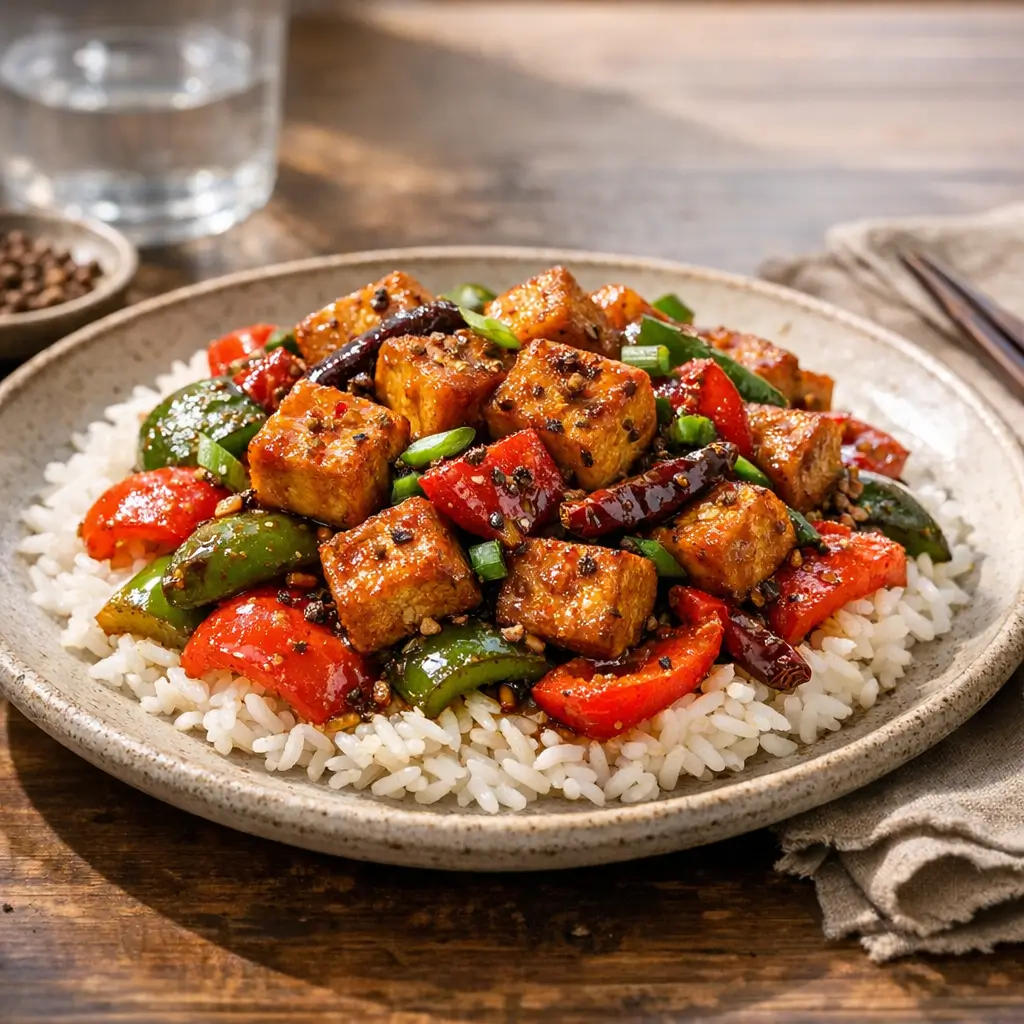
Optional aroma. Off heat, swirl in toasted sesame oil. Serve immediately over steamed rice or chewy wheat noodles.
Beginner safeguards
- Pre-measure everything. Cornstarch slurry settles fast; keep a spoon handy to re-stir before adding.
- Vent the kitchen. Dried chiles can be sneeze-inducing when they hit hot oil.
- Keep heat moderate when pan looks dry. Doubanjiang scorches quickly in a screaming-hot dry spot.
WHAT TO EXPECT
- Texture: Tofu edges should be lightly crisp with a custardy interior. Bell peppers stay vivid and tender-crisp, not soft.
- Sauce: The coating is glossy and clinging, not soupy. It should leave a thin sheen on the pan and spoon.
- Flavor: A balanced trifecta—savory umami from doubanjiang and soy, gentle sweetness from sugar and peppers, and the distinctive citrusy-numbing lift of Sichuan pepper.
- Variability: Nonstick pans may yield a paler sear; cast iron or carbon steel produce deeper browning. Some brands of doubanjiang are saltier and spicier than others—taste and adjust with water or sugar if needed.
WAYS TO CHANGE IT UP
-
Vegetarian/vegan adapted: The base recipe is naturally vegan. For extra body, add mushrooms (shiitake or cremini) in Step 8; sauté until they release and reabsorb moisture before peppers. A splash of vegetarian “oyster” sauce (mushroom-based) deepens savoriness.
-
Spicier or milder: For more heat, double the dried chiles or add 1–2 tsp chili oil with the paste. To go milder, reduce doubanjiang to 1 tbsp and omit dried chiles; the dish will lean savory with just a hint of warmth.
-
Faster or simplified: Use pre-baked or air-fried tofu (many supermarkets sell baked tofu) and skip Step 6. Or replace doubanjiang with 1½ tbsp chili-garlic sauce plus ½ tsp soy sauce; you’ll lose some fermented depth but keep a friendly heat and speed.
-
Protein swap: If cooking for mixed eaters, stir-fry 4 oz (115 g) finely chopped ground chicken or pork with the aromatics in Step 7, then proceed as written with tofu. The sauce quantity is sufficient for both.
-
Veggie variations: Add 1 small carrot in thin matchsticks, or a handful of snow peas. Keep total veg to ~3 cups so the pan doesn’t crowd.
Trade-offs are real: More vegetables mean a slightly lighter, less glossy sauce cling. Extra heat sharpens bitterness if peppers get charred—stir, don’t scorch.
SERVING AND STORAGE
Serve hot over medium-grain white rice, brown rice, or chewy wheat noodles. A cool side like smashed cucumbers or a simple citrus-dressed slaw balances the heat.
Garnish ideas: extra ground Sichuan pepper, sliced scallion greens, or toasted sesame seeds.
Leftovers keep 3 days in the refrigerator in an airtight container. Reheat in a skillet over medium heat with a teaspoon of water to loosen the sauce; the tofu will re-crisp slightly but won’t be as crunchy as day one. Microwave in 30-second bursts if needed, but expect softer peppers.
Not freezer-friendly: Freezing changes tofu’s texture and can turn peppers watery once thawed.
CULTURAL CONTEXT — Szechuan Tofu Stir-Fry
Sichuan (Szechuan) cooking is recognized among China’s eight major regional cuisines, known for complex layering of heat, aroma, and the ma la sensation from Sichuan pepper. For a concise overview of how regional Chinese cooking has been introduced and understood in the U.S., see this background from Asia Society, which highlights the rise of regional styles like Sichuan in American dining (Asia Society).
If you’re curious about the peppercorn itself and how public policy once shaped its availability in the U.S., Asia Society also notes the U.S. import ban on Sichuan peppercorns that lasted until 2005 in a culinary webcast context (Asia Society: Mapo Tofu Cook‑Along). For a cultural snapshot closer to home, the Museum of Food and Drink profiles Hwa Yuan Szechuan in New York’s Chinatown, connecting the cuisine’s history to a specific restaurant and neighborhood (MOFAD).
COMMON QUESTIONS AND TROUBLESHOOTING
-
My tofu didn’t crisp. What went wrong?
-
Most often, the tofu wasn’t dry. Pat aggressively and, if time allows, press the block between paper towels for 10–15 minutes. Crowding also steams the tofu—fry in batches and give each piece contact with the pan. Finally, make sure the pan and oil are hot before tofu goes in.
-
The sauce tastes too salty or intense.
-
Doubanjiang varies. Thin the sauce with 1–2 tbsp water and add ½–1 tsp sugar to round edges. Next time, start with 1 tbsp doubanjiang and increase to taste.
-
It’s not spicy enough for me.
-
Add extra dried chiles, a teaspoon of chili oil, or a pinch more freshly ground Sichuan pepper at the end. You can also bloom ½ tsp crushed red pepper with the paste in Step 9.
-
My sauce didn’t thicken.
-
Cornstarch needs a simmer to activate. Ensure the pan is bubbling when you add the slurry, and re-stir the slurry right before pouring (starch settles). If it’s still thin, cook another 30–60 seconds.
-
The peppers turned soft and weepy.
-
High heat and space are key. Overcrowding or low heat traps moisture. Stir-fry in a wide pan, work in batches, and salt the peppers lightly to draw just enough moisture without flooding the pan.
-
Can I make it gluten-free?
-
Use tamari or certified gluten-free soy sauce and check your doubanjiang label carefully—some brands include wheat. Dry sherry often contains sulfites but not gluten; if avoiding alcohol, use water plus a touch more vinegar.
-
No Shaoxing wine on hand—what’s best?
-
Dry sherry is the closest common substitute. If you prefer not to use alcohol, swap in water and ½ tsp rice vinegar for brightness.
-
What if I can’t find Sichuan peppercorns?
-
The black pepper–lemon zest substitute adds a citrusy lift but won’t provide the numbing effect. If you enjoy heat, lean on chili oil or dried chiles to compensate.
CONCLUSION
If you try this, leave a comment with how spicy you went, what pan you used, and any swaps that worked for you. Your notes help other home cooks adapt the stir-fry to their kitchens. Ratings and thoughtful tips are always appreciated.



Leave a Reply