
If you want a side that wakes up the whole plate without extra work, this light, lemony Shirazi Salad does it. It’s the small‑dice Iranian salad of cucumbers, tomatoes, onions, and herbs you see alongside grilled meats and rice dishes at many Persian tables.
In under 20 minutes, you’ll chop, toss, and chill. The flavor is bright and tangy with gentle herbal notes, and the texture leans crunchy‑juicy rather than leafy. It’s perfect for warm evenings, potlucks, or whenever rich mains need contrast.
Home cooks who like low‑effort, high‑reward recipes will appreciate how flexible this is. Use what you can find, keep the cuts small, and let the vinaigrette do the rest. Expect a refreshing bite with a little onion heat and citrusy zip.
INGREDIENTS
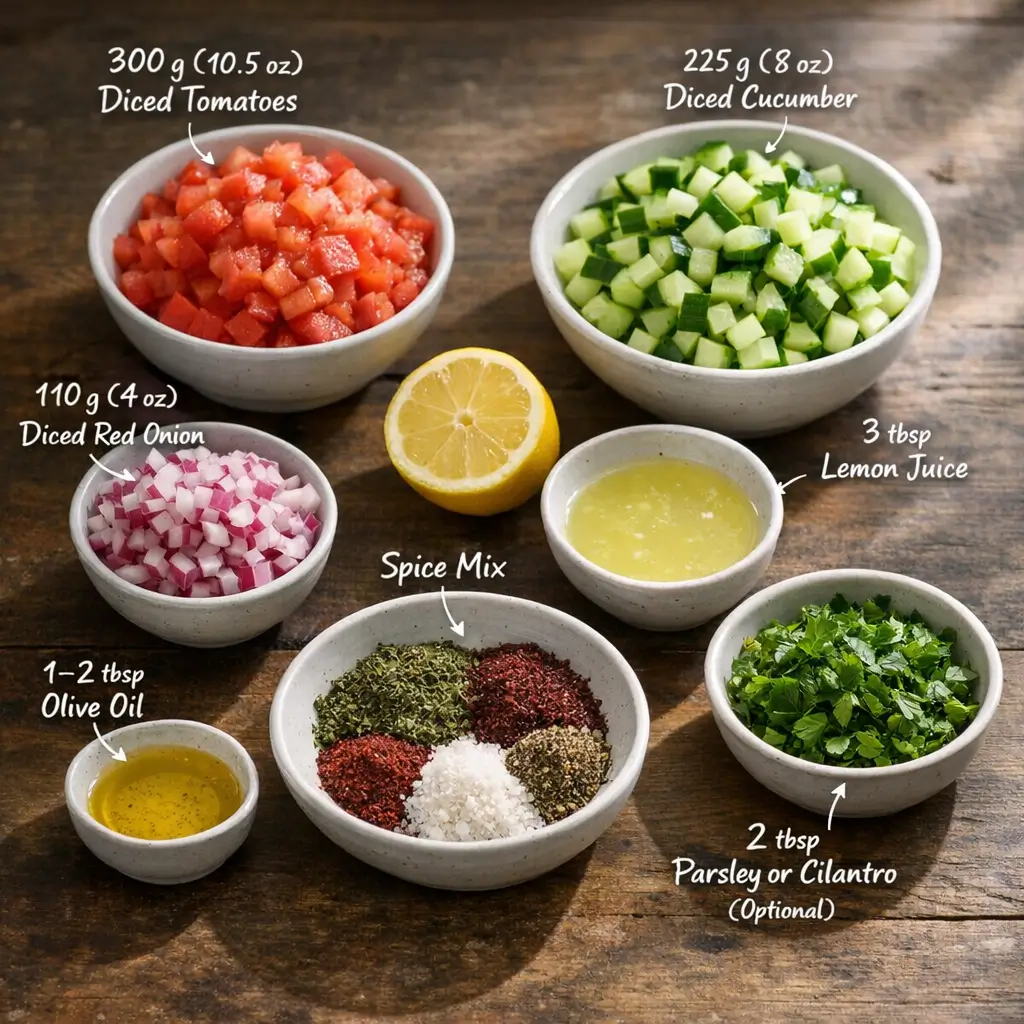
- 300 g (10.5 oz) ripe but firm tomatoes, 1/4‑inch (6 mm) dice — juicy backbone; seed if extra watery.
- 225–250 g (8–9 oz) Persian cucumbers, 1/4‑inch (6 mm) dice — crisp crunch. Sub: 1 small English cucumber (about 275 g/10 oz), peeled if waxed; scrape seeds if large.
- 1/2 medium red onion (about 110 g/4 oz), finely diced — peppery bite and color. Milder option: 1 small shallot; or briefly soak diced onion in ice water, then drain well.
- 2–3 tbsp (30–45 ml) fresh lemon or lime juice — classic tang. Traditional option: verjuice (ab‑ghooreh); start with 2 tbsp as it varies in sharpness.
- 1–2 tbsp (15–30 ml) extra‑virgin olive oil (optional) — some families add it, others keep the salad very light.
- 1/2–1 tsp dried mint, crushed between fingers — signature aroma. Sub: 2–3 tbsp finely chopped fresh mint (use a light hand; it’s stronger fresh).
- 1/4 tsp ground sumac (optional) — adds a lemony, winey tartness.
- 3/4–1 tsp kosher salt — start with 3/4 tsp Diamond Crystal; if using Morton, start with 1/2 tsp and adjust.
- 1/4 tsp freshly ground black pepper — gentle warmth.
- 2 tbsp chopped parsley or cilantro (optional) — color and freshness.
Notes on sourcing and swaps:
- Verjuice (ab‑ghooreh) is the pressed juice of unripe grapes. Middle Eastern markets often carry it; if unavailable, lemon or lime juice works well. Its acidity is typically gentler than vinegar, so start low and taste.
- Tomatoes: Roma or vine‑ripe that feel firm are easiest to dice neatly. Keep the cuts small so every bite tastes balanced.
STEP-BY-STEP INSTRUCTIONS
- Prep the vegetables with an even, small dice.
- Aim for 1/4‑inch (6 mm) pieces. Uniform size matters more than perfection — it ensures equal amounts of cucumber, tomato, and onion in each bite.
- If tomatoes are very seedy, scoop or squeeze out the watery core before dicing to limit dilution. If using English cucumber with large seeds, scrape them out.
- Salt to unlock flavor and light juiciness.
- In a medium bowl, combine tomatoes, cucumbers, and onion with the salt. Toss well and let sit 5–10 minutes. You should see a small puddle of tomato‑cucumber juices forming at the bottom.
- This is intentional: those juices help form the dressing and carry flavor. If you prefer a drier salad, drain off a little before dressing.
- Make the lemon‑mint dressing.
- In a small bowl or jar, whisk the lemon or lime juice (or verjuice), olive oil (if using), dried mint, black pepper, and sumac. Taste; it should be bright but not harsh. If it puckers your mouth, whisk in another teaspoon of oil or a splash of water.
- Combine and toss gently.
- Pour the dressing over the vegetables. Fold with a spatula to avoid crushing the dice. Taste and adjust salt or acid now.
- Rest briefly for melding.
- Let the salad stand 10–15 minutes. The salt and acid draw out more juices, marrying everything into a refreshing, spoonable mixture. For maximum crunch, you can dress right at the table instead and skip the rest.
- Finish and serve.
- Stir in parsley or cilantro if using. Give one last taste; add a pinch more dried mint or sumac if you want stronger herbal or tangy notes. Serve cool, not icy cold, so the flavors bloom.
Kitchen checkpoints and safeguards:
- Onion strength varies by season and source. If yours smells very sharp after dicing, rinse briefly, soak 5 minutes in ice water, drain, and pat dry before adding.
- Salt type matters. Diamond Crystal is flakier and lighter than Morton. Start low, then work up. You can always add more, but you can’t take it back.
- If your tomatoes are weak in winter, the salad will be less juicy and sweet. A tiny pinch of sugar (1/8 tsp) can round the edges without making the salad sweet.
WHAT TO EXPECT IN SHIRAZI SALAD
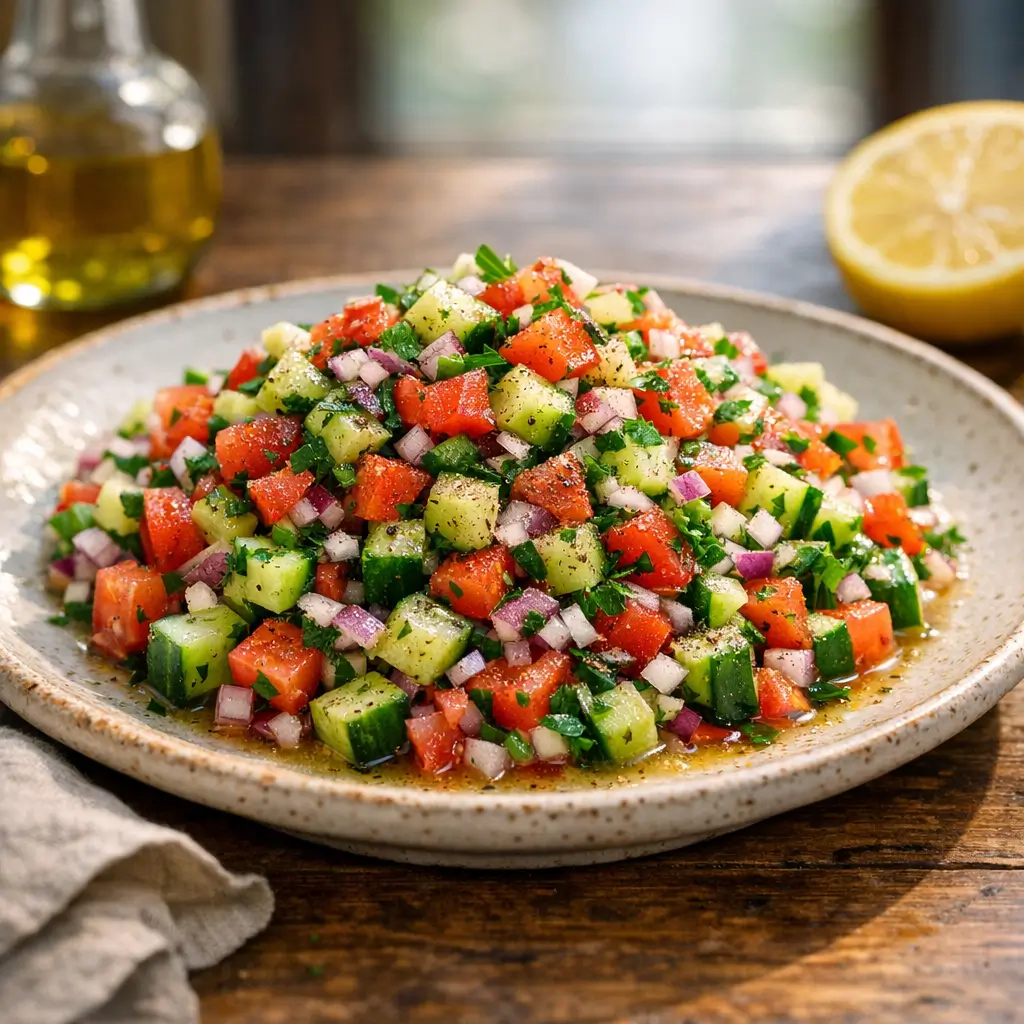
Texture is crisp‑meets‑juicy: snappy cucumbers, tender tomato pieces, and a little bite from onion. Don’t chase perfect cubes; neat, small dice is enough.
Flavor skews tangy and herbal with a clean finish. Dried mint stays subtle and aromatic rather than mint‑forward like a mojito. Sumac adds lemony depth if you have it but isn’t required.
Expect a small pool of rosy dressing at the bottom of the bowl. Some cooks consider that a feature — spoon it over rice or swipe with flatbread.
Tools and ingredient differences will change the result slightly. A very sharp knife gives cleaner edges and less liquid loss. English cucumbers are more watery than Persian; seeding them helps. Lemon and lime have different aromatic profiles; verjuice is milder and fruitier. Olive oil adds body but softens crunch faster — skipping it yields a lighter, sharper salad.
WAYS TO CHANGE IT UP
-
Keep it vegan and extra‑light: Omit the olive oil and use verjuice or lemon only. The trade‑off is a leaner mouthfeel but a more pronounced, refreshing tang. If the acid tastes too sharp, whisk in a teaspoon of cold water to soften it.
-
Make it spicier or milder: For gentle heat, add 1/2 finely diced jalapeño or 1 small serrano; seeds in for extra kick, seeds out for less. To go milder, swap red onion for shallot and soak it 5 minutes in ice water before adding. The texture stays crisp either way.
-
Faster, lunch‑box version: Keep the dice a touch larger (3/8‑inch/1 cm) so it goes quicker, and use cherry tomatoes (halved) to skip seeding. Dress right before eating to keep crunch. The trade‑off is slightly less uniform bites but big, fresh flavor.
-
Herb‑forward riff: Use 2 tbsp each chopped fresh mint and parsley in place of dried mint. It will taste greener and more aromatic, though the fresh mint can crowd the other flavors if you add too much. Start modestly.
-
Pomegranate sparkle (festive twist): Fold in 1/4 cup (40 g) pomegranate arils. They add sweetness and pop, which some love with grilled meats. The salad veers a bit from the classic profile but stays balanced if you hold the olive oil.
SERVING AND STORAGE
Serve as a bright counterpoint to grilled kebabs, saffron chicken, salmon, or rich stews. It’s also excellent with plain rice or in wraps with falafel or roasted vegetables.
Try scattering it over warm flatbreads with a drizzle of tahini, or serve alongside creamy dips to contrast textures. That little pool of dressing at the bottom? Spoon it over rice or mop it up with bread.
Storage: Refrigerate leftovers in a lidded container up to 2 days. The vegetables will soften and release more liquid over time. Before serving again, stir, taste, and re‑season with a pinch of salt and a squeeze of lemon. Do not freeze. Reheating isn’t appropriate for this salad.
CULTURAL CONTEXT
Shirazi Salad takes its name from the city of Shiraz in southern Iran and is widely served as a fresh side with rice dishes and kebabs. Many versions use verjuice (ab‑ghooreh), the gently acidic juice of unripe grapes, in place of or alongside citrus. For readers curious about the city’s background, this overview of Shiraz’s history from the Encyclopaedia Iranica offers useful context: Shiraz: History to 1940. To learn more about verjuice as an ingredient, see this concise entry: Verjuice.
This salad’s small‑dice technique and simple dressing place it among a family of tomato‑cucumber‑onion salads found across the region, each with its own name and nuance. Ingredients vary by household and what’s in season, but the goal is the same: something cool, crisp, and bright that complements richer foods.
COMMON QUESTIONS AND TROUBLESHOOTING
1) My salad turned watery. What did I do wrong?
- Likely nothing. Salt and acid naturally draw out liquid from tomatoes and cucumbers. If you want it less juicy, seed extra‑watery tomatoes, scrape large cucumber seeds, and either drain a little liquid after the 10‑minute salt rest or dress right before serving. Expect some pooling at the bottom; many serve that over rice.
2) I can’t find verjuice. What should I use, and how much?
- Fresh lemon or lime juice is a great stand‑in. Start with 2 tbsp (30 ml), taste, then add up to 1 more tablespoon if needed. If using a strong vinegar (like red wine vinegar), begin with 1 tbsp (15 ml) and dilute with 1 tbsp water to avoid harshness. Brands vary in strength, so taste and adjust.
3) Dried mint vs. fresh — which is better here?
- Dried mint gives a subtle, classic aroma and disperses evenly in the dressing. Fresh mint tastes brighter and more intense; chop very fine and use 2–3 tbsp, then taste before adding more. If the salad starts tasting like mint tea, you’ve added too much.
4) The onion tastes too sharp. How can I mellow it?
- Rinse the diced onion in a fine sieve, then soak 5 minutes in ice water. Drain and pat dry before adding. You can also swap in a small shallot for a milder bite.
5) Can I make Shirazi Salad ahead?
- You can chop the vegetables up to 12 hours ahead and refrigerate them separately. Mix and dress 15–30 minutes before serving for best flavor and texture. If you fully mix it earlier, it will soften but still taste good; re‑season before serving.
6) How small should I dice the vegetables?
- About 1/4‑inch (6 mm) gives the best balance. Larger dice eat chunkier and can separate in the bowl; very tiny dice can get mushy quickly once dressed.
7) Do I have to use olive oil?
- No. Many households skip the oil entirely for an ultra‑light salad. Oil adds a silkier mouthfeel but softens the crunch faster. If you add it, keep it to 1–2 tbsp and dress closer to serving time.
8) Is sumac essential?
- It’s optional. Sumac contributes a lemony, wine‑like tartness that complements the citrus or verjuice. If you don’t have it, the salad will still be bright; you can add an extra squeeze of lemon at the end.
CONCLUSION
This is the kind of recipe that rewards good chopping and fresh produce more than fancy gear. Keep the dice small, season thoughtfully, and adjust to your palate — a little more lemon here, a pinch more mint there. If you try it, leave a comment with what you served it alongside, any swaps you made, and how it worked for you. Your notes help other home cooks make it their own.



Leave a Reply