
If you’ve scrolled TikTok or Instagram lately, you’ve likely seen Japanese Cheesecake made the easy way: thick yogurt and cookies, tucked into the fridge until dessert. The result is spoonable, tangy, and surprisingly cheesecake‑like without turning on the oven.
This version leans into that simplicity while giving you practical sizing, flavor options, and make‑ahead guidance. It’s ideal for weeknights, school events, or anytime you want a sweet finish with almost no prep.
Expect a cool, creamy texture, gentle tang from Greek yogurt or skyr, and a buttery cookie backbone. It isn’t a sliceable bakery cheesecake—it’s a chilled, parfait‑style treat that invites toppings and tweaks.
INGREDIENTS
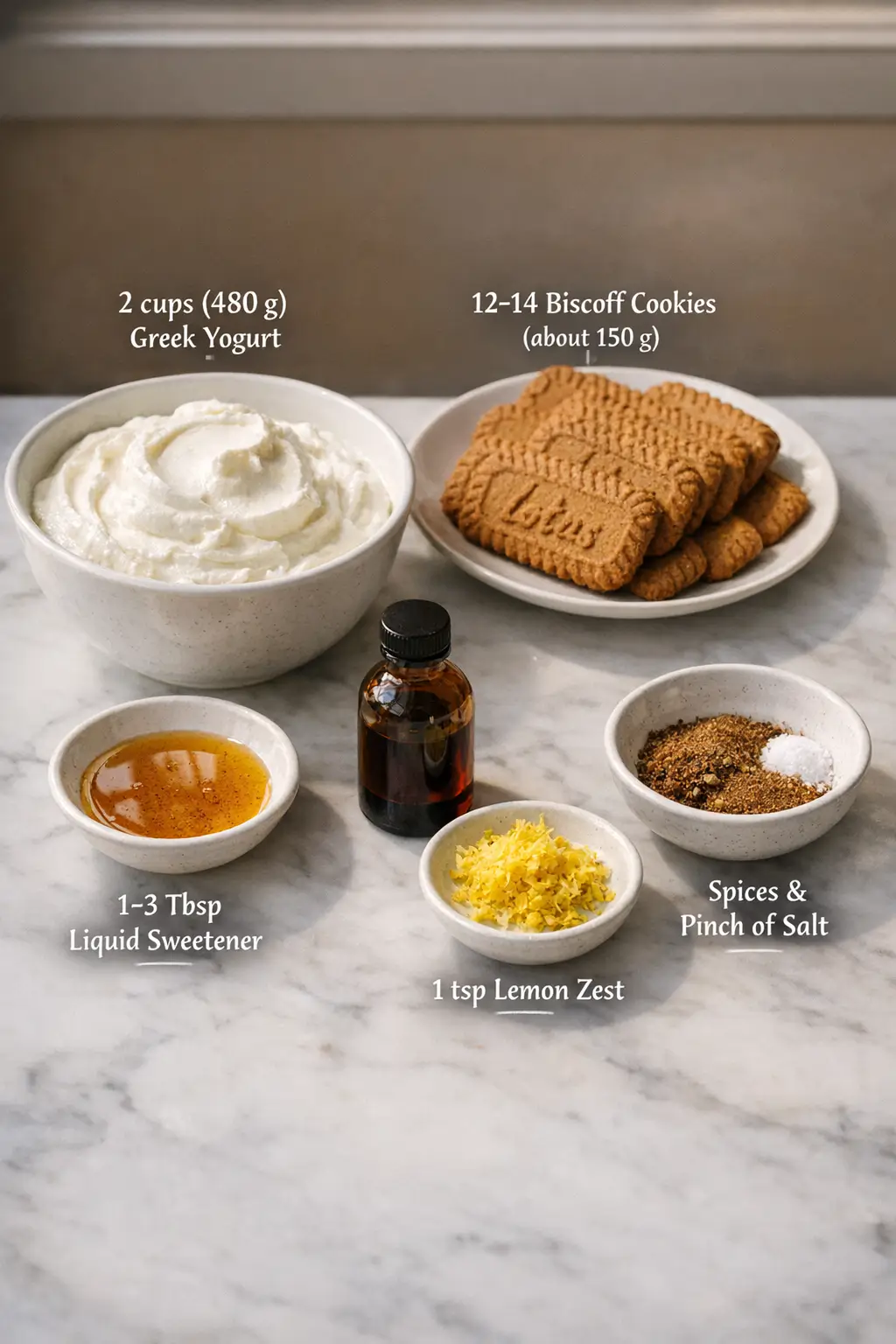
- 2 cups (480 g) thick plain Greek yogurt or skyr — the base; whole‑milk works best for creaminess.
Use vanilla yogurt for a sweeter, dessert‑forward flavor; strain thinner yogurts through a fine strainer or cheesecloth for 30–60 minutes to thicken. - 12–14 Biscoff cookies (about 150 g) or 8 full graham cracker sheets (about 120 g) — cookie flavor drives the “cheesecake” vibe.
Shortbread, speculoos, Nilla wafers, or gluten‑free cookies also work. - 1–3 tablespoons (15–45 ml) liquid sweetener, optional — honey, maple syrup, or agave to taste.
Or use 2–3 teaspoons (8–12 g) powdered sugar for a subtler sweetness. - 1 teaspoon vanilla extract, optional — rounds out the dairy tang.
Almond extract is stronger; start with 1/4 teaspoon (1 ml). - 1 teaspoon finely grated lemon zest, optional — adds classic cheesecake brightness.
A few drops of bottled lemon extract also works; it’s potent. - Pinch of fine salt — balances sweetness and boosts cookie flavor.
Ingredient notes and why they matter:
- Thick yogurt or skyr is key. Brands that list gums/starches may taste fine but can weep more after chilling. Straining fixes this quickly. Reputable no‑bake yogurt cheesecakes use strained yogurt for structure.
- Cookie choice sets the profile. Biscoff gives warm spice and caramel notes; grahams taste familiar and mild; chocolate wafers make it more decadent.
- Sweetener is optional because cookies already bring sugar. Add it only if you want a more dessert‑like finish.
STEP-BY-STEP INSTRUCTIONS
- Prep the yogurt (2 minutes, plus optional straining).
- In a medium bowl, whisk the yogurt with the salt, vanilla, lemon zest, and sweetener if using. Taste and adjust; it should be pleasantly tangy with just enough sweetness.
- If the yogurt seems loose (it slides off the spoon quickly), line a sieve with a coffee filter or paper towel, set over a bowl, and chill 30–60 minutes. You’re aiming for a thick, creamy spoonable texture.
- Decide your build: quick cups or a shareable pan.
- Cups give tidy portions for 2–4 people and chill fast.
- A small pan (loaf pan) looks nice for the table but will be scoopable, not sliceable, unless you add a gelling agent (see Variations).
- For quick dessert cups (recommended for first‑timers).
- Spoon 2–3 tablespoons of yogurt into 4 small glasses or bowls.
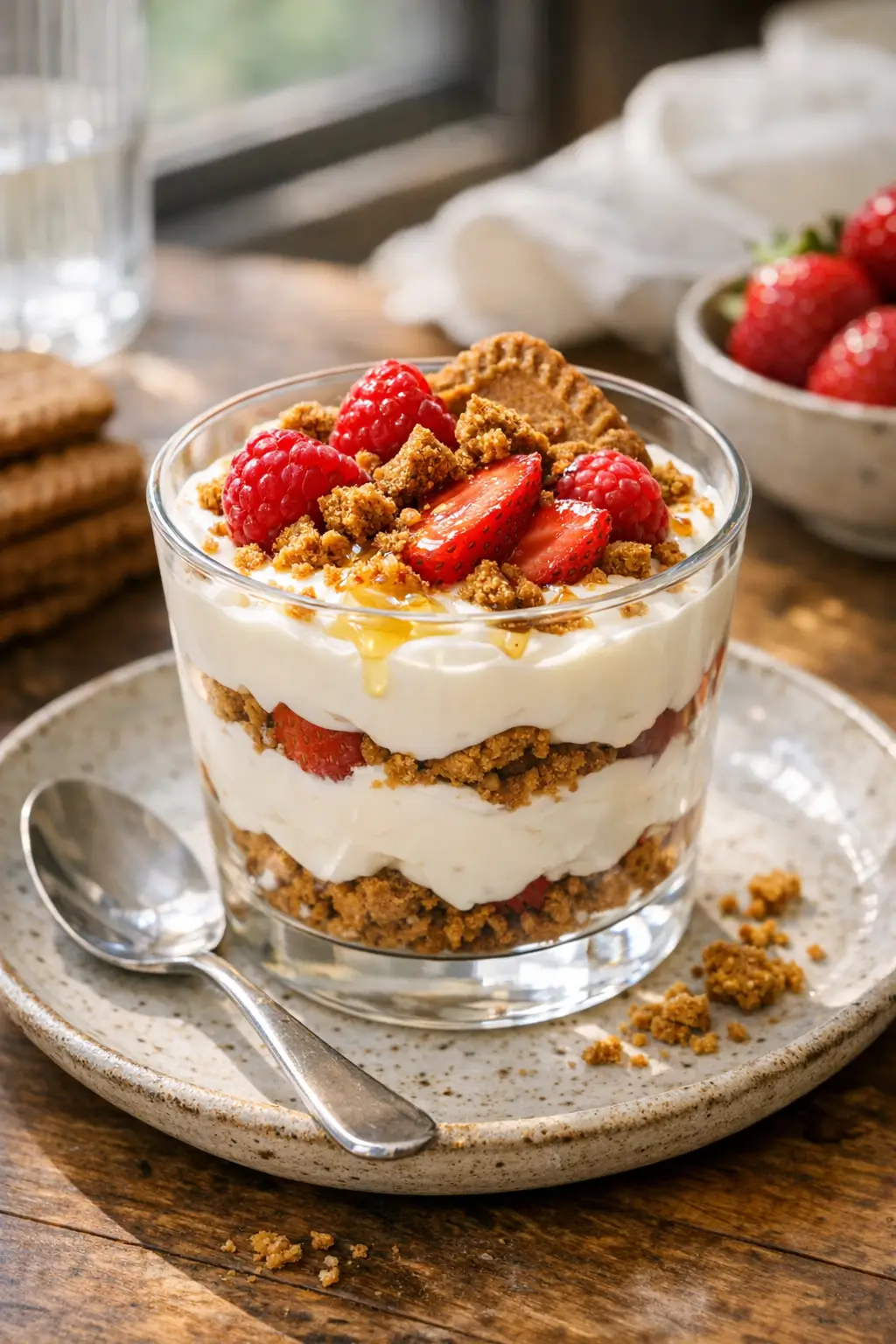
- Nestle 2–3 whole cookies vertically into each cup so they’re half‑submerged. You can also roughly crush the cookies by hand for a crumbly layer.
- Cover the cookies with more yogurt, then top with a few cookie chunks for texture.
- For a shareable pan (loaf‑pan parfait).
- Line an 8.5×4.5‑inch (22×11.5 cm) loaf pan with parchment, leaving overhang for easy lifting.
- Make coarse cookie crumbs by hand (you want some bigger bits for bite). Scatter a loose 1/2‑inch (1.25 cm) layer in the bottom—no butter needed for this trend; the goal is soft, not crisp.
- Add a thick layer of yogurt (about half), more crumbs, then the remaining yogurt. Finish with a handful of crushed cookies on top.
- Chill until cookies soften and flavors mingle.
- Cover and refrigerate at least 6 hours; 8–12 hours (overnight) gives a creamier, cheesecake‑like bite. Thicker yogurts set faster; thinner yogurts need more time.
- Don’t freeze; freezing destabilizes yogurt and can make it grainy or icy.
- Serve with a light hand.
- For cups: eat straight from the cup, spooning through softened cookies.
- For the loaf pan: lift with parchment and spoon onto plates. Expect soft mounds, not sharp slices.
- Add optional toppings.
- Fresh berries, a drizzle of honey or maple syrup, shaved chocolate, or a few toasted nuts complement the tang. Keep toppings modest so the yogurt stays the star.
- Clean up and store.
- Cover extras and refrigerate up to 3 days. Cookies will continue to soften. If you used very sweet cookies and no added sweetener, the balance tends to be best on day 2.
Kitchen notes grounded in testing and reliable methods:
- Strained dairy is the backbone of many respected no‑bake cheesecakes. Using thick Greek yogurt or skyr gives that same tangy lift while staying light.
- Cookie‑crumb layers are standard in classic no‑bake cheesecakes; here they soften into a creamy, pudding‑like base rather than forming a firm crust.
- Chilling time is a function of yogurt thickness, fridge temp (many home fridges sit between 36–40°F / 2–4°C), and how packed your container is. Deeper pans need a longer rest.
WHAT TO EXPECT
- Texture: creamy and spoonable, like thick pudding or soft‑set mousse. Cookies transform from crisp to tender, with a few pleasant nubby bits if you left some chunks. Don’t expect clean wedges unless you introduce gelatin or agar.
- Flavor: gentle tang from the yogurt, mellowed by vanilla and lemon if used. Cookie choice matters—Biscoff delivers spice and caramel, grahams read nostalgic and toasty. A small pinch of salt keeps it from tasting flat.
- Variability: different yogurts behave differently. Ultra‑thick yogurts (skyr, “Greek‑style” that’s heavily strained) produce a sturdier set; low‑fat or stabilized yogurts may weep slightly on day 2–3. Quick whisking before assembly and proper chilling helps.
WAYS TO CHANGE IT UP
-
Vegetarian/vegan adapted:
-
Use a thick plant‑based yogurt (coconut or almond) that’s unsweetened and strained to remove excess whey‑like liquid. Choose a vegan cookie. Expect a looser set and stronger coconut notes. For more structure, dissolve 1/2–1 teaspoon (1.5–3 g) agar‑agar powder in 2 tablespoons (30 ml) boiling water, cool until just warm, then whisk into the yogurt before layering. Agar sets firmer than gelatin and needs boiling to activate.
-
Spicier or milder:
-
For extra warmth, add 1/4–1/2 teaspoon ground cinnamon or cardamom to the yogurt, or use gingersnaps instead of grahams. For milder flavor, stick with plain grahams or vanilla wafers and skip the lemon zest.
-
Faster or simplified:
-
Make single‑serve tubs by opening a 5.3–7 oz (150–200 g) cup of Greek yogurt or skyr, sliding 2–3 Biscoff cookies straight in, and chilling the closed cup 4–6 hours. It’s the viral “dip‑and‑chill” approach—zero dishes, same flavor idea. A drizzle of maple before serving adds a dessert edge.
Trade‑offs to know:
- Plant‑based yogurts can be delightful, but wateriness varies. Strain well to avoid a soupy result.
- Agar or gelatin creates sliceable structure but reduces the soft, pudding‑like texture that makes this trend so effortless.
- More sweetener makes it taste closer to a classic dessert but can overshadow yogurt’s tang.
SERVING AND STORAGE
- Serve chilled, not icy cold—5 minutes at room temp softens the edges and boosts aroma.
- Pairings: fresh berries or sliced stone fruit, a spoon of berry compote, shaved dark chocolate, chopped pistachios, or a thin honey drizzle. Coffee or green tea both work well alongside.
- Storage: cover and refrigerate up to 3 days. Expect more cookie softness by day 2.
- Reheating: none. If some liquid collects, gently fold it back in or spoon it off; it’s normal whey separation.
CULTURAL CONTEXT — Japanese Cheesecake
In Japan, the term “rare cheesecake” refers to a no‑bake style that sets in the refrigerator, often with gelatin and sometimes with yogurt added for lightness. The famous fluffy, oven‑baked version is a different dessert altogether. For a concise overview of the soufflé‑style cheesecake so many people know by name, see the neutral summary at Wikipedia’s Japanese cheesecake entry.
This 2‑ingredient trend borrows the idea that tangy, strained dairy plus a cookie base reads as “cheesecake,” but it skips eggs, cream cheese, and gelling agents. Think of it as a quick, fridge‑set cousin inspired by broader Japanese cheesecake culture rather than a traditional recipe.
COMMON QUESTIONS AND TROUBLESHOOTING
1) It didn’t set—why is it runny?
Two common culprits: yogurt that isn’t thick enough or not enough chill time. Strain your yogurt 30–60 minutes to thicken, and chill at least 8 hours. If your kitchen is warm and your fridge is packed, budget 12 hours. Avoid stirring vigorously right before serving; it can loosen the texture.
2) My cookies turned mushy—did I do something wrong?
Softening is the point, but you can keep more texture by leaving some cookies in larger chunks, adding a fresh crumble on top just before serving, or layering cookies closer to serving time.
3) Can I make it sliceable for a party?
Yes, but it won’t be strictly 2‑ingredient anymore. Whisk 1 teaspoon (3 g) powdered gelatin into 2 tablespoons (30 ml) cold water to bloom, microwave until melted (about 5–10 seconds), cool to warm, then whisk into the yogurt before layering. Chill 8–12 hours in a parchment‑lined loaf pan. The texture will be firmer and less pudding‑like.
4) Will low‑fat yogurt work?
It works, but expect a slightly looser texture and more tang. Whole‑milk Greek yogurt or skyr gives the creamiest result. If using low‑fat, straining becomes even more helpful.
5) Can I use flavored yogurt?
Absolutely. Vanilla, lemon, or strawberry are easy wins. Most flavored yogurts are sweeter, so you can skip added sweeteners. If very sweet, add a bit more plain yogurt to balance.
6) Is this safe to make ahead?
Yes—assemble up to 24 hours ahead. It stays good up to 3 days refrigerated, though cookies get softer over time. For best contrast, save a handful of cookie crumbs to sprinkle just before serving.
7) Which cookies work best?
Biscoff/speculoos bring warm spice that many people associate with “cheesecake crust.” Graham crackers are classic and milder. Shortbread, gingersnaps, and chocolate wafers are great alternatives. If using gluten‑free cookies, check sweetness; some blends are very sugary, so you may want unsweetened yogurt.
8) Can I make it without any added sugar?
Yes. The cookies supply plenty of sweetness for many palates. Taste your yogurt mixture first; if it’s not dessert‑sweet to you, add a teaspoon of honey or maple and retaste.
9) How do I scale this for two people?
Use 1 cup (240 g) yogurt and 6–7 Biscoff cookies or 4 graham sheets. Build two cups and chill as directed.
10) My yogurt separated on day 2—what now?
A small amount of liquid (whey) is normal. Gently fold it back in to re‑emulsify, or spoon it off for a thicker bite. Next time, strain the yogurt a little longer or choose an extra‑thick brand.
CONCLUSION
This is the kind of dessert that rewards a light touch and a good chill. Keep the base simple—thick yogurt and cookies—then tailor sweetness and toppings to your crowd. If you try the pan version, the agar/gelatin add‑on, or a favorite cookie swap, share what worked in the comments so other home cooks can learn from your tweaks.



Leave a Reply