
You’re looking at a 20-minute path to big flavor. Gochujang Butter Salmon brings a sweet‑spicy, lightly smoky glaze that broils to a caramelized finish while the fish stays tender and flaky. It’s a weeknight main you’ll find in Korean‑inspired menus and modern restaurants, yet it works just as well for busy parents and new cooks.
The payoff is in the balance: buttery richness meets the deep chile‑fermented heat of gochujang, plus a little honey and rice wine or vinegar for shine. Expect charred edges, a glossy glaze, and a clean, satisfying heat rather than a blow‑torch burn. If you’ve got a reliable broiler and a small bowl, you’re set. This recipe suits anyone who likes straightforward steps, minimal dishes, and big results.
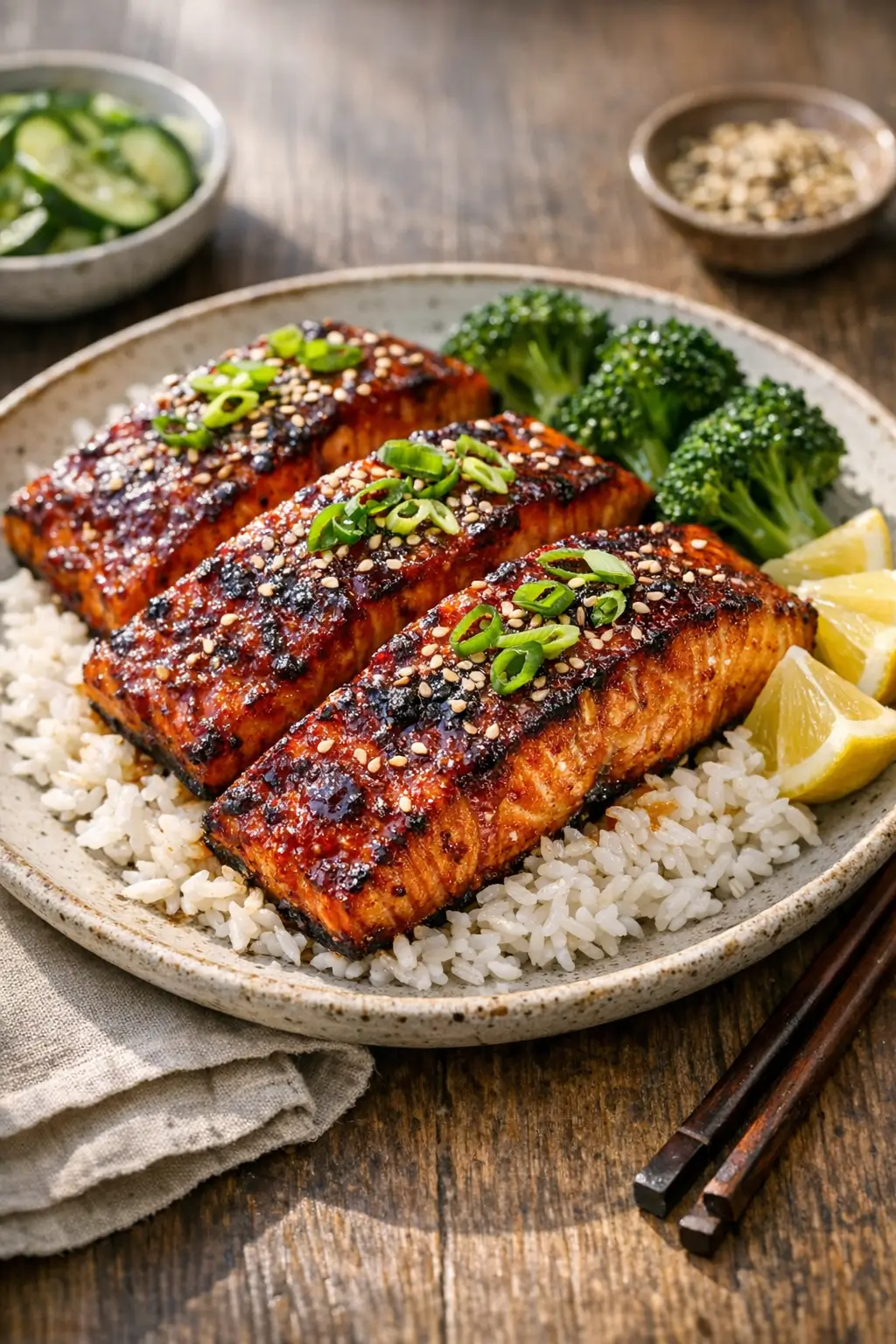
Serve it on rice with quick veg and dinner is done.
INGREDIENTS
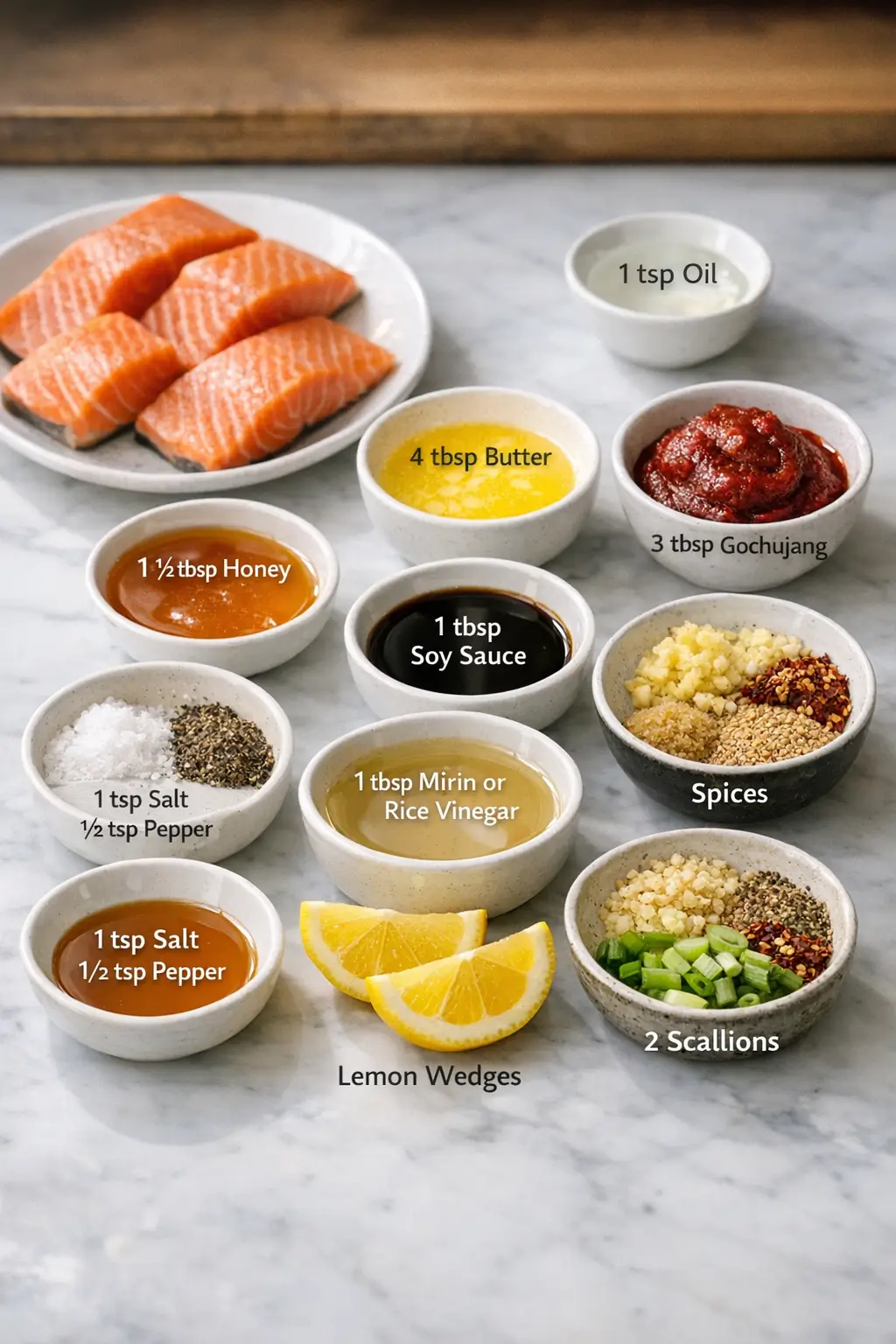
- Salmon fillets, skin-on or skinless, about 5–6 oz (140–170 g) each — 4 fillets
- Kosher salt and freshly ground black pepper — about 1 tsp (6 g) salt and 1/2 tsp (2 g) pepper, to season
- Neutral oil for the pan (avocado, grapeseed, or canola) — 1 tsp (5 ml)
Glaze
- Unsalted butter, melted but not hot — 4 tbsp (56 g)
- Gochujang (Korean fermented red chile paste) — 3 tbsp (45 g)
- Soy sauce (regular or low‑sodium) — 1 tbsp (15 ml)
- Honey — 1 1/2 tbsp (22 g)
Sub: light brown sugar, 1 1/2 tbsp (18 g). - Mirin or unseasoned rice vinegar — 1 tbsp (15 ml)
If using vinegar, add an extra 1/2 tsp (2–3 ml) honey to balance. - Toasted sesame oil — 1 tsp (5 ml)
- Garlic, finely grated — 1 small clove
- Fresh ginger, finely grated — 1 tsp (5 g)
Optional but recommended for brightness.
To finish
- Scallions, thinly sliced — 2
- Toasted sesame seeds — 2 tsp (6 g)
- Lemon or lime wedges — 4
Optional squeeze cuts the richness.
STEP-BY-STEP INSTRUCTIONS
-
Preheat the broiler. Place an oven rack 5–6 inches (12–15 cm) below the broiler element. Line a sturdy sheet pan with foil and lightly oil it. Avoid parchment; it scorches under a broiler.
-
Mix the glaze. In a small bowl, whisk the melted butter, gochujang, soy sauce, honey, mirin or rice vinegar, sesame oil, garlic, and ginger until smooth and glossy. Reserve 1 tablespoon of the glaze for finishing.
-
Dry and season the fish. Pat the salmon very dry on all sides so the surface can caramelize. Sprinkle evenly with salt and pepper. If the fillets are tapered, tuck the thin tail under for even cooking.
-
First broil, unglazed (2–3 minutes). Set the salmon skin‑side down on the pan. Broil 2–3 minutes to start the cooking and reduce surface moisture. This step prevents the sweet glaze from scorching too early.
-
Glaze and finish under the broiler (3–6 minutes). Pull the pan out and brush a generous layer of glaze over the tops and sides. Return to the broiler. Cook until the edges are lightly charred, the glaze is bubbling, and the thickest part flakes when nudged with a fork:
-
3–4 minutes for 3/4‑inch (2 cm) fillets
-
5–6 minutes for 1‑inch (2.5 cm) fillets
Visual cues matter more than the clock. If the glaze darkens too fast, move the pan to a lower rack or switch the broiler to low, if available.
-
Check doneness. For medium, look for a center that separates into moist flakes and registers about 125–130°F (52–54°C) on an instant‑read thermometer. For fully cooked to USDA guidance, go to 145°F (63°C). Either way, pull the pan just before your target; carryover heat finishes the job.
-
Rest and finish. Let the salmon rest 2–3 minutes on the pan. Brush with the reserved glaze for fresh sheen, then top with scallions and sesame seeds. Add a squeeze of lemon or lime at the table.
Safeguards and speed bumps to watch for
- Sugar in the glaze means things move quickly. Don’t walk away from the broiler; check every 60–90 seconds.
- If your oven runs hot, start with the rack 7 inches (18 cm) from the element to reduce scorching.
- Skin-on fillets are easiest to handle. After cooking, slide a spatula between flesh and skin; the skin will release and stay on the foil.
- Cold butter can seize when whisked into cold gochujang. Melt the butter gently and let it cool a minute before mixing so the glaze stays smooth.
WHAT TO EXPECT (Gochujang Butter Salmon)
Texture: Expect a sticky, lacquered top with lightly charred spots and a tender, flaky interior. The butter keeps the flesh plush, even if your timing isn’t perfect. Edges will caramelize first; the center should stay juicy.
Flavor: Buttery richness meets gochujang’s savory heat. Honey rounds the edges without turning the dish sugary, while soy and sesame add salt and nuttiness. Mirin or rice vinegar supplies a clean finish so the glaze doesn’t feel heavy.
Variability: Store‑bought gochujang varies in heat and sweetness by brand. If your tub leans hot, decrease gochujang by 1 teaspoon next time or add 1 teaspoon extra honey. Wild salmon (leaner) cooks a bit faster and tastes more minerally; farmed fillets (fattier) feel silkier and handle a minute longer under the broiler.
WAYS TO CHANGE IT UP
-
Vegetarian or vegan: Swap salmon for extra‑firm tofu planks (press 20 minutes) or 1‑inch‑thick cauliflower “steaks.” Use plant‑based butter. Broil the tofu 3 minutes unglazed, glaze, then broil 4–6 minutes more until blistered. Cauliflower takes longer; par‑roast at 425°F (220°C) for 12–15 minutes before glazing and broiling.
-
Spicier or milder: For more heat, add 1/2–1 tsp gochugaru (Korean red pepper flakes) or a pinch of crushed red pepper to the glaze. For less heat, reduce gochujang by 1 tbsp and increase butter by 1 tbsp, or add 1 tbsp mayonnaise to mellow the spice and add gloss.
-
Faster or simpler: Make a compound butter in advance (softened butter mashed with gochujang, soy, honey, and a touch of sesame oil). Smear 2–3 tsp on each fillet and roast at 425°F (220°C) for 8–12 minutes; broil the last minute for color. You’ll get fewer charred edges but a very tender result with almost no whisking.
-
Air fryer option: Air‑fry at 400°F (205°C) for 7–9 minutes, brushing glaze at the halfway point. Line the basket with foil and poke a few holes to catch drips. Watch for smoking—sweet glazes can scorch in some models if placed too close to the heating element.
Trade‑offs: More butter = silkier mouthfeel but a looser glaze. More honey = faster browning and stickier finish; adjust rack height accordingly.
SERVING AND STORAGE
Serving ideas
- Spoon over hot rice or barley. Add a side of simply dressed cucumbers or steamed broccoli.
- Make bowls with kimchi, avocado, and roasted sweet potatoes. The tangy kimchi offsets the buttery glaze.
- For crunch, serve with a quick sesame‑cabbage slaw or blistered green beans.
What pairs well
- Acidic sides: cucumber salad, pickled radishes, or a citrusy greens salad.
- Clean, cool toppings: sliced scallions, fresh cilantro, or thinly sliced raw radish.
- Starches: sushi rice, jasmine rice, or buttered noodles.
Storage and reheating
- Refrigerate leftovers in a covered container for up to 2 days. Fish dries out as it waits; plan to enjoy it soon.
- Reheat gently: 275°F (135°C) oven for 8–10 minutes, or microwave at 50% power in 30‑second bursts just until warm. High heat makes salmon chalky.
- Leftover ideas: Flake cold salmon into rice bowls, salads, or fried rice. It’s also great in nori wraps with cucumber.
- Freezing cooked salmon isn’t ideal here; the glaze can weep and the fish can turn mealy. The glaze itself can be refrigerated for 1 week or frozen for up to 3 months.
CULTURAL CONTEXT
Gochujang is part of Korea’s family of fermented sauces known as jang, which also includes doenjang (soybean paste) and ganjang (soy sauce). These sauces are central to daily cooking and have deep roots in home fermentation. In 2024, the practice of jang‑making—preparing, fermenting, aging, and using these sauces—was inscribed on UNESCO’s Representative List of the Intangible Cultural Heritage of Humanity. Read more on UNESCO’s page for “Knowledge, beliefs and practices related to jang‑making.” UNESCO listing.
For an accessible overview of how gochujang developed and spread, the Korean Cultural Center’s webzine offers a non‑recipe explainer on its history and storage, including the role of onggi (earthenware jars) in fermentation. Korean Cultural Center article.
COMMON QUESTIONS AND TROUBLESHOOTING
Q: My glaze started to burn before the salmon was done. What happened?
A: The rack may have been too close to the broiler or your glaze layer was very thick. Move the rack one notch lower or switch the broiler to low, and apply a thinner first coat. You can also broil unglazed for 3 minutes before brushing to get ahead of the sugars.
Q: Can I use brown sugar instead of honey?
A: Yes. Use the same amount, pack it lightly, and whisk until dissolved. Brown sugar browns a touch faster than honey, so keep the pan an inch farther from the heat.
Q: I only have rice vinegar, not mirin. Is that okay?
A: Absolutely. Start with the listed amount and add 1/2 teaspoon extra honey to balance the sharper acidity. Mirin contains sugar, so vinegar needs a bit of help to mimic it.
Q: My butter separated in the bowl. How do I fix it?
A: The butter was likely too hot or the gochujang too cold. Let both come to room temperature for a minute, then whisk vigorously. A few drops of warm water help re‑emulsify.
Q: Can I cook this from frozen salmon?
A: Thaw first for best texture. If you must cook from frozen, roast at 400°F (205°C) until the surface dries and the center is nearly cooked, then add glaze and broil briefly to caramelize. Timing is less predictable and the glaze won’t cling as well.
Q: Skin on or off?
A: Either works. Skin‑on helps keep moisture in and makes it easy to lift the fillets off the stuck skin after broiling.
Q: How do I avoid overcooking?
A: Use an instant‑read thermometer and pull the fish 2–3°F (1–2°C) shy of your target. Rest 2–3 minutes. Thinner tail pieces cook faster—consider removing them a minute early.
Q: What if my gochujang is very spicy?
A: Reduce gochujang by 1 tablespoon and increase butter by 1 tablespoon. You can also add 1–2 teaspoons of mayonnaise to soften the heat without making the glaze runny.
CONCLUSION
When you give this a try, leave a comment with your timing, broiler distance, and the brand of gochujang you used—details help other home cooks. If you tweaked the heat, swapped in tofu, or tried the air fryer method, share that too. Your notes make the recipe better for everyone.



Leave a Reply