
If dinner needs to happen fast but still taste like you planned it, this Thai Basil Chicken delivers. In about 15–20 minutes, ground chicken is stir‑fried with garlic and chilies, tossed in a savory mix of soy and oyster sauce, then finished with a handful of fragrant basil. Expect a glossy, saucy stir‑fry that’s bold, a little spicy, and deeply satisfying over hot jasmine rice.
It’s the kind of one-pan meal you’ll see at Thai street stalls and casual spots, built for speed and flavor. It works for busy weeknights, or whenever you want a quick, saucy rice topper. If you’re a confident beginner or an experienced home cook, the steps are straightforward and the cues are sensory: sizzling aromatics, chicken that smells toasty, basil just wilted.
INGREDIENTS
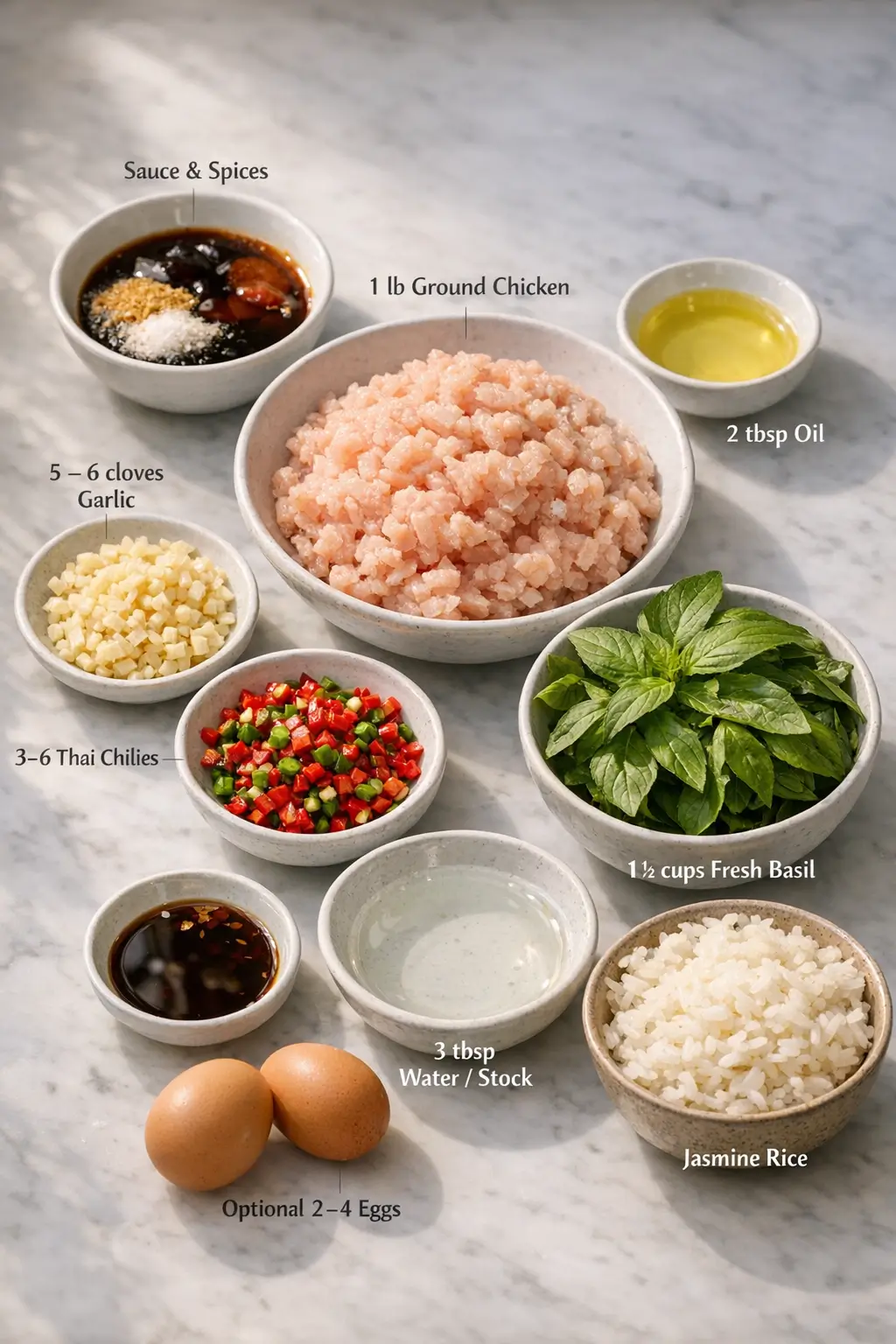
- 1 lb (450 g) ground chicken (thigh preferred for juiciness; breast works too)
- 2 tbsp (30 ml) neutral oil (canola, peanut, or vegetable)
- 5–6 garlic cloves (20 g), finely chopped
- 3–6 fresh Thai bird’s eye chilies, finely chopped (use 1–2 for mild; 3–4 serrano or 1 red Fresno works for a gentler heat) – substitute jalapeño for a milder U.S. supermarket option
- 1 tbsp (15 ml) oyster sauce
- 1 tbsp (15 ml) light soy sauce – tamari for gluten‑free
- 2 tsp (10 ml) fish sauce – optional for extra depth; or add 1 tsp soy if avoiding fish sauce
- 1 tsp (5 ml) dark soy sauce – optional; adds color and a touch of sweetness
- 1–2 tsp (4–8 g) sugar – balances salinity; start with 1 tsp and adjust
- 3 tbsp (45 ml) water or unsalted chicken stock – to loosen and help the sauce coat
- 1½ packed cups (15–20 g) fresh basil leaves (holy basil if you can find it; Thai basil or regular sweet basil are fine)
- Steamed jasmine rice, for serving
- Optional but classic: 2–4 eggs for frying
Notes and purpose:
- Oyster sauce and soy sauce supply most of the umami and salt; fish sauce adds a savory, slightly funky edge.
- Water/stock helps the sauce glaze rather than burn; it evaporates quickly on high heat.
- Basil is stirred in off the heat so it stays bright and aromatic.
STEP-BY-STEP INSTRUCTIONS
-
Mix the sauce first. In a small bowl, stir together the oyster sauce, light soy, fish sauce (if using), dark soy (if using), sugar, and water/stock until the sugar dissolves. Set near the stove. This dish moves fast—having the sauce ready prevents burning the aromatics.
-
Prep the aromatics. Finely chop the garlic and chilies. If you prefer a smoother texture, pound them to a rough paste in a mortar and pestle. Wash and pick the basil leaves. Keep everything within reach.
-
Heat the pan. Place a carbon steel wok or a 12-inch skillet over high heat until very hot—30 to 90 seconds, depending on your burner. Add the oil and swirl; you should see thin ripples when it’s ready. Too cool and the chicken will steam.
-
Bloom the aromatics. Add the garlic and chilies. Stir-fry 20–30 seconds until fragrant and just starting to color at the edges. If they brown quickly or smell harsh, your heat is a touch high—splash in a tablespoon of water to cool things down.
-
Cook the chicken. Add the ground chicken in one layer. Let it sizzle undisturbed for 30 seconds to start browning, then stir-fry, breaking it into small crumbles. Cook until the pink is mostly gone and any liquid has reduced, 2–3 minutes. Look for small browned bits on the pan; those will enrich the sauce.
-
Sauce and glaze. Give the sauce a quick stir and pour it around the sides of the pan so it hits the heat first. Toss for 60–90 seconds, scraping up browned bits. The mixture should look glossy, not soupy. If it’s dry or sticky, add another splash of water; if it’s watery, keep the heat high and stir until it reduces.
-
Finish with basil. Turn off the heat, add the basil leaves, and toss just until wilted—10–20 seconds. Basil should look vibrant green, not dark and limp.
-
Optional crispy eggs. For the classic topping, heat 2–3 tablespoons oil in a small skillet over medium-high until shimmering. Crack in eggs and spoon hot oil over the whites until lacy and golden with runny yolks, 1–2 minutes. Season lightly.
-
Serve. Spoon the chicken over hot jasmine rice. Add the egg on top if using. Taste a bite; if you want more brightness, a squeeze of lime or a quick drizzle of chile‑fish‑sauce (prik nam pla) works well.
Timing notes:
- Burners vary. On strong gas, steps 5–7 may take 3–4 minutes total; on electric or induction, add 1–2 minutes. Always cook by sight and sound.
- Garlic burns fast. If you’re new to high-heat cooking, reduce the heat to medium-high during step 4.
WHAT TO EXPECT WITH THAI BASIL CHICKEN
Texture: Crumbly, juicy chicken in a sauce that clings rather than pools. The basil should be soft but not gray or mushy.
Flavor: Salty‑savory from soy and oyster sauce, balanced with a hint of sweetness and heat from chilies. Fish sauce, if used, adds depth without making the dish taste “fishy.”
Appearance: Medium brown, sometimes darker if using dark soy, with flecks of red/green chilies and bright green basil.
Variability:
- Soy and oyster sauce brands differ in salinity. Start with the lower end of sugar, then adjust at the end.
- Ground thigh tends to stay juicier than breast. If using breast, avoid overcooking and don’t skimp on the sauce.
- Wok vs. skillet: a wok evaporates liquid faster; in a skillet you might need 30–60 seconds more reduction.
WAYS TO CHANGE IT UP
-
Vegetarian/vegan option: Use crumbled extra‑firm tofu or a plant‑based ground. Swap fish sauce for more soy or a vegan “fish” sauce. Choose a vegan oyster‑style sauce. Expect a slightly looser texture because tofu releases more moisture; press it well and brown it longer.
-
Spicier or milder: For heat, Thai bird’s eye chilies deliver a sharp kick. For gentle heat, use Fresno or serrano and deseed. You can also replace part of the fresh chili with 1–2 teaspoons sambal oelek or chili‑garlic paste for convenience; add it with the aromatics. Red pepper flakes work in a pinch but taste more one‑note.
-
Faster and simplified: Buy pre‑chopped garlic or use a small food processor to blitz garlic and chilies. If you’re cooking for two, halve the chicken and keep full sauce amounts for extra glaze. A nonstick skillet can help beginners avoid sticking while they get used to high heat.
Trade‑offs:
- Non‑wok pans are easier to control but won’t sear quite as aggressively.
- Sweet basil is widely available and works, but the flavor is softer than holy basil or Thai basil. Increase the chili slightly if you want bolder character.
SERVING AND STORAGE
Serve over hot jasmine rice. A crispy fried egg on top is common and adds richness that softens the heat. Cool, crunchy sides like cucumber slices or a quick vinegar‑dressed slaw pair well.
If you like condiments, set out chile‑fish‑sauce (prik nam pla), chili flakes, and lime wedges. A light broth soup or blanched greens balances the salty stir‑fry.
Storage: Refrigerate leftovers in an airtight container for up to 3 days. Basil will darken but the dish still tastes great. Reheat quickly in a hot skillet with a splash of water; avoid microwaving too long or the chicken can toughen. Freezing isn’t ideal once basil is mixed in; if you plan to freeze, freeze the cooked chicken without basil and add fresh basil after reheating.
CULTURAL CONTEXT
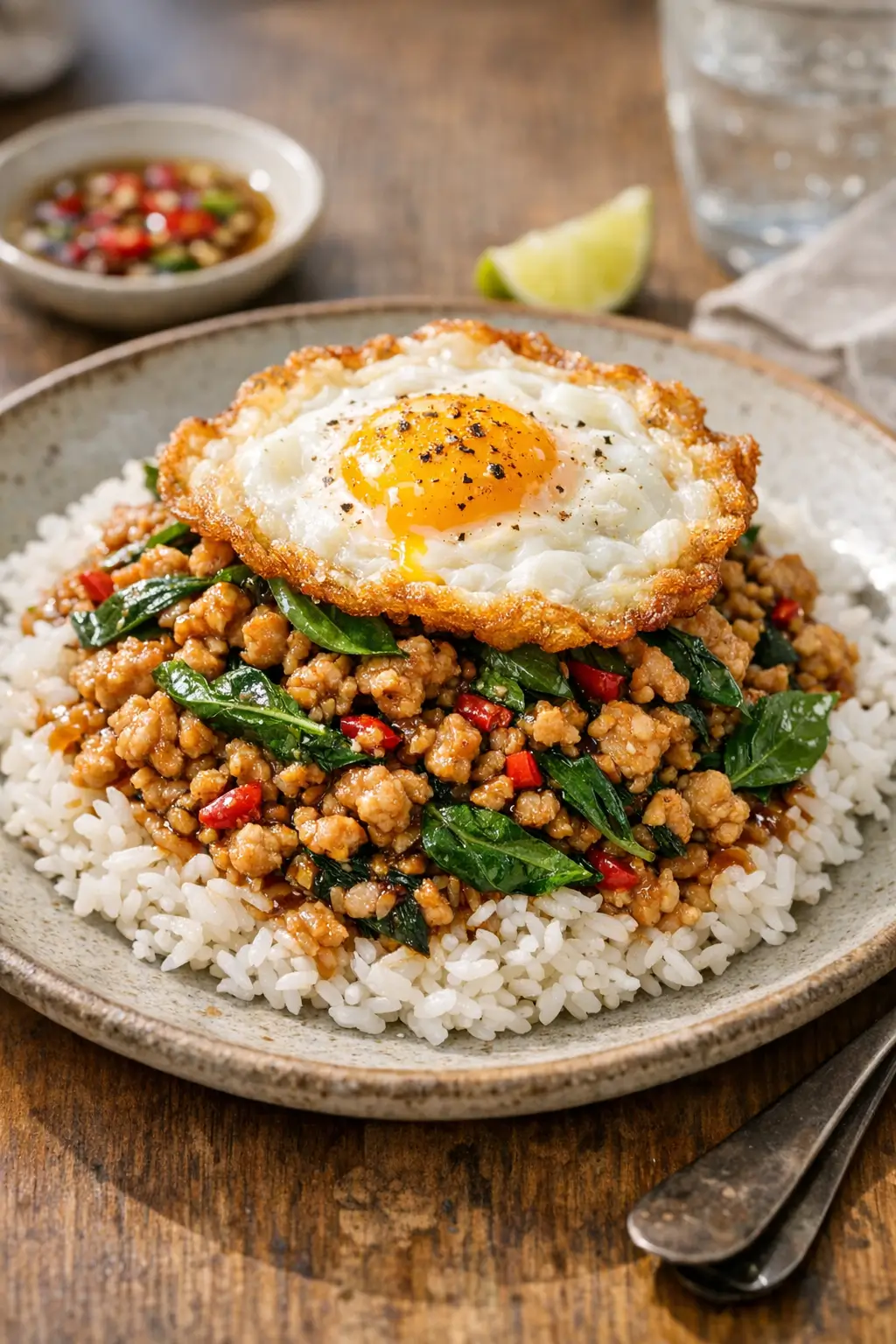
Pad krapow is a staple of modern Thai quick meals, commonly served over rice and often topped with a crispy fried egg. The name signals the defining herb—holy basil (krapow)—stir‑fried with a chosen protein. You’ll see it at street stalls and work‑day lunch counters because it cooks fast and travels well.
For readers curious about the herb itself, holy basil (Ocimum tenuiflorum) is documented by the Royal Botanic Gardens, Kew; their overview outlines how it’s distinct from sweet basil and where it grows. Learn more at Kew Science: Plants of the World Online.
To explore the role of street food in Thailand’s daily life, this article from a Thai cultural institution provides useful background: Thailand Foundation: Street Food.
COMMON QUESTIONS AND TROUBLESHOOTING
-
My stir-fry turned watery. What happened? Likely the pan wasn’t hot enough or it was crowded. Heat the pan thoroughly before adding oil. Let the chicken sear briefly, and reduce the sauce on high heat. In a skillet, cook 30–60 seconds longer to evaporate excess liquid.
-
Can I use sweet (Italian) basil? Yes. The dish will be softer and less peppery than with holy basil or Thai basil, but still delicious. Add a little extra chili if you want to bump up the punch.
-
I don’t eat fish sauce. What’s a good substitute? Use extra soy sauce to replace the salt and add a small squeeze of lime at the end for brightness. Vegan “fish” sauces based on seaweed and mushroom are another option.
-
How spicy should it be? Heat is adjustable. Deseed chilies, use milder types, or cut the quantity. For more heat, add extra bird’s eye chilies or serve with chile‑fish‑sauce on the side.
-
My garlic burned—now it’s bitter. Can I save it? If it’s lightly golden, carry on. If it’s dark brown, start over. Next time, add a splash of water and drop the heat to medium‑high if the pan runs too hot.
-
Can I use ground turkey or pork? Yes. Ground pork cooks similarly and is very juicy. Ground turkey breast is lean; consider adding 1–2 teaspoons oil or a tablespoon of water while cooking to prevent dryness.
-
Is there a gluten‑free option? Use tamari (gluten‑free soy) and a gluten‑free oyster‑style sauce. Check fish sauce labels—many are naturally gluten‑free.
-
Will leftovers reheat well with the fried egg? The egg is best fresh. Reheat the chicken and cook a new egg; it takes 1–2 minutes and makes a big difference.
CONCLUSION
This fast stir‑fry rewards a little prep with big weeknight payoff—hot rice, savory chicken, and basil aroma in every bite. Share how you adjusted the heat, which basil you used, or what pan worked best in your kitchen. Your notes help other home cooks dial it in next time.



Leave a Reply