
If you crave fruit desserts that are creamy yet light, Mango Sticky Rice checks every box. Chewy coconut-scented rice meets juicy ripe mango, then a lightly salted coconut sauce ties it all together for balance.
You don’t need a bamboo steamer or specialty tools; a mesh strainer over a pot works. The steps are simple, and the payoff tastes like peak summer even in the middle of winter.
Expect tender, clinging grains of sticky rice, not a pudding, with sweet-salty coconut and cool mango. This is a great make-ahead dessert for warm-weather dinners, celebrations, or whenever mangoes look irresistible. If you’re new to cooking glutinous rice, I’ll walk you through common pitfalls so your first batch succeeds.
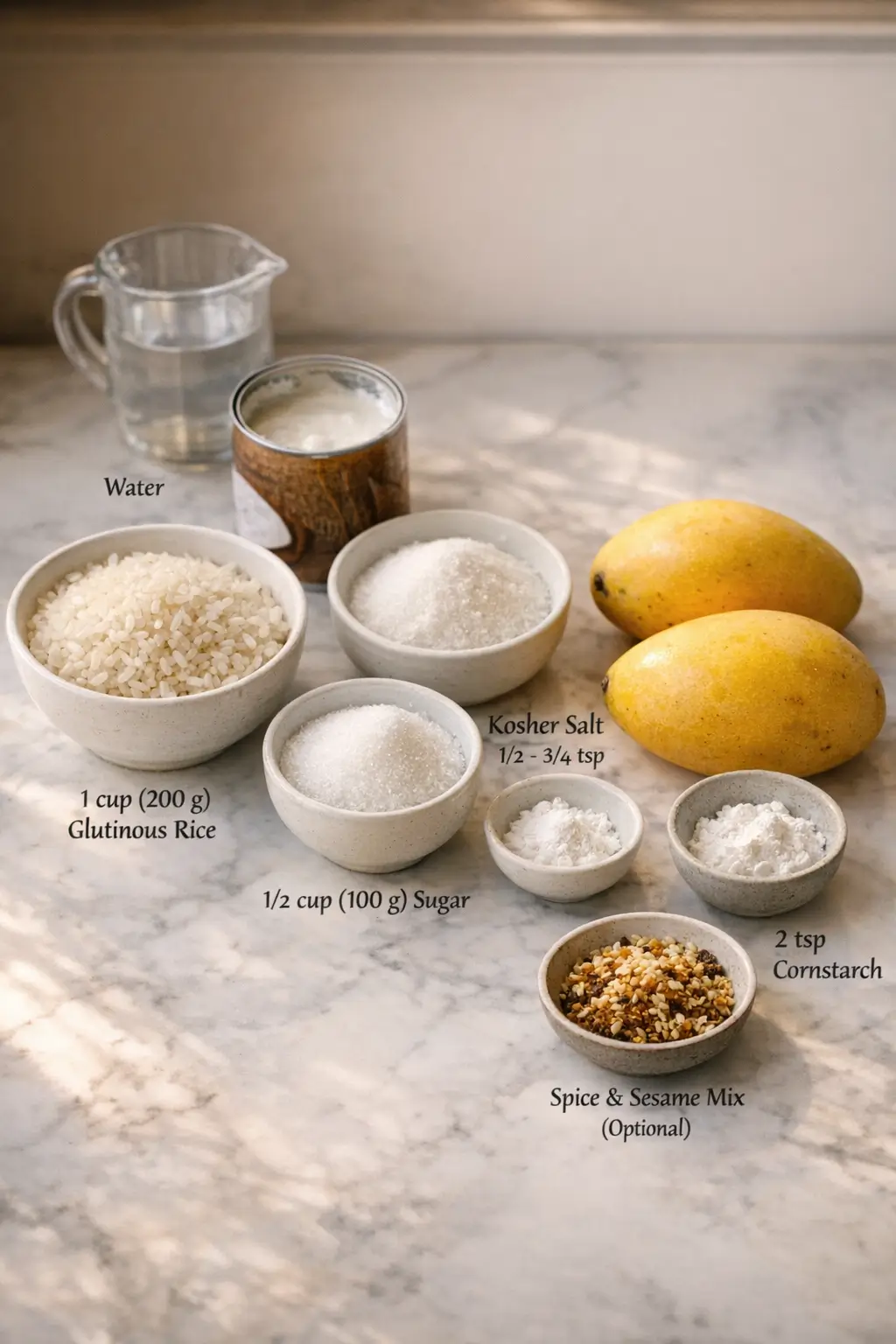
INGREDIENTS
- 1 cup (200 g) Thai glutinous rice (sweet/sticky rice) — the base; do not substitute regular jasmine or long-grain rice
- 1 (13.5–14 oz / 400 ml) can full‑fat coconut milk, well shaken, divided — flavor and richness
- 1/2 cup (100 g) granulated sugar, divided — sweetness for rice and sauce
- 1/2 to 3/4 teaspoon kosher salt, divided — essential to balance the sweetness
- 2 teaspoons (6 g) cornstarch — thickens the pouring sauce; use rice flour or tapioca starch instead if preferred
- 2 to 3 ripe mangoes (Ataulfo/Champagne/Manila recommended) — creamy, low‑fiber mangoes taste best
- 1 tablespoon toasted white sesame seeds or crispy split mung beans (optional) — light crunch
- Water for soaking and steaming
- Optional aroma: 1 pandan leaf, tied in a knot (remove before serving), or a small strip of lime peel — optional, skip if unavailable
Ingredient notes:
- Glutinous rice is sometimes labeled “sweet rice” or “sticky rice.” Despite the name, it contains no gluten.
- Full‑fat coconut milk gives body. Avoid “lite” coconut milk; it turns thin and the sauce won’t cling as well.
- Mangoes should be fully ripe and fragrant. In U.S. supermarkets, Ataulfo (a.k.a. Champagne) are the most reliable for this dessert.
STEP-BY-STEP INSTRUCTIONS
- Rinse and soak the rice.
- Place the rice in a bowl, cover with cool water, and swish. Drain and repeat until the water runs mostly clear (3–5 rinses).
- Cover with fresh water by at least 2 inches/5 cm. Soak 4–12 hours (overnight is convenient). Longer soaks cook more evenly.
- Drain well. If using pandan or lime peel, keep it for the syrup in Step 3, not in the steamer.
- Set up a steamer (no special equipment needed).
- Line a mesh strainer, steamer insert, or colander (heat‑safe, no plastic) with a clean, damp cotton towel or cheesecloth. The lining prevents grains from falling through and keeps steam from dripping on top.
- Set the strainer over a pot with 2 inches/5 cm simmering water. Make sure the rice sits above the water line; you want steam, not boiling.
- Steam the rice.
- Spread the drained rice in an even layer. Cover with a lid and steam over a steady simmer until the grains are translucent and tender, 20–25 minutes.
- Check at 15 minutes and gently fluff/turn once with a fork or spatula so the center cooks evenly. Add hot water to the pot if it boils low.
- Sensory cue: properly steamed sticky rice looks shiny and the grains stick to one another but retain their shape when pressed.
- Make the warm coconut “soak” (for the rice) while the rice steams.
- In a small saucepan, combine 1 cup (240 ml) coconut milk, 1/3 cup (67 g) sugar, and 1/4 teaspoon salt. Add the pandan knot or lime peel if using.
- Heat over medium‑low, stirring, just until sugar dissolves and the mixture is hot. Do not boil vigorously; boiling can split some brands of coconut milk.
- Remove the pandan or lime peel. Keep the syrup warm.
- Combine hot rice and coconut soak.
- Transfer the freshly steamed rice to a wide bowl. Immediately pour the warm coconut mixture over the rice.
- Fold gently with a silicone spatula to coat every grain without mashing. Cover and rest 15 minutes.
- Uncover, fold again, then cover and rest 10–15 minutes more until the liquid is absorbed. The rice should be glossy, cohesive, and tender.
- Make the salted coconut pouring sauce.
- In a saucepan, whisk 2/3 cup (160 ml) coconut milk, 3 tablespoons (38 g) sugar, and 1/4–1/2 teaspoon salt (start low; adjust to taste). Warm over medium heat until steaming.
- In a small cup, stir 2 teaspoons (6 g) cornstarch with 2 teaspoons (10 ml) water to make a slurry. Whisk it into the hot coconut milk and cook 30–60 seconds until lightly thickened and glossy. It should coat the back of a spoon.
- Keep warm on low. If it thickens too much while holding, whisk in a splash of water or coconut milk to loosen.
- Prep the mangoes.
- Peel and slice the mangoes just before serving. Ripe mangoes should yield slightly to pressure and smell sweet. If they’re firm, let them sit a day or two at room temp.
- Plate and serve.
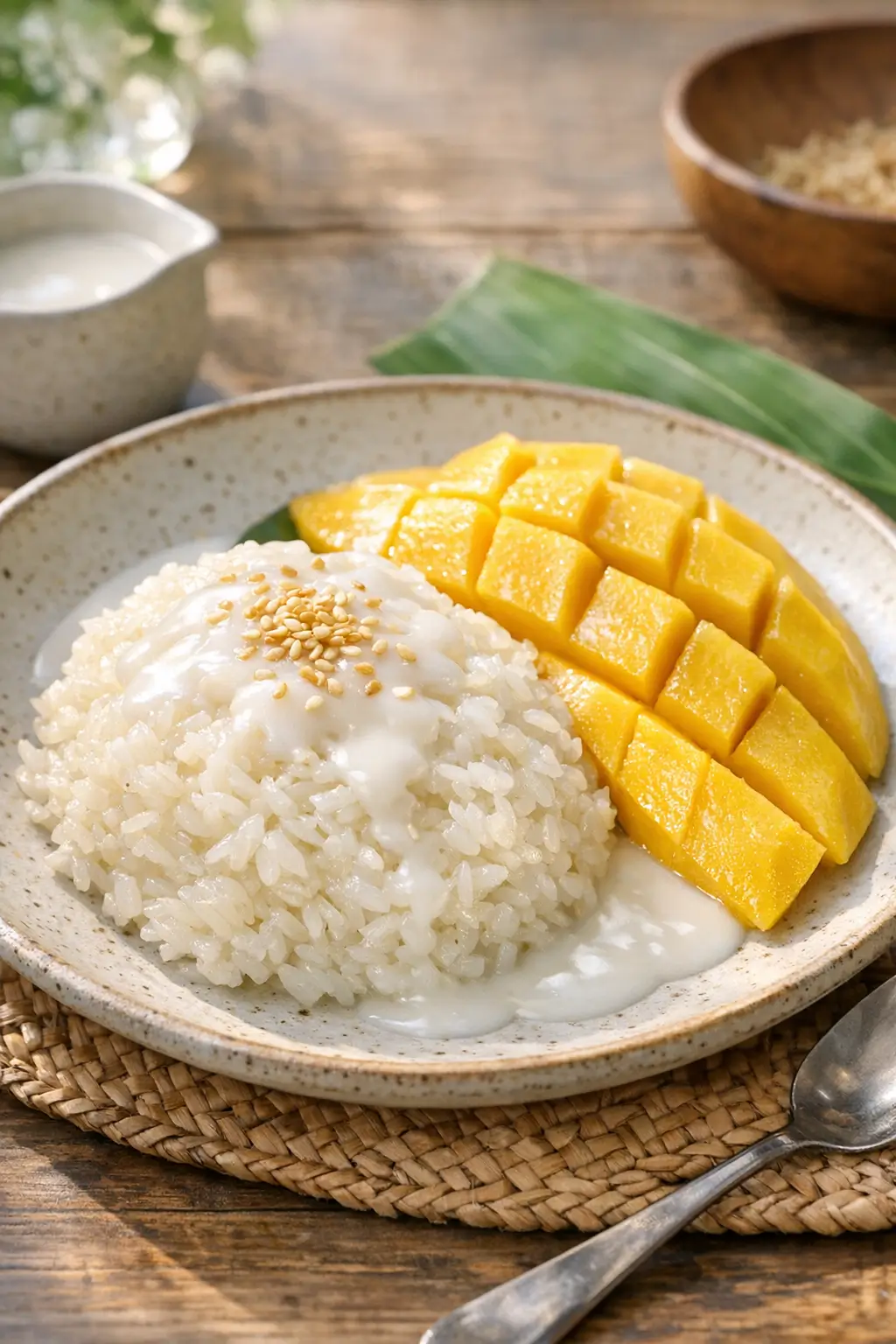
- Spoon warm sticky rice into shallow bowls or plates. Fan mango slices alongside.
- Spoon some salted coconut sauce over the rice (and a bit on the mango if you like). Finish with sesame seeds or crunchy mung beans.
Beginner safeguards:
- Don’t skip the soak. Unsoaked glutinous rice cooks unevenly—soft outside, hard centers.
- Keep the pot at a steady simmer, not a rolling boil; boiling water can splash up and wet the rice.
- Avoid aggressive stirring after you add the coconut soak. Overmixing can smear the grains and turn the rice pasty.
- Taste the sauce. A noticeable (but pleasant) saltiness keeps the dessert from tasting one‑note sweet.
Timing variability:
- Real steaming time varies by steamer setup, towel thickness, and how thoroughly the rice drained. If grains still feel firm after 25 minutes, continue steaming in 5‑minute bursts.
WHAT TO EXPECT — Mango Sticky Rice
Texture: The rice is sticky and cohesive, with individual grains that hold shape and a tender chew. It’s not soupy like rice pudding. The sauce is glossy and lightly thickened so it clings, not pools.
Flavor: Expect a sweet coconut baseline with a gentle saline edge from the sauce. Mango brings fragrant acidity and tropical aroma. Sesame or mung beans add a little nutty crunch.
Variability: Some coconut milks are thicker or more prone to splitting. If yours separates, whisk before heating and keep heat moderate. Brands also differ in salt levels, so adjust the sauce to taste. Mangoes vary by batch and season; if yours are less sweet, reduce salt slightly or add a teaspoon of sugar to the sauce to keep balance.
WAYS TO CHANGE IT UP
-
Vegetarian or vegan adapted: This dessert is naturally dairy‑free and egg‑free. For an extra‑lush finish, replace 2 tablespoons (30 ml) of the pouring sauce with canned coconut cream. Trade‑off: richer sauce can overshadow delicate mango.
-
Spicier or milder: Sprinkle a tiny pinch of Thai‑style chili‑salt (a mix of fine salt, sugar, and chili flakes) over the mango for a sweet‑salty‑spicy pop. To go milder for kids, skip the salted sauce on their portion and drizzle plain coconut milk instead.
-
Faster or simplified: Try a microwave method to cook the rice if you’re in a hurry—soak the rice, then microwave in a covered, microwave‑safe bowl in 3‑minute bursts, resting between rounds, until tender; fold in the coconut soak as usual. It’s quick, but the texture is a touch less even than steaming. A saucepan method (gently simmering soaked sticky rice in water, then draining and macerating with coconut milk) also works with fewer tools, though it’s easier to overcook. See the expert advice on microwave sticky rice for technique background.
-
Different grains: Black glutinous rice yields a striking purple color and deeper, nuttier flavor. Trade‑off: it takes longer to steam and the texture is slightly firmer.
-
Garnish swaps: Toasted coconut chips or crushed roasted peanuts add crunch if sesame or mung beans aren’t on hand.
SERVING AND STORAGE
How to serve:
- Serve the rice warm, the sauce warm, and the mango cool or room‑temperature. The warm‑cool contrast is part of the charm.
- This pairs well after lighter mains, grilled meats, or spicy salads. Drinks like Thai iced tea, jasmine tea, or sparkling water with lime complement the richness.
Storage:
- Sticky rice is best within a few hours. If needed, refrigerate rice, sauce, and mango separately for up to 2 days.
- Reheat rice gently: cover and steam 5–7 minutes, or microwave in a covered bowl with a teaspoon of water for 30–60 seconds, until warm and soft.
- Warm the sauce on low; thin with a splash of water if overly thick.
- Mango softens and weeps after slicing. Keep whole until serving and slice what you need.
- Freezing is not recommended; the rice becomes dry and crumbly after thawing.
CULTURAL CONTEXT
Sweet sticky rice with mango is widely enjoyed across mainland Southeast Asia and appears in markets and restaurants especially when mangoes are in season. The dessert relies on glutinous rice, a variety notable for its low amylose content that cooks up sticky. For a concise overview of the dish’s regional presence and common components, see this summary from Wikipedia. For readers curious about why some rice cooks sticky while other types stay fluffy, the Food and Agriculture Organization explains how amylose/amylopectin ratios influence texture in its resource on rice grain quality and starch behavior; it’s a useful primer on why glutinous rice behaves the way it does (FAO).
COMMON QUESTIONS AND TROUBLESHOOTING
-
My rice turned out firm in the center. What happened?
-
It likely wasn’t soaked long enough or the steamer heat was too low. Soak at least 4 hours (up to overnight), and steam over a steady simmer. If still firm, sprinkle a tablespoon of hot water over the rice, fluff gently, and steam another 5 minutes.
-
The coconut sauce separated. Can I fix it?
-
Separation happens when coconut milk boils hard. Whisk to emulsify and reduce the heat. If it’s still broken, whisk in a teaspoon of cornstarch slurry over gentle heat to bring it back together. Avoid rapid boiling next time.
-
Can I use jasmine or sushi rice?
-
No. Only glutinous (sweet/sticky) rice will produce the signature clingy texture. Other rices become soft but not sticky enough and the dessert will feel off.
-
I can’t find mung beans. What else adds crunch?
-
Toasted white sesame seeds or toasted coconut chips are widely available and provide a similar textural contrast.
-
My mangoes aren’t very sweet. Any adjustments?
-
Reduce the salt slightly in the pouring sauce and add a teaspoon of sugar. A squeeze of lime over the mango can also perk up muted fruit.
-
Can I cook the rice in a rice cooker?
-
Many rice cookers can handle soaked glutinous rice on the regular white rice setting. Texture can be a bit denser than steaming. As soon as it finishes, fold in the warm coconut soak and let it rest covered.
-
How far ahead can I make it?
-
Steam the rice and macerate with coconut up to 2 hours ahead; keep covered at room temperature. Make the sauce up to 3 days ahead and rewarm. Slice mango right before serving.
-
The rice got hard after refrigeration. How do I reheat it?
-
Sprinkle with a teaspoon of water, cover, and steam or microwave just until warm. Sticky rice softens again with gentle heat and a bit of moisture.
CONCLUSION
If you try this at home, I’d love to hear how your version turned out—what mangos you used, whether you kept the sauce lightly salty or leaned sweeter, and any tweaks that suited your kitchen. Your notes help other home cooks learn from real results. Leave a comment and a rating, and share what worked for you or what you’d change next time.



Leave a Reply