
If the idea of bite-size, glassy fruit that shatters with a crisp crack sounds good, you’re in the right place. Tanghulu delivers that candy-shell crunch with a juicy center, using just sugar, water, and fresh fruit.
Unlike a long dessert project, this is a quick stovetop treat often seen at winter street stalls in northern China. It’s ideal for weeknights, birthday parties, or a fun cooking project with teens who can follow safety directions. Expect a thin, glossy sugar shell that sets firm and clean; the inside stays fresh and bright.
You’ll learn the practical details home cooks need—how dry the fruit must be, what the hard-crack stage looks like, and how to avoid crystallized syrup—so your tanghulu pops with every bite.
INGREDIENTS
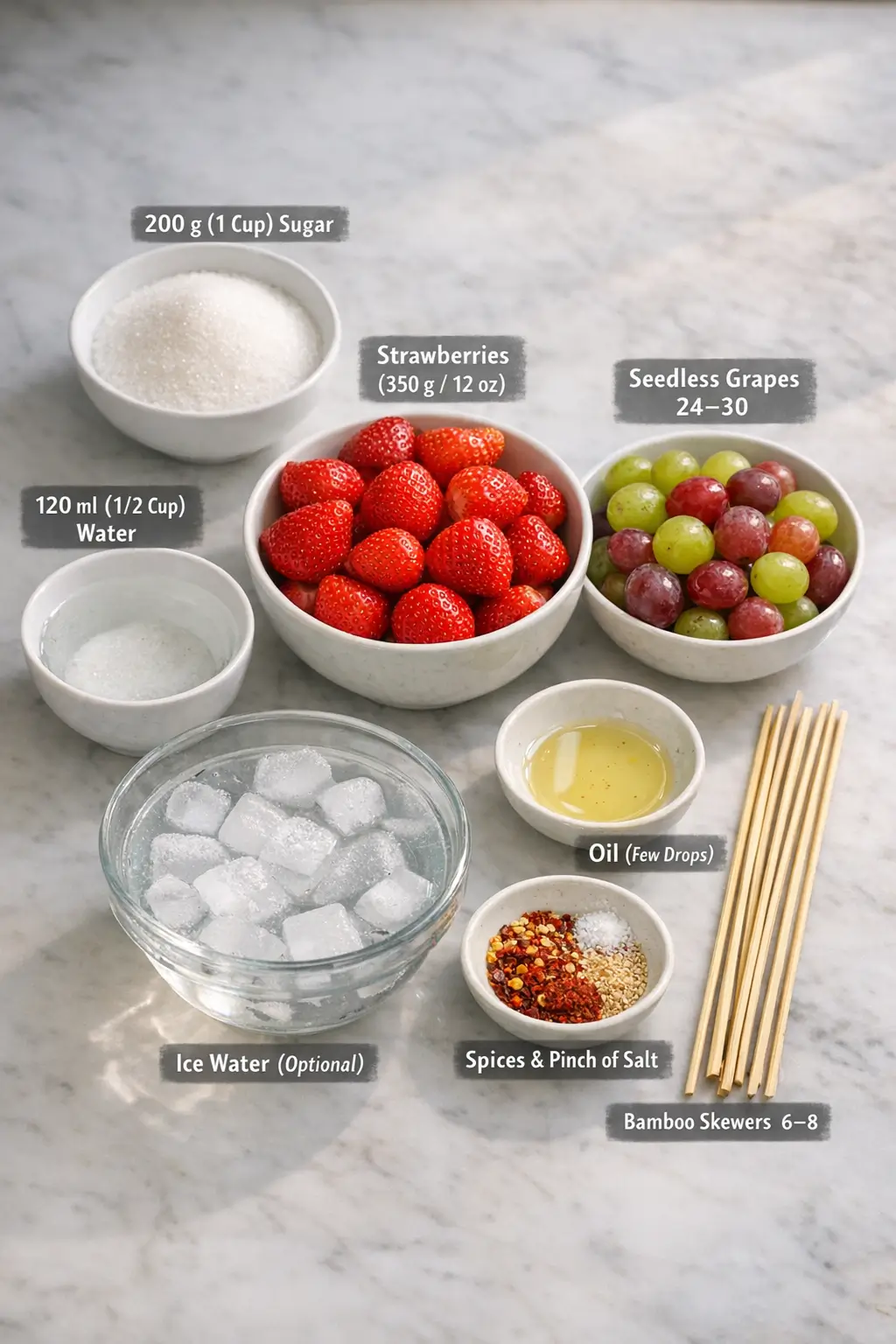
- 12–16 medium strawberries (about 350 g / 12 oz), hulled if large, or 24–30 seedless grapes — the most forgiving fruit for beginners
- 200 g (1 cup) granulated sugar — forms the hard, clear shell
- 120 ml (1/2 cup) water — dissolves sugar and controls boil
- 6–8 bamboo skewers (8–10 inches)
- Neutral oil, a few drops — to lightly grease parchment or a silicone mat so finished skewers release easily
- Ice water, optional — speeds setting and helps in case of minor splashes
Substitutions and notes:
- Fruit options that also work: peeled kiwi chunks, apple slices (1/2-inch thick), pineapple spears, firm mandarin segments, or cherry tomatoes. Very soft fruits (bananas, overly ripe berries) are tricky and often slide or weep.
- Sugar: standard white granulated sugar makes the clearest shell. Rock sugar is traditional in some settings, but granulated works perfectly at home.
- Skewers: sturdy toothpicks for single pieces work if you’re making bite-size portions for kids.
STEP-BY-STEP INSTRUCTIONS
-
Prep pans and space.
Line a sheet pan with parchment or a silicone baking mat and very lightly oil it. Clear space near the stove to set down hot syrup and finished skewers. Keep a bowl of ice water nearby for optional quick-setting. -
Wash and dry fruit thoroughly.
Rinse fruit, then dry it completely. Any surface moisture will make the coating slide or turn sticky. Pat dry with paper towels and air-dry for a few minutes. For strawberries, leave a tiny gap between the fruit and the hull by trimming stems if needed; this helps the syrup wrap neatly. -
Skewer the fruit.
Thread 2–3 strawberries or 4–5 grapes per skewer, leaving a sliver of space between pieces so syrup can flow around each fruit. If using apple or kiwi, cut into 1/2-inch chunks and skewer snugly but not tight. -
Make the sugar syrup.
Add the sugar and water to a small, heavy saucepan (1–2 quarts). Set over medium-high heat. Do not stir once it starts bubbling; undisturbed boiling reduces the chance of crystallization. If crystals form on the pan’s inner walls, gently swirl—don’t scrape—so they dissolve. -
Cook to hard-crack (about 300°F / 150°C).
Use a candy thermometer or an instant-read thermometer rated for high heat. You’ll see large, glassy bubbles and the syrup will look very clear with the faintest tinge of straw-gold. Typical timing ranges from 8–15 minutes depending on your burner, pan size, and batch size.No thermometer? Drip a little syrup into ice water: it should form brittle threads that snap, not bend. If it bends or feels tacky, keep cooking 1–2 minutes and test again.
-
Work quickly—this part moves fast.
Turn off the heat. Tilt the pan slightly to deepen the pool of syrup. Dip and rotate one skewer until fully coated. Let excess syrup drip back into the pan for 2–3 seconds so you get a thin shell. -
Set the shell.
Either lay the coated skewer on the prepared pan to harden, or dip the fruit briefly (2–3 seconds) into the ice water to set instantly, then stand the skewer upright in a glass. The ice dip is optional and helpful in warm kitchens, but don’t let water splash into the syrup. -
Repeat with remaining skewers.
If the syrup thickens too much between dips, briefly return the pan to low heat to loosen it. Avoid overheating past hard-crack; the syrup will darken and taste bitter. -
Cool and serve.
The shell sets within 1–3 minutes. You’ll know it’s ready when it’s glass-clear and no longer tacky. Tap two skewers together; you should hear a crisp clink. -
Clean up safely.
Fill the syrup pan with hot water and let it soak; the sugar will dissolve. Never pour hot syrup into the sink undiluted—it can harden in the drain.
Safety notes that matter:
- The syrup is extremely hot. Keep small children and pets away from the stove, and use long sleeves. A bowl of ice water is good to have nearby for minor contact.
- Don’t use a microwave for the syrup; it can superheat unevenly and cause severe burns if disturbed.
WHAT TO EXPECT
-
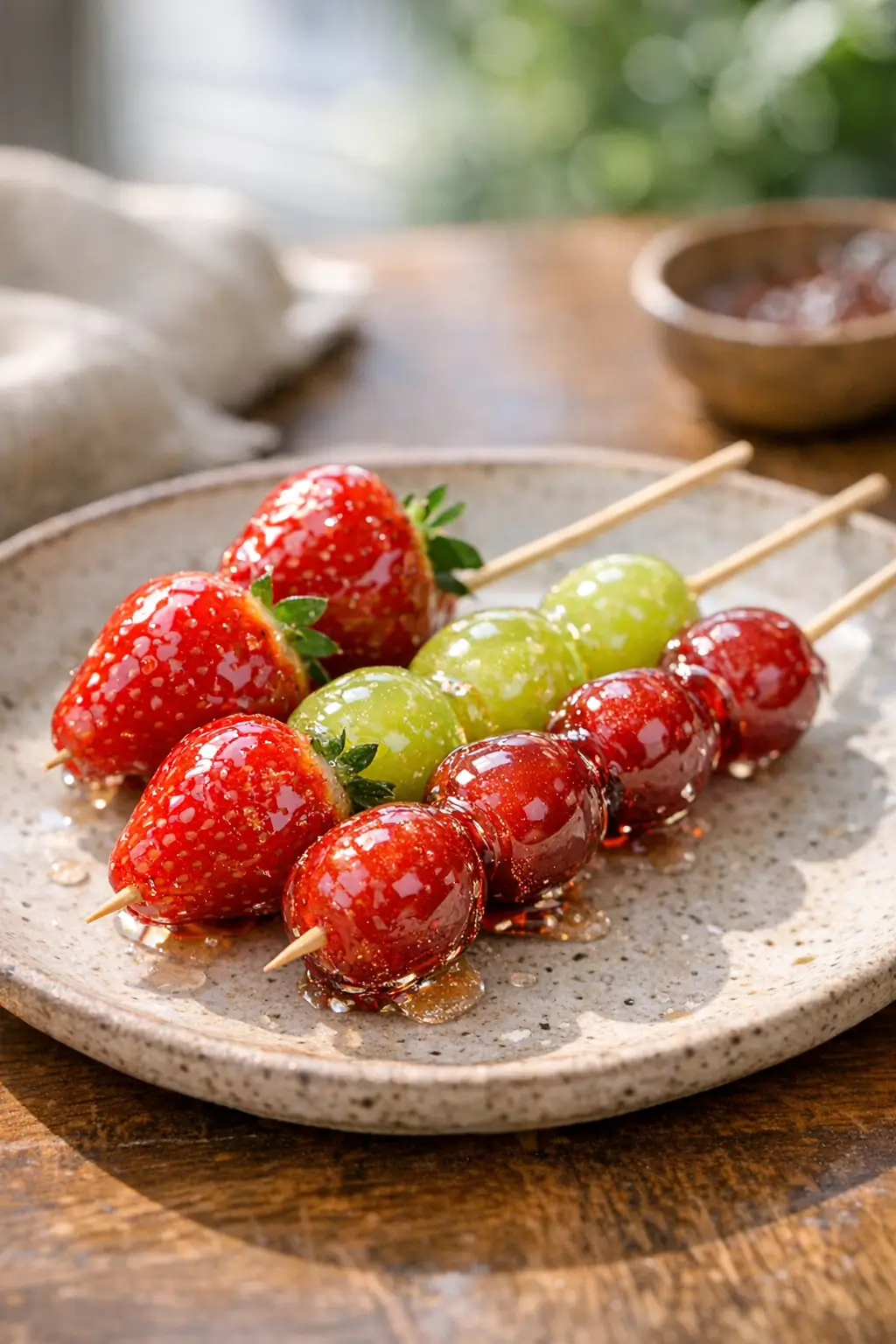
Texture: The ideal shell is paper-thin, shiny, and brittle. It cracks cleanly with a dry snap. If it’s thick or sharp, you let too much syrup cling to the fruit; hold the skewer longer over the pan to drip before setting.
-
Flavor balance: With grapes or strawberries, expect bright, fruity sweetness under a neutral sugar shell. Tarter fruits (kiwi, mandarin, Chinese haw if you find it) produce the classic sweet-sour contrast that makes street-side versions so memorable.
-
Variability: Humidity and kitchen temperature affect results. In a warm or humid kitchen, the shell softens faster. Using the quick ice dip helps lock it in. Pan choice matters too: a small, heavy saucepan keeps depth and temperature steadier for home-size batches.
-
Appearance: Slight bubbles or tiny drips are normal. Clear, glassy coating is a sign you hit hard-crack. Pale straw color is fine; deeper amber means it’s on the edge of overcooking.
WAYS TO CHANGE IT UP
-
Vegetarian/vegan-friendly: This recipe uses only sugar and fruit, which are naturally vegan. If you avoid refined sugar processed with bone char, choose organic cane sugar. For the classic tart profile, mix in a few skewers of peeled kiwi or mandarin segments alongside strawberries and grapes.
-
Milder or tarter: Make the sweetness feel lighter by choosing very tart fruit (kiwi, mandarin, or Chinese haw/“shan zha” when available). For a gentler bite, stick to sweet seedless grapes or ripe strawberries.
-
Faster/simplified: Make single-bite tanghulu on toothpicks—one grape or cherry tomato each. The syrup step stays the same, but dipping is easier and cleanup is quicker. Trade-off: single bites cool so fast that any uneven coating is more visible.
-
Party platter: Alternate colors—green, red, and black grapes—on each skewer. Dip as directed and cool on parchment for a jewel-like display. This is visually striking with minimal extra effort.
-
Note on creative coatings: Some modern stalls dust tacky shells with toasted sesame or a pinch of mild chili powder. It’s a fun twist, but it’s not traditional and slightly softens the glassy look.
SERVING AND STORAGE
Serve soon after the shells harden—ideally within 30–60 minutes—for peak crunch. The contrast of crisp coating and juicy fruit is best the day you make it.
Pairing ideas: Green tea, jasmine tea, or lightly sweetened iced tea balance the sugar well. For a dessert board, add salted nuts or plain biscuits to offset sweetness.
Short-term holding: In a cool, dry room, tanghulu can sit for about 2 hours without losing much snap. Avoid covering tightly; trapped moisture fogs the shell.
Refrigeration: The fridge’s humidity tends to make the shell turn tacky and the fruit weep. If you must hold longer, chill the skewers uncovered on a rack for up to 6 hours and serve straight from the fridge. Expect some stickiness.
Leftovers: Tanghulu doesn’t re-crisp once the shell softens. Chop leftover fruit and stir into yogurt or oatmeal rather than trying to revive the candy.
CULTURAL CONTEXT: Tanghulu
This snack is closely associated with winter street vendors in northern China, especially around Beijing and Tianjin. Traditionally, hawthorn (Chinese haw) is skewered and dipped in hot sugar syrup that hardens in the cold air, creating the familiar glossy finish.
For readers curious about background, see this overview of the snack’s history and regional names on Tanghulu. To learn more about the fruit often used in classic versions, here’s a horticultural profile of Chinese hawthorn from a plant education site: Crataegus pinnatifida (Chinese hawthorn).
COMMON QUESTIONS AND TROUBLESHOOTING
-
Why is my coating sticky or cloudy instead of crisp?
Sticky shells usually mean the syrup didn’t reach hard-crack. Cook a little longer to about 300°F/150°C, or use the cold-water test until the syrup forms brittle threads. Cloudiness can also come from humidity or stirring once the syrup boils. -
The syrup crystallized—what went wrong?
Sugar crystals on the pan’s sides can trigger graininess. Avoid stirring after the boil starts, and don’t scrape the sides. If crystallization happens, add a splash of hot water, re-dissolve over low heat, and try again. -
Can I make tanghulu without a thermometer?
Yes. Use the ice-water test: drop a little syrup into ice water. If it snaps cleanly and shatters, it’s ready. If it bends, keep cooking and test again in a minute. -
Which fruits work best for beginners?
Seedless grapes and firm strawberries are the easiest. Soft berries, very ripe fruit, or fruits with a lot of surface moisture tend to slip and weep, softening the shell. -
Is brown sugar okay?
It will work but changes flavor and color. The molasses darkens the shell and adds a toffee note. For a classic clear glass look, stick with white granulated sugar. -
My shells are too thick and sharp—how do I fix that?
Let more syrup drip off the skewer before setting. You can also briefly warm the syrup if it thickens between dips; cooler syrup clings more heavily. -
Can kids help?
Older kids and teens can skewer and dry fruit, but the syrup step should be handled by a careful adult. The syrup is extremely hot and sticks to skin. -
How long can I store it?
This treat is best fresh. If you need to hold it, keep in a cool, dry place for up to 2 hours. Refrigeration can extend time a bit but expect some tackiness upon serving.
CONCLUSION
With a little attention to dryness and temperature, you can turn everyday fruit into tanghulu that cracks cleanly and tastes bright. If you try different fruits or find a workflow that fits your kitchen better, share your notes and a rating below—your experience helps other home cooks get that perfect, glassy crunch next time.



Leave a Reply