
If you love a pasta night that feels special without eating up your whole evening, this is for you. Pasta alla Norma brings silky sautéed eggplant, a quick-simmered tomato sauce, and a snowfall of ricotta salata together in one comforting bowl.
The appeal here is balance: savory depth from eggplant, brightness from tomatoes, and a salty finish from the cheese. You’ll find versions of this dish on menus across Sicily and in Italian restaurants worldwide, and it’s a smart choice for weeknights or casual dinners with friends.
If you’re a newer cook, this recipe guides you through the handful of spots that move quickly—frying eggplant and marrying the pasta to the sauce—so you get reliably delicious results. Expect tender eggplant, a glossy sauce that clings, and a clean, basil-forward aroma.
INGREDIENTS
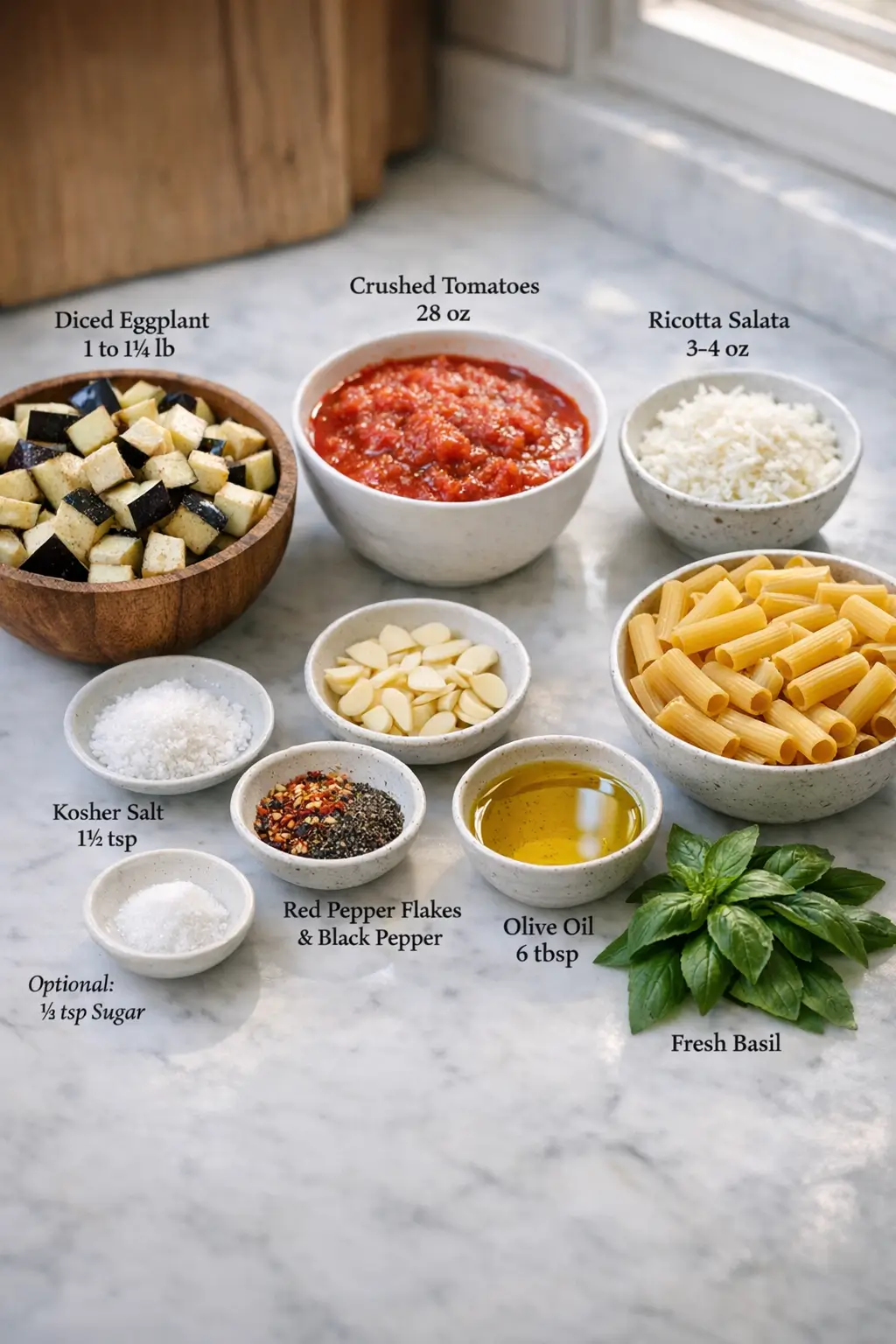
- 1 large globe eggplant (1 to 1¼ lb / 450–570 g), cut into ¾-inch (2 cm) cubes; skin on for texture. Salting helps tame bitterness and improves browning.
- Kosher salt: 1½ tsp / 9 g, plus more for salting the eggplant and pasta water.
- Extra-virgin olive oil: 6 tbsp / 90 ml, divided, plus more as needed. Eggplant is absorbent; you may need an extra tablespoon or two if pan-frying.
- 3 garlic cloves, thinly sliced. Aromatics for the sauce; avoid burning.
- ¼–½ tsp crushed red pepper flakes. Optional heat; use less for a milder sauce.
- 1 can whole peeled tomatoes (28 oz / 800 g), crushed by hand, or tomato passata (24–26 oz / 680–740 g). Tomato base; choose a brand you like.
- Fresh basil: small bunch (about ½ oz / 15 g), leaves torn; reserve a few for serving. Adds aroma and freshness.
- Dried pasta: 12 oz / 340 g rigatoni, penne, or spaghetti. Short shapes hold sauce and eggplant well.
- Ricotta salata: 3–4 oz / 85–115 g, grated or shaved. Salty, firm cheese for finishing.
- Freshly ground black pepper, to taste.
- Optional: ½ tsp / 2 g sugar if your tomatoes taste especially sharp.
Substitutions (choose what’s realistic for your kitchen):
- Ricotta salata: If unavailable, use finely grated Pecorino Romano or crumble a firm feta. Fresh ricotta can be dolloped on at the end for a creamier, less salty profile.
- Tomatoes: Quality crushed tomatoes or passata work. In peak season, use 2 lb / 900 g ripe tomatoes, peeled and chopped, and simmer slightly longer.
- Basil: If you’re out, a small handful of flat-leaf parsley adds freshness, though the flavor will differ.
STEP-BY-STEP INSTRUCTIONS
- Prep and salt the eggplant (10 minutes active, 30–45 minutes resting).
- Toss the eggplant cubes with 1 tsp kosher salt in a colander. Set over a bowl or in the sink and let drain 30–45 minutes. This draws out excess moisture so the cubes brown instead of steaming.
- Pat very dry with towels before cooking. If you skip salting, budget an extra minute or two of cooking time to achieve tenderness.
- Start the tomato sauce (5 minutes to start; 20–25 minutes simmering).
- In a wide skillet or Dutch oven, warm 2 tbsp olive oil over medium heat. Add the sliced garlic and cook, stirring, until fragrant and just turning pale gold, 45–60 seconds. Sprinkle in the red pepper flakes and toast for 10 seconds.
- Immediately add the hand-crushed tomatoes and a big pinch of salt. Simmer gently, partially covered, 20–25 minutes, stirring occasionally until thickened and glossy. Taste; if very tangy, stir in the optional sugar. Keep warm on low.
- Sensory cue: bubbles should be steady but not spattering; the sauce should coat the back of a spoon and look slightly shiny from emulsified oil.
- Cook the eggplant: choose pan-fry or roast.
- Pan-fry method (best texture; requires attention): Heat 3 tbsp olive oil in a large, heavy skillet over medium to medium-high heat until shimmering. Add half the dried eggplant cubes in a single layer. Cook without moving until the bottoms are well browned, about 3 minutes. Toss and continue cooking, adding another 1 tbsp oil if the pan looks dry, until deeply golden and tender, 6–8 minutes total. Transfer to a paper towel–lined plate and season with a pinch of salt. Repeat with remaining eggplant.
- Roast method (hands-off; slightly lighter): Heat the oven to 425°F / 220°C. Toss the dried eggplant with 3 tbsp olive oil and a pinch of salt on a rimmed sheet. Spread in a single layer. Roast 20–30 minutes, flipping once, until browned on the edges and creamy inside.
- Watch-out moment: overcrowded pans steam eggplant. If your skillet isn’t wide, cook in batches. Proper browning = better flavor and less oiliness.
- Boil the pasta.
- Bring a large pot of water to a rolling boil and salt it generously (about 1 tbsp Diamond Crystal kosher salt per 4 quarts / 3.8 L). Add the pasta and cook just shy of al dente, 1 minute less than package time. Reserve about 1 cup / 240 ml pasta water before draining.
- Marry sauce, eggplant, and pasta (the key step).
- Stir most of the eggplant into the simmering tomato sauce, reserving a handful for topping. Add the pasta and a splash (about ¼ cup / 60 ml) of pasta water. Toss over medium heat 1–2 minutes until the sauce loosens, then clings to the pasta. Add more water in small amounts as needed.
- Off the heat, fold in most of the torn basil leaves. Grind in black pepper to taste.
- Serve.
- Divide among warm bowls. Top with the reserved eggplant, remaining basil, and a generous shower of ricotta salata. Finish with a light drizzle of good olive oil if you like.
Beginner safeguards and timing notes:
- Garlic browns fast; add tomatoes as soon as it turns pale gold. If it burns, start over to avoid bitterness.
- Ricotta salata is salty. Taste the sauce before adding more salt at the end to avoid oversalting.
- Different brands of tomatoes vary in thickness. If yours is watery, simmer a few minutes longer.
WHAT TO EXPECT — Pasta alla Norma
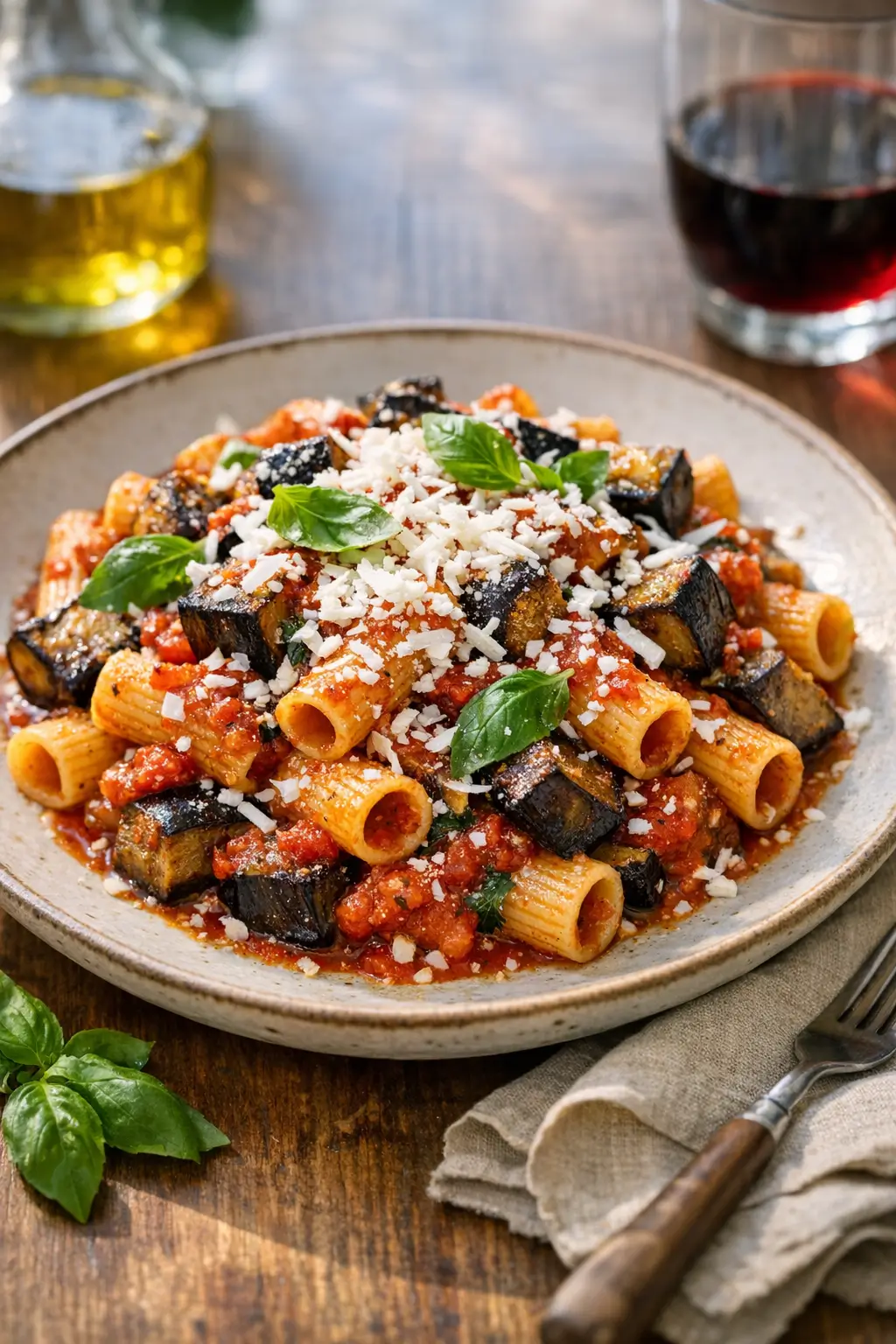
Texture: The eggplant should be creamy and tender inside with browned, slightly crisped edges. The sauce will be thick enough to cling but not pasty, coating each piece of pasta in a glossy layer. Ricotta salata adds a firm, crumbly bite on top rather than melting into the sauce.
Flavor: Expect a savory base with gentle sweetness from tomatoes, a whisper of heat from the chile flakes, and bright herbal notes from basil. The cheese brings salinity, so the overall balance reads as rich and savory rather than heavy.
Variability: A cast-iron skillet gives deeper browning than a nonstick pan. Gas burners may run hotter than electric; adjust heat to maintain steady sizzle without smoking. Canned San Marzano–style tomatoes are typically sweeter; standard crushed tomatoes may need that tiny pinch of sugar. Some ricotta salata is aged longer and tastes saltier—use a lighter hand when seasoning the sauce if your cheese is especially sharp.
WAYS TO CHANGE IT UP
-
Vegetarian or vegan adapted:
-
This dish is already meatless. For a vegan finish, skip ricotta salata and top with toasted breadcrumbs (toss ½ cup / 30 g panko with 1 tbsp olive oil in a skillet until golden) plus a spoonful of capers for briny pop. A dairy-free almond “ricotta” works for a creamy contrast, though the flavor differs.
-
Spicier or milder:
-
For more heat, bloom ½–1 tsp red pepper flakes in the oil or swirl in 1 tsp Calabrian chile paste with the tomatoes. For a gentle, kid-friendly version, omit the flakes and rely on black pepper at the end.
-
Faster or simplified:
-
Use roasted eggplant from the oven or air fryer: cook at 400°F / 205°C for 12–15 minutes in an air fryer, shaking once. Swap passata for whole tomatoes to skip hand-crushing. You can also simmer the sauce while the eggplant roasts so everything finishes together in about 35–40 minutes.
-
Shape swap and add-ins:
-
Rigatoni and penne catch the eggplant nicely, but spaghetti works too. If you want a touch of brine, add 1 tbsp chopped capers to the sauce in the last 2 minutes. Keep add-ins light so the core flavors shine.
Trade-offs: More chile = livelier sauce but can overshadow basil. Air-fried or roasted eggplant saves effort but won’t have quite the same fried-edge flavor as pan-seared cubes.
SERVING AND STORAGE
Serve in warm bowls with extra basil and plenty of ricotta salata shaved over the top. A drizzle of olive oil right before serving adds aroma.
What pairs well: A simple green salad with lemony dressing keeps things fresh. Garlicky sautéed greens or roasted zucchini make an easy side. For wine, medium-bodied reds like Nero d’Avola or a chillable Frappato play well with tomato and eggplant.
Storage: Leftovers keep, covered, in the refrigerator up to 3 days. The pasta will soften and the eggplant will lose some edge-crispness, but flavors meld nicely.
Reheating: Warm gently on the stovetop with a splash of water to loosen the sauce, or microwave in short bursts. Re-grate a little ricotta salata just before serving; don’t store pasta with the cheese already mixed in if you can avoid it.
Freezing: The assembled pasta doesn’t freeze well. If you’re planning ahead, freeze the tomato sauce by itself for up to 2 months and cook eggplant and pasta fresh when serving.
CULTURAL CONTEXT
This dish is widely associated with the city of Catania in Sicily. The name is commonly linked to the opera “Norma” by Catania-born composer Vincenzo Bellini and a famous exclamation by writer Nino Martoglio praising the dish. For a concise overview, see this entry from an educational source: Pasta alla Norma.
For readers curious about the opera link itself, the city’s Opera House debuted in 1890 with a performance of “Norma.” You can explore a short history on the theatre’s official page: Teatro Massimo Bellini di Catania. These resources offer historical context only and are not recipe pages.
COMMON QUESTIONS AND TROUBLESHOOTING
-
My eggplant drank all the oil and still looks pale—what went wrong?
-
Likely overcrowding or insufficient heat. Cook in batches over medium-high heat, giving the cubes room to sear. Salting and drying thoroughly also helps prevent sponginess and encourages browning.
-
Do I have to salt the eggplant?
-
Not strictly, especially if eggplant is very fresh and in season. Salting improves texture and browning, and it’s a good hedge if you’re unsure of freshness.
-
I can’t find ricotta salata. What’s the best substitute?
-
Finely grated Pecorino Romano gives a similar salty lift; firm feta crumbled on top also works. Fresh ricotta changes the character—tasty, but creamier and less salty. Add it off the heat in small dollops.
-
My sauce seems thin. How do I fix it?
-
Simmer uncovered until thick and glossy. If you’ve already added pasta, let it cook together for an extra minute, tossing with small splashes of reserved pasta water to create an emulsion.
-
Can I make any part ahead?
-
Yes. Make the tomato sauce up to 3 days in advance and refrigerate. Reheat while you cook fresh eggplant and pasta. The finished dish tastes best right after tossing together.
-
What pasta shape should I choose?
-
Short, ridged shapes like rigatoni or penne hold cubes of eggplant well. Long pasta works but won’t catch as many pieces per bite.
-
Can I air-fry the eggplant?
-
Yes. Toss salted, dried cubes with oil and cook at 400°F / 205°C for 12–15 minutes, shaking once. They’ll be lighter and a touch drier than pan-fried.
-
How do I keep the dish from tasting too salty if my ricotta salata is very assertive?
-
Reduce the salt in the sauce and taste again after grating the cheese on top. You can also mix in a pinch of sugar if the tomatoes are sharp; sweetness can balance salt.
CONCLUSION
Your turn: make the sauce, brown the eggplant well, and toss everything together while it’s hot so the flavors marry. If you try this, leave a comment with what pasta shape you chose, how you cooked the eggplant, and any tweaks you loved. Ratings and thoughtful tips help other home cooks, so share what worked for you and what you might change next time.



Leave a Reply