
If you’re craving a hearty bowl that’s both soothing and lively, Creamy Moroccan Harira Soup delivers fast. This tomato-based soup layers chickpeas, lentils, and warming spices into a silky, satisfying pot that’s easy enough for a weeknight.
Harira is commonly enjoyed across Morocco and the wider Maghreb, especially at day’s end during cooler months or anytime you want something nourishing. The method here favors pantry staples and minimal prep, so it suits newer cooks and busy families without sacrificing flavor.
Expect a gentle heat, fresh herbs, and a plush mouthfeel created by a quick blend and a light flour slurry—no dairy required. Serve with lemon to brighten every spoonful.
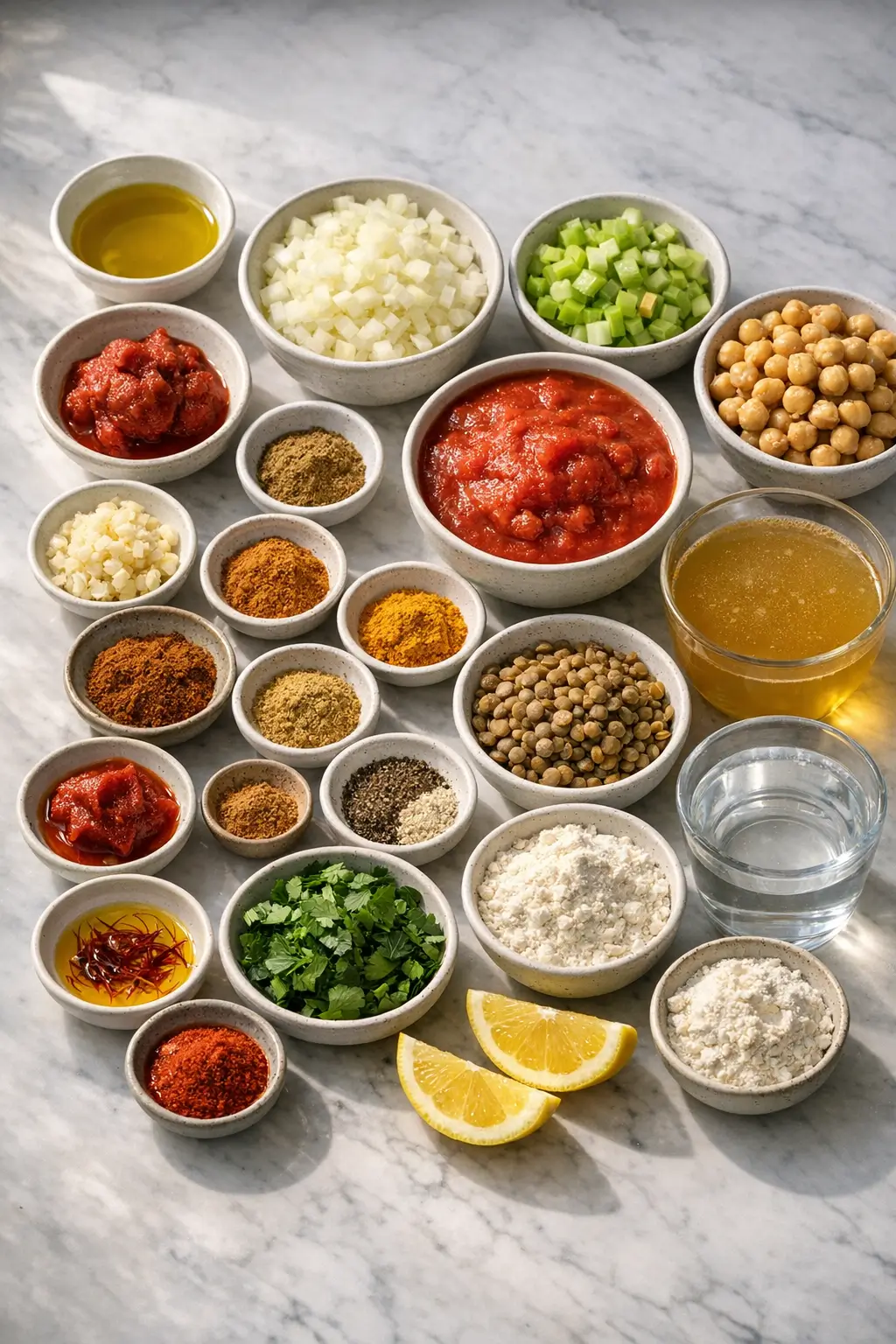
INGREDIENTS — Creamy Moroccan Harira Soup
- 2 tbsp (30 ml) olive oil
- 1 large yellow onion (about 10 oz/300 g), finely chopped — base sweetness
- 2 celery stalks (about 3.5 oz/100 g), finely chopped — classic aromatic
- 1 medium carrot (about 3.5 oz/100 g), small dice — body and subtle sweetness; omit if you prefer a straighter tomato profile
- 3 garlic cloves, minced — savory depth
- 1 tsp (3 g) ground cumin — earthy warmth; or 1 1/2 tsp ras el hanout for a blended spice profile
- 1 tsp (3 g) ground turmeric — color and earthiness
- 1 tsp (3 g) ground ginger — gentle heat
- 1/2 tsp (1 g) ground cinnamon — background warmth
- 1/2 tsp (1 g) freshly ground black pepper
- 2 tbsp (30 g) tomato paste — concentrates tomato flavor
- 1 can (14.5 oz/410 g) crushed tomatoes — or 2 cups (500 ml) passata
- 1/2 cup (100 g) green or brown lentils, rinsed — hold their shape; avoid red lentils for this style
- 1 can (15 oz/425 g) chickpeas, drained and rinsed (about 1 1/2 cups/250 g)
- 4 cups (1 liter) low-sodium vegetable or chicken broth — choose based on preference
- Pinch saffron threads (optional) — steep in 2 tbsp hot water for aroma; skip if unavailable
- 1/4 cup (30 g) fine vermicelli or thin spaghetti, broken into short pieces (optional) — adds body; or 1/4 cup (45 g) rinsed basmati rice
- 3 tbsp (24 g) all-purpose flour, whisked with 1 cup (240 ml) cold water — classic tedouira-style slurry for silkiness; gluten-free: use 1 1/2 tbsp (12 g) cornstarch instead
- 1/2 cup (20 g) chopped fresh cilantro
- 1/4 cup (10 g) chopped flat-leaf parsley
- 1–1 1/2 tsp kosher salt (Diamond Crystal), to taste — use half if using table salt
- 2 tbsp (30 ml) fresh lemon juice, plus lemon wedges for serving
- Optional for heat at the table: harissa or a pinch of cayenne
STEP-BY-STEP INSTRUCTIONS
- Prep the aromatics and lentils. Rinse the lentils until the water runs mostly clear. If using saffron, steep the threads in 2 tbsp hot water now so it’s ready.
- Build the flavor base (6–8 minutes). Warm the olive oil in a medium-large pot over medium heat. Add onion, celery, and carrot with a pinch of salt. Cook, stirring occasionally, until the onion turns translucent and edges soften. You should smell sweetness, not browning.
- Bloom the spices (45–60 seconds). Stir in garlic, cumin, turmeric, ginger, cinnamon, and black pepper. Cook just until fragrant. Don’t walk away—spices can scorch quickly.
- Toast the tomato paste (1–2 minutes). Add the tomato paste and cook, stirring, until darkened slightly. This step deepens the tomato base and prevents raw acidity later.
- Add tomatoes and broth. Pour in the crushed tomatoes (or passata) and broth. If using saffron, add the saffron and its soaking liquid. Bring to a gentle boil, then immediately reduce to a simmer.
- Simmer the lentils (20 minutes). Stir in the rinsed lentils. Maintain a steady simmer—occasional gentle bubbles—until the lentils are just tender but not falling apart. Time ranges by brand and age of lentils; begin checking at 18 minutes.
- Add chickpeas and optional pasta (8–10 minutes). Stir in the chickpeas. If using vermicelli or broken spaghetti, add it now and simmer until the pasta is al dente. Stir more frequently at this stage to prevent sticking at the bottom.
- Make it creamy without dairy. Ladle about 2 cups of the soup into a bowl or blender jar. Blend until smooth using an immersion blender or regular blender (vent lid and cover with a towel). Return the puree to the pot and stir. The color should shift from bright red to a slightly deeper, velvety hue.
- Thicken with a slurry (3–5 minutes). Whisk the flour with cold water until perfectly smooth. To prevent lumps, whisk a ladle of hot soup into the slurry to temper, then pour the tempered slurry in a slow stream into the pot while stirring constantly. Simmer gently until the soup looks glossy and lightly thickened. Avoid a rolling boil once the slurry is in—it can dull the silky finish.
- Finish with herbs and lemon (1–2 minutes). Stir in cilantro and parsley. Season with salt to taste and add lemon juice to balance the tomatoes. The soup should taste round and bright, not sour.
- Rest briefly and serve. Remove from heat and let sit 5 minutes so the pasta (if using) finishes hydrating and the flavors settle. Serve with lemon wedges and optional harissa on the side.
Notes
- Timing varies with lentil age and brand. Green and brown lentils typically take 20–30 minutes to soften; older lentils can need longer. If they resist softening, cover and simmer a touch longer, adding splashes of water as needed.
- If using rice instead of pasta, add it with the lentils so it cooks through in time.
- For an egg-finish version (common in some households), whisk 1 beaten egg and drizzle it into the gently simmering soup in thin streams during Step 9 after the slurry has thickened. Stir lightly to create ribbons.
WHAT TO EXPECT
- Texture: Not heavy, but silky. The puree-plus-slurry technique gives a soft, “coats-the-spoon” body similar to traditional tedouira thickening used in many harira kitchens without adding cream.
- Flavor: Tomato-forward and warmly spiced. Ginger and turmeric lead; cinnamon stays in the background. Lemon at the end keeps the finish bright.
- Variability: Broth brand, tomato acidity, and lentil age all affect salt and simmer time. If your soup tastes a little sharp, a longer gentle simmer or an extra teaspoon of olive oil can soften the edges before adding more lemon.
WAYS TO CHANGE IT UP
- Vegetarian/vegan adapted: The base recipe is already meatless and dairy-free. For extra plant protein, add 1 cup (150 g) diced cooked potatoes or 1/2 cup (90 g) small-cubed firm tofu during Step 7. Trade-off: thicker, heartier texture that may mute the tomato brightness slightly.
- Spicier or milder: For more heat, whisk 1–2 tsp harissa into the pot in Step 10 or add a pinch of cayenne with the dry spices. For milder bowls, skip harissa and lean on lemon and herbs for lift. Trade-off: heat adds complexity but can overshadow cinnamon and ginger.
- Faster weeknight version: Use 1 cup (200 g) canned lentils (rinsed) and skip the pasta. Add canned lentils with the chickpeas in Step 7 and reduce simmer by 10–12 minutes. Trade-off: slightly less structure than dried lentils but still satisfying.
- Meaty variation: Brown 6 oz (170 g) diced lamb shoulder or beef in Step 2 before adding vegetables; proceed as written and simmer until tender. Trade-off: deeper savoriness, longer cook time.
- Gluten-free: Replace the flour slurry with 1 1/2 tbsp (12 g) cornstarch whisked into 2/3 cup (160 ml) cold water; simmer only 1–2 minutes after adding to preserve silkiness.
SERVING AND STORAGE
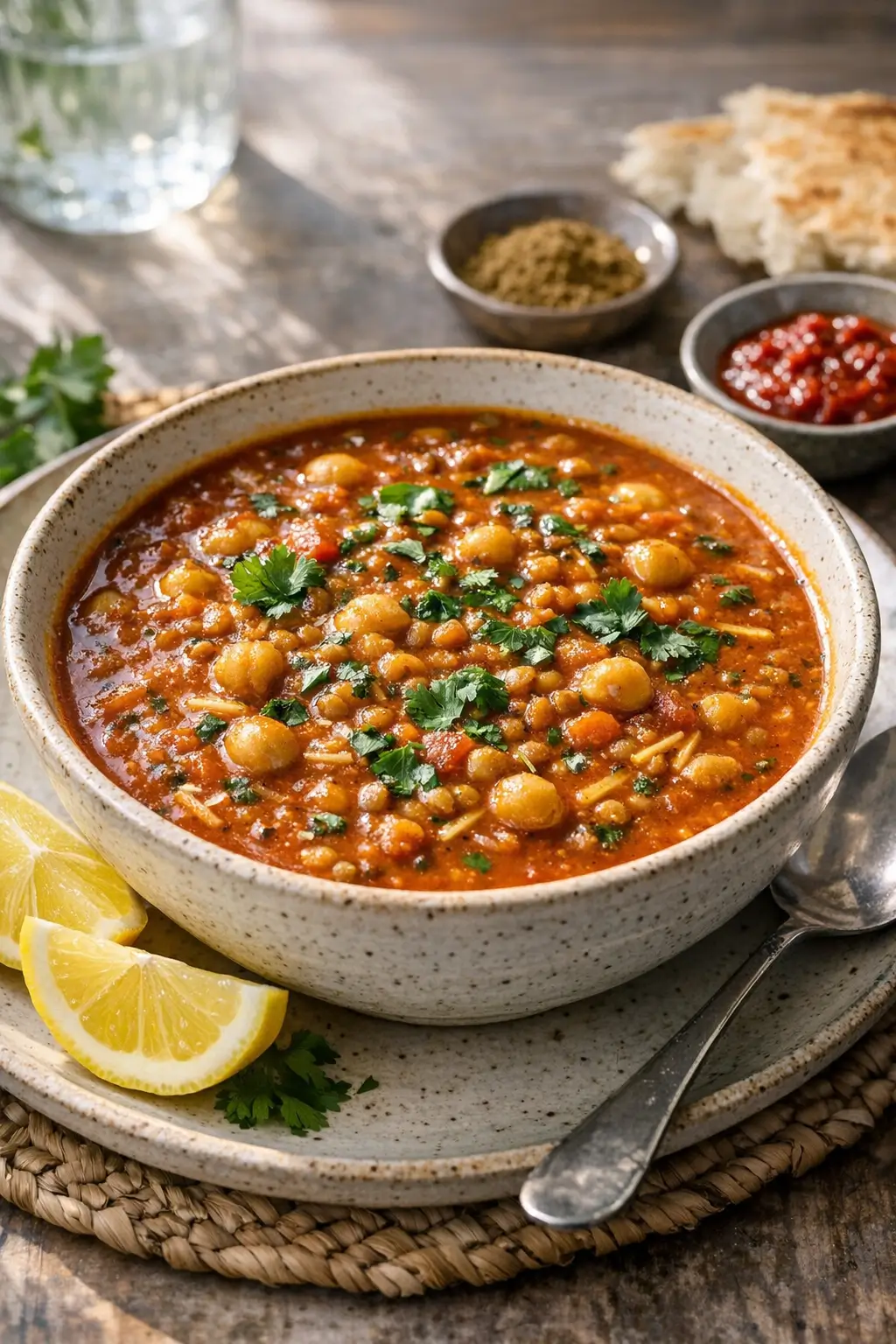
Serve hot with lemon wedges and a small dish of cumin to pinch over each bowl. Dates, olives, or a simple salad pair well. Bread that’s great for dipping—pita, rustic sourdough, or flatbreads—fits right in.
Leftovers thicken as they sit. In the fridge, store in sealed containers for up to 4 days. For freezing, the best approach is to freeze before adding the pasta or the slurry; it keeps for 2–3 months. Thaw overnight in the fridge and reheat gently on the stove, adding water or broth until the soup loosens to a spoonable consistency. Avoid vigorous boiling after thickening—it can dull the silky texture.
CULTURAL CONTEXT
Harira is widely associated with the fast-breaking meal during Ramadan in Morocco and across the Maghreb. The soup’s name is often linked to the Arabic word for “silk,” nodding to its smooth texture, traditionally achieved with a flour-and-water mixture and sometimes egg. For an accessible overview of harira’s place at the Ramadan table, see National Geographic’s piece on Morocco’s evening meal (To Break the Ramadan Fast in Morocco, Start With Soup). A concise background on ingredients and regional variations is also available here (Harira — Wikipedia). These resources are educational, not step-by-step recipes.
COMMON QUESTIONS AND TROUBLESHOOTING
- Why isn’t my soup creamy enough? Blend a larger portion (up to 3 cups) before returning it to the pot, or simmer 2–3 minutes longer after adding the slurry. If you used passata instead of crushed tomatoes, you may need an extra minute of simmering to reach the same body.
- My lentils are still firm after 25 minutes. Keep the simmer steady and covered. Older lentils take longer. A pinch of salt early won’t toughen green or brown lentils here, but acidic tomatoes can slow softening—time and gentle heat fix it.
- The slurry clumped when I added it. Lumps form if the slurry meets boiling liquid. Temper the slurry with a ladle of hot soup first, then add in a thin stream while stirring. If small lumps appear, brisk whisking usually smooths them out.
- It tastes too acidic. Simmer 5–10 more minutes or add 1–2 tsp olive oil to round the edges before adjusting with lemon. A pinch of sugar is a last resort if your tomatoes are very sharp.
- Can I add pasta and freeze the soup? Pasta softens and swells in the freezer. For best texture, freeze without pasta and add fresh vermicelli during reheating.
- How do I make it meatier without a long cook? Stir in 1/2 lb (225 g) cooked, shredded rotisserie chicken during Step 10. Warm through and serve. The taste leans less traditional but works for weeknights.
CONCLUSION
If you try this, leave a comment with what you used—passata or crushed tomatoes, pasta or rice—and how the texture turned out in your kitchen. Your notes help other home cooks make a bowl that fits their weeknight rhythm.



Leave a Reply