
Sweet, tangy, and a little fiery, Pineapple Salsa is the five-ingredient-style condiment that turns chips, tacos, and grilled proteins into something you actually crave on a busy weeknight. You’ll chop, mix, and be done in about 15 minutes.
It’s a common sight alongside tacos and grilled meats in many taquerías and backyard cookouts. Warm weather is prime time, but its brightness livens up winter meals, too. If you like simple prepping, clear steps, and big payoff, this salsa suits you.
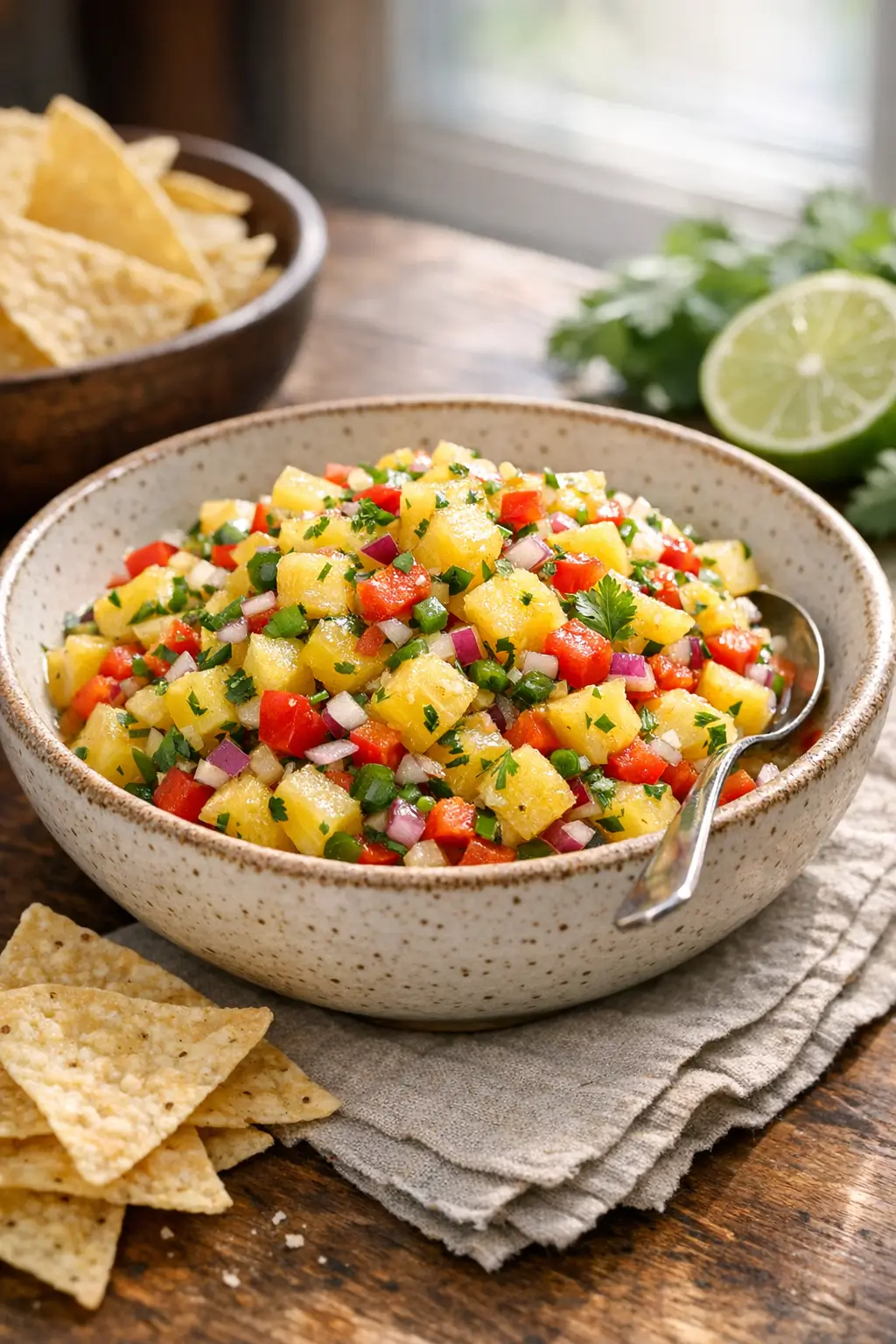
Expect juicy pineapple, crisp bell pepper and onion, fresh cilantro, and jalapeño heat balanced by lime and a pinch of salt. The texture is chunky yet spoonable, and it keeps a pleasant crunch for a day or two.
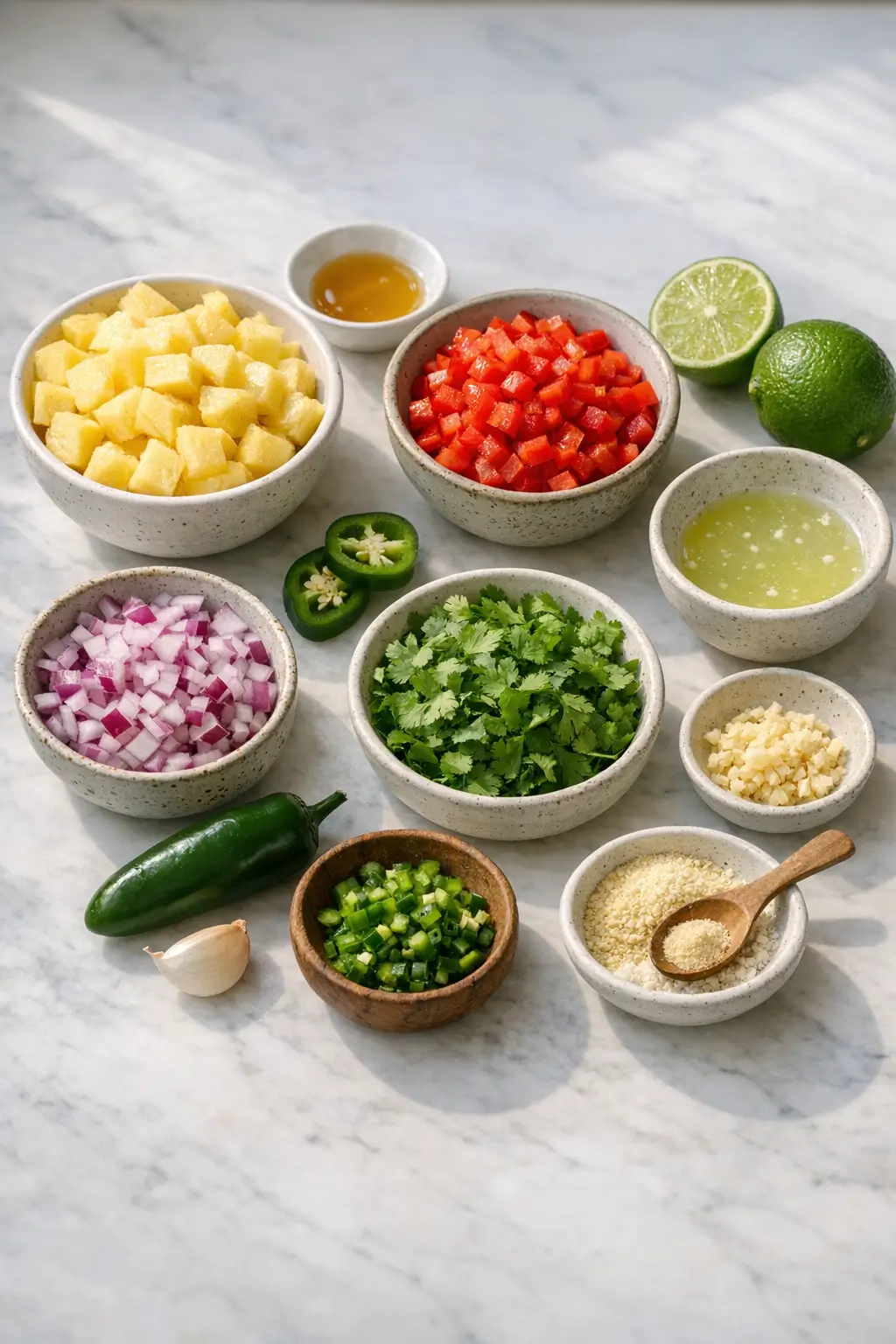
INGREDIENTS for Pineapple Salsa
- 300 g (2 cups) diced ripe pineapple — the sweet, juicy base; cut into small, even pieces for scooping
- 75 g (1/2 cup) red bell pepper, finely chopped — adds crunch and color
- 50 g (1/3 cup) red onion, finely chopped — sharp bite for balance; rinse briefly if you prefer milder flavor
- 1 small jalapeño, seeded and minced (about 2 tbsp / 10 g) — heat and freshness; keep some seeds for extra spice
- 2–3 tbsp (30–45 ml) freshly squeezed lime juice — brightens and helps the flavors meld
- 1/4 tsp (1.5 g) fine sea salt, plus more to taste — amplifies sweetness and acidity
- Optional but nice: 1 small garlic clove, very finely minced — a savory edge; or 1/8 tsp garlic powder for a gentler note
- If pineapple isn’t very sweet: 1/2 tsp honey or agave — optional; taste first
Substitutions
- No jalapeño? Use a small serrano (hotter) or a green Fresno chile (milder). In a pinch, a few dashes of bottled hot sauce work.
- No red onion? Swap with the white part of 2–3 scallions or 1/4 small sweet onion.
- Cilantro-averse? Use 2 tbsp finely sliced scallions or a little fresh mint for brightness.
- Fresh pineapple best, but if using canned: Choose unsweetened chunks, drain very well, and pat dry; reduce added salt slightly.
STEP-BY-STEP INSTRUCTIONS
-
Prep the produce. Peel and core the pineapple, then dice into small pieces about 6–8 mm (1/4 inch). Chop the bell pepper and onion the same size for even texture. Mince the jalapeño. Finely chop the cilantro. If adding garlic, mince it very finely so it disappears into the mix.
-
Optional mellowing step. For a gentler onion bite, soak the chopped onion in cold water for 5 minutes, then drain and pat dry. This is helpful if serving kids or heat-sensitive guests.
-
Combine and season. In a medium bowl, add pineapple, bell pepper, onion, jalapeño, and cilantro. Sprinkle in the salt, pour in 2 tbsp (30 ml) lime juice, and stir to coat.
-
Taste and adjust. You’re aiming for a sweet-tart balance with a fresh chile glow. Add more lime for extra zing, another pinch of salt if flavors feel flat, and a few jalapeño seeds if you want more heat. If the pineapple is underripe or extra tart, a tiny drizzle of honey can round it out.
-
Rest briefly. Let the salsa stand 10–15 minutes. The salt and lime start to draw out juices and help the flavors come together. If you’re in a rush, it’s still tasty right away—just slightly less integrated.
-
Final check and serve. Stir again and check the bottom of the bowl—if a lot of liquid has pooled, use a slotted spoon for serving with chips to keep things crisp.
Safety and speed tips
- Wear disposable gloves when handling jalapeños if you’re sensitive; avoid touching your eyes.
- A sharp knife and small, even dice matter here. Bigger chunks look rustic but won’t cling to chips as well.
- Precut pineapple from the store works; pat it very dry and trim away any tough core bits for best texture.
WHAT TO EXPECT
- Texture: Crisp, juicy, and chunky. It should scoop cleanly without breaking most chips. Some natural juices will collect in the bowl after resting—normal and flavorful.
- Flavor: Bright and balanced. Sweet pineapple leads, lime and cilantro bring freshness, jalapeño adds a gentle burn, and onion gives backbone. No single element should dominate.
- Variability: Pineapple sweetness, chile heat, and lime potency vary by brand and season. Start modestly with lime and salt, then adjust. Precut pineapple and canned fruit are typically more watery; good draining and a quick rest help.
WAYS TO CHANGE IT UP
-
Keep it vegan and more filling: Stir in 1 cup (170 g) cooked black beans and 1/2 diced avocado. You’ll get a heartier salsa for rice bowls and still keep everything plant-based. Trade-off: avocado softens faster; serve within a few hours.
-
Make it spicier or milder: For more heat, use a serrano or add a second jalapeño. For a big kick, replace part of the jalapeño with a tiny amount of minced habanero. To go milder, remove jalapeño seeds and ribs or swap in a little green bell pepper. Trade-off: more heat can overshadow pineapple’s sweetness—counter with extra lime.
-
Faster or simplified: Use store-bought, well-drained pineapple tidbits and a mini chopper for the onion and pepper. It’s on the table in 8–10 minutes. Trade-off: texture is softer and slightly wetter.
-
Smoky-roasted twist: Char the jalapeño and a few pineapple spears under the broiler or on a grill until lightly blistered, then chop. Trade-off: deeper flavor with a few extra minutes of cooling and chopping.
SERVING AND STORAGE
Serve with salty tortilla chips, spoon over fish or shrimp tacos, tuck into pork carnitas, or pair with grilled chicken or tofu. It’s also excellent alongside rice-and-bean bowls or as a topper for breakfast huevos.
For a party platter, drain off excess juices before serving so chips stay crisp. A sprinkle of flaky salt at the table perks up leftovers.
Storage: Cover and refrigerate up to 3 days. It tastes brightest in the first 24–36 hours; after that, pineapple softens and more liquid accumulates. To refresh, drain lightly and add a squeeze of lime and pinch of salt. Freezing isn’t recommended—the texture turns mushy.
CULTURAL CONTEXT
In Spanish, “salsa” simply means sauce, and in Mexican cooking it spans cooked, roasted, and raw styles made with chiles, tomatoes or tomatillos, herbs, and aromatics. Many were (and still are) ground with a molcajete, a volcanic-stone mortar and pestle. For a look at this tool as a cultural object, the National Museum of American History catalogs an example here: molcajete and tejolote.
Pineapple itself has deep roots in the Americas. The plant originated in lowland South America and spread across the tropics long before European contact. Kew Gardens’ Plants of the World Online offers an accessible overview of its history and cultivation: Ananas comosus (pineapple). Fruit-based salsas are popular in contemporary Mexican and U.S. kitchens; they sit alongside classics like salsa roja and salsa verde without replacing them.
COMMON QUESTIONS AND TROUBLESHOOTING
-
My salsa turned watery. What happened, and can I fix it?
Pineapple and salt naturally release juice. Dice the fruit small but not too fine, pat very wet pineapple dry, and drain canned fruit thoroughly. If the bowl gets soupy, tip off a little liquid before serving or scoop with a slotted spoon. A quick stir and a pinch of salt right before eating revive flavor. -
Can I use canned pineapple?
Yes, but choose unsweetened chunks and drain well. Pat dry with paper towels and reduce the salt slightly. Expect a softer texture and a bit more liquid than with fresh fruit. -
How spicy is this as written?
With one jalapeño (seeded), most people find it gentle to medium. Keep a few seeds for more heat, or swap in a serrano for a noticeable bump. Sensitive palates can remove all seeds and ribs or use half a jalapeño. -
The onion tastes too strong. Any tips?
Finely chop it and soak in cold water for 5 minutes, then drain and pat dry. Sweet onion or the white parts of scallions are milder alternatives. A little extra lime can also soften the perception of sharpness. -
Can I make it ahead?
Yes. Mix it up to 12 hours in advance and refrigerate. Stir, taste, and adjust lime and salt just before serving. For maximum crunch, chop ingredients ahead but combine 30 minutes before eating. -
How long does it keep? Can I freeze it?
Refrigerate in an airtight container up to 3 days. Freezing isn’t recommended because pineapple becomes mushy and watery after thawing. -
What proteins pair best?
Grilled or pan-seared fish (mahi-mahi, cod, salmon), shrimp, pork carnitas, pulled chicken, and grilled tofu all benefit from the sweet heat and acidity.
CONCLUSION
If you try this, leave a comment with your heat level and any tweaks—extra lime, added avocado, roasted chiles. Your notes help other home cooks dial in the version that fits their chips, tacos, and weeknight routine.



Leave a Reply