
Butter chicken is the cozy, crowd‑pleasing curry many of us order on repeat—and it’s easier to cook at home than you might think. This version gives you the classic creamy, tomato‑butter sauce with tender chicken and a gentle, warming spice profile.
Here’s the promise: straightforward steps, supermarket ingredients, and flexible timing so dinner lands smoothly on a weeknight or for low‑key entertaining. You’ll build flavor in layers and finish with a silky texture that tastes like it took all day.
Originating from North India’s restaurant menus, it’s a natural fit for family dinners, game days, or cooler months. It will especially suit cooks who like clear, repeatable methods with make‑ahead options. Expect a rich, velvety sauce, mild heat, and balanced tang from tomatoes tempered by butter and cream.
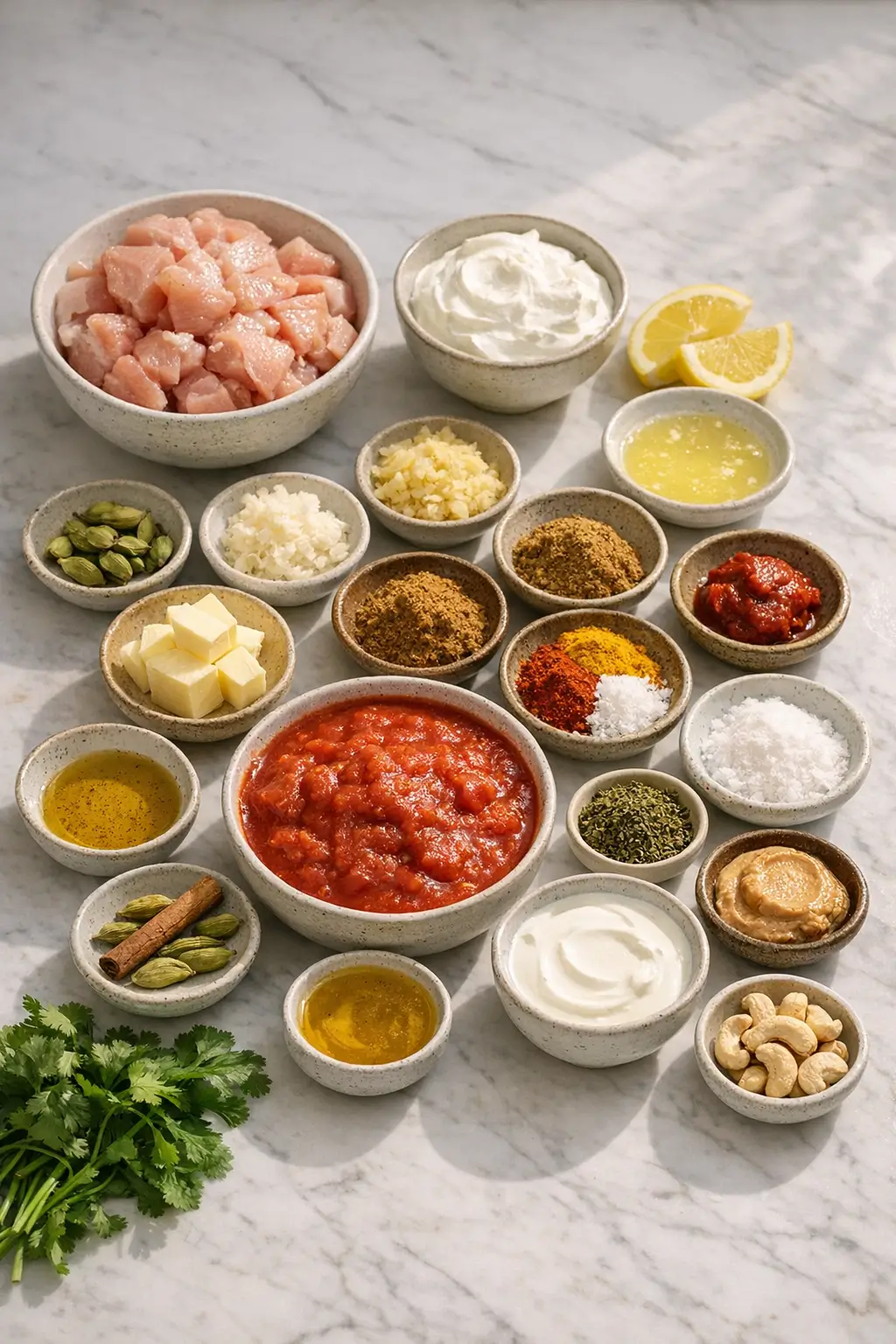
INGREDIENTS
-
For 3–4 servings
-
Chicken and marinade
-
700 g / 1½ lb boneless, skinless chicken thighs, cut into 3–4 cm / 1½ in pieces (juicy and forgiving)
-
150 g / ⅔ cup plain Greek yogurt (helps tenderize)
-
2 tbsp lemon juice (brightens; aids tenderizing)
-
4 garlic cloves, finely grated or pressed (about 12 g / 2 tsp)
-
1 tbsp finely grated fresh ginger
-
1 tsp ground cumin
-
1 tsp garam masala
-
½ tsp ground turmeric
-
1 tsp Kashmiri chili powder or mild chili powder; use sweet paprika for color with very low heat
-
1 tsp fine salt
-
Sauce
-
2 tbsp neutral oil (prevents butter from scorching)
-
60 g / 4 tbsp unsalted butter, divided
-
4 green cardamom pods, lightly crushed; or ½ tsp ground cardamom added later
-
1 small cinnamon stick (about 5 cm / 2 in); or ¼ tsp ground cinnamon added later
-
1 bay leaf (optional)
-
2 garlic cloves, finely grated
-
1 tbsp finely grated fresh ginger
-
800 g / 28 oz crushed tomatoes or passata
-
1 tbsp tomato paste (boosts color and depth)
-
1–2 tsp sugar or clear honey (balances acidity; adjust to taste)
-
½–¾ tsp fine salt, to taste
-
120 ml / ½ cup heavy cream
-
1 tsp dried fenugreek leaves (kasuri methi), crushed between fingers; optional but recommended; if unavailable, use a tiny pinch of ground fenugreek seed or omit
-
½ tsp garam masala, to finish
-
Optional richness: 2 tbsp smooth cashew butter or 30 g / ¼ cup very finely ground raw cashews; stir in with cream for a thicker, silkier finish
-
To serve (optional)
-
Warm basmati rice and/or naan
-
Fresh cilantro (coriander) leaves
-
Extra cream for a swirl and a small knob of butter for gloss
STEP-BY-STEP INSTRUCTIONS
- Marinate the chicken (30 minutes to overnight).
- In a bowl, combine yogurt, lemon juice, garlic, ginger, cumin, garam masala, turmeric, chili powder, and salt. Add the chicken and coat thoroughly.
- Cover and refrigerate at least 30 minutes; up to 24 hours deepens flavor. The mix should be thick and clingy, not runny.
- Preheat for a quick “tandoor‑style” char.
- Set an oven rack 6–8 in / 15–20 cm from the broiler (grill). Line a sheet pan with foil and oil a rack. Preheat the broiler on high for 5 minutes.
- Alternatively, heat a large skillet over medium‑high until very hot for stovetop searing.
- Par‑cook and lightly char the chicken.
- Broiler: Arrange chicken on the rack in a single layer. Broil 7–10 minutes, turning once, until lightly charred at the edges and just opaque. It does not need to be fully cooked through.
- Skillet: Film the pan with 1 tbsp oil. Sear chicken in two batches, 2–3 minutes per side, until spot‑charred. Transfer to a plate. Avoid fully cooking now to keep it juicy later.
- Sensory cue: You want golden edges and some dark spots; juices should run mostly clear but the center can still be slightly underdone.
- Bloom the whole spices.
- In a wide saucepan or deep skillet, heat 1 tbsp oil and 2 tbsp butter over medium heat. When the foam subsides, add cardamom, cinnamon, and bay leaf. Sizzle 30–60 seconds until aromatic. If they brown rapidly, lower the heat—burnt spices taste bitter.
- Build the tomato base.
- Stir in ginger and garlic; cook 30 seconds.
- Add crushed tomatoes, tomato paste, sugar/honey, and ½ tsp salt. Simmer uncovered 12–15 minutes, stirring occasionally, until the sauce thickens, darkens slightly, and looks glossy around the edges.
- Texture option: For ultra‑smooth sauce, blend carefully (immersion blender) and strain back into the pan. This step mirrors restaurant‑style smoothness.
- Finish the sauce.
- Stir in remaining 2 tbsp butter until shiny. Lower heat to medium‑low. Add cream and, if using, cashew butter/ground cashews. Simmer 2–3 minutes, stirring, just until velvety.
- Important: Keep it at a gentle simmer. A hard boil can split the dairy. If you see oil separating aggressively, whisk in a splash of hot water or a tablespoon of cream to re‑emulsify.
- Bring it together.
- Add the par‑cooked chicken (and any tray juices). Simmer 6–8 minutes, stirring occasionally, until the chicken is cooked through and tender.
- Crush fenugreek leaves between your palms and add with the finishing ½ tsp garam masala. Taste and adjust salt, sweetness, and heat.
- Rest and serve.
- Let the curry stand off heat 3–5 minutes; it thickens slightly as it settles. Swirl in a final teaspoon of butter if you like a glossy finish.
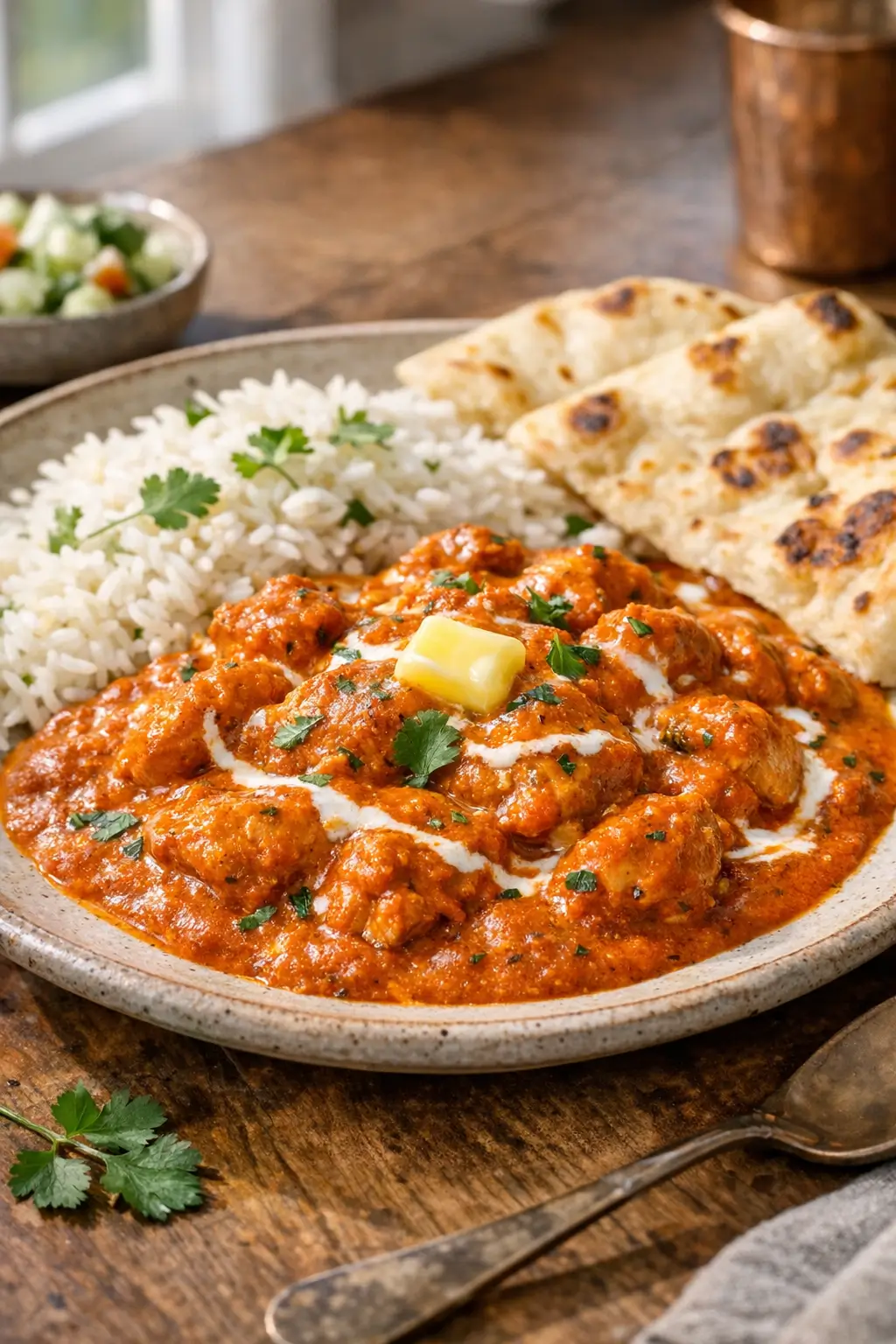
- Serve with rice or warm naan. Garnish with cilantro and a light drizzle of cream.
Beginner safeguards and timing notes:
- Marinating overnight gives you the deepest flavor, but even 30 minutes helps. The lemon juice and yogurt work quickly.
- Oven strength varies. If the chicken isn’t charring under the broiler by 5 minutes, move it closer or switch to a hot skillet.
- Tomatoes differ by brand. If the sauce tastes sharp, add another pinch of sugar/honey and simmer a few more minutes.
- If dairy curdles, the sauce likely boiled. Take it off heat, whisk in a splash of hot water and another spoon of cream, then gently reheat.
WHAT TO EXPECT
-
Texture: The sauce should coat a spoon in a satiny layer, not stand as a thick paste. Expect a pourable, creamy consistency with a soft sheen.
-
Flavor balance: Tangy tomatoes meet buttery richness and a faint sweetness. The spices read as warm and aromatic rather than hot—Kashmiri chili brings color and gentle heat. Fenugreek adds a distinctive maple‑like aroma; if you omit it, the dish is still delicious but a touch less “restaurant‑like.”
-
Variability: Different canned tomatoes and garam masala blends swing flavor notably. Some brands are more acidic or have more seeds; passata yields the smoothest finish. Chicken thighs stay juicier than breasts; if using breasts, keep the par‑cook brief and the final simmer shorter.
WAYS TO CHANGE IT UP
-
Vegetarian or vegan:
-
Swap chicken for roasted cauliflower florets and cooked chickpeas (about 400 g / 14 oz can, drained). Roast cauliflower at 218°C/425°F with oil and salt until browned, then fold into the finished sauce.
-
For dairy‑free, use coconut cream (½ cup) and plant butter or neutral oil. Expect a light coconut note and a slightly looser body.
-
Spicier or milder:
-
Spicier: Add a slit green chili to the sauce with the tomatoes, or increase chili powder to 1½–2 tsp. You can also finish with a drizzle of chili oil.
-
Milder: Use mostly sweet paprika for color and just a pinch of chili. Add an extra tablespoon of cream at the end.
-
Faster or simplified:
-
Use rotisserie chicken pieces and skip the marinating step; simmer gently in the finished sauce for 5 minutes. The flavor is rounder but lacks light char.
-
Rely on jarred ginger‑garlic paste and passata to cut prep and blending time.
Trade‑offs: The more you simplify, the less char and layering you’ll get. Keeping the spice bloom and a brief simmer preserves most of the character in a hurry.
SERVING AND STORAGE
-
Serve with steamed basmati rice, naan, or both. A quick cucumber‑yogurt raita and a kachumber‑style salad (tomato, cucumber, onion, lemon) keep the plate fresh.
-
Leftovers keep well: Refrigerate in a sealed container for 3–4 days. The sauce often tastes even better the next day.
-
Reheat gently over low heat, adding a splash of water to loosen. Avoid boiling to prevent the sauce from splitting. Stir while warming until creamy again.
-
Freeze up to 2 months. Thaw overnight in the refrigerator; reheat slowly and finish with a spoon of cream to restore silkiness.
CULTURAL CONTEXT — Butter Chicken
Butter chicken is closely associated with Delhi and the post‑Partition restaurant scene. Accounts vary on whether Kundan Lal Gujral or Kundan Lal Jaggi first developed the dish at Moti Mahal; the dispute even reached India’s courts. For a concise, well‑reported overview of the history and the competing origin stories, see this National Geographic explainer: What is butter chicken and where is it from?. For reporting on the ongoing legal debate between restaurant families, this Guardian article summarizes the case: India’s courts to rule on who invented butter chicken.
COMMON QUESTIONS AND TROUBLESHOOTING
-
My sauce looks grainy or split. What happened?
-
The dairy likely boiled or the tomatoes were very acidic. Take the pan off heat and whisk in a splash of hot water and a tablespoon of cream, then re‑warm gently. A quick blend with an immersion blender smooths it, too.
-
Can I use chicken breasts?
-
Yes. Cut into slightly larger pieces (about 2 in) to prevent overcooking, broil/sear just until opaque, and simmer only 4–5 minutes in the sauce. Breasts are leaner and can dry if cooked as long as thighs.
-
I can’t find dried fenugreek (kasuri methi). What’s my best move?
-
Omit it or use a tiny pinch of ground fenugreek seed instead; seeds are more bitter, so use sparingly. The dish remains excellent without it.
-
The sauce is too tangy.
-
Simmer a few more minutes to cook off sharpness, then add a pinch more sugar/honey and another tablespoon of cream. Taste again before adding salt.
-
Can I make it ahead?
-
Yes. The sauce can be made 2–3 days in advance and chilled. Reheat gently, then add freshly cooked or par‑cooked chicken and simmer to finish. Fully cooked butter chicken also reheats well the next day.
-
Is cashew butter necessary?
-
No. It adds body and a subtly nutty roundness. If skipped, you’ll still get a rich, restaurant‑style sauce from the butter and cream.
-
My spices burned during blooming. How do I avoid this?
-
Use medium heat, add oil with the butter, and bloom whole spices for only 30–60 seconds. If they darken rapidly, pull the pan off heat and continue.
CONCLUSION
If you cook this, leave a comment with what worked for you, the tomatoes you used, and any tweaks you made—especially heat level and whether you added fenugreek or cashews. Your notes help other home cooks dial in their perfect batch.
Looking forward to hearing how your version turns out and what you served it with—rice, naan, or both.



Leave a Reply