
Brisket With Onion Gravy for Passover Seder is exactly the kind of main course that works hard for you. It’s slow-braised, slices beautifully for a crowd, and the onions turn into a rich, flour-free gravy that fits right into Passover cooking. You’ll see versions of this on many Ashkenazi holiday tables, often surrounded by kugel, potatoes, and spring vegetables.
If you’re juggling kids, guests, and a crowded oven, start by slicing your onions and seasoning the brisket so it can go straight into the pan. If you’re nervous about timing, plan to cook this a day ahead; the flavor and texture actually improve. Expect deeply savory meat, soft onions, and a sauce that clings to every slice.
Ingredients
Serves 6 (generous portions) or 8 (lighter portions)
For the brisket and onions
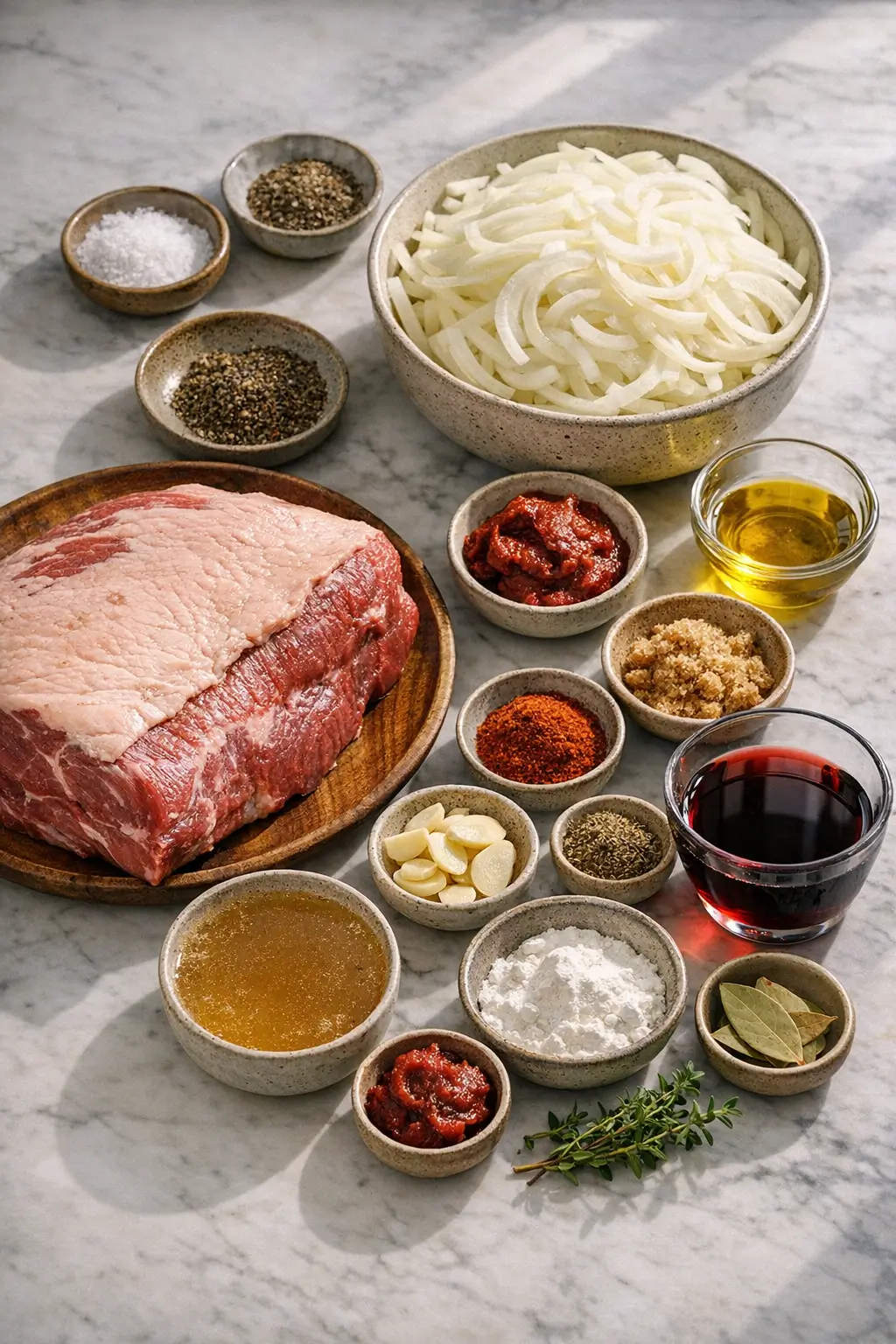
- 1.8–2.3 kg / 4–5 lb first-cut (flat) beef brisket, trimmed to about a 0.5 cm / 1/4-inch fat cap
- 2 tsp kosher salt, plus more to taste
- 1 1/2 tsp freshly ground black pepper
- 2 tbsp / 30 ml neutral oil (such as avocado, canola, or light olive oil)
- 1.1–1.4 kg / 2 1/2–3 lb yellow onions, peeled, halved, and thinly sliced (about 4–5 large onions)
- 4 garlic cloves, sliced
- 2 tbsp / 30 ml tomato paste
- 2 tsp sweet paprika
- 1 tbsp / 12 g brown sugar, lightly packed (balances the onions and wine)
- 240 ml / 1 cup dry red wine (such as Cabernet Sauvignon or Merlot)
- 720 ml / 3 cups low-sodium beef or chicken broth (Passover-appropriate)
- 2 bay leaves
- 1 tsp dried thyme or 2–3 sprigs fresh thyme
Kitchen note: Onions cook down a lot. It will look like too many at first, but you need that volume to create enough body and sweetness for the gravy.
To finish the onion gravy (flour-free)
- 125 ml / 1/2 cup braising liquid taken from the pan
- 1–2 tbsp / 8–16 g potato starch, as needed, or simmer to reduce instead of thickening
- Extra broth or water as needed to thin the gravy
- Chopped fresh parsley, for garnish (optional)
Step-by-Step Instructions for Brisket With Onion Gravy for Passover Seder
-
Season the brisket.
Pat the brisket dry with paper towels. Sprinkle both sides evenly with the kosher salt and black pepper, pressing the seasoning in so it adheres. Let the meat sit at room temperature for 20–30 minutes while you prep the onions; this takes the chill off and helps it brown more evenly. -
Preheat and choose your pan.
Heat your oven to 160°C / 325°F. Use a heavy Dutch oven or deep roasting pan that holds the brisket snugly in a single layer, with a lid or heavy foil to cover. A pan that’s too big can cause the liquids to evaporate too fast and leave you with less gravy. -
Brown the brisket.
Place your Dutch oven over medium-high heat and add the oil. When the oil is shimmering but not smoking, add the brisket, fat side down. Sear until well browned, about 4–5 minutes per side. If your brisket is very large, brown one half at a time by sliding it around the pan. -
Rest the meat and deglaze.
Transfer the browned brisket to a plate. Pour off all but about 1 tablespoon of fat from the pot, leaving the browned bits on the bottom. Those bits will season the onions and deepen the gravy flavor. -
Soften and caramelize the onions.
Lower the heat to medium. Add the sliced onions and a pinch of salt. Cook, stirring every few minutes, until the onions soften, release their liquid, and start to turn golden, about 12–15 minutes. Scrape the bottom of the pot regularly so the fond (brown bits) doesn’t burn. -
Add garlic and aromatics.
Stir in the sliced garlic and cook for 1–2 minutes until fragrant. Add the tomato paste, paprika, and brown sugar. Cook, stirring, for another 2–3 minutes so the tomato paste darkens slightly and the spices bloom.
Kitchen note: If the bottom of the pot looks like it’s getting too dark at this point, splash in 1–2 tablespoons of the red wine early and scrape with a wooden spoon. You want deep brown, not black.
-
Deglaze with wine.
Pour in the red wine and stir, scraping up any stuck bits. Let the wine simmer briskly for 3–4 minutes to reduce slightly and cook off the sharp alcohol smell. You should see the liquid thicken just a bit around the onions. -
Add broth and herbs.
Stir in the broth, bay leaves, and thyme. Bring the mixture up to a gentle simmer. Taste the liquid and add a small pinch of salt if it tastes flat; remember the flavors will concentrate in the oven. -
Nestle in the brisket.
Return the brisket to the pot, fat side up, along with any juices on the plate. The liquid should come about halfway up the sides of the meat; add a little extra broth or water if needed. Spoon some onions over the top. -
Cover and braise.
Cover the pot with a tight-fitting lid or a double layer of foil. Transfer to the oven and cook for 2 1/2–3 1/2 hours, depending on the thickness of your brisket. Start checking around the 2 1/2-hour mark: a fork should slide in with gentle resistance and the meat should just start to pull apart at the edges. -
Check the liquid level while braising.
After about 1 1/2 hours, quickly peek under the lid. If the liquid looks low or the onions are not mostly submerged, add 120–240 ml / 1/2–1 cup hot water or broth around the meat. Reseal and continue cooking. -
Cool for easy slicing (ideal make-ahead).
When the brisket is tender, transfer it to a cutting board and let it cool for 20–30 minutes, then cover and chill for several hours or overnight. Cool the onion mixture separately in its liquid and refrigerate. Chilling makes it much easier to slice the meat thinly and to remove excess fat from the gravy. -
Slice the brisket.
Once cold, trim off any thick, waxy layer of fat from the top of the brisket. Slice the meat across the grain into thin slices, about 0.5–1 cm / 1/4–3/8 inch. Arrange the slices in a baking dish that can go back into the oven later. -
Prepare the onion gravy.
Skim the hardened fat from the chilled braising liquid and onions. Transfer the onions and liquid to a saucepan. For a chunkier gravy, leave the onions as they are. For a smoother sauce, use an immersion blender to puree partially or fully. -
Adjust thickness.
Bring the sauce to a simmer. If you like a natural, looser gravy, reduce it over medium heat for 10–15 minutes until it coats the back of a spoon. For a thicker gravy, whisk together the 1/2 cup hot braising liquid with 1 tablespoon potato starch until smooth, then whisk this slurry into the simmering sauce. Cook for 1–2 minutes; it will thicken quickly. Add more potato starch slurry in small amounts only if needed.
Kitchen note: Potato starch thickens fast and can turn gluey if you add too much. Stop when the gravy clings to a spoon and remember it thickens slightly as it cools.
-
Taste and balance.
Taste the gravy and adjust the seasoning with salt, pepper, or a pinch more brown sugar if it tastes too sharp. If it seems overly rich, a splash of hot water or broth will soften it. -
Reheat the sliced brisket in gravy.
Pour some of the hot onion gravy into the pan with the sliced brisket, tucking onions between slices and making sure everything is coated but not drowning. Cover the pan tightly with foil. -
Warm before serving.
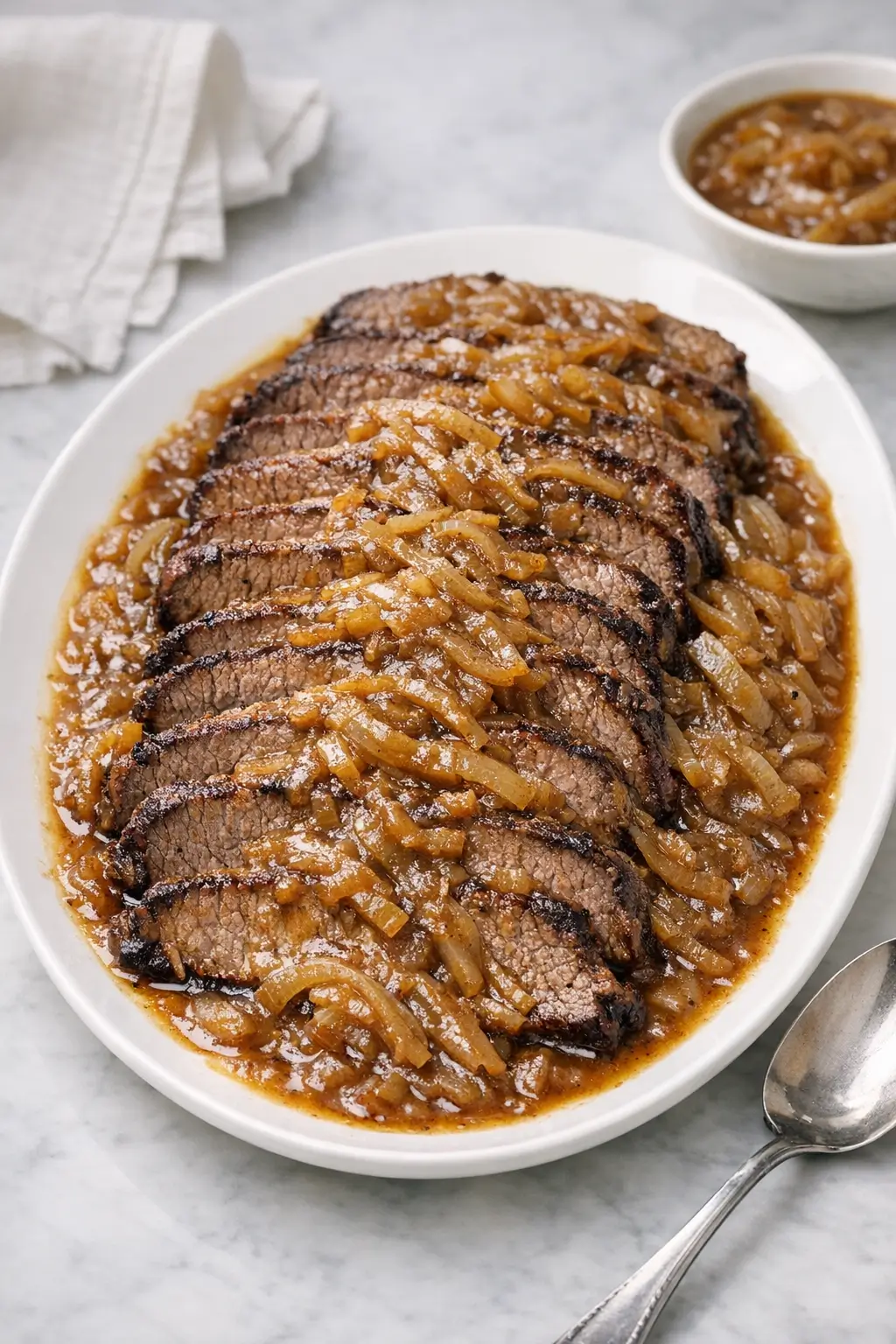
Reheat the brisket in a 150°C / 300°F oven for 25–35 minutes, until the slices are heated through and easily separated with a fork. Transfer to a platter, spoon with extra gravy and onions, and garnish with chopped parsley if you like.
What to Expect
This brisket should be tender enough to cut with a dinner knife, but not so soft that it shreds into stew. When sliced across the grain, each piece holds its shape and shows a visible, moist grain.
The onion gravy leans savory with gentle sweetness. The browned onions, tomato paste, and red wine create depth, while a touch of brown sugar rounds out the edges without turning it into a sweet-and-sour sauce. If your wine is very tannic, you may notice a slightly more robust flavor; that’s normal and mellows as the dish rests.
Oven quirks and pan shapes make a difference. A very wide, shallow pan can reduce the sauce faster, giving you a thicker, more intense gravy and slightly darker onions. A taller Dutch oven keeps more steam in, so the gravy may be a bit looser and paler. Both results are workable; you can always reduce the sauce more on the stove or thin it with a splash of broth.
Kitchen note: First-cut brisket is leaner and slices neatly, ideal for sitting on a Seder plate. Second-cut has more marbling and can be even more tender but may look more rustic once sliced.
Ways to Change It Up
-
Richer mushroom-onion gravy (still Passover-friendly).
Add 225 g / 8 oz sliced cremini or button mushrooms after the onions have softened a bit, and cook until they release their liquid and start to brown. The mushrooms bring extra umami and a steakhouse-style feel. This can be especially helpful if you’re serving the brisket with simple potatoes or a lighter side. -
Low-spice version for sensitive palates.
Skip the paprika or reduce it to 1 tsp and omit any black pepper at the table. Use a very mild, fruity red wine and lean more on thyme and bay for flavor. The trade-off is a slightly gentler, less complex gravy, but it works well if you’re cooking for kids or guests who dislike heat. -
Spicier, smoky variation.
Swap half the sweet paprika for smoked paprika and add a small pinch of cayenne to the tomato paste step. Keep the overall spice level modest so it doesn’t read as barbecue sauce; you still want it to feel like a Seder main, not a cookout. This gives you a deeper, slightly smoky gravy that pairs nicely with roasted carrots or potatoes. -
Faster, stovetop-leaning version.
If oven space is tight, you can braise mostly on the stovetop. After adding the broth and herbs, bring the pot to a very gentle simmer, cover, and cook over low heat for 2–2 1/2 hours, turning the brisket once or twice. You’ll need to monitor the heat more closely to avoid scorching, and the cooking time can be a bit less predictable than the oven method.
Serving and Storage
For a Passover Seder, this brisket with onion gravy usually lands in the role of centerpiece next to kugel, potato dishes, and greens. It pairs especially well with creamy sides like mashed potatoes, Potato Kugel With Crispy Edges for Passover, or bright salads that cut through the richness.
Plan on 170–225 g / 6–8 oz cooked brisket per adult and a little less for kids, especially with multiple courses. Arrange the slices in slight overlapping rows on a warmed platter, spoon some onions and gravy over the top, and bring extra sauce to the table in a small pitcher or bowl.
Leftovers keep well. Cool any remaining brisket and gravy quickly, then store together in an airtight container in the refrigerator for up to 4 days. Reheat gently, covered, in a 150°C / 300°F oven or on low on the stovetop with a splash of water or broth until just hot; boiling can toughen the meat.
For longer storage, freeze sliced brisket snugly packed in gravy for up to 3 months. Thaw overnight in the refrigerator before reheating. The onions may soften further after freezing, but the flavor holds nicely.
Cultural Context
Brisket holds a long-standing place in Ashkenazi Jewish cooking and is a common main course for holidays like Passover, Rosh Hashanah, and Hanukkah. Historically, it was a more affordable cut that responded well to slow braising, which fit both budget needs and the rhythm of holiday preparation. Slow-cooked brisket could be started before work was prohibited and served later, tender and ready. Historical overviews of Jewish brisket describe how it became an iconic centerpiece in many American Jewish homes.
Onions are a natural partner here. They were widely available, inexpensive, and, when cooked slowly, created a rich, sauce-like base without flour, aligning with Passover’s avoidance of most grain-based thickeners. Contemporary food writers still point to brisket as a classic holiday dish, with discussions of its roots and symbolism appearing in resources like articles on the history of brisket at Jewish holidays. Your version at the Seder table joins a long, evolving tradition rather than a single fixed style.
Common Questions and Troubleshooting
My brisket is cooked but feels a bit tough. Can I fix it?
Often, brisket that’s sliceable but still chewy just needs more time. Return it to the pot so it’s partly submerged in the onions and liquid, cover, and continue braising at 150–160°C / 300–325°F for another 30–45 minutes, then check again. Make sure the liquid level stays at least one-third of the way up the meat.
The gravy tastes too sharp or wine-heavy. What should I do?
Simmer the sauce uncovered for a few more minutes to burn off more alcohol, then whisk in a small splash of broth and an extra pinch of brown sugar. Avoid adding too much sugar at once; you want balance, not sweetness. Serving it over plain potatoes or kugel also helps mellow strong flavors.
Can I make this brisket fully in advance for Seder night?
Yes, and many hosts prefer it that way. Cook the brisket a day or two ahead, chill it in its liquid, slice when cold, and store the slices in a baking dish covered with some of the gravy. Before the meal, cover tightly and rewarm in a moderate oven until heated through. This approach frees you up to assemble sides like Charoset with Apples and Walnuts for Easy Passover Prep and Potato Kugel With Crispy Edges for Passover.
How do I keep the gravy Passover-friendly without matzo meal or flour?
Long-cooked onions already bring a lot of body. You can either reduce the sauce until thick or use a small amount of potato starch slurry. Add it gradually to simmering liquid and stop as soon as the gravy lightly coats a spoon. Over-thickening can make the texture pasty.
What if I can only find a very large brisket?
You can either cook the whole piece and freeze half in gravy, or cut it into two smaller pieces. Arrange them side by side in a larger roasting pan, making sure there’s still enough liquid to come partway up the sides. Start checking for doneness around the 3-hour mark; thicker pieces may need closer to 3 1/2 hours.
Kitchen note: Brisket continues to tenderize slightly as it rests in the hot gravy. If it seems just a touch firm but nearly there, take it off the heat, keep it covered in the sauce for 20–30 minutes, and check again before chilling or serving.
Conclusion
This brisket with onion gravy is built for real-world Passover hosting: it’s make-ahead friendly, reheats well, and feeds a table of mixed ages without much last-minute effort. Once you’ve made it once, you can adjust the seasoning, wine, and onion level to suit your own family’s preferences.
If you try it, leave a comment with how it fit into your Seder menu and any tweaks you made—extra mushrooms, different herbs, or your preferred sides. Those practical notes help other home cooks plan their own relaxed, well-fed holiday gatherings.
Passover Brisket With Onion Gravy Made Easier

Equipment
- Dutch oven or deep roasting pan with lid (or heavy foil)
- Oven
- Wooden spoon
- Cutting board and knife
- Saucepan
- Whisk
- Immersion blender (optional)
- Baking dish (for reheating)
Ingredients
For the brisket and onions
- 4–5 lb first-cut (flat) beef brisket 1.8–2.3 kg; trimmed to about a 1/4-inch (0.5 cm) fat cap
- 2 tsp kosher salt plus more to taste
- 1 1/2 tsp freshly ground black pepper
- 2 tbsp neutral oil such as avocado, canola, or light olive oil
- 2 1/2–3 lb yellow onions 1.1–1.4 kg; peeled, halved, and thinly sliced (about 4–5 large onions)
- 4 garlic cloves sliced
- 2 tbsp tomato paste
- 2 tsp sweet paprika
- 1 tbsp brown sugar 12 g; lightly packed
- 1 cup dry red wine 240 ml
- 3 cups low-sodium beef or chicken broth 720 ml; Passover-appropriate
- 2 bay leaves
- 1 tsp dried thyme or 2–3 sprigs fresh thyme
To finish the onion gravy (flour-free)
- 1/2 cup braising liquid taken from the pan (to make slurry if thickening)
- 1–2 tbsp potato starch 8–16 g; as needed, or reduce sauce instead
- extra broth or water as needed to thin the gravy
- fresh parsley chopped, for garnish (optional)
Instructions
- Season the brisket: Pat the brisket dry. Season both sides with kosher salt and black pepper, pressing to adhere. Let sit at room temperature 20–30 minutes while you prep the onions.
- Preheat the oven to 160°C / 325°F. Use a heavy Dutch oven or deep roasting pan that fits the brisket snugly, with a lid or heavy foil to cover.
- Brown the brisket: Heat oil in the pot over medium-high. Sear brisket fat-side down until well browned, about 4–5 minutes per side (work in parts if needed). Transfer brisket to a plate.
- Pour off all but about 1 tablespoon fat, keeping the browned bits (fond) in the pot.
- Soften and caramelize the onions: Reduce heat to medium. Add sliced onions and a pinch of salt. Cook 12–15 minutes, stirring and scraping, until softened and starting to turn golden.
- Add garlic and aromatics: Stir in sliced garlic for 1–2 minutes until fragrant. Add tomato paste, sweet paprika, and brown sugar; cook 2–3 minutes, stirring, until paste darkens slightly and spices bloom.
- Deglaze with wine: Pour in red wine, scraping up stuck bits. Simmer 3–4 minutes to reduce slightly.
- Add broth and herbs: Stir in broth, bay leaves, and thyme. Bring to a gentle simmer and adjust salt lightly if needed.
- Nestle in the brisket: Return brisket (fat side up) and any juices to the pot. Liquid should come about halfway up the meat; add a splash of broth or water if needed. Spoon some onions over the top.
- Cover and braise: Cover tightly with lid or double layer of foil. Braise in the oven 2 1/2–3 1/2 hours, checking around 2 1/2 hours, until a fork slides in with gentle resistance and edges begin to pull apart.
- Check liquid level: After about 1 1/2 hours, quickly peek; if low, add 1/2–1 cup (120–240 ml) hot water or broth around the meat. Reseal and continue braising.
- Cool for easy slicing (make-ahead): When tender, transfer brisket to a board and cool 20–30 minutes. For best slicing, chill brisket and onion-braising liquid separately for several hours or overnight.
- Slice the brisket: When cold, remove any thick hardened fat. Slice across the grain into thin slices (about 1/4–3/8 inch / 0.5–1 cm). Arrange in a baking dish.
- Prepare the onion gravy: Skim hardened fat from chilled braising liquid. Warm onions and liquid in a saucepan; leave chunky or partially/fully blend with an immersion blender for a smoother sauce.
- Adjust thickness: Simmer to reduce 10–15 minutes for a looser gravy, or whisk 1 tablespoon potato starch into 1/2 cup hot braising liquid and whisk slurry into simmering sauce; cook 1–2 minutes. Add more slurry only if needed. Thin with broth or water if necessary.
- Taste and balance: Adjust with salt, pepper, or a pinch more brown sugar if needed.
- Reheat brisket in gravy: Spoon some hot onion gravy over and between brisket slices (coat, don’t drown). Cover tightly with foil.
- Warm before serving: Reheat at 150°C / 300°F for 25–35 minutes until hot and slices separate easily. Serve with extra gravy and onions; garnish with chopped parsley if desired.



Leave a Reply