
Charoset with apples, walnuts, and warm cinnamon is one of those Passover dishes that’s simple to make but carries a lot of meaning. It sits on the Seder plate, but it also has to actually taste good with matzo and horseradish, and hold up through long services and late meals.
If you’re planning a Seder around work, kids, or travel, start here: chop the apples first so they can mix with lemon and wine while you prep everything else. If you’re juggling a tiny kitchen, measure the walnuts and spices into one bowl now so they’re ready when the apples are done.
This version leans on classic Ashkenazi flavors: tart-sweet apples, toasty walnuts, honey, and warm cinnamon, with just enough sweet Passover wine to bind it all together. Expect a chunky, spoonable mixture that’s gently spiced, not cloying, and easy to scale up for a crowd.
Ingredients
Makes about 3 1/2–4 cups, 6–8 Seder servings
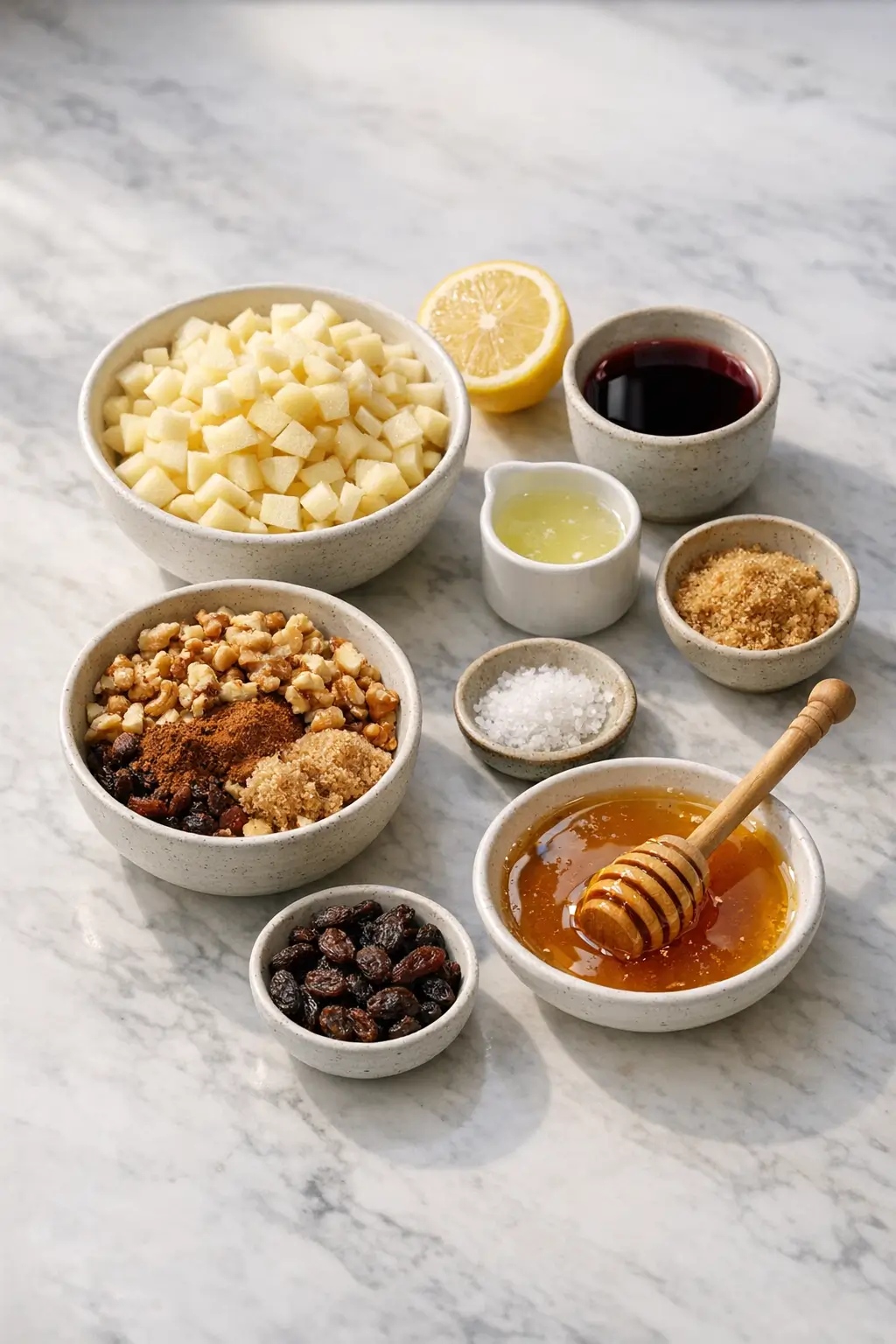
- 3 medium apples (about 675 g / 1 1/2 lb), peeled, cored, and finely diced (Gala, Fuji, or Honeycrisp work well)
- 120 g / 1 cup walnut halves or pieces, lightly toasted and coarsely chopped
- 60–80 ml / 1/4–1/3 cup sweet red kosher wine (such as Manischewitz or Malaga), plus more to taste
- 2–3 tbsp honey (about 30–45 g), to taste
- 1 1/2 tsp ground cinnamon
- 1–2 tbsp brown sugar (optional, for deeper sweetness)
- 2–3 tbsp lemon juice (about 1 small lemon), to keep apples from browning and add brightness
- Small pinch fine sea salt (optional, to sharpen the flavors)
Optional fruit add-ins (pick 1–2 if you like):
- 1/4 cup (40 g) raisins or chopped dates for extra sweetness and texture
Substitutions:
- Wine-free: Use grape juice instead of wine if you prefer a non-alcoholic version.
- Honey-free / vegan: Swap honey for maple syrup or agave.
- Nut alternative: Walnuts are classic, but pecans work in a pinch if that fits your family’s custom.
Kitchen note: If your Seder includes guests with nut allergies, make a clearly labeled nut-free batch (no walnuts, extra dried fruit for texture) in a separate bowl and use separate utensils.
Step-by-Step Instructions for Charoset With Apples Walnuts and Warm Cinnamon
-
Prep and toast the walnuts (optional but recommended).
If you have a few extra minutes, spread the walnuts on a baking sheet and toast at 350°F / 175°C for 5–7 minutes, until they smell nutty and darken slightly. Let them cool, then coarsely chop. This step deepens the flavor and helps the nuts stay pleasantly crunchy in the charoset. -
Peel and dice the apples.
Peel, core, and finely dice the apples into roughly 1/4-inch (0.5 cm) pieces. Aim for small, even cubes; that gives you a spoonable texture without turning the mixture into a paste. -
Toss apples with lemon and a splash of wine.
In a large mixing bowl, combine the diced apples with the lemon juice and 2–3 tablespoons of the wine. Stir well to coat every piece. This helps keep the apples from browning and starts building flavor. -
Add cinnamon, honey, and optional sugar.
Sprinkle the cinnamon evenly over the apples. Drizzle in 2 tablespoons of honey and, if using, the brown sugar. Stir thoroughly so the spices and sweeteners are distributed rather than clumping. -
Fold in walnuts and any dried fruit.
Add the chopped walnuts and raisins or dates, if using. Fold gently until everything looks evenly mixed and lightly glossy from the wine and honey. -
Adjust texture with more wine.
Add more wine, 1 tablespoon at a time, just until the charoset holds together when you press it with the back of a spoon but is not soupy. Different apples release different amounts of juice, so trust the look and feel here more than a strict measurement. -
Season to taste.
Taste and add more honey or brown sugar if you’d like it sweeter, a pinch of salt if the flavors feel flat, or an extra sprinkle of cinnamon if you want more warmth. You should taste bright apple first, then spice and wine. -
Chill to let flavors meld.
Cover the bowl and refrigerate at least 1–2 hours, or up to 2 days. The mixture will deepen in flavor and the apples will soften slightly but should still have some bite. -
Stir before serving.
Just before placing on the Seder table, give the charoset a good stir and taste again. Add a splash more wine or lemon juice if it has thickened or dulled in flavor during chilling.
Kitchen note: If you’re making charoset the same day as your Seder, aim to finish at least 3–4 hours before the meal so it has time to marinate in the fridge. Freshly mixed charoset is fine, but the flavor becomes more integrated as it sits.
What to Expect
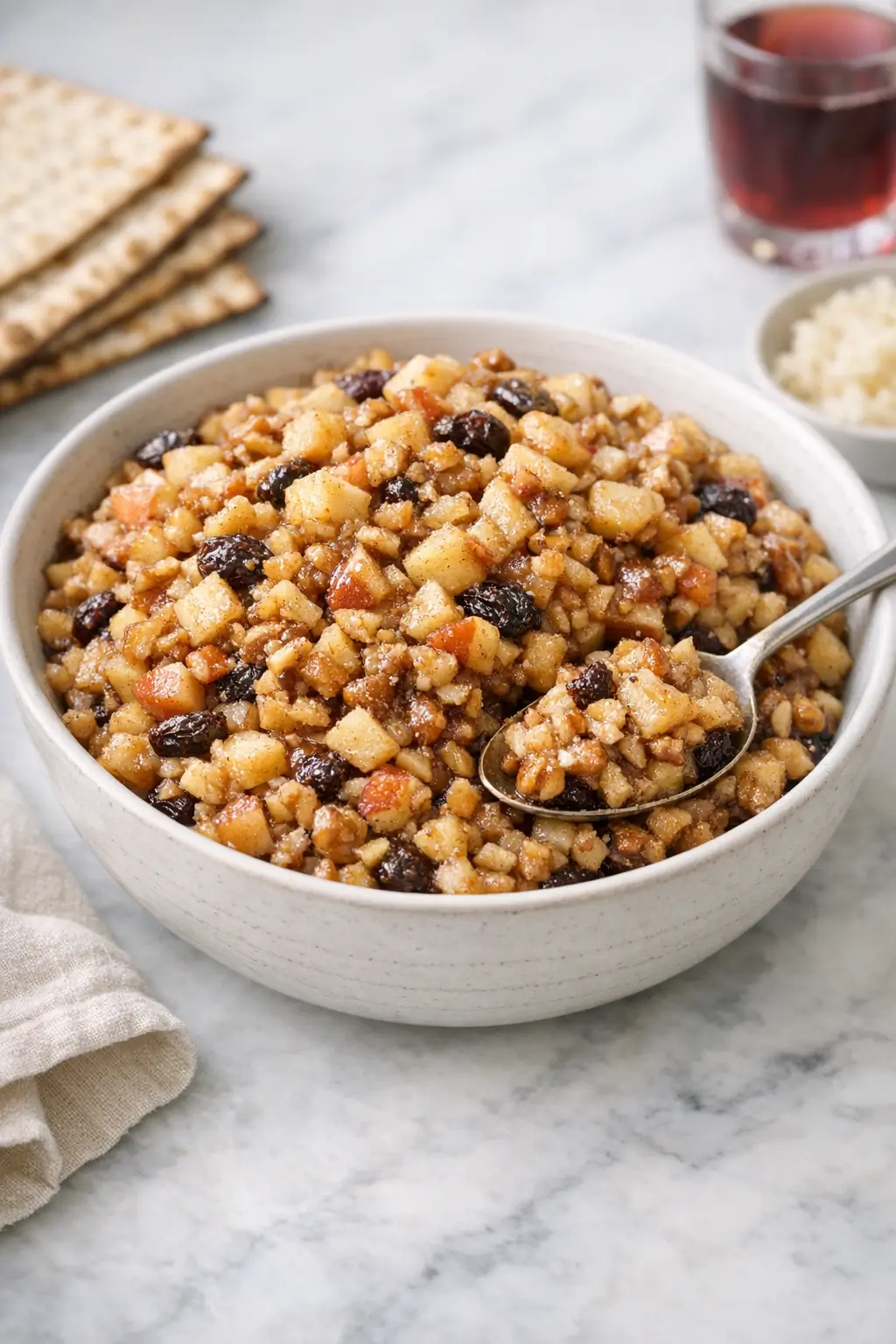
This apple-walnut charoset is meant to be chunky and a little rustic, not perfectly smooth or uniform.
The apples should still have gentle crunch after chilling, with the walnuts giving a firmer, toasty bite.
Flavor-wise, expect a balance of tart and sweet: the lemon and wine keep it bright, while honey and cinnamon bring warmth. The wine should be present but not overpowering; if it tastes too boozy, let the bowl sit uncovered in the fridge for 10–15 minutes so some of the aroma dissipates.
Different apple varieties will change the final texture and sweetness. Gala or Fuji give a softer, sweeter charoset, while Granny Smith stays more tart and crisp.
If you include raisins or dates, you’ll get pockets of softer, jammy sweetness; leaving them out makes the apples the clear star.
Kitchen note: If your charoset looks too dry right before serving, stir in a spoonful each of wine and honey. If it looks too loose, add a finely chopped extra half-apple and a few more walnuts.
Ways to Change It Up
1. Simple vegan version.
Skip the honey and use maple syrup or agave instead. Choose a vegan-certified sweet wine or use grape juice, checking labels as needed. The flavor shifts slightly toward caramel if you use maple, which works well with the cinnamon.
2. Milder and kid-friendly.
If you’re serving very young kids, you can replace some or all of the wine with grape juice and reduce the cinnamon to 1 teaspoon. Add a bit more honey to keep it appealing, and dice the apples extra small so it’s easy to scoop onto matzo.
3. Spiced and slightly deeper.
For those who like more spice, add a small pinch of ground nutmeg or ginger along with the cinnamon. Keep the amounts tiny so the charoset still reads as apple-cinnamon first, with background warmth.
4. Faster, food-processor assist.
If you’re making several Seders’ worth, you can pulse the apples in a food processor instead of hand-dicing. Use the pulse button and stop as soon as you reach small, uneven chunks—going too far turns the mixture into applesauce.
5. Dried-fruit boost.
Stir in chopped dates and raisins for a more robust texture and extra sweetness. This pushes the charoset slightly toward some Sephardi-style flavors while still feeling familiar if your family is used to the apple-walnut version.
Kitchen note: If you’re using a food processor for big batches, process the apples and nuts separately. Walnuts break down much faster than apples and can quickly become pasty if chopped together.
Serving and Storage
Charoset is served on the Seder plate and also passed around the table with matzo, often paired with maror (bitter herbs) to create the classic Hillel sandwich.
Spoon it into a shallow bowl so everyone can see the apples and walnuts, and include a small serving spoon or spreader to keep the texture intact.
At the table, keep the bowl out with the rest of the meal. Many people like charoset as a sweet counterpoint to brisket, roasted vegetables, or chicken. It also works well alongside simple sides like Creamy Lemon Orzo With Parmesan or Garlic Herb Roasted Asparagus in 15 Minutes, especially if your Seder menu leans more flexible.
For storage, cover tightly and refrigerate for up to 3 days. The apples will soften over time but still taste good; the flavors often improve on day two.
If liquid separates at the bottom of the bowl, simply stir it back in or drain a spoonful off before serving.
To serve leftovers after Passover meals, spoon charoset over yogurt, oatmeal, or cottage cheese for breakfast, or use it as a sweet topping on vanilla ice cream for a simple dessert.
Kitchen note: Avoid freezing charoset with fresh apples. The apples tend to turn mealy once thawed, which affects both texture and appearance at the Seder.
Cultural Context
Charoset is a ritual food on the Passover Seder plate, symbolizing the mortar or clay used by the Israelites during forced labor in ancient Egypt. Its thick, sticky texture and dark color are deliberate choices, meant to echo that history rather than to be purely decorative.
While this version with apples, walnuts, sweet wine, and cinnamon is closely associated with Ashkenazi communities, there is wide variation across Jewish diasporas—from date-based mixtures in parts of the Middle East to fig- and nut-forward versions around the Mediterranean. The shared thread is the combination of fruit, nuts, and wine or juice, and the way charoset both tells a story and softens the intensity of other Seder foods.
For more on charoset’s symbolism and diverse regional styles, see this overview from a general encyclopedia entry on charoset and this cultural explainer from Eater on charoset as a Passover tradition.
Common Questions and Troubleshooting
My apples turned brown. Is the charoset ruined?
Not necessarily. A little browning is normal once the apples are exposed to air. Next time, toss the apples with lemon juice immediately and keep the bowl covered as you work. If the flavor still tastes fresh and bright, slight browning is mostly a cosmetic issue.
The mixture is too runny. How can I fix it?
First, stir well; some liquid may have settled at the bottom. If it’s still too loose, add another finely diced half-apple and a small handful of chopped walnuts. Let it sit 15–20 minutes in the fridge so the new ingredients can absorb some of the moisture.
The charoset tastes flat or too sweet.
A small pinch of salt and an extra squeeze of lemon can sharpen the flavors if it feels heavy or overly sweet. You can also add a touch more cinnamon for warmth. If the wine flavor is overpowering, let the bowl sit uncovered in the refrigerator for a short time, then taste again.
Can I make charoset ahead of time for multiple Seders?
Yes. Many cooks prepare a large batch the day before the first Seder and portion it into separate containers for each night. Store in the refrigerator for up to 3 days, stirring before each serving. If you’re planning very far ahead, it’s better to prep the nuts and measure the spices in advance, then chop fresh apples closer to the holiday.
What if I can’t use wine?
Grape juice is the most common substitute and still keeps the flavor aligned with Passover traditions. Start with slightly less juice than the wine amount, then add more as needed so the charoset holds together.
Can I make this nut-free?
Yes. Omit the walnuts and increase the diced apples and dried fruit to compensate. The texture will be softer, but still very usable on the Seder plate. If you’re serving guests with allergies, prepare and store the nut-free batch completely separately from any version that contains nuts.
Conclusion
Charoset with apples, walnuts, and warm cinnamon is a straightforward recipe that rewards a bit of care in chopping, seasoning, and resting time.
Once you’ve made a base batch that works for your table, you can adjust sweetness, spice, and texture from year to year while keeping the same core structure. If you try a variation—extra dried fruit, no wine, or a nut-free version—feel free to share how it went and what your guests noticed.
Comments, ratings, and small tweaks from your own Seder table help other home cooks plan their Passover menus with fewer last-minute surprises.
Charoset with Apples and Walnuts for Easy Passover Prep

Equipment
- Baking sheet
- Large mixing bowl
- Knife
- Cutting board
- Measuring cups
- Measuring spoons
Ingredients
- 3 medium apples peeled, cored, and finely diced (about 675 g / 1 1/2 lb; Gala, Fuji, or Honeycrisp)
- 1 cup walnut halves or pieces lightly toasted and coarsely chopped (120 g)
- 1/4–1/3 cup sweet red kosher wine plus more to taste (60–80 ml)
- 2–3 tbsp honey to taste (about 30–45 g)
- 1 1/2 tsp ground cinnamon
- 1–2 tbsp brown sugar optional, for deeper sweetness
- 2–3 tbsp lemon juice about 1 small lemon
- 1 pinch fine sea salt optional
- 1/4 cup raisins or chopped dates optional (about 40 g)
Instructions
- Prep and toast the walnuts (optional but recommended). If you have a few extra minutes, spread the walnuts on a baking sheet and toast at 350°F / 175°C for 5–7 minutes, until they smell nutty and darken slightly. Let them cool, then coarsely chop.
- Peel and dice the apples. Peel, core, and finely dice the apples into roughly 1/4-inch (0.5 cm) pieces.
- Toss apples with lemon and a splash of wine. In a large mixing bowl, combine the diced apples with the lemon juice and 2–3 tablespoons of the wine. Stir well to coat every piece.
- Add cinnamon, honey, and optional sugar. Sprinkle the cinnamon evenly over the apples. Drizzle in 2 tablespoons of honey and, if using, the brown sugar. Stir thoroughly until evenly distributed.
- Fold in walnuts and any dried fruit. Add the chopped walnuts and raisins or dates, if using. Fold gently until evenly mixed.
- Adjust texture with more wine. Add more wine, 1 tablespoon at a time, just until the charoset holds together when pressed with the back of a spoon but is not soupy.
- Season to taste. Taste and add more honey or brown sugar for sweetness, a pinch of salt if needed, or an extra sprinkle of cinnamon for more warmth.
- Chill to let flavors meld. Cover and refrigerate at least 1–2 hours, or up to 2 days.
- Stir before serving. Just before serving, stir well and taste again; add a splash more wine or lemon juice if it has thickened or dulled in flavor during chilling.



Leave a Reply