
What if your favorite bowl of chicken soup could ride along in your lunchbox? This Chicken Soup Salad delivers the same cozy flavors—tender chicken, celery, carrots, dill, and lemon—in a creamy, scoopable salad that’s easy to meal-prep.
Expect a well-seasoned, herb-forward salad with a light tang. It’s ideal for make-ahead lunches, busy weeknights, or a bring-along for winter potlucks when you want something comforting but not steamy.
Home cooks who like practical, low-mess recipes will appreciate that you can use rotisserie chicken or quickly poach your own. The texture is intentionally creamy but not heavy, with a lemony finish that keeps every bite bright.
INGREDIENTS
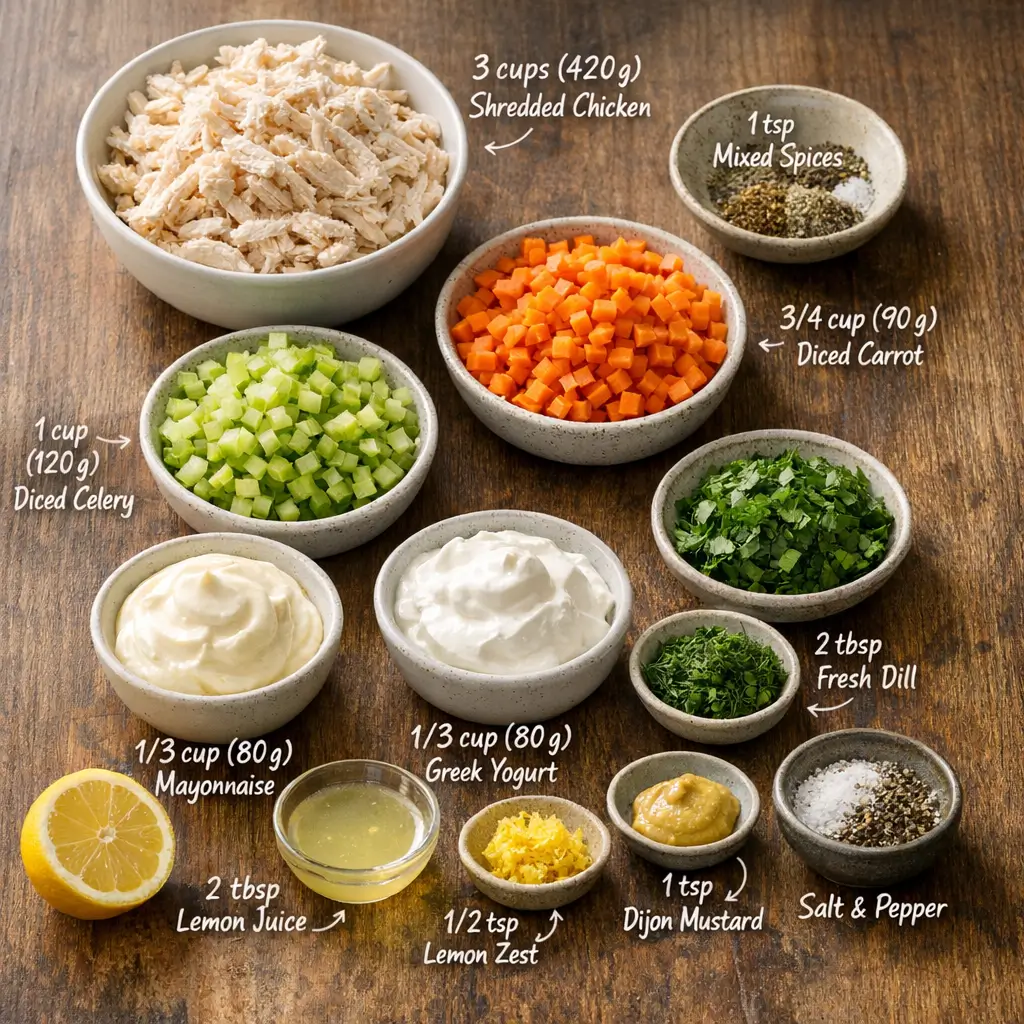
- 3 cups (about 420 g) cooked shredded chicken (rotisserie or poached) — the protein base
- 1 cup (120 g) finely diced celery — classic soup crunch
- 3/4 cup (90 g) finely diced carrot — sweet, colorful soup note
- 1/3 cup (30 g) thinly sliced scallions (white and green parts) — gentle onion flavor; or 1/4 cup (30 g) minced red onion
- 2 tbsp (6 g) chopped fresh dill — hallmark soup herb
- 2 tbsp (8 g) chopped fresh flat-leaf parsley — fresh lift
- 1/3 cup (80 g) mayonnaise — creamy binder; use avocado oil mayo if preferred
- 1/3 cup (80 g) plain Greek yogurt or sour cream — light tang; use all mayo to make it dairy-free
- 2 tbsp (30 ml) freshly squeezed lemon juice — brightness
- 1/2 tsp finely grated lemon zest — aromatic oils without extra acidity
- 2 tbsp (30 ml) low-sodium chicken broth — echoes soup flavor and loosens the dressing
- 1 tsp (5 g) Dijon mustard — subtle bite
- 1/2 tsp dried thyme (crushed) — tiny nod to soup aromatics; or 1 tsp fresh thyme leaves
- 1/4 tsp celery seed (optional) — savory depth that a lot of deli salads use
- 3/4 tsp kosher salt, plus more to taste
- 1/2 tsp freshly ground black pepper
- Optional add-in: 1/2 cup (70 g) thawed peas, patted dry — classic soup vibe; add for color and sweetness
STEP-BY-STEP INSTRUCTIONS
- Cook or prep the chicken.
- Using rotisserie: Remove skin, pull meat into bite-size shreds, and spread on a plate to cool and air-dry for 5–10 minutes so the salad doesn’t get watery.
- Poaching quickly: In a medium saucepan, cover 1 lb (450 g) boneless, skinless chicken breasts with cold water by 1 inch, add a big pinch of salt and a strip of lemon zest. Bring just to a bare simmer, then reduce heat to low. Cook gently until the thickest part reaches 165°F/74°C, 12–15 minutes depending on thickness. Transfer to a plate, rest 5 minutes, then shred. If you like, reserve a spoon or two of the cooking liquid to use as the broth in the dressing. Note: Keep the simmer gentle—boiling can make the chicken tough.
- Whisk the dressing.
- In a large bowl, whisk mayonnaise, Greek yogurt (or sour cream), lemon juice, lemon zest, Dijon, chicken broth, dried thyme, celery seed (if using), salt, and pepper until smooth and glossy. The mixture should be spoonable, not runny. If it looks thin already, hold back a teaspoon or two of the broth.
- Prep the vegetables and herbs.
- Finely dice the celery and carrot to a small, even chop (about 1/8–1/4 inch). Thinly slice scallions. Chop dill and parsley. Small pieces distribute better and help the salad hold together for sandwiches.
- Fold the vegetables into the dressing.
- Stir in celery, carrot, and scallions until evenly coated. This step seasons the vegetables before the chicken goes in, so you can taste and adjust more accurately.
- Add the chicken and combine.
- Add shredded chicken and any optional peas. Using a spatula, fold gently until everything is coated. Avoid mashing—crushing the chicken makes the texture pasty. If the mixture looks dry, splash in 1–2 teaspoons more broth (or a touch of mayo). If it looks loose, add a small handful of extra chicken or a spoon of yogurt to pull it back.
- Taste and tune.
- Add the chopped dill and parsley, then taste. Adjust salt, pepper, and lemon to your liking. If you prefer more “soup” aroma, a pinch more dried thyme or a few extra dill fronds will do it. Remember that flavors soften a little after chilling.
- Chill to set.
- Cover and refrigerate for at least 30 minutes and up to 24 hours before serving. The rest time lets the dressing hydrate the vegetables and cling to the chicken for a more cohesive scoop.
- Garnish and serve.
- Before serving, stir again and, if needed, freshen with a squeeze of lemon or a teaspoon of mayo. Top with a few dill sprigs and cracked pepper.
Beginner safeguards:
- Don’t over-thin the dressing at the start. It will loosen slightly as the vegetables release moisture.
- If you’re tempted to blitz the chicken in a food processor, pulse in 1–2 second bursts and stop while it’s still chunky. Overprocessing turns it gluey.
- If using frozen peas, thaw and pat them very dry. Extra moisture can break the emulsion.
WHAT TO EXPECT (Chicken Soup Salad)
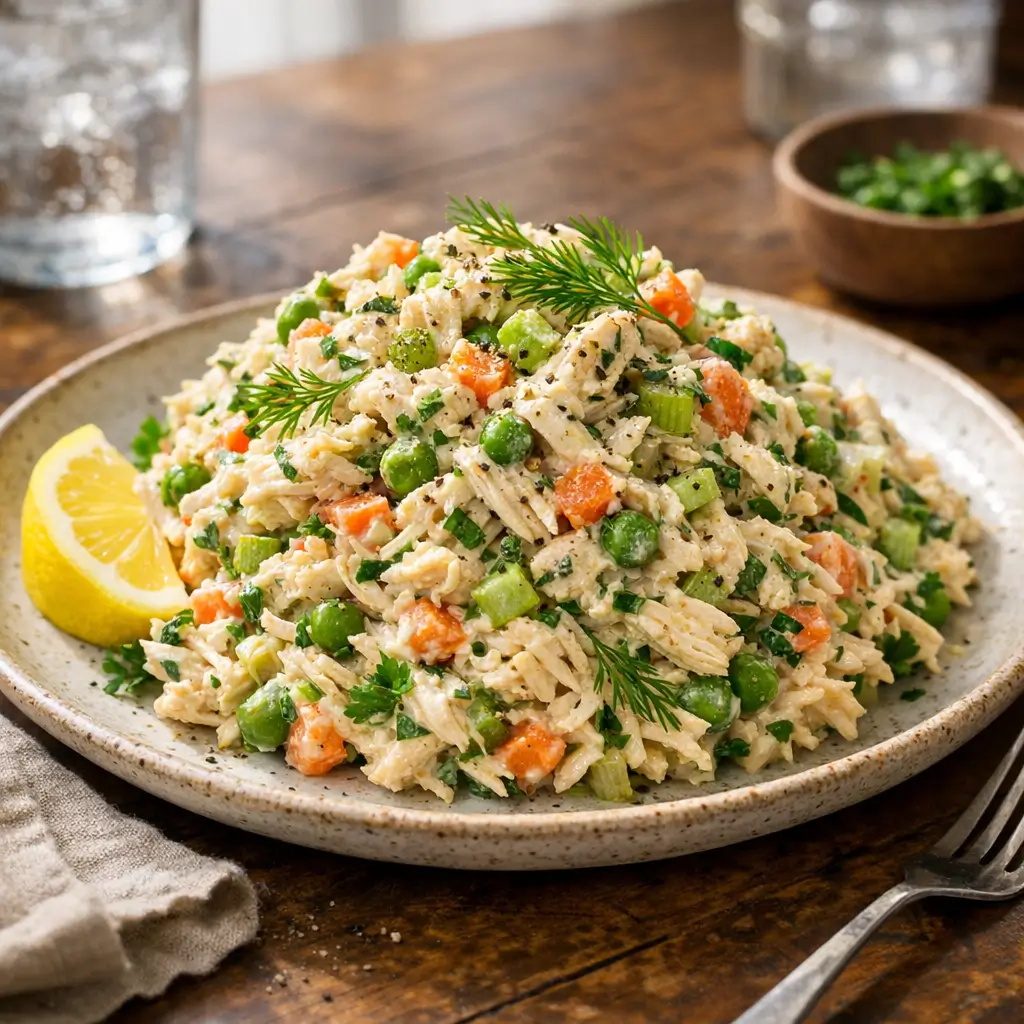
The salad should be creamy enough to mound on a spoon but not so loose that it slumps like dip.
Texture balances tender shreds of chicken with crisp celery and carrot confetti. Yogurt or sour cream lightens the mayo, so the result eats bright rather than heavy.
Flavor-wise you’ll taste lemon first, then dill and parsley, with thyme humming in the background like a classic chicken soup. Using rotisserie chicken yields a slightly richer, seasoned base; poached chicken tastes cleaner and lets the herbs lead.
WAYS TO CHANGE IT UP
-
Vegetarian or vegan: Swap the chicken for 2 (15-oz/425 g) cans chickpeas, drained, rinsed, and roughly smashed with a fork. Use vegan mayo, lemon juice, and a splash of olive oil; skip yogurt or use a plant-based version. Trade-off: less meaty chew but great protein and fiber.
-
Spicier or milder: For more heat, add 1/4–1/2 tsp red pepper flakes or a few dashes of hot sauce. For a gentler profile, reduce black pepper to 1/4 tsp and lean on parsley over dill.
-
Faster or simplified: Use pre-shredded rotisserie chicken and skip the broth in the dressing (compensate with 1–2 tsp extra lemon juice). The flavor reads a little less “soupy,” but the lemon-dill carries it.
-
Noodle nod: If you want that chicken-noodle wink, fold in 1/2 cup (80 g) well-drained, well-cooled cooked orzo right before serving. Trade-off: it’s tasty the day it’s made but softens in the fridge, so avoid for meal-prep.
SERVING AND STORAGE
Serve it in lettuce cups, over crunchy romaine, or piled onto toasted sourdough. Crackers and cucumber rounds make tidy scoops for lunchboxes.
It pairs well with sliced tomatoes, a simple green salad with lemon vinaigrette, potato chips, or a bowl of brothy soup if you’re chasing maximum comfort.
Storage: Keep the salad covered and refrigerated at 40°F/4°C or below. For food safety, refrigerate within 2 hours of mixing and discard if left out longer than that at room temperature. Plan to eat within 3–4 days for best quality and safety; salads made with mayo don’t freeze well. For official guidance, see the USDA/FSIS on cold storage times and leftovers. Open resources: FSIS: Chicken from Farm to Table and FSIS: Refrigeration & Food Safety.
Reheating isn’t recommended for this dish; it’s meant to be served cold or cool. To refresh leftovers, stir in a squeeze of lemon and a teaspoon of mayo.
CULTURAL CONTEXT
This salad borrows its flavor map from a bowl many people know well. Across regions, chicken soup often combines chicken, celery, carrot, and herbs, with lemon and dill showing up in everything from Eastern European broths to Mediterranean lemony soups. If you’re curious about how chicken soup became linked with comfort and wellness, the medical encyclopedia entry at MedlinePlus explains why warm liquids can ease cold symptoms. For a broader historical overview—from the ancient world to its modern “penicillin” nickname—see this summary on Encyclopedia.com.
None of this background makes the salad a health treatment; it’s simply context for the familiar flavors you’ll taste here.
COMMON QUESTIONS AND TROUBLESHOOTING
-
My salad came out watery. What happened?
-
Likely causes are large vegetable pieces, still-warm chicken, or overuse of broth. Dice celery and carrot small, cool the chicken completely, and start with just 1 tablespoon of broth if your yogurt is thin. If it’s already loose, mix in extra chicken or a spoon of Greek yogurt to tighten the texture.
-
Can I use canned chicken?
-
Yes. Drain it very well and pat dry with paper towels. Canned chicken is softer than rotisserie or poached, so keep your dice small for more texture and reduce the broth to 1 tablespoon at first.
-
Do I have to use both mayo and yogurt?
-
No. All mayo works and gives extra richness, while a half-and-half mayo/yogurt blend tastes lighter. Both approaches are common in classic chicken salad recipes, and you can adjust to taste.
-
Can I make it ahead?
-
Definitely. The flavor improves after a short chill. Make up to 24 hours in advance, store airtight in the fridge, and stir before serving. For best crunch, hold back peas or any optional add-ins until right before serving.
-
Is the lemon too strong?
-
It should taste bright but balanced. If you prefer subtler acidity, start with 1 tablespoon lemon juice and add more to taste after chilling. A pinch of sugar (1/4 teaspoon) can round sharp edges without making it sweet.
-
How much salt is right?
-
Different brands of rotisserie chicken, broth, and mayo vary in salt. Start with 3/4 teaspoon kosher salt, chill, then re-taste. Add in small pinches until the flavors “pop.”
-
Can I freeze Chicken Soup Salad?
-
No. Mayonnaise-based salads don’t thaw well; the emulsion breaks. Plan on refrigerating only. The USDA/FSIS recommends eating chicken salads within 3–5 days and keeping them cold. See the storage links above for details.
-
Any sandwich ideas?
-
Try toasted whole wheat with a swipe of Dijon, thin cucumber slices, and lettuce; or stuff into warm pita with shredded romaine and extra dill. For low-carb, scoop into iceberg wedges.
CONCLUSION
If you try this mash-up, leave a comment with how you served it and what you tweaked—extra dill, more lemon, or a pinch of thyme. Your notes help other home cooks set expectations and make it their own.



Leave a Reply