
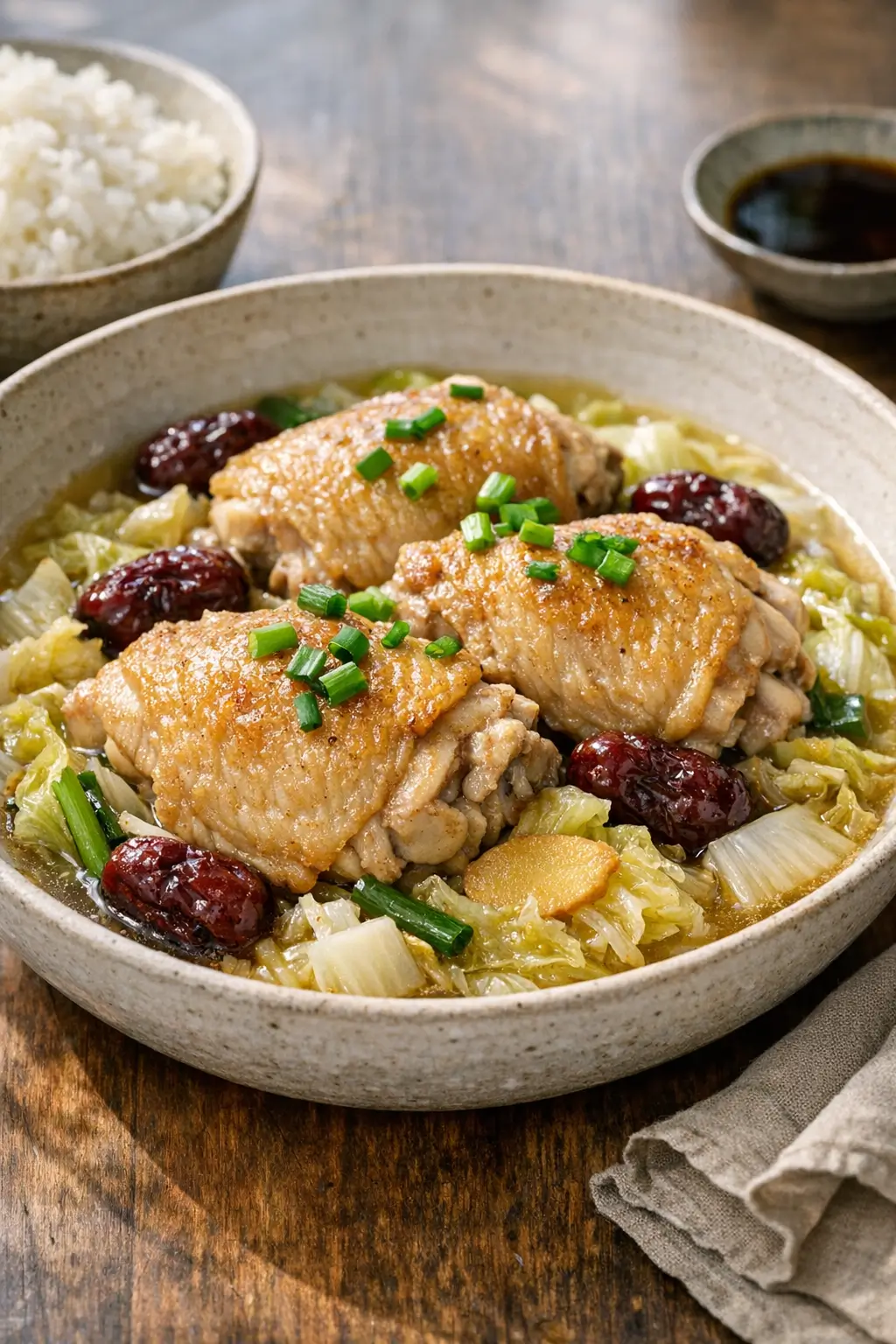
Chinese waterless braised chicken delivers a lot of flavor for very little effort. The rice cooker’s sealed pot traps steam from napa cabbage and the chicken itself, so you don’t add any water. What you get is tender meat, sweet-savory broth, and jujube (Chinese red date) notes that feel restorative without the heaviness of a long braise. Expect gentle ginger heat, scallion aroma, and cabbage that goes silky.
If you’re racing through a busy weeknight, start by washing and chopping the napa cabbage; it takes the most volume and goes in first. Using a small 5.5‑cup cooker? Halve the cabbage so the lid seals properly. Have the ginger sliced before you touch the chicken—aromatics go down fast once the pot is hot.
This dish leans on home-kitchen techniques seen across Chinese households and in today’s viral rice-cooker videos, and it works in any season. It suits cooks who want a forgiving, set‑and‑forget main with clean flavors you can customize.
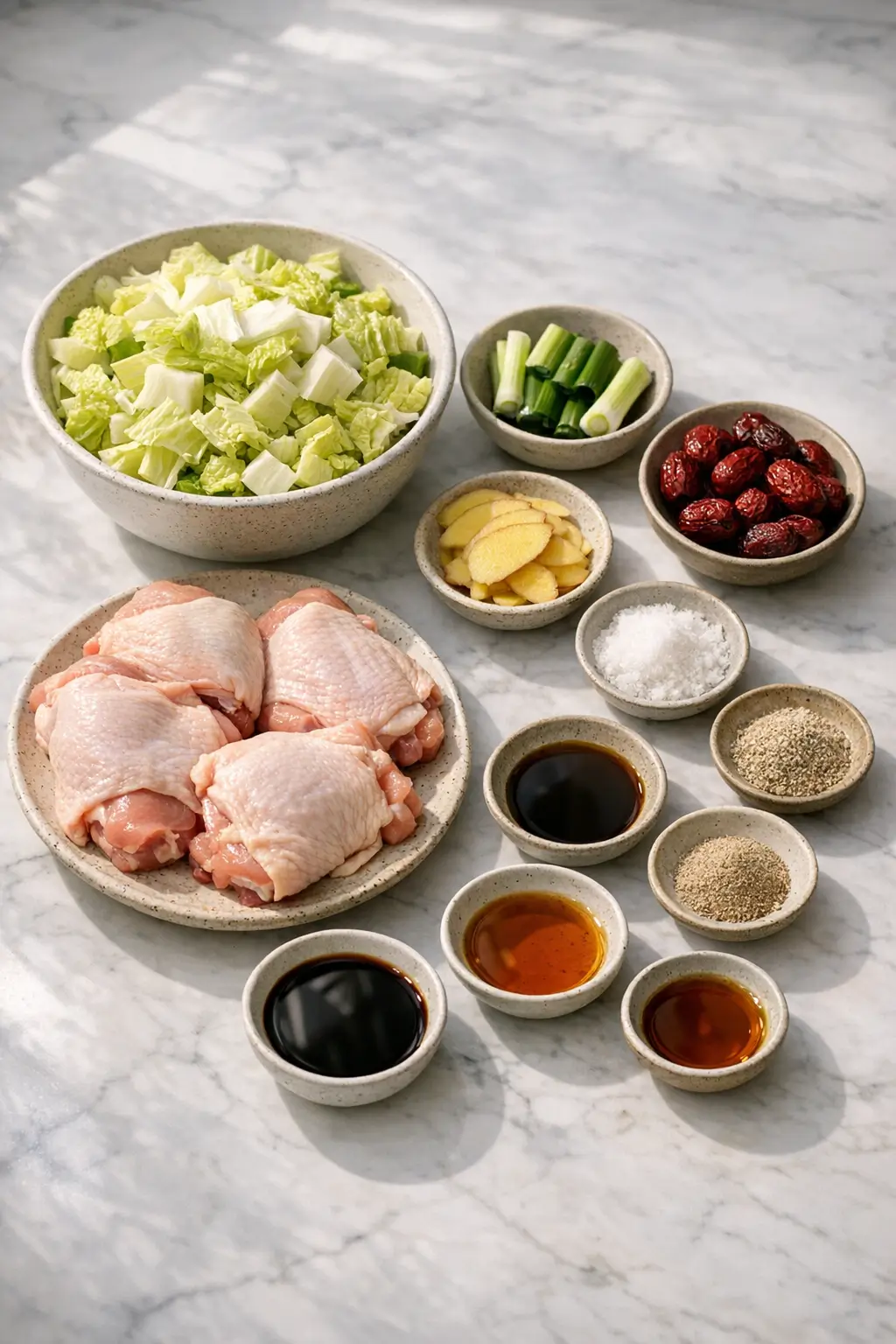
Ingredients
- Napa cabbage, core removed and cut into 2–3 cm (1‑inch) pieces — 900 g / 2 lb
Purpose: the moisture source and sweet base for the broth.
Substitute: savoy cabbage or regular green cabbage; reduce quantity by 10–15% since they release slightly less water. - Scallions (green onions), cut into 5 cm (2‑inch) lengths — 6
Purpose: aromatic base; use whites for cooking, greens for garnish.
Substitute: 1 small leek (white/light green parts only), sliced. - Fresh ginger, thinly sliced — 30 g / 1 oz
Purpose: warmth and backbone for the broth.
Substitute: 2 tsp ginger paste in a pinch (add after cooking to avoid scorching). - Dried Chinese red dates (jujubes), pitted if possible — 60 g / 2 oz (12–16 dates)
Purpose: mild sweetness and depth.
Optional add‑in: 1 Tbsp dried goji berries for a fruitier broth. - Bone‑in, skin‑on chicken thighs — 4 large (900–1,000 g / 2–2.2 lb)
Whole small chicken option: 1 bird, 1.2–1.5 kg / 2.6–3.3 lb, if your rice cooker is 8–10 cup capacity or larger. - Kosher salt — 1 to 1½ tsp (6–9 g), divided
Purpose: baseline seasoning. - Ground white pepper — ½ tsp
Purpose: gentle heat that won’t muddy the broth. - Light soy sauce — 2 Tbsp / 30 ml
Purpose: savory depth (optional but recommended).
Substitute: tamari for gluten‑free; or keep salt‑only if you prefer a very clean broth. - Shaoxing wine — 1 Tbsp / 15 ml
Purpose: rounds out chicken aroma (optional).
Substitute: dry sherry; or omit entirely for alcohol‑free. - Toasted sesame oil — 1 tsp / 5 ml
Purpose: finish for aroma (optional).
Step-by-Step Instructions for Chinese waterless braised chicken
-
Prep the aromatics and vegetables. Rinse the napa cabbage and shake off excess water. Cut into 2–3 cm (about 1‑inch) pieces. Cut scallions into 5 cm (2‑inch) lengths, keeping whites and greens separate. Slice ginger thinly. If your jujubes aren’t pitted, slice along one side and pop out the pit. If very dry, soak the dates in hot water for 5 minutes and drain.
-
Season the chicken. For a clean, light version, sprinkle the thighs evenly with 1 tsp salt and ½ tsp white pepper. For a deeper, soy‑forward version, toss thighs with 2 Tbsp light soy sauce, 1 Tbsp Shaoxing wine, and ½ tsp salt; marinate 15–30 minutes while you prep the pot. Either path works—the cabbage will still release ample liquid.
-
Build the rice cooker base. In the rice cooker’s inner pot, add all the cabbage. It will heap high; compress it with clean hands. Scatter on scallion whites and all the ginger. Tuck the jujubes throughout so a few sit under each thigh. If using goji berries, hold them for the end so they don’t over‑soften.
-
Set the chicken on top. Nestle thighs skin‑side up in a single layer. Drizzle on any marinade left in the bowl, plus 1 tsp sesame oil if using. Do not add water—cabbage + chicken provide all the liquid you need.
-
Start the cooker. Close the lid and set to a standard “Cook/White Rice” cycle. Many basic models will click to “Warm” after 25–35 minutes. Leave it on “Warm” for 5 minutes, then start a second “Cook” cycle. In fuzzy‑logic cookers with simmer/steam functions, use “Steam” for 35–45 minutes total instead.
Kitchen note: If your pot shows signs of scorching (rare, usually from too little cabbage), splash in 2 Tbsp water down the side of the pot and add a small handful of cabbage on top. Resume cooking. The dish remains effectively “waterless” because the vegetables still generate the broth.
-
Check doneness. When steam smells savory‑sweet and the cabbage has collapsed by half, open quickly and measure the thickest thigh: you want 165°F / 74°C. If not there yet, close the lid, wait 3–5 minutes, and re‑start “Cook” once more. Total time varies by cooker and load, typically 45–60 minutes for thighs.
-
Whole‑chicken variation. Use a small bird (1.2–1.5 kg / 2.6–3.3 lb), truss loosely so it fits, and cook breast‑side up over the same base. Choose “Steam” or run 2–3 “Cook” cycles for 60–75 minutes, checking for 165°F / 74°C at the thigh joint. Rest 10 minutes before carving.
-
Finish and serve. Fold scallion greens and any reserved goji berries into the pot. Taste the broth; add a pinch of salt or a few drops of soy if needed. Spoon broth over the chicken and cabbage in bowls. If you want lightly crisper skin, move the thighs to a tray and broil 2–3 minutes, then return them to the broth.
What to Expect
The broth will be clear, light, and a touch sweet from cabbage and jujubes. Ginger and scallion lift the aroma without overpowering the chicken.
Thighs cook silky and pull off the bone with minimal effort. Skin won’t crisp in a sealed cooker; that’s normal for this method. The cabbage turns tender‑supple and collects chicken juices.
Cooker differences matter. Basic on/off models often need two cycles; advanced “Steam/Soup” settings maintain a gentle simmer and may finish in a single go. Jujubes vary: softer dates melt into the broth; firmer ones keep their shape.
Kitchen note: Salt perception climbs as the broth reduces slightly on “Warm.” If you used soy sauce, taste before salting at the end—many cooks add less than they expect.
Ways to Change It Up
-
Vegetarian or vegan: Swap chicken for 600–700 g / 1.3–1.5 lb firm tofu slabs or thick‑sliced king oyster mushrooms. Season with 1 Tbsp light soy or tamari, 1 tsp sesame oil, and ½ tsp salt. Cook 20–30 minutes on “Steam” or until the cabbage collapses and tofu is heated through. Trade‑off: the broth will be lighter‑bodied.
-
Spicier: Add 1–2 dried chilies or 1 Tbsp chili crisp to the pot in Step 3, or swirl chili oil into bowls at the table. Trade‑off: spice will nudge aside some of the jujube’s sweetness.
-
Milder and extra‑clean: Skip soy and wine; use only salt, white pepper, ginger, and scallion. Trade‑off: the broth is very delicate, so finish with a few extra ginger slices to keep it lively.
-
Faster: Use boneless, skin‑on thighs (700–800 g / 1.5–1.75 lb). Cook time drops to 30–40 minutes total; check for 165°F / 74°C earlier. Trade‑off: the broth will be slightly less rich because the bones aren’t contributing.
Serving and Storage
Serve in wide bowls to catch the fragrant broth. Plain steamed rice is classic alongside, or spoon broth over rice to make a quick “soup rice” moment. A crisp, juicy salad cuts the richness nicely; try Cucumber Salad That Stays Crunchy in 15 Minutes.
If you prefer a full chicken‑and‑rice pairing with sauces, see our Hainanese Chicken Rice for Fragrant, Comforting Meals and borrow the “broth over rice” habit here.
Leftovers keep well. Refrigerate chicken, cabbage, and broth together, covered, for up to 4 days. The broth will gel when cold; that’s a sign of good collagen. Reheat gently in a covered pan over low heat or in the microwave with the broth, stirring once, until hot.
Freeze in meal‑size portions for up to 2 months. Thaw overnight in the fridge, then reheat gently. Napa softens more after freezing; if texture matters, reserve fresh scallion greens to add after reheating.
Kitchen note: Avoid hard boiling on reheat; a simmer keeps the meat tender and the broth clear.
Cultural Context
Layering meat over vegetables in a closed pot is a longstanding home‑cooking approach across China, and modern rice cookers made it even more accessible. Electric rice cookers spread through East and Southeast Asia in the mid‑20th century, then to the rest of the world; museums document their design and impact on household cooking. For a concise overview, see the National Museum of American History’s entry on a 1970s model: rice cooker at the Smithsonian.
Jujubes (Chinese red dates) are common in Chinese soups and braises for gentle sweetness and a rounded finish. Horticultural research notes their very long cultivation history in China and continued global spread; for background, see the International Society for Horticultural Science’s overview: the development and history of jujubes.
Common Questions and Troubleshooting
-
My rice cooker flipped to “Warm” too early. What now? Wait 5 minutes to let residual heat keep steaming, then hit “Cook” again. If it repeats, your load may be light. Add a small handful of cabbage on top and continue.
-
Will there really be enough liquid with no water added? Yes. Cabbage is ~93% water, and chicken releases juices as it heats. If the bottom edges ever smell toasty, add 2 Tbsp water down the pot’s side to deglaze and continue.
-
Can I skip the jujubes? You can. The broth will be less sweet and more purely savory. A few goji berries or a couple of carrot coins deliver a whisper of sweetness if you want a substitute.
-
Boneless thighs or breast? Boneless thighs work great—reduce time as noted above. Breast dries more easily in this method; if using, choose bone‑in, skin‑on split breasts and check at 150–155°F / 66–68°C, letting carryover bring them to 165°F / 74°C.
-
Whole‑chicken timing seems long—any shortcuts? Use a small bird and ensure good contact with the aromatic layer so steam circulates. In many cookers, selecting “Steam” instead of “Cook” delivers a steadier simmer and more predictable timing.
-
My jujubes stayed a bit firm. Pre‑soak for 5–10 minutes next time, or slice each in half so more surface area meets the steam.
-
What if my cooker is non‑stick? That’s standard. Use silicone or wooden utensils to avoid scratching the pot, and avoid broiling directly in the inner pot—move chicken to a tray first.
Conclusion
This is a low‑effort, high‑comfort way to turn a few produce drawer staples and pantry dates into dinner. If you make adjustments—spicier, salt‑only, tofu instead of chicken—share what you tried and what rice cooker model you used. Your notes help other home cooks dial in timing and seasoning for their own kitchens.
Chinese Waterless Braised Chicken in the Rice Cooker

Equipment
- Rice cooker (with inner pot and lid)
- Cutting board
- Knife
- Instant-read thermometer
Ingredients
- 900 g napa cabbage core removed and cut into 2–3 cm (1-inch) pieces
- 6 scallions (green onions) cut into 5 cm (2-inch) lengths; whites for cooking, greens for garnish
- 30 g fresh ginger thinly sliced
- 60 g dried Chinese red dates (jujubes) pitted if possible
- 4 large bone-in, skin-on chicken thighs about 900–1,000 g total
- 1 to 1 1/2 tsp kosher salt divided
- 1/2 tsp ground white pepper
- 2 Tbsp light soy sauce optional but recommended
- 1 Tbsp Shaoxing wine optional
- 1 tsp toasted sesame oil optional, for finishing
Instructions
- Prep the aromatics and vegetables. Rinse the napa cabbage and shake off excess water. Cut into 2–3 cm (about 1-inch) pieces. Cut scallions into 5 cm (2-inch) lengths, keeping whites and greens separate. Slice ginger thinly. If your jujubes aren’t pitted, slice along one side and pop out the pit. If very dry, soak the dates in hot water for 5 minutes and drain.
- Season the chicken. For a clean, light version, sprinkle the thighs evenly with 1 tsp salt and 1/2 tsp white pepper. For a deeper, soy-forward version, toss thighs with 2 Tbsp light soy sauce, 1 Tbsp Shaoxing wine, and 1/2 tsp salt; marinate 15–30 minutes while you prep the pot.
- Build the rice cooker base. In the rice cooker’s inner pot, add all the cabbage (compress if needed). Scatter on scallion whites and all the ginger. Tuck the jujubes throughout so a few sit under each thigh (hold goji berries for the end if using).
- Set the chicken on top. Nestle thighs skin-side up in a single layer. Drizzle on any marinade left in the bowl, plus 1 tsp sesame oil if using. Do not add water—cabbage and chicken provide all the liquid.
- Start the cooker. Close the lid and set to a standard “Cook/White Rice” cycle. Many basic models will click to “Warm” after 25–35 minutes. Leave it on “Warm” for 5 minutes, then start a second “Cook” cycle. In fuzzy-logic cookers with simmer/steam functions, use “Steam” for 35–45 minutes total instead.
- Check doneness. Open quickly and check the thickest thigh for 165°F / 74°C. If not there yet, close the lid, wait 3–5 minutes, and re-start “Cook” once more; total time is typically 45–60 minutes for thighs.
- Finish and serve. Fold scallion greens (and any reserved goji berries, if using) into the pot. Taste broth and adjust with a pinch of salt or a few drops of soy if needed. Spoon broth over the chicken and cabbage in bowls. Optional: broil chicken on a tray for 2–3 minutes to crisp the skin, then return to the broth.



Leave a Reply