
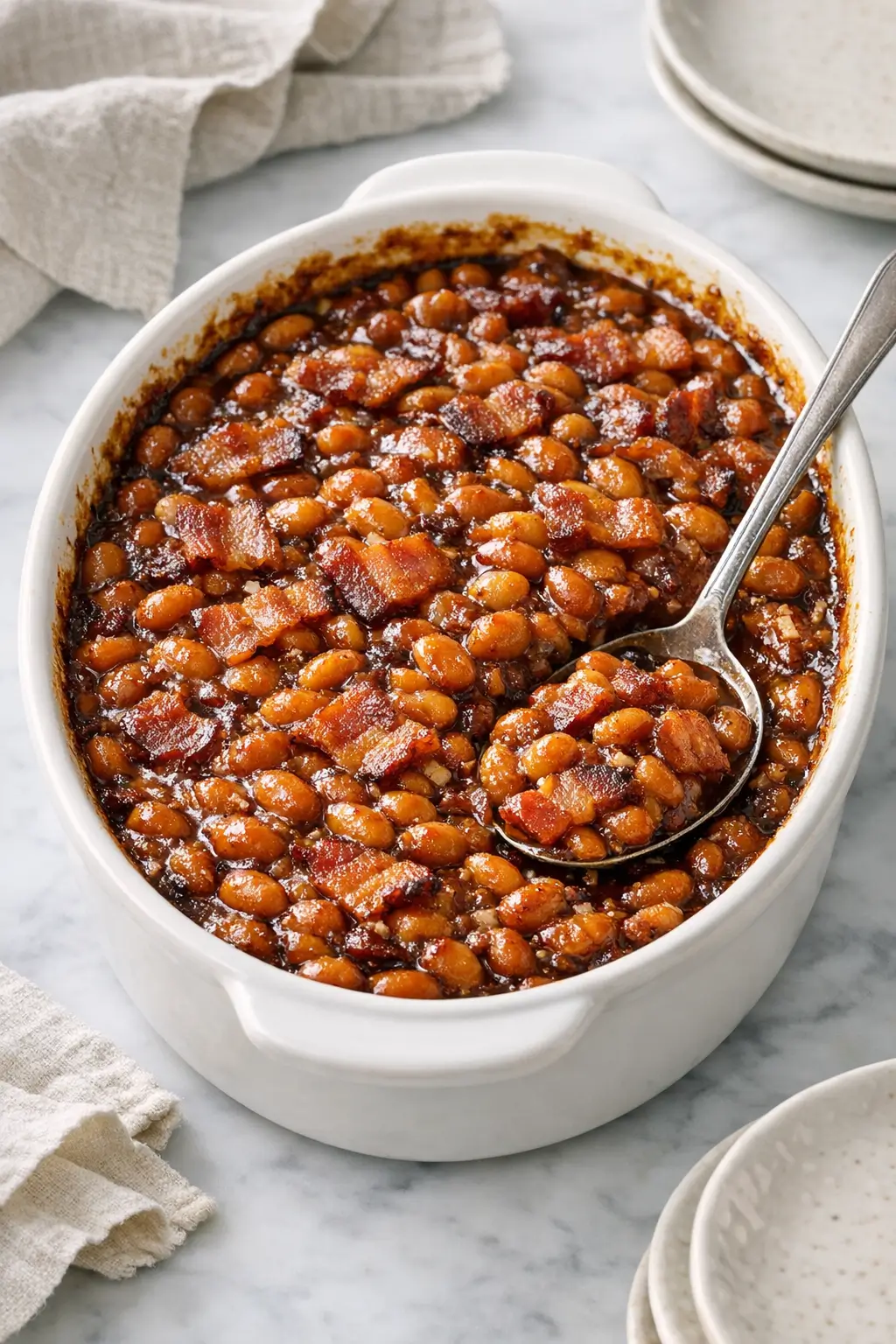
A pan of classic baked beans with bacon and brown sugar quietly takes over the plate. The beans are soft but still intact, the sauce is glossy and thick, and the edges get just a little bit sticky where the brown sugar and molasses have reduced. This version leans into smokiness from real bacon, gentle sweetness, and enough tang to keep every bite from feeling heavy.
If you’re racing to get ready for a cookout or juggling kids on a weeknight, start by cooking the bacon and onions; you can stir the rest of the sauce together while they sizzle. Before you preheat the oven, also check that your baking dish is deep enough so the beans don’t dry out.
These baked beans show up most often as a barbecue or potluck side, but they work just as well alongside simple sausages or a green salad all year long. The recipe suits newer cooks who want clear direction, and more experienced cooks who like a flexible base they can tweak for sweetness, smoke, or spice.
Ingredients
Serves 4 as a generous side, 2–3 as a main
- 2 cans (about 15 oz / 425 g each) navy beans or small white beans, drained but not rinsed – canned beans keep this weeknight-friendly
- 6 slices (about 150 g) thick-cut bacon, cut into 1/2-inch (1.25 cm) pieces – adds smokiness and richness
- 1 medium yellow onion (about 150 g), finely diced – builds sweetness and body
- 2 cloves garlic, minced – optional but helpful for depth
- 1/3 cup (70 g) packed light or dark brown sugar – classic sweetness and slight caramel flavor
- 1/4 cup (80 g) unsulphured molasses – gives that deep, old-fashioned baked bean flavor
- 1/4 cup (60 g) ketchup – adds tomato, acidity, and a bit of gloss
- 2 tbsp (30 ml) apple cider vinegar – balances the sweetness
- 1 tbsp (15 g) Dijon mustard – a small but important sharp note
- 1 tbsp (15 ml) Worcestershire sauce – savory backbone
- 1/2 cup (120 ml) water – helps the sauce reduce slowly instead of scorching
- 1 tsp (6 g) kosher salt – start here and adjust to taste, especially if your bacon is quite salty
- 1/2 tsp freshly ground black pepper – for gentle heat
- Optional but nice: 1/4 tsp smoked paprika – boosts smokiness if your bacon is mild
Substitutions and simple tweaks:
- Beans: Use canned cannellini or great northern beans if navy beans aren’t available.
- Bacon: Thick-cut bacon holds texture best, but regular bacon or diced salt pork also work. If using salt pork, reduce the kosher salt slightly.
- Sweetness: Swap up to half the brown sugar for maple syrup for a more maple-forward flavor.
- Mustard: Yellow mustard can stand in for Dijon; start with 2 tsp (10 g) and adjust.

Step-by-Step Instructions for Classic Baked Beans with Bacon and Brown Sugar
-
Preheat the oven and choose your pan.
Preheat the oven to 325°F (160°C) with a rack in the middle. Use a deep 2–2.5 quart (about 2–2.5 L) baking dish, Dutch oven, or bean pot. A deeper pan helps keep the beans saucy instead of drying out on top. -
Render the bacon.
Place the bacon pieces in a large skillet or sauté pan and set over medium heat. Cook, stirring occasionally, until the fat is mostly rendered and the bacon is lightly browned but not fully crisp, 7–10 minutes depending on thickness.
Kitchen note: If the bacon jumps straight to dark brown within a few minutes, your heat is too high. Turn it down to medium-low so you get melted fat and soft, flavorful bits instead of burnt pieces that will taste harsh in the finished beans.
-
Soften the onions and garlic.
Use a spoon to transfer the bacon to a paper towel–lined plate, leaving 2–3 tbsp of bacon fat in the pan. If there’s more than that, carefully spoon off the excess.Add the diced onion and a pinch of salt to the pan. Cook over medium heat, stirring occasionally, until the onion turns translucent and lightly golden around the edges, 6–8 minutes. Stir in the minced garlic and cook just 30–60 seconds more, until fragrant.
-
Build the sauce base.
Reduce the heat to low. Add the brown sugar, molasses, ketchup, Dijon mustard, Worcestershire sauce, apple cider vinegar, black pepper, smoked paprika (if using), and water to the pan.
Whisk or stir well, scraping up any browned bits from the bottom. The mixture should look glossy and pourable. -
Taste and adjust the sauce now.
Carefully taste a small spoonful (it will be hot). The sauce should taste slightly too sweet and tangy at this stage; the beans will soak up some of that intensity.
If it feels flat, add another 1–2 tsp (5–10 ml) vinegar. If it’s too sharp, add 1–2 tsp (4–8 g) additional brown sugar. Stir in the 1 tsp kosher salt, then taste again, bearing in mind that the bacon will add more saltiness. -
Combine beans, bacon, and sauce.
Place the drained beans in your baking dish or Dutch oven. Scatter the cooked bacon over the top, reserving a small handful if you’d like to garnish later.
Pour the hot sauce mixture over everything and gently fold with a spatula until the beans are evenly coated and the bacon is distributed.
Kitchen note: Fold gently from the bottom up rather than stirring vigorously. Canned beans are already cooked and can break down if overworked, which turns the finished dish into more of a mash.
-
Bake uncovered until thick and bubbling.
Transfer the dish to the oven and bake uncovered for 45–60 minutes. The sauce should be bubbling around the edges and noticeably thicker.Around the 35-minute mark, peek in: if the top looks dry or the sauce seems very thick already, gently stir once and splash in 2–4 tbsp (30–60 ml) hot water to keep things saucy.
-
Check doneness and adjust consistency.
When the beans are ready, the sauce should have the consistency of warm maple syrup or a loose barbecue sauce. It will thicken more as it cools.If the sauce is still very loose after 60 minutes, keep baking in 10-minute increments, checking often. If it’s too thick, stir in a bit of hot water directly in the pan until it loosens.
-
Rest before serving.
Remove the beans from the oven and let them rest for at least 10–15 minutes. This short rest helps the sauce cling to the beans instead of running all over the plate.Taste and adjust seasoning one last time with salt, pepper, or a splash of vinegar. Sprinkle the reserved bacon over the top just before serving for extra texture.
Kitchen note: Oven temperatures can vary quite a bit. If you know your oven runs cool, expect the beans to take closer to the longer end of the baking window, and rely on the look and thickness of the sauce more than the clock.
What to Expect
These baked beans are tender but not mushy. The skins stay mostly intact, and the interior of each bean is creamy. You should be able to scoop them easily with a spoon, but they should mound slightly on the plate instead of sliding off like soup.
Flavor-wise, the dish sits in a sweet-savory-tangy balance. Brown sugar and molasses bring caramel and dark, almost toffee notes, while the bacon layers in smoke and salt. Dijon mustard, vinegar, and ketchup keep the sweetness from feeling cloying, especially once the beans cool a little.
Different brands of canned beans and bacon will shift the final flavor. Some canned beans are softer and will thicken the sauce more, while very firm beans keep the mixture looser. Extra-smoky bacon can dominate, so if yours is heavily smoked, you may want to skip the smoked paprika and lean on a bit more vinegar at the end.
Kitchen note: If the beans taste dull after baking, a tiny pinch of salt and a small splash of vinegar almost always sharpen the flavor more effectively than extra sugar.
Ways to Change It Up
-
Smokier and spicier baked beans.
Add 1 finely chopped jalapeño (ribs and seeds removed) along with the onion, and include the smoked paprika. A small pinch of cayenne or a few dashes of hot sauce in the sauce base also works. Expect a more pronounced heat that stands up well to rich meats like ribs or pulled pork. -
Milder and kid-friendly.
Skip the smoked paprika and keep the black pepper on the lighter side. You can also reduce the apple cider vinegar by 1 tbsp (15 ml) if your crew is sensitive to tangy flavors. The beans will eat sweeter and softer, closer to canned baked beans but with better texture and depth. -
Vegetarian version (with a smoky workaround).
Omit the bacon and instead warm 2–3 tbsp (30–45 ml) neutral oil or butter in the pan before cooking the onions. Add 1/2 tsp smoked paprika and 1 tsp soy sauce to the sauce base to replace some of the missing savory smokiness. The texture will be a bit lighter, but the beans still bake up thick and satisfying. -
Make-ahead or slower-baked beans.
For extra-developed flavor, assemble the beans up through combining everything in the baking dish, cover, and refrigerate up to 24 hours. Bake straight from the fridge at 300°F (150°C) for 1–1 1/4 hours, uncovering for the last 20 minutes so the top can darken slightly. This lower, slower bake gives a deeper color and a slightly thicker sauce.
Serving and Storage
These beans are most commonly served warm as a side dish at barbecues, potlucks, and casual weekend dinners. They pair naturally with grilled or smoked meats, sausages, burgers, and simple roasted vegetables. For a lighter meal, serve them in a bowl with a sharp green salad or vinegar-dressed slaw.
Crusty bread, cornbread, or soft rolls are helpful for scooping up the thick sauce. If you enjoy old-school combinations, serve the beans alongside hot dogs or sausages and a simple mustardy potato salad.
Leftovers keep well. Cool the beans completely, then transfer to an airtight container and refrigerate for up to 4 days. Reheat gently in a saucepan over low heat with a splash of water, stirring often, until hot and loosened. You can also rewarm individual portions in the microwave, pausing to stir so they heat evenly.
For longer storage, freeze in smaller containers for up to 2 months. Thaw overnight in the refrigerator before reheating. The beans may soften a bit more after freezing, but the flavor holds up nicely.
Cultural Context
Baked beans sweetened with molasses and enriched with pork are closely associated with New England in the United States. In Boston, versions of this dish have been cooked slowly in bean pots for centuries, using molasses and salt pork or bacon as defining flavor elements. Historical accounts note that baked beans were often part of Saturday meals, with leftovers carried into the next day.
For a concise overview of how “Boston baked beans” became tied to the city and its role in regional identity, see this summary from the Smithsonian’s National Museum of American History: Boston baked beans historical notes.
Broader histories of beans in the Americas also emphasize Indigenous cultivation and use of beans long before European colonists adapted them into oven-baked dishes. For more background on beans as a staple crop and their cultural importance, this article from the Food and Agriculture Organization of the United Nations is helpful: FAO overview of pulses and food culture.
Common Questions and Troubleshooting
My baked beans came out too thick and dry. Can I fix them?
Yes. Stir in hot water, 2 tbsp (30 ml) at a time, directly into the baking dish until the beans loosen to a saucy consistency. Next time, cover the dish loosely with foil for the first half of baking if your oven runs hot, and check a bit earlier.
The beans are too sweet for my taste. What should I do?
Add a splash of apple cider vinegar and a small pinch of salt while the beans are still hot, then taste again. If they’re still overly sweet, you can stir in a spoonful of tomato paste or a bit more Dijon mustard, which shifts the balance toward savory and tangy.
My beans are pale and the flavor seems flat.
Often this means they either did not bake long enough or the sauce needs a bit more salt and acidity. Return the pan to the oven for another 10–15 minutes to deepen the color, then finish with a small pinch of salt and a splash of vinegar, tasting as you go.
Can I use dry beans instead of canned?
You can, but you’ll need to cook them first. Start with about 1 1/2 cups (285 g) dried navy beans, soak if you like, then simmer in unsalted water until just tender before proceeding with the recipe. The baking time will be similar, but you may need slightly more water in the sauce because cooked-from-dry beans can absorb more.
How far in advance can I make these baked beans?
The beans can be fully cooked and cooled, then refrigerated for up to 4 days. Many people prefer them the next day because the flavors have more time to meld. Reheat gently with a splash of water to bring the sauce back to a spoonable consistency.
Kitchen note: If you’re cooking for a gathering, bake the beans earlier in the day and keep them warm, covered, in a low oven (around 200°F / 95°C) for up to an hour. Stir once or twice and add a splash of water if the edges start to look dry.
Conclusion
Classic baked beans with bacon and brown sugar reward a little hands-on time with a pan of beans that feel substantial and thoughtfully seasoned. The method is straightforward enough for newer cooks but leaves room for tweaking the sweetness, smokiness, or heat level to suit whoever is at your table.
If you make adjustments—different beans, extra spice, or a vegetarian spin—share what you changed so other readers can benefit from your version. Comments, ratings, and small details like your baking time or pan size all help others get a reliable result at home.

Classic Baked Beans with Bacon and Brown Sugar

Equipment
- Deep 2–2.5 quart (2–2.5 L) baking dish, Dutch oven, or bean pot
- Large skillet or sauté pan
- Spoon
- Whisk
- Spatula
- Paper towels
Ingredients
- 2 cans navy beans or small white beans about 15 oz / 425 g each; drained but not rinsed
- 6 slices thick-cut bacon about 150 g; cut into 1/2-inch (1.25 cm) pieces
- 1 medium yellow onion about 150 g; finely diced
- 2 cloves garlic minced (optional)
- 1/3 cup packed light or dark brown sugar 70 g
- 1/4 cup unsulphured molasses 80 g
- 1/4 cup ketchup 60 g
- 2 tbsp apple cider vinegar 30 ml
- 1 tbsp Dijon mustard 15 g
- 1 tbsp Worcestershire sauce 15 ml
- 1/2 cup water 120 ml, plus more hot water as needed to adjust consistency
- 1 tsp kosher salt 6 g, to taste
- 1/2 tsp freshly ground black pepper
- 1/4 tsp smoked paprika optional
Instructions
- Preheat the oven to 325°F (160°C) with a rack in the middle. Use a deep 2–2.5 quart (about 2–2.5 L) baking dish, Dutch oven, or bean pot.
- Render the bacon: Place bacon pieces in a large skillet over medium heat and cook, stirring occasionally, until fat is mostly rendered and bacon is lightly browned but not fully crisp, 7–10 minutes. Transfer bacon to a paper towel–lined plate.
- Soften the onions and garlic: Leave 2–3 tbsp bacon fat in the pan (spoon off excess). Add diced onion and a pinch of salt; cook over medium, stirring occasionally, until translucent and lightly golden at the edges, 6–8 minutes. Stir in minced garlic and cook 30–60 seconds more, until fragrant.
- Build the sauce base: Reduce heat to low. Add brown sugar, molasses, ketchup, Dijon mustard, Worcestershire sauce, apple cider vinegar, black pepper, smoked paprika (if using), and water. Whisk or stir well, scraping up browned bits, until glossy and pourable.
- Taste and adjust: Carefully taste the hot sauce. If it feels flat, add 1–2 tsp (5–10 ml) more vinegar; if too sharp, add 1–2 tsp (4–8 g) more brown sugar. Stir in the kosher salt, then taste again (bacon will add saltiness).
- Combine: Put drained beans in the baking dish. Scatter cooked bacon over the top (reserve a little for garnish if you like). Pour hot sauce over and gently fold with a spatula until evenly coated.
- Bake uncovered 45–60 minutes until thick and bubbling. Around 35 minutes, check: if the top looks dry or sauce is very thick, gently stir once and add 2–4 tbsp (30–60 ml) hot water.
- Adjust consistency: Sauce should be like warm maple syrup or a loose barbecue sauce. If still loose after 60 minutes, bake in 10-minute increments. If too thick, stir in hot water in the pan until loosened.
- Rest 10–15 minutes before serving so the sauce clings. Taste and adjust with salt, pepper, or a splash of vinegar, and sprinkle reserved bacon on top if using.



Leave a Reply