
A clear, savory bowl of chicken noodle soup is comfort that actually cooks fast. This version builds deep flavor from bone‑in chicken thighs, classic aromatics, and just enough herbiness to brighten the broth without turning it into a herb garden. It’s the kind of soup you find in diners and family kitchens across North America, easy for weeknights and welcome when the weather turns or someone needs a warm, gentle meal.
If you’re rushing after work, start by chopping the onion, carrots, and celery; they can soften while the chicken browns. Cooking in a small kitchen? Keep a trash bowl near the cutting board and set a ladle by the stove for quick skimming.
Expect a savory broth with tender chicken, springy noodles, and vegetables that keep a bit of bite—not a long-simmered stockpot project, but honest, cozy soup.
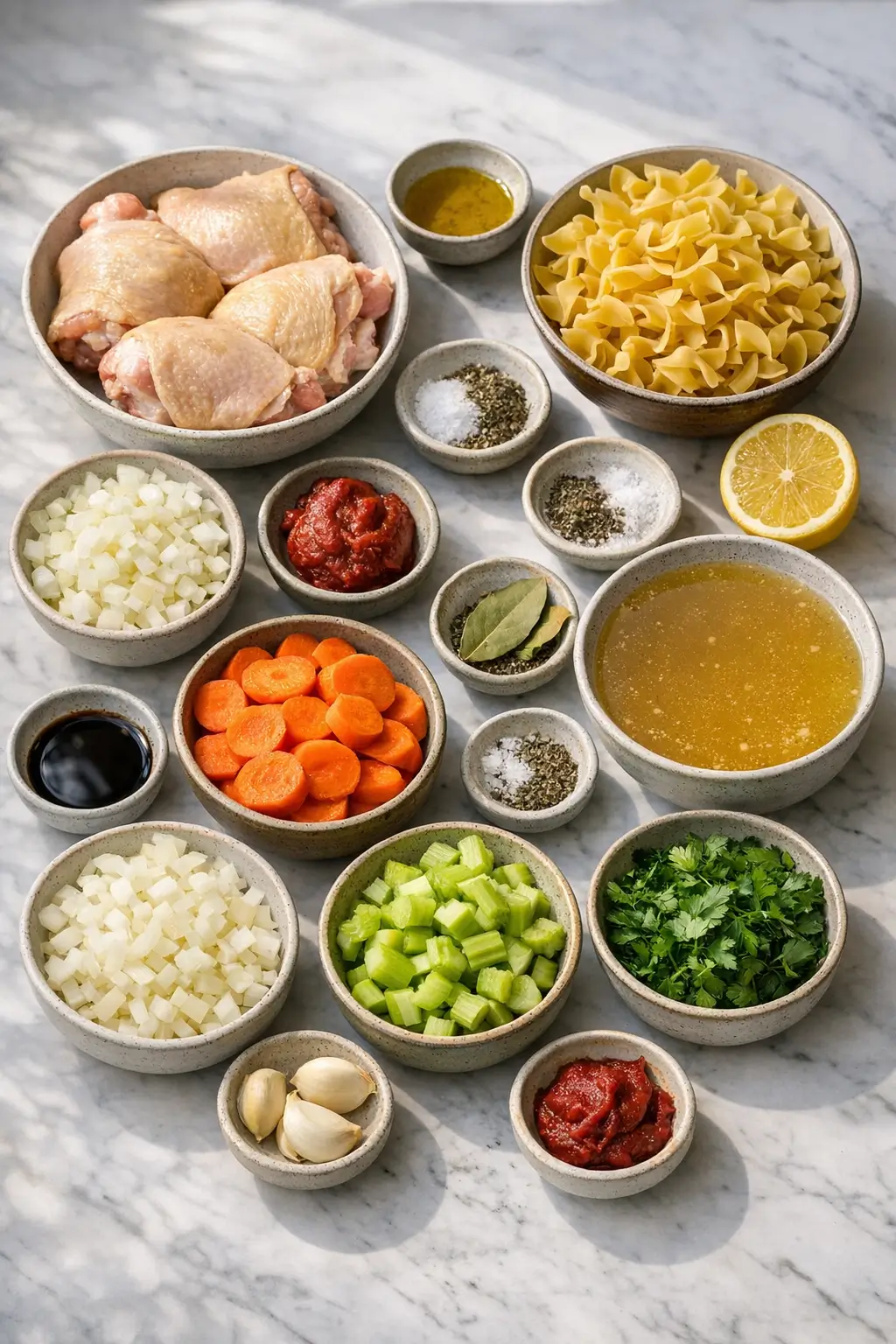
Ingredients
- 680 g / 1 1/2 lb bone‑in, skin‑on chicken thighs (4–6 pieces) — bones and skin enrich the broth
- 1 tbsp / 15 ml neutral oil (or rendered chicken fat) — for browning
- 1 medium (about 150 g) yellow onion, small dice — sweet base
- 2 medium (about 200 g) carrots, sliced 1/4‑inch — classic sweetness
- 2 ribs (about 150 g) celery, sliced 1/4‑inch — aromatic backbone
- 3 garlic cloves, minced — gentle warmth
- 1 tbsp / 16 g tomato paste — boosts savory depth without tasting tomato‑y
- 1 tsp dried thyme (or 2 tsp fresh, chopped) — subtle herbal note
- 2 bay leaves — round out the broth
- 1.9 liters / 8 cups low‑sodium chicken broth — control the salt
- 150–180 g / 5–6 oz wide egg noodles — classic texture
- 2 tbsp chopped fresh parsley or dill — finish and freshness
- 1–2 tsp soy sauce, optional — quick umami depth
- 1/2 lemon, optional — squeeze to brighten
- Kosher salt and freshly ground black pepper — to taste
Substitutions:
- Boneless, skinless thighs work, but add 1 tbsp / 15 ml butter with the oil to replace missing fat.
- Gluten‑free egg noodles or rice noodles cook fine; check package time and cook very gently.
- No tomato paste? Use 1 tsp fish sauce or 1/2 tsp Worcestershire for body.
- Herb swap: Italian parsley or dill are both classic; use what you have.
Step-by-Step Instructions for chicken noodle soup
- Pat the chicken dry and season all over with salt and pepper. Heat the oil in a Dutch oven (5–6 qt) over medium heat until shimmering. Place the thighs skin‑side down and brown until the skin is well rendered and spotty golden, 5–7 minutes. Flip and cook 1 minute more. Transfer to a plate.
- Spoon off all but about 1 tbsp fat. Add onion, carrots, and celery with a pinch of salt. Cook, stirring and scraping brown bits, until the onion softens and edges look glossy, 4–6 minutes. Stir in garlic and cook just until fragrant, about 30 seconds.
- Add tomato paste and thyme. Cook, stirring, until the paste darkens slightly and coats the vegetables, 60–90 seconds. This quick browning builds body in the broth.
- Pour in about 1 cup / 240 ml of the broth and scrape up any stuck bits from the pot bottom. Return the chicken (and any juices) to the pot. Add the remaining broth and bay leaves. Bring to a simmer over medium‑high heat, then immediately reduce to maintain a gentle, steady simmer.
- Simmer uncovered until the chicken is tender and slips easily off the bone, 25–35 minutes. Adjust the heat so the surface barely burbles; a hard boil can cloud the broth and toughen the meat.
- Lift chicken to a bowl and let it cool just enough to handle. Skim excess fat from the pot’s surface with a ladle. Pull the meat from the bones, discarding skin and bones, and shred or chop into bite‑size pieces.
- Return the pot to a boil. Add egg noodles and cook until barely al dente, 5–7 minutes or per package minus 1 minute. Slide the shredded chicken back into the pot, stir in parsley or dill, and simmer 1 minute to rewarm.
- Taste and season with salt and pepper. Add soy sauce for deeper savoriness if the broth tastes thin. Off the heat, squeeze in a little lemon for brightness, if you like. Rest 3–5 minutes so the noodles finish hydrating.
Kitchen note: Noodles keep drinking broth. If you plan leftovers, boil the noodles separately in salted water, rinse briefly, toss with a little oil, and add to bowls when serving.
What to Expect
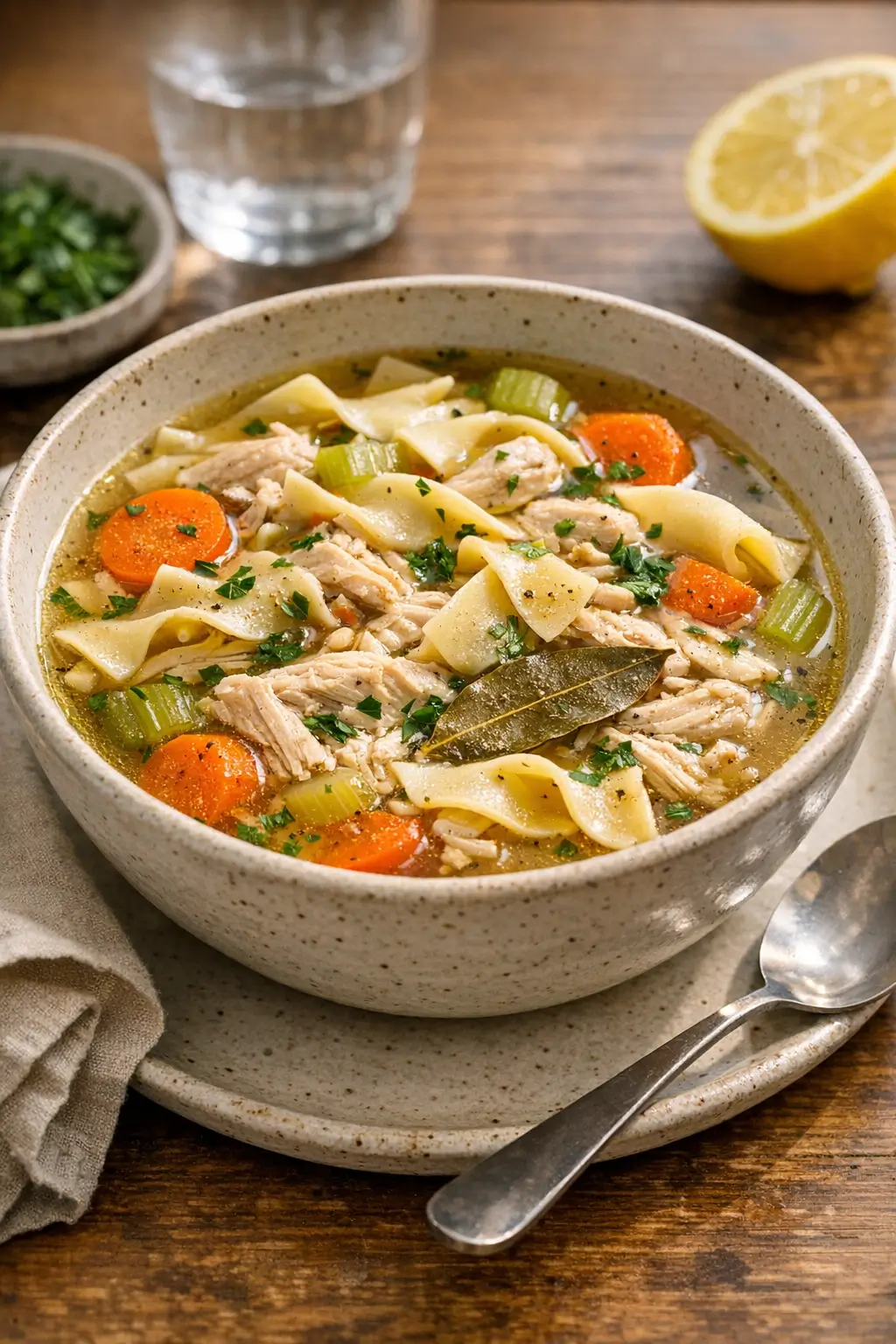
A clear, savory broth that’s not greasy, thanks to skimming and gentle simmering. The chicken will be tender but still meaty, because thighs hold moisture under moderate heat. Vegetables soften but won’t go mushy if sliced 1/4‑inch.
Flavor is balanced: sweet from carrots, aromatic from celery and onion, lightly herbal from thyme, with optional dill or parsley at the end. A small amount of tomato paste adds backbone without turning the soup red or tasting like tomato sauce. Soy sauce is optional for a subtle umami lift.
Results vary by tools and brands. Thin store‑bought stocks may need an extra pinch of salt or a teaspoon of soy sauce. Egg noodles vary widely; some “wide” styles cook in 4 minutes, others in 8. Use taste and texture, not just the clock.
Ways to Change It Up
- Vegetarian/vegan: Swap in 1 can (425 g / 15 oz) chickpeas for chicken and use vegetable broth. Add 1 tsp white miso or 1 tsp soy sauce to replace savory depth. Finish with extra dill and lemon.
- Spicier: Sweat 1 tbsp grated fresh ginger and 1 sliced chile (jalapeño or Fresno) with the aromatics. Finish with extra lemon or a splash of rice vinegar.
- Milder: Skip the garlic and thyme. Use only parsley and a small bay leaf for a gentler broth.
- Faster: Use 3 cups / 375 g shredded rotisserie chicken. Start at Step 2 with the vegetables, simmer 6 cups / 1.4 L broth 10 minutes to meld, then add chicken for the last 5 minutes. Trade‑off: slightly less body than simmering bone‑in pieces.
- More veg: Add 1 cup frozen peas in the last 2 minutes or a handful of baby spinach off heat. Keep it brief so greens stay bright.
- Gluten‑free: Use GF egg noodles or cooked rice. Hold the rice separate and add to bowls to keep the broth clear.
Serving and Storage
Ladle into warm bowls and finish with dill or parsley. Crack black pepper on top for aroma. This stands alone as a meal, but a crisp side helps: try a fresh, crunchy salad like Cucumber Salad That Stays Crunchy in 15 Minutes.
For a creamier spin another night, see our Easy Creamy Chicken Noodle Soup, One‑Pot Comfort.
Refrigerate leftovers (without noodles if possible) up to 4 days. Freeze broth and chicken (no noodles) up to 3 months; thaw overnight, reheat gently, then cook fresh noodles and add to serve. Reheat on the stove over medium‑low until steaming but not boiling to keep the chicken tender.
Kitchen note: If the soup sits, noodles swell and salt concentrates. When reheating, add 1/2–1 cup / 120–240 ml water or unsalted broth to restore balance, then retaste for seasoning.
Cultural Context
Chicken soup with noodles is common in North American home cooking and delis, and many communities have comparable bowls—from Greek avgolemono to Chinese chicken noodle variations. In Jewish cooking, chicken soup often appears with matzo balls; NPR’s reporting outlines how “matzo balls” entered common usage and how the dish became part of holiday and deli culture. See this short history from an NPR member station: history and symbolism of matzo balls.
Science has also weighed in on the cold‑weather legend. A peer‑reviewed study found homemade chicken soup inhibited neutrophil migration in vitro, suggesting a mild anti‑inflammatory effect that could ease cold symptoms. Read the abstract here: chicken soup and neutrophils.
Common Questions and Troubleshooting
- My broth turned cloudy. Why? A vigorous boil can emulsify fat and disturb proteins. Keep the pot at a gentle simmer and skim foam in the first 10 minutes. If it’s already cloudy, it’s still delicious—next time, lower the heat earlier.
- The soup tastes flat. What should I add? First, salt to taste. If the flavor is still shallow, add 1–2 tsp soy sauce for umami or a squeeze of lemon to perk it up. Both are quick, reliable fixes.
- Can I use chicken breasts? Yes, but poach gently in simmering broth until just cooked through, 12–15 minutes, then cool and shred. Breasts dry out faster than thighs; I prefer bone‑in thighs for forgiving texture.
- My noodles go mushy. How do I fix that? Cook noodles separately and add to bowls, or undercook by 1–2 minutes, then rest the soup off heat. Wide egg noodles vary; check at the earliest time listed.
- Can I make this in a pressure cooker? Yes. Simmering under pressure extracts great flavor from bones in less time; add noodles only after depressurizing to avoid overcooking. (See the note in America’s Test Kitchen’s pressure‑cooker approach for timing guidance.)
- Is boxed broth okay? Absolutely. Use low‑sodium so you can season accurately. If it tastes thin, simmer 5 more minutes to reduce slightly or add a teaspoon of soy sauce.
- How do I skim fat without losing broth? Tilt the pot so fat collects on one side and skim with a ladle. Or chill the soup; the fat cap lifts off easily once solid.
Kitchen note: If you’re sensitive to sodium, keep soy sauce optional and use low‑sodium broth; season in small additions and retaste after the noodles go in (they add starch and can dull salt perception).
Conclusion
If you make this, leave a comment with how it went and what you tweaked—more dill, extra lemon, or a different noodle shape. Your notes help other cooks adjust the pot to their own kitchens and tastes.



Leave a Reply