
If you’re after a festive, one‑pot rice that tastes like a full meal without a sink full of dishes, this delivers. Popular at gatherings and weekend dinners across West Africa and in diaspora kitchens, it’s hearty enough to anchor the plate yet familiar enough for picky eaters. Classic Nigerian Jollof Rice leans on a cooked-down tomato and red pepper base, warm spices, and long‑grain rice that steams to separate, not sticky, grains. Expect a soft bite, a deep tomato savor with sweet pepper notes, and a gentle background heat you can dial up or down.
If you’re new to rice cooked in sauce instead of water, this method sets you up with clear checkpoints and timing ranges. Busy weeknight cooks will appreciate that once the stew base is ready, the pot mostly steams on low while you prep sides.
INGREDIENTS
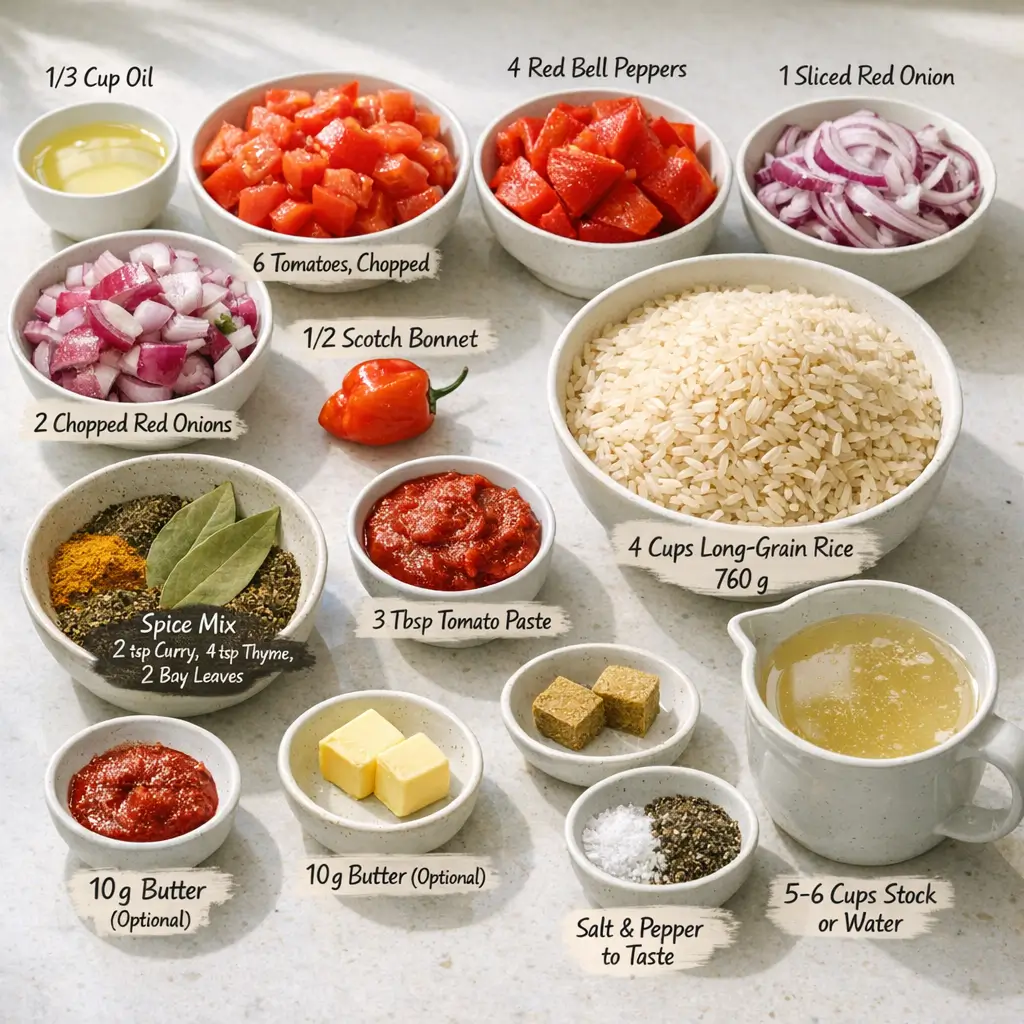
- 80 ml (1/3 cup) neutral oil (vegetable, canola, or coconut; not olive oil) — for frying the base.
- 6 medium plum/Roma tomatoes, chopped (or one 400 g can crushed tomatoes) — body and acidity.
- 6 red poblano peppers or 4 large red bell peppers, seeded — sweetness and color. Use red bell peppers if poblanos aren’t available.
- 3 medium red onions (2 roughly chopped, 1 thinly sliced), divided — depth and a little sweetness.
- 1/2 to 1 Scotch bonnet (or habanero) pepper, to taste — heat; start small if serving kids.
- 45 g (3 tablespoons) tomato paste — concentrates color and umami when fried.
- 2 teaspoons Jamaican‑style curry powder — warm base note.
- 1 teaspoon dried thyme — classic herb note.
- 2 dried bay leaves — background aroma.
- 1.2 to 1.4 liters (5 to 6 cups) low‑sodium stock or water, divided — the cooking liquid.
- 10 g (2 teaspoons) unsalted butter, optional — adds gloss at the end.
- 760 g (4 cups) uncooked converted long‑grain rice or golden sella basmati, well rinsed — separates beautifully. Avoid jasmine; it softens too much.
- Fine salt, to taste
- Black and white pepper, to taste — a blend brings depth.
Optional but helpful:
- If using water instead of stock: add 1–2 bouillon/seasoning cubes to taste for savory backbone.
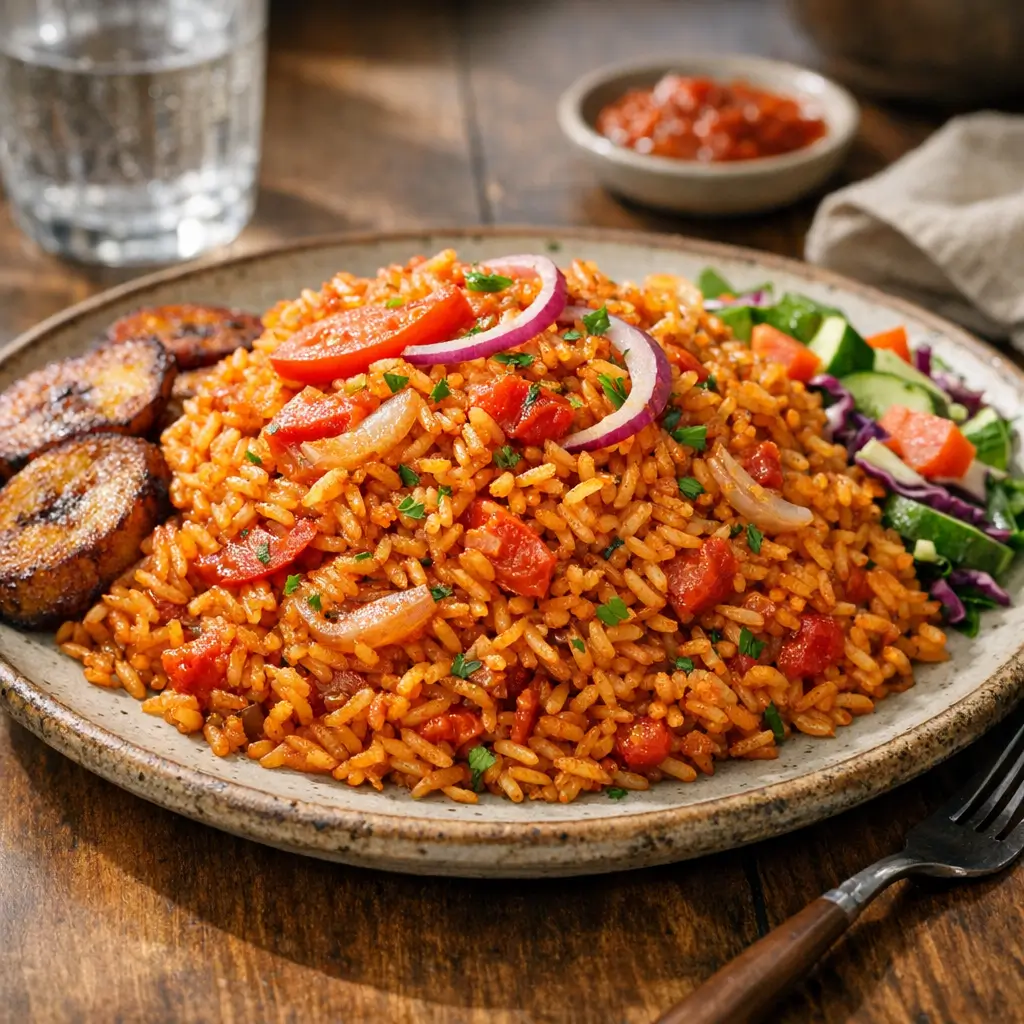
- For serving: fried ripe plantains (dodo) and a simple salad or slaw pair well.
STEP-BY-STEP INSTRUCTIONS — Classic Nigerian Jollof Rice
1) Blend and reduce the pepper‑tomato base.
- Combine the chopped tomatoes, red peppers, the two roughly chopped onions, and Scotch bonnet in a blender with about 480 ml (2 cups) of the stock. Blend until smooth (you’re aiming for roughly 6 cups of puree). Pour into a large pot and bring to a lively simmer, partly covered, for 10–12 minutes to lightly reduce and tame raw flavors. You’ll see small bubbles and a slightly thickened texture. Don’t let it scorch; stir once or twice.
2) Build the jollof stew.
- In a wide, heavy pot with a tight lid, heat the oil over medium. Add the thinly sliced onion and a pinch of salt; cook 2–3 minutes until translucent at the edges. Stir in bay leaves, curry powder, dried thyme, and a few grinds of black pepper; toast 3–4 minutes until fragrant.
- Add the tomato paste and fry 2 minutes, stirring, until it darkens slightly and smells sweet, not sharp. Pour in the reduced pepper‑tomato blend, stir, and cook 10–12 minutes with the lid ajar, until the stew is glossy and noticeably thicker. This concentrated stew is what flavors the rice.
3) Add liquid and bring to a brief boil.
- Stir in 960 ml (4 cups) of stock; bring to a gentle boil for 1–2 minutes. Taste and season with salt and pepper now, knowing the rice will absorb some salt.
4) Rice in; seal for steam.
- Stir in the well‑rinsed rice and half the butter (if using). Smooth the top, then cover the pot with a double layer of foil or baking/parchment paper and clamp on the lid to trap steam. Drop the heat to the lowest setting and cook for 30 minutes, stirring just once halfway to re‑distribute without breaking grains. Resist the urge to peek—a tight seal is key for even steaming.
5) Check doneness and finish.
- Uncover and taste a few grains. If still chalky in the center, sprinkle in 60–120 ml (1/4–1/2 cup) more stock or water, stir gently, reseal, and steam on low until tender. Off the heat, stir in the remaining butter and, if you like, a handful of thinly sliced onions and fresh tomatoes. Rest, covered, 5–6 minutes to settle the flavors.
6) Optional “party jollof” smokiness.
- For a toasty, smoky accent, return the covered pot to medium‑high for 3–5 minutes until you hear faint crackles and smell a light toasted aroma. Stop well before a dark burn—pleasant smoky notes turn bitter quickly. Leave covered to rest until serving.
Beginner safeguards
- Use low heat once the rice goes in. High heat will catch the base and scorch the bottom before the top steams through.
- Keep the lid sealed. Frequent lifting dumps steam, leading to uneven cooking and mushy edges with hard centers.
- Stir just once. Excess stirring smears starch into the sauce and compacts the grains.
Timing notes
- Rice brands vary. Converted long‑grain and golden sella basmati hold their shape, but newer bags can cook faster than older ones. Expect 30 minutes plus 5–15 minutes of steaming if needed. If you swap to thinner long‑grain basmati, reduce both stock and sauce slightly, as noted in testing.
WHAT TO EXPECT
Texture: Separate, tender grains that glisten orange‑red. The rice should be moist but not saucy; you should see distinct grains with a little cling from the tomato base.
Flavor: A balance of tomato, sweet red pepper, gentle curry, thyme, and bay. Heat is adjustable—Scotch bonnet brings fruity fire, but even a half pepper perfumes the pot.
Variability: Pots with a heavier base and tight lids (enameled cast iron, sturdy aluminum) run more forgiving; very thin pots may develop hot spots. Stocks differ in saltiness; taste before salting. Converted rice drinks more liquid than regular basmati. If you use thinner basmati, plan on less stock and a touch less sauce.
WAYS TO CHANGE IT UP
-
Vegetarian or vegan
-
Use vegetable stock or water plus bouillon for depth; skip the butter or use a plant‑based alternative. Serve with roasted mushrooms or spiced baked tofu for protein.
-
Spicier or milder
-
For more heat, use the full Scotch bonnet and keep a few seeds. For milder pots, start with 1/2 pepper or swap in a small jalapeño. Smoked paprika can add warmth without more chiles.
-
Faster or simplified
-
Use canned crushed tomatoes for consistency and skip peeling; jarred roasted red peppers can stand in for fresh. Stick with converted long‑grain or golden sella basmati, which stay fluffy even if you shorten the simmer a bit. Keep in mind that cutting reduction time reduces depth; the fried tomato paste step helps compensate.
Trade‑offs: More heat highlights the tomato sweetness but can overshadow thyme; less reduction saves minutes but softens the stew’s intensity; skipping the foil seal risks uneven grains.
SERVING AND STORAGE
Serving ideas: Spoon into a warm serving bowl and pair with fried ripe plantains (dodo), grilled or stewed chicken, fish, or a simple crunchy slaw. Leftovers shine next to sautéed greens.
What pairs well: Crisp cucumber‑tomato salads, citrusy slaw, and cooling yogurt sauces all balance jollof’s warmth. Fried plantains are a classic partner for contrast in sweetness and texture.
Storage: Cool quickly and refrigerate in a shallow container within 2 hours. Keeps 4 days. For longer storage, portion and freeze up to 3 months.
Reheating: Add 1–2 tablespoons of water per cup of rice; reheat covered over low heat or in the microwave, stirring once. Expect slightly softer grains on day two—still delicious.
CULTURAL CONTEXT
Jollof rice is a beloved West African rice-and-tomato dish with many regional styles. The Nigerian style here focuses on a seasoned tomato‑pepper stew and long‑grain rice, while other countries use different rice types and add‑ins. For a concise overview of its background and regional variations, see the entry on jollof rice from Encyclopaedia Britannica, which outlines how the dish appears across West Africa and in diaspora communities. Read more at Britannica.
For additional cultural reading from a cooking publication that explores background and diaspora links—distinct from a recipe card—Simply Recipes has an article about jollof rice’s journey and community role. It’s a helpful primer if you’re new to the dish’s broader context. Explore the article.
COMMON QUESTIONS AND TROUBLESHOOTING
-
The rice is soft on the outside but chalky inside. What happened?
-
The seal was likely opened too often or the heat ran too high. Add 1/4 cup hot stock, reseal with foil and lid, and steam on very low 5–10 minutes. Stir gently once to redistribute.
-
My pot is catching on the bottom before the rice is done.
-
Drop the heat to low immediately. Slide a heat diffuser under the pot if you have one. Don’t scrape the bottom; transfer the top layer to a new pot to finish with a splash of stock. If you want intentional toasty notes, use the controlled “party jollof” step at the end, for just a few minutes.
-
Can I use jasmine or medium‑grain rice?
-
It’s not ideal here. The starch and grain shape encourage clumping. Converted long‑grain or golden sella basmati keep their structure in sauce and are the best fit.
-
Do I have to use stock? What if I only have water?
-
Water works. Season the stew a touch more and consider 1–2 bouillon cubes to replace the savory depth of stock. Taste as you go to avoid oversalting.
-
How spicy should it be for kids?
-
Start with 1/2 Scotch bonnet and remove the seeds. You can always add heat at the table with a spoon of the pepper base or your favorite hot sauce.
-
Why fry tomato paste?
-
Brief frying caramelizes sugars and drives off sharp acidity, giving the base a rounder, deeper flavor. It also boosts color, which makes the rice look vibrant.
-
How do I get the smoky flavor without burning it?
-
Follow the optional finishing step: medium‑high heat, lid on, 3–5 minutes max until you hear crackles and smell a light toast—not acrid smoke—then cut the heat and keep covered to trap the aroma.
CONCLUSION
If you cook this, share what worked with your stove and rice brand, and what you paired alongside. Questions, tweaks, and honest results help other home cooks get great jollof on the table, too.



Leave a Reply