
Cold brew coffee concentrate is one of those quiet brunch helpers that does a lot of work behind the scenes. You brew once, tuck it in the fridge, and you’re ready to pour iced lattes, tall spritzers, and coffee cocktails without hovering over a kettle.
If you’re hosting brunch, start the night before: grind the beans, stir the slurry, and set a timer so you don’t forget to strain. On a busy morning with guests arriving, your only job should be shaking or stirring drinks, not measuring coffee grounds.
This version leans on a concentrate-style ratio, so it’s strong enough to dilute with milk, sparkling water, or cocktail mixers. Expect a smooth, chocolatey flavor rather than sharp bitterness, and a texture that holds up to ice and dairy. It suits anyone who wants reliable caffeine for a crowd, without espresso equipment or barista skills.
Ingredients
Makes about 3 cups / 700 ml concentrate (enough for 8–10 brunch drinks, depending on dilution)
- 4 oz (115 g) coarsely ground coffee beans – medium or medium-dark roast, ideally with chocolate or nutty notes
- 3 cups (720 ml) cold filtered water – cold tap water is fine if it tastes good on its own
- 2–3 strips fresh orange zest (optional) – adds a gentle citrus aroma that works well in brunch drinks
- 1 tsp vanilla extract (optional) – rounds out bitterness and pairs with dairy, cream, and simple syrups
- Pinch of fine sea salt (optional) – helps suppress harsh bitterness without making the brew taste salty
Equipment: 1-quart (1 liter) jar or pitcher, fine-mesh strainer, paper coffee filter or clean nut milk bag, spoon for stirring.

Kitchen note: Grind size matters more than brand here. Aim for a coarse, breadcrumb-like grind; anything close to espresso grind will over-extract and make straining frustratingly slow.
Step-by-Step Instructions for Cold Brew Coffee Concentrate for Brunch Drinks
-
Measure and grind the coffee.
Weigh 4 oz (115 g) of whole beans, then grind them on a coarse setting, similar to French press. If you do not have a scale, this is roughly 1 cup of whole beans before grinding, but weight is more consistent.
-
Combine coffee and water.
Add the ground coffee to a clean 1-quart (1 liter) jar or pitcher. Pour in 3 cups (720 ml) of cold filtered water, making sure all the grounds are submerged.
-
Add optional flavorings.
Drop in the orange zest strips, the vanilla extract, and a small pinch of salt if using. These additions stay subtle in the concentrate but become more noticeable once you dilute with milk or mixers.
-
Stir thoroughly.
Use a spoon or chopstick to stir from the bottom, scraping up any dry pockets. The goal is even saturation so the concentrate extracts consistently.
Kitchen note: If a thick layer of dry grounds is still floating on top after stirring, add a splash more water and stir again. Pockets of dry coffee lead to weak, uneven flavor.
-
Cover and steep in the fridge.
Cover the jar loosely (a lid or plastic wrap is fine) and refrigerate for 14–18 hours. Around the 14-hour mark, the brew will be smoother and lighter; by 18 hours it will taste fuller and stronger. Most home fridges sit around 37–40°F (3–4°C), so this timing range works well.
-
Check for flavor before straining.
Give the concentrate a quick stir, then spoon out a small sample, dilute it 1:1 with water, and taste. If it tastes hollow or weak, let it go another 2–4 hours; if it’s already quite intense, move straight to straining.
-
Strain the concentrate.
Set a fine-mesh strainer over a bowl or second jar and pour the mixture through, catching as much of the grounds as you can. For a cleaner result with less sediment, line the strainer with a paper coffee filter or use a nut milk bag and let it drain without pressing.
-
Optional second filter.
For extra-smooth brunch drinks—especially if you plan to mix with foamed milk or shake cocktails—strain the liquid a second time through a clean filter. This reduces sludge at the bottom of glasses.
-
Transfer and chill.
Pour the strained concentrate into a clean bottle or jar, seal, and refrigerate. It will keep best flavor for up to 7–10 days. The aroma will gradually flatten after that, but it stays safe to drink a bit longer if it has been chilled the whole time.
-
Basic dilution guide for brunch drinks.
For a standard iced coffee, start with 1 part concentrate to 1–1.5 parts water or milk, plus ice. For richer lattes or coffee milkshakes, go closer to 1:2 concentrate to milk; for lighter spritzers or coffee tonics, try 1:3 concentrate to sparkling water and adjust from there.
Kitchen note: Ice dilutes drinks quickly, especially in warm kitchens. If serving over a lot of ice, mix your drink slightly stronger than you think you want and taste again after 2–3 minutes.
What to Expect
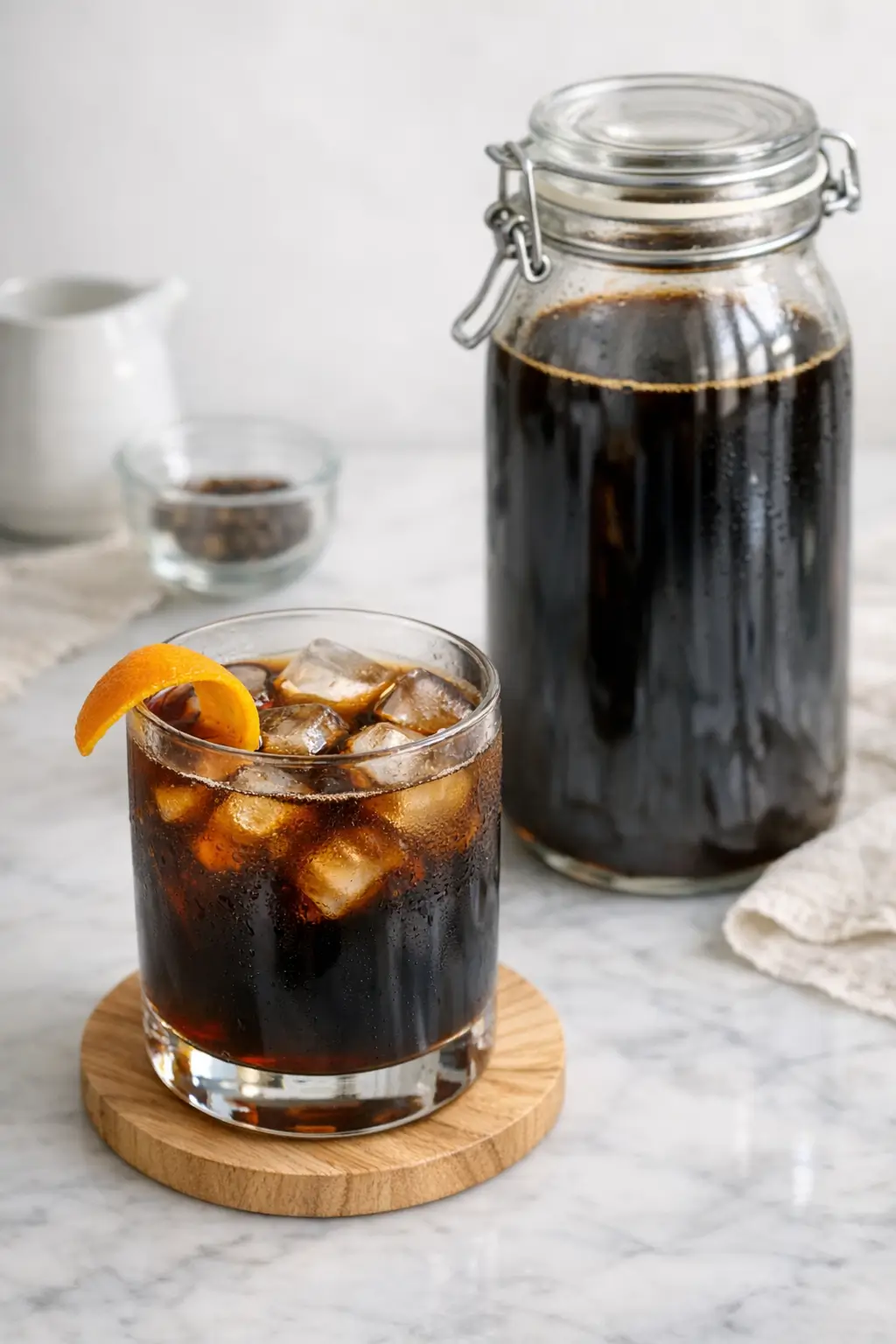
This cold brew concentrate comes out dark and inky in the jar, but it should pour smoothly without feeling syrupy.
Once diluted, the body is medium: fuller than regular drip coffee but not as heavy as espresso. The flavor skews toward chocolate, toasted nuts, and gentle caramel if you start with a medium or medium-dark roast.
Acidity is noticeably lower than hot-brewed coffee at the same strength, which is why it works so well in brunch drinks where you might also be serving juice or fruit-forward dishes.
Depending on your grinder and steeping time, you might see a thin layer of fine sediment at the bottom of the bottle. That is normal; simply avoid shaking the bottle vigorously if you prefer a cleaner cup.
If you extend the steep time past 18–20 hours or use a grind that is closer to medium than coarse, expect a more intense, slightly bitter edge. Some people like that bitterness in cocktails or affogato-style desserts.
Kitchen note: If every batch tastes harsh, shorten the steep time by 2–4 hours before changing the ratio. Over-extraction is more common than “bad beans” when cold brew tastes astringent.
Ways to Change It Up
-
Brunch-friendly vanilla cream cold brew.
Mix 1 part concentrate, 1 part whole milk or half-and-half, and sweeten to taste with simple syrup or maple syrup. Add ice and finish with a little extra orange zest on top. This is a good option when you want something richer than black coffee but don’t have an espresso machine.
-
Citrus coffee spritz (lighter and lower-caffeine per glass).
Combine 2 oz (60 ml) concentrate with 4–6 oz (120–180 ml) cold sparkling water over ice. Add a squeeze of orange or grapefruit juice and a splash of simple syrup if you like it sweeter. This stretches the caffeine and works well alongside heavier brunch plates.
-
Coffee cocktail base.
Shake 1.5–2 oz (45–60 ml) concentrate with ice, 1.5 oz (45 ml) whiskey or rum, and 0.5–0.75 oz (15–20 ml) coffee liqueur or simple syrup. Strain into a chilled glass. Because the concentrate is already smooth and cold, you do not need to worry about hot coffee melting ice and thinning the drink.
-
Vegan and dairy-free versions.
The base concentrate is already dairy-free. For drinks, pair it with oat milk, almond milk, or coconut milk instead of dairy. Oat milk tends to blend most smoothly and gives a naturally sweet result, which can help if you are serving guests who usually add sugar.
-
Stronger or milder concentrate.
For a stronger concentrate, increase the coffee to 5 oz (140 g) while keeping water at 3 cups (720 ml) and taste around the 14-hour mark. For a milder, more sippable concentrate, drop to 3.2 oz (90 g) coffee for the same water volume. Trade-off: stronger concentrate offers more flexibility for cocktails but can taste too intense if you drink it straight.
Serving and Storage
Cold brew coffee concentrate earns its place at brunch because it is ready the moment guests walk in.
For a simple iced coffee bar, set out the chilled concentrate with a small sign suggesting a 1:1 concentrate to milk or water starting point, plus ice, sweeteners, and citrus wedges. Small pitchers of whole milk, oat milk, and cream make it easy for people to customize.
You can also use the concentrate in non-alcoholic brunch drinks. Stir a splash into chocolate milk, blend into smoothies, or drizzle over vanilla ice cream with a bit of soda water for a quick coffee float.
Store the concentrate in an airtight jar or bottle in the coldest part of your fridge, not the door. It tastes freshest for about one week, and acceptably good up to 10 days, though the flavors gradually flatten.
If you plan ahead, you can freeze extra concentrate in ice cube trays. Transfer the frozen cubes to a freezer bag and use them within 1 month for best flavor. Drop the cubes into milk or cocktails to chill and flavor without much extra water.
Kitchen note: If the concentrate ever smells sour, yeasty, or noticeably off—even before the one-week mark—discard it. That usually means the jar was not fully clean or it sat at room temperature too long before chilling.
Cultural Context
Cold brew coffee in its modern, bottled form is relatively recent, but the idea of brewing coffee with cold water has deeper roots. Historical references connect cold-style coffee to Kyoto-style slow-drip methods in Japan, where towers drip cool water over grounds for hours to produce a concentrated extract. You can read more about these traditions in this overview of cold brew’s history from cold brew coffee.
Cold coffee drinks for social occasions have appeared in different forms, from iced coffee in the United States to frappé in Greece. These beverages are often tied to leisurely breaks and shared meals rather than quick, on-the-go cups. For a broader look at how cold coffee evolved in different regions, the section on history and variations in this article on cold brew from the National Coffee Association is a useful starting point.
Common Questions and Troubleshooting
My concentrate tastes weak. How do I fix it?
If your diluted drink tastes flat, first try using more concentrate in the glass before changing the recipe. Move from a 1:2 ratio (1 part concentrate to 2 parts liquid) to 1:1 and see if it improves. For the next batch, you can either increase the coffee to 5 oz (140 g) per 3 cups (720 ml) water or extend the steep time by 2–4 hours while keeping the grind coarse.
The coffee is bitter or astringent. What went wrong?
Bitter concentrate usually comes from steeping too long, grinding too fine, or both. Shorten the steep time to around 14–16 hours, make sure your grind is clearly coarser than drip coffee, and avoid squeezing the grounds when straining. Pressing or wringing the filter can force fine particles and harsher compounds into the final brew.
Can I use pre-ground coffee instead of grinding fresh?
You can, but choose a grind labeled for French press or “coarse” if possible. Standard pre-ground coffee for drip brewers is finer and tends to over-extract in long cold steeps, leading to muddier flavor and more sediment. If drip-ground coffee is your only option, reduce the steep time to 10–12 hours and taste as you go.
How long does cold brew coffee concentrate really keep?
Flavor is best in the first 5–7 days when stored in a sealed container in the fridge. After that, you may notice duller aroma and more muted flavors, though it is still usable if it smells and tastes fine. Always rely on your senses: if it smells sour, fermented, or “off,” discard it.
Is this strong enough for coffee cocktails or espresso-style drinks?
This recipe is designed as a moderate-strength concentrate for flexibility at brunch. For drinks where the coffee needs to punch through richer ingredients—like cream liqueurs or chocolate syrups—use the stronger variation mentioned above or simply reduce the dilution in the glass. Many home bartenders find 1.5–2 oz (45–60 ml) concentrate per drink gives a clearly defined coffee flavor.
Can I heat the concentrate for hot brunch coffee?
Yes. Dilute the concentrate with an equal amount of hot water (just off the boil), then adjust to taste. Heating will not restore lost aromatics, but it does provide a low-acid option for guests who prefer hot coffee without the sharper edges of regular drip.
Conclusion
Cold brew coffee concentrate takes most of the stress out of serving coffee for brunch. With one overnight batch, you can cover iced coffees, light spritzers, and simple cocktails in a way that feels consistent from glass to glass.
Once you are comfortable with the base method, adjust the ratio, steeping time, and flavorings to suit your beans and your guests. If you do experiment—different roasts, spices, or citrus—share what worked in the comments so other home cooks can learn from your version too. Honest feedback and small tweaks are exactly how this kind of recipe keeps getting better in real home kitchens.

Cold Brew Coffee Concentrate for Easy Brunch Drinks

Equipment
- 1-quart (1 liter) jar or pitcher
- Fine-mesh strainer
- Paper coffee filter or clean nut milk bag
- Spoon for stirring
Ingredients
- 4 oz coffee beans coarsely ground; medium or medium-dark roast
- 3 cups cold filtered water
- 2–3 strips fresh orange zest optional
- 1 tsp vanilla extract optional
- 1 pinch fine sea salt optional
Instructions
- Measure and grind the coffee: weigh 4 oz (115 g) whole beans, then grind on a coarse setting (French press-style). If you don’t have a scale, this is roughly 1 cup whole beans before grinding.
- Combine coffee and water: add the ground coffee to a clean 1-quart (1 liter) jar or pitcher. Pour in 3 cups (720 ml) cold filtered water, ensuring all grounds are submerged.
- Add optional flavorings: add orange zest strips, vanilla extract, and a small pinch of salt (if using).
- Stir thoroughly: stir from the bottom, scraping up any dry pockets, until evenly saturated (add a splash more water and stir again if dry grounds remain floating).
- Cover and steep in the fridge: cover loosely and refrigerate for 14–18 hours.
- Check for flavor before straining: stir, then taste a small sample diluted 1:1 with water; steep another 2–4 hours if weak, or proceed if intense enough.
- Strain the concentrate: pour through a fine-mesh strainer into a bowl or second jar. For less sediment, line the strainer with a paper coffee filter or use a nut milk bag and let it drain without pressing.
- Optional second filter: strain a second time through a clean filter for extra-smooth concentrate.
- Transfer and chill: pour into a clean bottle or jar, seal, and refrigerate. Best flavor for up to 7–10 days.
- Basic dilution guide: for iced coffee use 1 part concentrate to 1–1.5 parts water or milk; for lighter spritzers/tonics try 1:3 concentrate to sparkling water, and adjust to taste.



Leave a Reply