
A Cornish pasty is straightforward comfort: seasoned beef, potato, onion, and swede (rutabaga) bundled in a sturdy shortcrust and baked until golden. Expect a peppery, savory filling and a crust built to hold its shape. This version keeps the spirit of the classic while staying practical for home ovens and weeknight timing.
If you’re juggling a busy evening, start by dicing the vegetables and meat first; the pastry rests while you prep. Working in a small kitchen? Stack a sheet pan in the fridge and chill the filled pasties right on it so the dough stays firm when it hits the oven.
You’ll find Cornish pasties in bakeries across Britain and in communities influenced by Cornish mining. They’re typically eaten for lunch or as a packable dinner, and they freeze well for future meals. I keep the heat at medium-high early in the bake to set the shape, then lower it so the vegetables can turn tender without bursting seams.
Ingredients
- 500 g (about 4 cups) all-purpose flour, plus extra for dusting — structure for a robust, hand-held crust
- 125 g (9 tbsp) cold unsalted butter, diced — flavor and flake
- 125 g (9 tbsp) lard, diced — traditional strength and tenderness; use all-butter if preferred
- 1 tsp fine salt — seasons the pastry
- 90–120 ml (6–8 tbsp) ice water — enough to bring the dough together
- 1 large egg, beaten — for sealing and glazing
Filling for 4 pasties (serves 2–4):
- 350 g (12 oz) beef skirt steak, finely diced 1 cm/½ inch; chuck steak works too
- 300 g (10.5 oz) waxy potatoes, such as Yukon Gold, thinly sliced or 1 cm dice
- 175 g (6 oz) swede/rutabaga, peeled and 1 cm dice
- 1 large yellow onion (about 200 g/7 oz), finely chopped
- 1–2 tsp freshly ground black pepper — classic peppery finish
- 1–1¼ tsp kosher salt, to taste
- Optional: 1 tsp fresh thyme leaves or ¼ tsp dried thyme — subtle herbal note found in some modern bakes
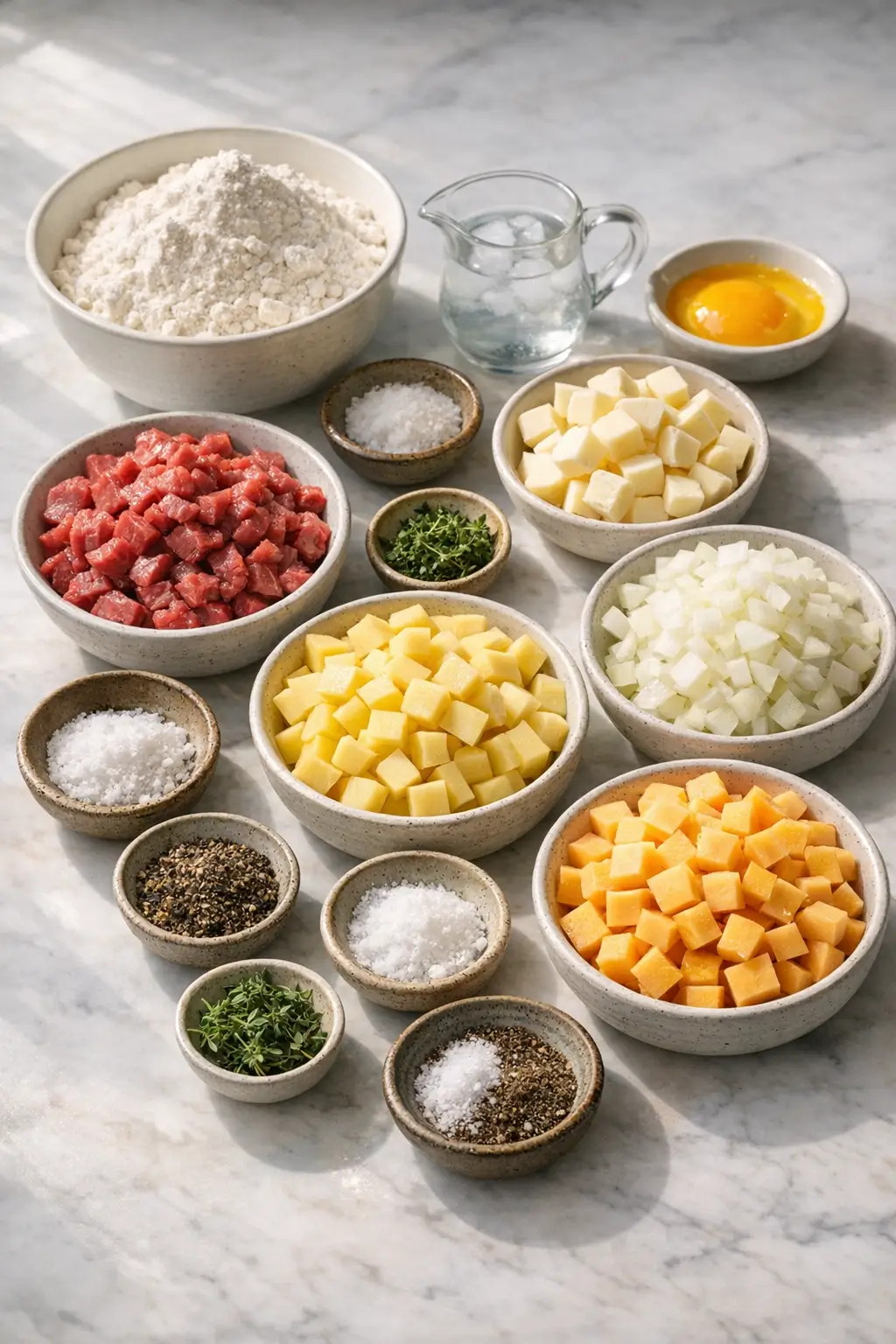
Step-by-Step Instructions for Cornish pasty
1) Make the pastry. In a large bowl, whisk the flour and salt. Rub in the cold butter and lard with fingertips until the mixture looks like coarse breadcrumbs with a few pea-sized pieces. Sprinkle in 6 tbsp ice water, tossing with a fork until shaggy. If dry, add up to 2 tbsp more water. Turn onto the counter, bring together without overworking, and divide into 4 discs. Wrap and chill 30–45 minutes.
2) Prep the filling. Finely dice the beef and vegetables to an even size (about 1 cm/½ inch). In a bowl, combine steak, potato, swede, onion, salt, pepper, and thyme if using. The vegetables go in raw and will cook inside the pastry.
3) Roll the rounds. On a lightly floured surface, roll one dough disc to a 21–23 cm (8½–9 inch) circle, about 3–4 mm thick. Use a plate as a guide for a clean round. Keep other discs chilled.
4) Fill and season. Pack a neat line of filling just off-center, leaving a generous 2–3 cm border. If your pepper grind is coarse, add a pinch more salt to the filling on top; potatoes and swede mute seasoning.
5) Seal and crimp. Brush the edge with beaten egg. Fold the bare half over the filling to meet the other edge and press to seal. Lift the pasty so the seam sits on the side, then crimp along the edge using your thumb and forefinger, folding small sections over themselves to create a firm rope-like seal.
Kitchen note: If the dough feels sticky or stretches when crimping, it’s too warm. Pause and chill the shaped pasties on a sheet pan for 10–15 minutes before glazing and baking.
6) Glaze and vent. Set the pasties on a parchment-lined sheet. Brush all over with egg. Cut a small slit near one end to vent steam or score initials for identification.
7) Bake hot, then slow. Bake at 220°C/425°F for 15 minutes to set the structure and blister the glaze. Without opening the oven for long, reduce to 180°C/350°F and continue 30–40 minutes until the pastry is deep golden and the vegetables are tender when tested with a skewer.
8) Rest before serving. Let pasties stand 10–15 minutes. The carryover heat finishes softening the vegetables and helps the crust crisp rather than shatter.
What to Expect
A Cornish pasty crust should be sturdy enough to pick up, with a crisp exterior and tender bite — not delicate puff pastry and not shatteringly flaky. The interior will be peppery and savory, with onion-sweetness and a gentle earthiness from swede. Potatoes should be soft but still in neat pieces, not mash.
Ovens and pan colors vary. Dark sheet pans brown the bottoms faster; pale pans can add a few minutes to the second stage of baking. Beef cut size matters: larger cubes cook slower and can leave the potatoes overdone if cut too fine.
Kitchen note: A teaspoon of visible juices on the sheet is normal; a puddle means the filling was cut too large or the pasties were under-sealed. Tighten your crimp and keep the cut size even next time.
Ways to Change It Up
-
Vegetarian or vegan: Swap the beef for 250 g (9 oz) finely chopped mushrooms plus 100 g (3.5 oz) cooked green or brown lentils. Season as directed. For vegan pastry, use 250 g vegetable shortening or a plant-based baking fat instead of butter and lard. The result is less buttery but satisfyingly savory.
-
Milder or spicier: Keep it kid-friendly by reducing black pepper to ½ tsp. For extra warmth, add ¼ tsp white pepper or a pinch of chili flakes to the filling. Expect a slightly drier finish with more spice; balance with an extra tablespoon of onion.
-
Faster path: Use 2 store-bought pie crust rounds to make 4 smaller pasties (you’ll need to roll them slightly thicker to avoid leaks). The texture will be more tender and less rugged than traditional shortcrust, but the method and bake times are similar.
-
Cheese tuck-in: Fold 30–40 g (1–1½ oz) sharp cheddar into the center of each pasty before crimping. This adds richness but softens the pepper edge and may increase internal moisture; crimp firmly and vent well.
Serving and Storage
Serve warm or at room temperature. Pasties are complete on their own, but a simple soup or crisp salad turns them into a relaxed dinner. Try a bowl of French Onion Soup with Deep Flavor, Simple Steps or a quick Creamy Broccoli Cheddar Soup Done Right in 35 Minutes. For something fresh, a small side like Cucumber Salad That Stays Crunchy in 15 Minutes balances the rich crust.
Refrigerate leftovers in a covered container for up to 4 days. Reheat on a wire rack set over a sheet pan at 175°C/350°F for 15–20 minutes until hot and crisp. Microwaves soften the crust; if you must use one, do short bursts and finish in a hot oven for 5 minutes to re-crisp.
For the freezer, bake the pasties fully, cool, wrap well, and freeze up to 2 months. Reheat from frozen at 175°C/350°F for 25–35 minutes until heated through.
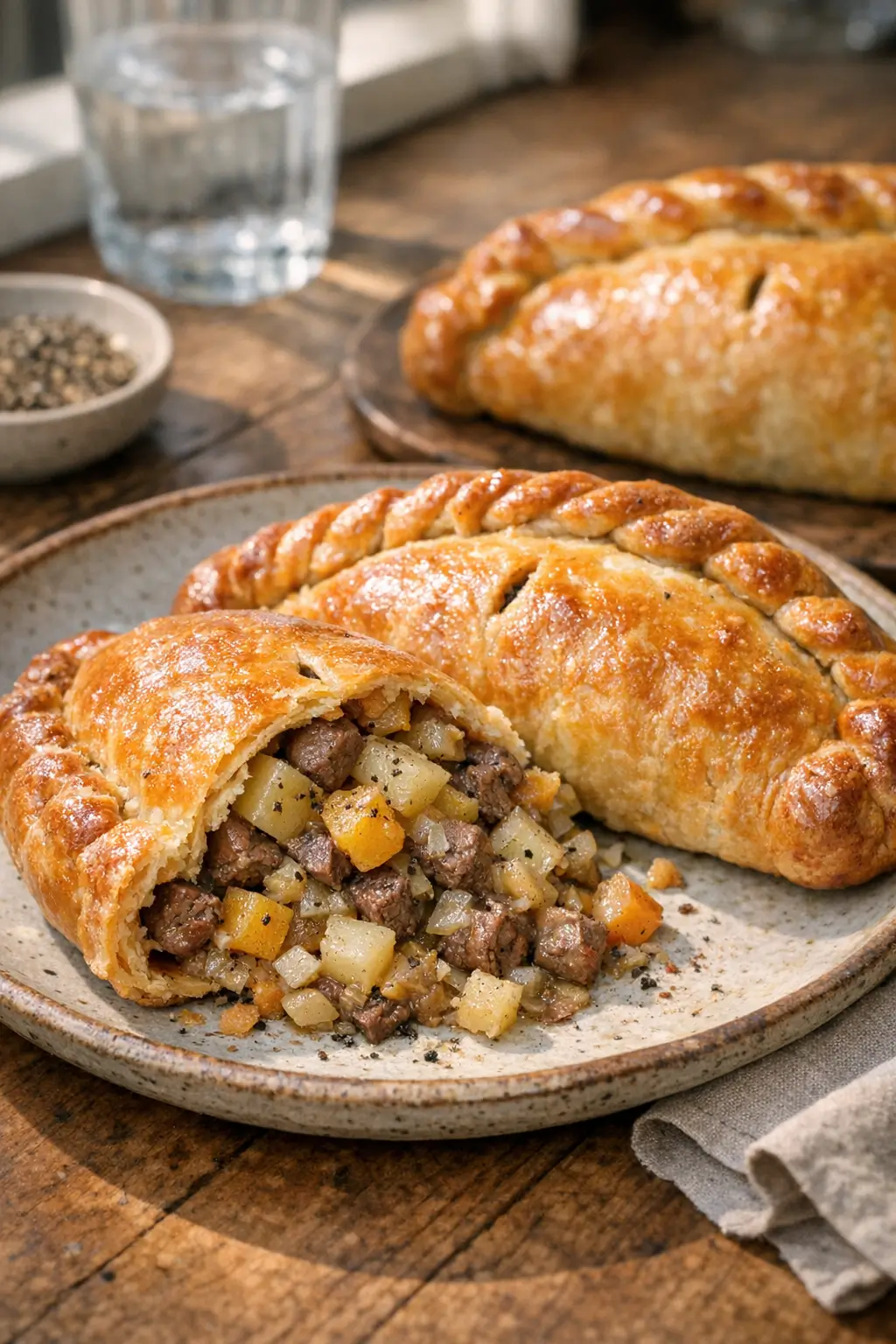
Kitchen note: To keep bottoms from softening during storage, cool pasties on a rack so steam can escape, then package once no longer warm to the touch.
Cultural Context
The Cornish pasty has legal protected status in the UK as a regional specialty: only pasties made in Cornwall to a recognized specification can be sold under that name. See the UK government’s PGI announcement for details: UK press release on protected status.
Its portable design is closely associated with Cornwall’s mining history, where a hand-held, all-in-one meal suited long shifts underground. For more on how miners ate and cooked, including the role of the pasty, read this background from the UNESCO Cornish Mining World Heritage Site: Cornish Mining “Food” page.
Common Questions and Troubleshooting
-
My pasties leaked in the oven. What happened? Usually the pieces were cut too large, which leaves gaps that boil and force the seam open, or the crimp wasn’t pressed firmly. Dice to 1 cm/½ inch, brush with egg to glue the edge, and crimp decisively.
-
Can I use puff pastry instead of shortcrust? You can, but it won’t be as robust to hold and the lamination can shatter when bitten. Bake on the cooler end of the range (190°C/375°F after the initial blast) and expect a lighter, flakier result.
-
I can’t find swede/rutabaga. What now? Use more potato in equal weight, or a small amount of turnip. The flavor balance will be milder and a bit sweeter; increase black pepper slightly to compensate.
-
How do I ensure the vegetables are tender? Keep the dice small and maintain the second stage of baking long enough — test with a skewer. If there’s resistance, add 5–10 minutes at 180°C/350°F and tent loosely with foil if the crust is already deep golden.
-
Can I make them smaller for snacks? Yes. Divide the dough into 6–8 pieces and roll to 15–17 cm (6–7 inch) rounds. Use about ¼–⅓ cup filling per pasty and reduce the second stage of baking by 5–10 minutes.
-
What meat works best if skirt isn’t available? Lean chuck or flat iron cut small works well. Avoid pre-ground beef; it weeps more and compacts into a dense layer.
Conclusion
If you try this, leave a rating and let others know what worked in your oven. Share any smart tweaks — a vegetable swap, a different crimp pattern, or a freezer routine that fits your week. Your notes help the next cook pull excellent pasties from a home oven with confidence.



Leave a Reply