
Creamy lemon orzo with Parmesan sits in that sweet spot between cozy and bright. It has the spoonable comfort of risotto, but cooks in about 25 minutes with very little fuss. You see it often as a Mediterranean‑inspired side dish in restaurants, but at home it also works beautifully as a light dinner base with chicken, shrimp, or roasted vegetables piled on top.
If it’s a packed weeknight, start by putting a small pot of broth on to warm while you mince your garlic and zest the lemon. If you’re cooking in a small kitchen, clear one spot near the stove for a cutting board so you can stir the pot and prep toppings without running around. This recipe suits newer cooks as well as confident ones: the method is forgiving, and the finish is more creamy-stovetop pasta than fragile restaurant risotto.
Ingredients
Serves 3 as a side, 2 as a light main
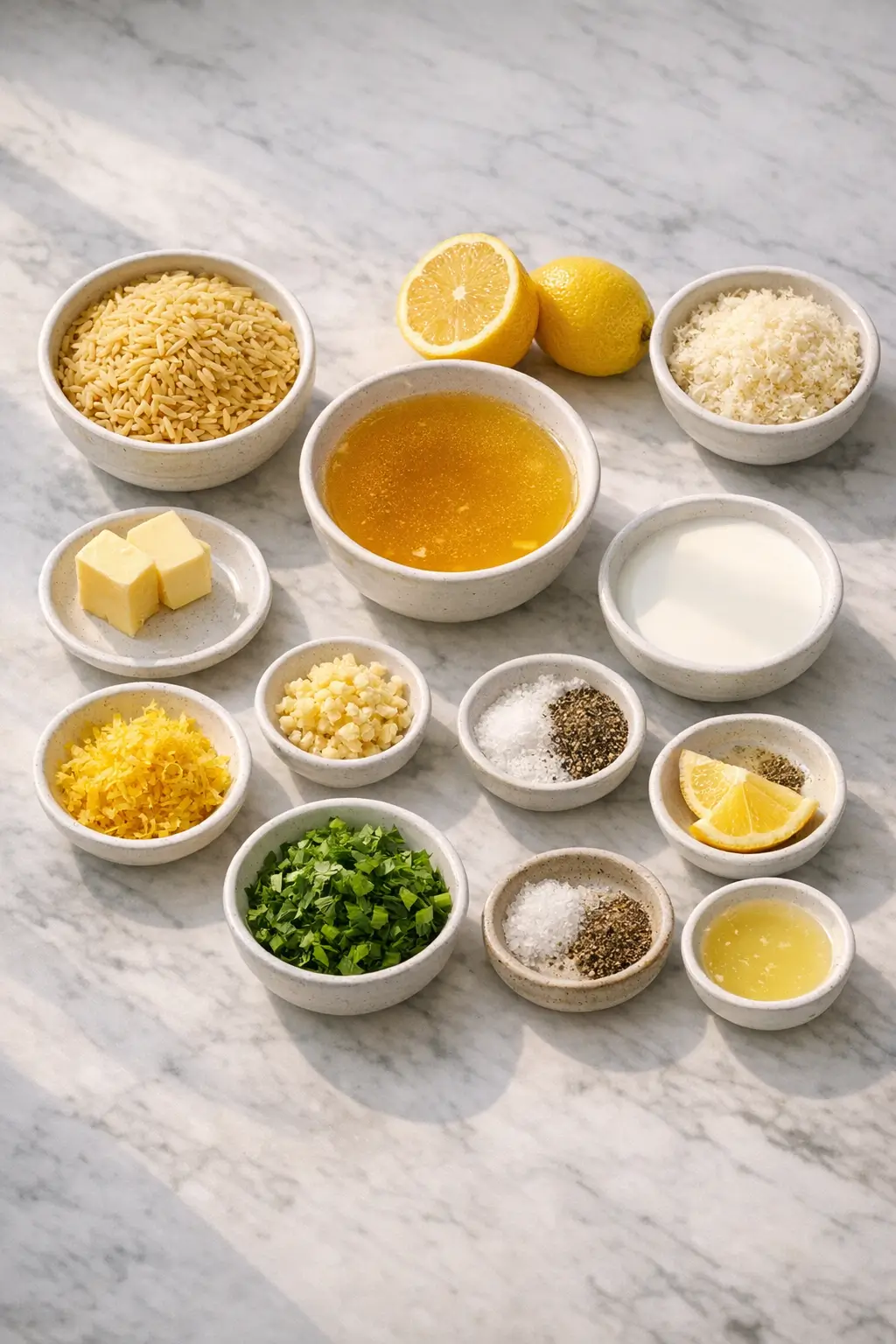
- 1 cup (200 g) dry orzo pasta – small rice‑shaped pasta
- 2 tablespoons (28 g) unsalted butter – for sautéing and richness
- 1 tablespoon (15 ml) olive oil – helps prevent the butter from scorching
- 2 cloves garlic, finely minced (about 2 teaspoons) – gentle background heat
- 2 ½ cups (600 ml) low‑sodium chicken or vegetable broth – flavor base; use vegetable for a meat‑free dish
- ½ teaspoon fine sea salt, plus more to taste – adjust if your broth is salty
- ¼ teaspoon freshly ground black pepper, plus more to finish
- ½ cup (120 ml) whole milk or half‑and‑half – adds creaminess without heaviness; sub: light cream
- ½ cup (45 g) finely grated Parmesan cheese, loosely packed – for body and umami; grate it yourself if possible
- 1 teaspoon finely grated lemon zest (from 1 lemon) – fragrant lemon flavor
- 2–3 teaspoons fresh lemon juice, to taste – brightens the sauce at the end
- 2 tablespoons (5–7 g) finely chopped fresh parsley or chives – optional, for color and freshness
Optional add‑ins for turning it into a light dinner:
- 1–2 cups (about 150–300 g) cooked shredded chicken, shrimp, or white beans – stir in at the end to warm through
- 1 cup (130 g) steamed or roasted vegetables such as asparagus, peas, or broccoli florets – fold in gently off the heat
Kitchen note: If using pre‑grated Parmesan from a bag, add it off the heat and a little at a time. It tends to clump more easily than freshly grated cheese.
Step-by-Step Instructions for creamy lemon orzo with parmesan
- Warm the broth.
- In a small saucepan or in the microwave, gently warm the broth until steaming but not boiling.
- Keeping the broth warm helps the orzo cook evenly and keeps the sauce creamy instead of gluey.
- Start the base.
- In a medium saucepan or shallow Dutch oven (about 2–3 quarts), melt the butter with the olive oil over medium heat.
- Add the minced garlic and cook for 30–60 seconds, stirring, just until fragrant. The garlic should soften without browning.
Kitchen note: If the garlic starts to brown quickly, your pan is too hot. Take it off the heat for a moment, then return it on a slightly lower setting before adding the orzo.
- Toast the orzo.
- Stir in the dry orzo so every grain is coated in the butter‑oil mixture.
- Toast for 2–3 minutes, stirring frequently, until some pieces look slightly golden and smell nutty. This deepens the flavor and helps the pasta keep a bit of bite.
- Simmer with broth.
- Pour in about 2 cups (480 ml) of the warm broth, along with the salt and pepper.
- Stir well, scraping up any bits from the bottom of the pan.
- Bring to a gentle simmer, then turn the heat down to medium‑low.
- Cook uncovered for about 8–10 minutes, stirring every minute or so, until most of the liquid is absorbed but the orzo still looks a little loose.
- Add remaining liquid gradually.
- Add the remaining ½ cup (120 ml) broth and the milk (or half‑and‑half).
- Continue to simmer gently, stirring often, for another 4–6 minutes.
- The orzo should be just al dente and suspended in a sauce that looks a bit thinner than you ultimately want; it will thicken as it stands.
- Fold in Parmesan and lemon zest.
- Turn the heat down to low.
- Sprinkle in the grated Parmesan in 2–3 additions, stirring constantly to melt it smoothly into the sauce.
- Stir in the lemon zest.
- Taste and adjust seasoning with more salt or pepper as needed.
- Finish with lemon juice and herbs.
- Take the pan off the heat.
- Stir in 2 teaspoons of lemon juice, then taste. Add the final teaspoon if you prefer a brighter, tangier finish.
- Fold in chopped parsley or chives if using.
- Adjust consistency and serve.
- Let the orzo stand for 2–3 minutes; it will thicken.
- If it tightens up too much, loosen with a splash of warm broth or hot water until it flows slowly off a spoon.
- Serve right away while still creamy.
Kitchen note: Orzo goes from perfectly al dente to soft fairly quickly. If you like it with more bite, start checking a grain at around the 10‑minute mark and pull it off the heat as soon as the center no longer feels chalky.
What to Expect
This dish lands firmly in “creamy but not heavy” territory. The orzo should be tender with a slight chew, similar to nicely cooked rice in a risotto.
The sauce will be silky and spoonable, not stiff. As it cools, the starch and cheese will thicken it; a splash of warm liquid loosens it back to the right texture.
Flavor‑wise, expect a gentle balance. Parmesan brings salt and savoriness, while lemon zest perfumes the whole pot and the juice adds a clean finish. Garlic sits in the background rather than shouting, so it won’t overpower a simply seasoned roast chicken or fish.
Different broths and dairy choices do shift the result. Chicken broth makes the dish taste rounder and more savory; vegetable broth leaves the lemon and cheese more forward. Using half‑and‑half or light cream instead of milk gives a richer feel and slightly glossier finish.
Kitchen note: Pan size matters. A wider pan evaporates liquid faster and may need an extra splash of broth. A tall, narrow saucepan hangs on to more moisture, so lower the heat a notch to avoid an overly soupy texture.
Ways to Change It Up
- Vegetarian or vegan version
- For vegetarian, simply choose vegetable broth and a Parmesan‑style cheese made with microbial rennet.
- To make it fully vegan, use olive oil instead of butter, swap the milk for an unsweetened oat or soy cooking cream, and stir in a few tablespoons of nutritional yeast in place of Parmesan.
- You may need a pinch of extra salt and a squeeze more lemon juice to bring up the flavor without the real cheese.
- Spicier and punchier
- Add ¼–½ teaspoon red pepper flakes along with the garlic, letting them sizzle briefly in the fat.
- Finish with extra black pepper and a bit more lemon zest.
- This version works well as a base under grilled shrimp or spicy roasted cauliflower, alongside other bold dishes like Quick Thai Basil Chicken with Saucy Heat and Crunch.
- Simplified weeknight version
- Skip warming the broth separately and pour room‑temperature broth straight into the toasted orzo.
- Replace the minced garlic with ½ teaspoon garlic powder to avoid chopping.
- Use just olive oil instead of a butter‑oil mix.
- The texture is slightly less silky and the garlic flavor a bit more blunt, but you shave off a few minutes and dishes, which can be worth it on very busy nights.
- Spring vegetable spin
- Stir in blanched asparagus pieces or peas during the last 3–4 minutes of cooking so they stay bright and a little crisp.
- Finish with extra lemon zest and herbs.
- For a lighter dinner, pair with something simple like Hainanese Chicken Rice for Fragrant, Comforting Meals or leftover roast chicken.
Serving and Storage
As a side dish, creamy lemon orzo with Parmesan works well next to roasted or grilled chicken, salmon, or pork tenderloin. It also pairs nicely with simply cooked asparagus, green beans, or a leafy salad for a lighter plate.
For a more substantial one‑bowl meal, pile warm sliced chicken, shrimp, or white beans over each serving and drizzle with good olive oil and extra black pepper. It makes an easy base for saucy meats as well, similar to how you might spoon Basque Chicken with Peppers, Tomatoes, and Herbs Tonight over rice.
Leftovers keep in an airtight container in the refrigerator for up to 3 days. The pasta will continue to absorb liquid, so expect a firmer, almost baked‑pasta texture when cold.
To reheat, add a splash of water, milk, or broth and warm gently over low heat on the stove, stirring often, until loosened and steaming. The microwave also works; reheat in 30‑second bursts, stirring between each, and adding a few drops of liquid as needed.
I don’t recommend freezing this dish. Thawed, the dairy can separate and the orzo tends to turn mushy instead of creamy.

Cultural Context
Orzo is a small, rice‑shaped pasta classified as pastina (“little pasta”) in Italian cooking, even though the word “orzo” in Italian usually refers to barley. It shows up in soups, simple brothy pastas, and baked dishes across the Mediterranean and in parts of the Middle East.
For a concise overview of orzo as a pasta shape and how it’s used in different dishes, see this entry from Barilla on the rice‑shaped pasta they label orzo: Barilla’s description of orzo pasta. For more historical and regional context, the article on orzo (also known as risoni) describes how this shape appears in Italian, Greek, Turkish, and Egyptian cooking: encyclopedic overview of orzo and its use in Mediterranean cuisines.
Creamy, risotto‑style treatments like this recipe adapt the traditional idea of orzotto—a barley‑based dish from northeastern Italy—using pasta instead of grains. The technique of simmering the starch directly in flavored liquid until it forms its own sauce is common across these preparations.
Common Questions and Troubleshooting
Why did my orzo turn out mushy?
If the texture is very soft, it was likely cooked a few minutes too long or with more liquid than needed. Next time, start tasting a grain at around the 10‑minute mark and pull it from the heat when the center is just barely cooked through. Using a wider pan and stirring regularly also helps the pasta cook more evenly.
My sauce looks thin. Will it thicken?
Yes, the sauce continues to thicken as it cools slightly and as the starch from the pasta releases. Let the orzo sit for 2–3 minutes off the heat before adjusting. If it still seems too loose, simmer briefly over low heat, stirring constantly, until it reaches a creamy, spoon‑coating consistency.
Can I use water instead of broth?
You can, but you’ll lose a layer of flavor. If you do use water, increase the salt a bit, and don’t skimp on the Parmesan and lemon zest. A small knob of extra butter stirred in at the end can also help round things out.
What if I don’t have milk or cream?
You can make a “no‑cream” version by skipping the dairy and adding a bit more broth instead. The starch from the orzo and the Parmesan will still create some creaminess. The sauce won’t feel as plush, but it will be lighter and still satisfying.
My cheese clumped instead of melting smoothly. How can I fix that?
Cheese usually clumps when the heat is too high or it’s added all at once. Remove the pan from the heat and splash in a tablespoon or two of warm broth, then stir firmly to break up the clumps. In future batches, keep the heat low and add the cheese in small handfuls, stirring between each addition.
Can I make this ahead for a gathering?
This dish is best within 20–30 minutes of cooking, but you can cook it slightly looser than you like, transfer to a warm serving dish, and keep it covered for up to 30 minutes. Right before serving, stir in a splash of hot broth or water to bring it back to a creamy state and adjust the seasoning.
Kitchen note: If you plan to hold the dish for a bit, cook the orzo just shy of al dente. It will continue to soften as it sits in the warm sauce.
Conclusion
Creamy lemon orzo with Parmesan is one of those flexible dishes that can behave as a quick side or become the base of a full dinner with almost no extra work. Once you’ve made it once or twice, you’ll be able to cook it mostly by eye, adjusting the liquid and lemon to match your mood.
If you try it, I’d love to hear how you served it—what protein or vegetables you paired it with, and any twists you added. Share your results and leave a rating so other home cooks can see what worked well for you.

Creamy Lemon Orzo With Parmesan in 25 Minutes

Equipment
- Small saucepan (to warm broth)
- Medium saucepan or shallow Dutch oven (2–3 quarts)
- Microplane or zester
- Knife and cutting board
- Measuring cups and spoons
- Wooden spoon or silicone spatula
Ingredients
- 1 cup dry orzo pasta (200 g)
- 2 tablespoons unsalted butter (28 g)
- 1 tablespoon olive oil (15 ml)
- 2 cloves garlic finely minced (about 2 teaspoons)
- 2 1/2 cups low-sodium chicken or vegetable broth (600 ml), warm; use vegetable broth for a meat-free dish
- 1/2 teaspoon fine sea salt plus more to taste
- 1/4 teaspoon freshly ground black pepper plus more to finish
- 1/2 cup whole milk or half-and-half (120 ml)
- 1/2 cup finely grated Parmesan cheese (45 g), loosely packed
- 1 teaspoon lemon zest finely grated (from 1 lemon)
- 2-3 teaspoons fresh lemon juice to taste
- 2 tablespoons fresh parsley or chives finely chopped (5–7 g), optional
Instructions
- Warm the broth in a small saucepan or in the microwave until steaming but not boiling.
- In a medium saucepan or shallow Dutch oven (about 2–3 quarts), melt the butter with the olive oil over medium heat. Add the minced garlic and cook for 30–60 seconds, stirring, just until fragrant (do not brown).
- Stir in the dry orzo so it’s coated in the butter-oil mixture. Toast for 2–3 minutes, stirring frequently, until some pieces look slightly golden and smell nutty.
- Pour in about 2 cups (480 ml) of the warm broth, along with the salt and pepper. Stir, scraping up any bits from the bottom. Bring to a gentle simmer, then reduce heat to medium-low and cook uncovered 8–10 minutes, stirring every minute or so, until most liquid is absorbed but the orzo still looks a little loose.
- Add the remaining 1/2 cup (120 ml) broth and the milk (or half-and-half). Simmer gently, stirring often, another 4–6 minutes, until the orzo is al dente and suspended in a sauce that’s slightly thinner than you want (it thickens as it stands).
- Turn heat to low. Add the Parmesan in 2–3 additions, stirring constantly to melt smoothly. Stir in the lemon zest. Taste and adjust salt and pepper.
- Remove from heat. Stir in 2 teaspoons lemon juice, then taste and add up to 1 teaspoon more if desired. Fold in parsley or chives, if using.
- Let stand 2–3 minutes to thicken. If needed, loosen with a splash of warm broth or hot water until it flows slowly off a spoon. Serve right away while still creamy.



Leave a Reply