
On a chilly evening, a pot of Dublin coddle quietly simmering on the stove does a lot of heavy lifting. You get browned sausages, smoky bacon, sweet onions, and tender potatoes in a light, peppery broth that feels cozy but not heavy.
If it’s a busy weeknight, start by slicing the onions and potatoes first and get the bacon into the pan so the fat can render while you deal with everything else. Cooking with kids around or in a small kitchen? Clear a space near the stove just for your cutting board and keep a bowl nearby for scraps so you’re not juggling knives and clutter.
This Irish one-pot supper shows up most often in colder months and around St. Patrick’s Day, but it’s practical any time you want something hands-off and satisfying. Expect a brothy stew rather than a thick gravy, with soft-edged potatoes that soak up flavor and sausages that stay juicy rather than crisp.
Ingredients
Serves 3–4
Meats
- 8 oz (225 g) thick-cut bacon, cut into 1/2-inch (1.25 cm) pieces – renders fat and adds smoky richness
- 1 lb (450 g) good-quality pork sausages (Irish bangers if possible) – the main protein and flavor base
Vegetables & Aromatics
- 2 large yellow onions (about 1 lb / 450 g), halved and sliced 1/4 inch (6 mm) thick – for sweetness and body in the broth
- 2 cloves garlic, minced – gentle background aroma (optional but helpful if your sausages are mild)
- 2 lb (900 g) waxy or all-purpose potatoes (Yukon Gold or red), peeled if you like, sliced 1/3–1/2 inch (8–12 mm) thick – hold shape while turning tender
Broth & Seasoning
- 2 1/2 cups (600 ml) low-sodium chicken stock or light pork/ham stock – forms the light, savory broth
- 1/2 cup (120 ml) stout beer such as Guinness, or more stock – adds a malty note; stock keeps it alcohol-free
- 1–1 1/4 tsp kosher salt, plus more to taste – adjust based on how salty your bacon and sausages are
- 1–1 1/2 tsp freshly ground black pepper – coddle is typically peppery
- 1 bay leaf – gentle herbal background
- 2–3 sprigs fresh thyme or 1/2 tsp dried thyme – optional but common
Finishing & Serving
- 2 Tbsp (30 g) unsalted butter – dotted over the top for richness at the end
- 2–3 Tbsp chopped fresh parsley – for fresh contrast and color
- Crusty bread or Irish soda bread, for serving (to soak up the broth)
Kitchen note: If your bacon and sausages are already quite salty, start with the lower amount of salt and only add more at the very end after tasting the broth.
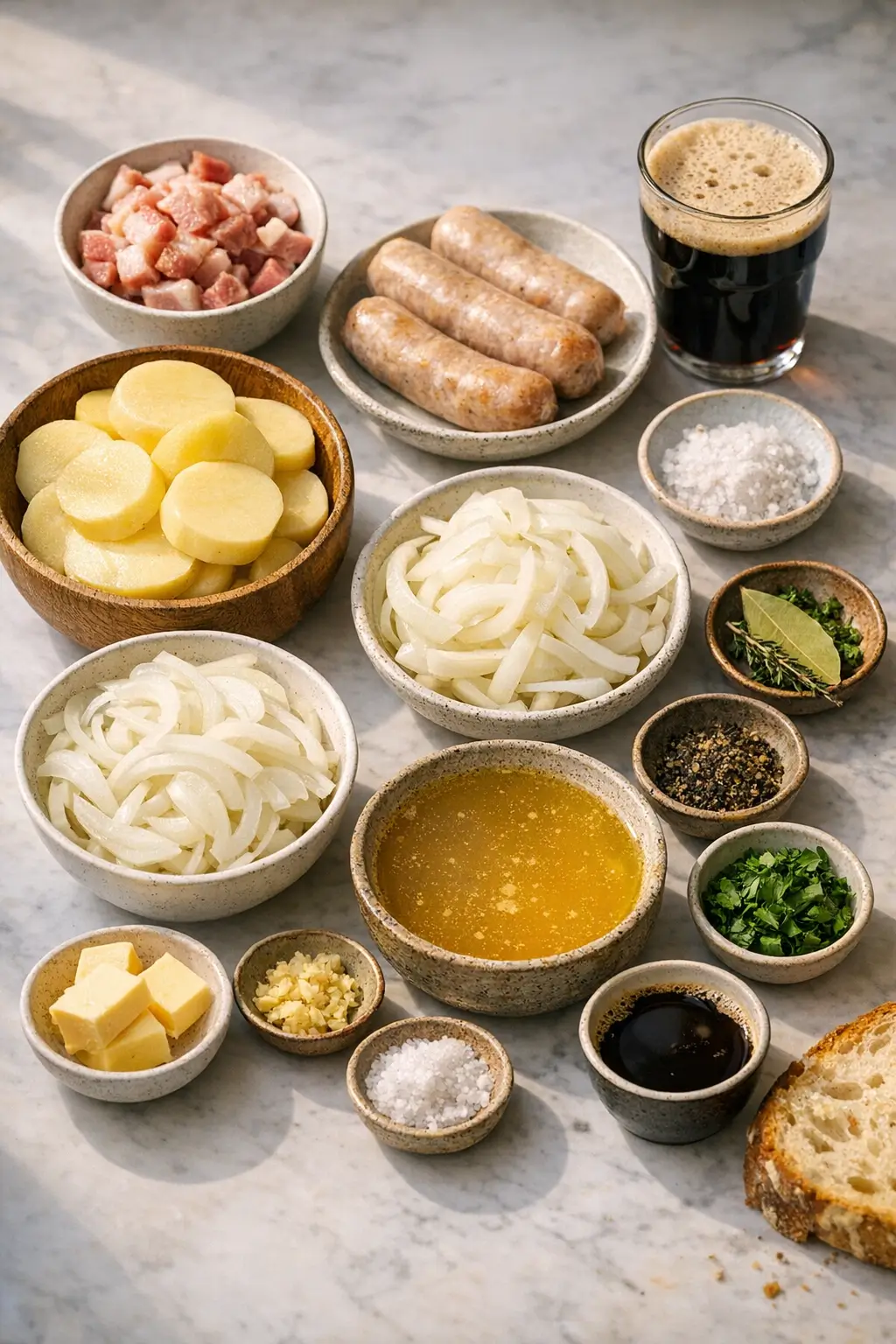
Step-by-Step Instructions for Dublin coddle
-
Prep the ingredients.
Slice the bacon into small pieces, cut the sausages into thirds if large, and peel and slice the onions and potatoes. Mince the garlic. Aim for even potato thickness so they cook at the same pace. -
Brown the bacon.
Set a heavy Dutch oven or deep, wide pot (about 4–5 quarts / liters) over medium heat. Add the bacon and cook, stirring occasionally, until it renders fat and turns lightly golden, 6–8 minutes. Use a slotted spoon to transfer the bacon to a plate, leaving a couple of tablespoons of fat in the pot. -
Brown the sausages.
Increase the heat slightly to medium-high. Add the sausages in a single layer and brown them on all sides until nicely colored but not cooked through, about 6–8 minutes. Transfer sausages to the plate with the bacon. Pour off excess fat if there’s more than a thin coating in the pan. -
Soften the onions.
Return the pot to medium heat. Add the sliced onions and a small pinch of salt. Cook, stirring and scraping up the browned bits, until the onions are soft and turning translucent with a bit of golden color at the edges, 8–10 minutes. Stir in the garlic and cook just until fragrant, about 30 seconds. -
Deglaze the pot.
Pour in the stout (or 1/2 cup / 120 ml of the stock) and use a wooden spoon to scrape any browned bits from the bottom. Let it simmer for 1–2 minutes to reduce slightly. -
Layer the potatoes, meats, and onions.
Turn off the heat. Use a spoon or tongs to move most of the onions to a bowl, leaving a thin layer on the bottom of the pot. Arrange roughly one-third of the potato slices in an even layer over the onions. Season with a pinch of salt, a few grinds of pepper, and a scatter of parsley. -
Add some bacon and sausages.
Add half of the bacon and half of the sausages over the potatoes. Top with half of the remaining onions. Repeat with another layer of potatoes, seasoning, bacon, sausages, and onions. Finish with a final layer of potatoes on top, seasoned lightly again.
Kitchen note: Potatoes on top will be more exposed and may break up a bit when you serve. If you prefer them intact, keep them in the middle layers and use slightly sturdier slices for the top.
-
Add broth and herbs.
Gently pour the remaining stock down the side of the pot so you don’t disturb the layers. The liquid should come just to the top of the potatoes or slightly below; add a splash more stock or water if needed. Tuck in the bay leaf and thyme. -
Bring to a gentle simmer.
Set the pot over medium heat and bring the liquid just to a simmer. Once you see gentle bubbles around the edges, reduce the heat to low. -
Coddle slowly.
Cover the pot tightly with a lid and let the coddle cook at a bare simmer for 45–60 minutes. The potatoes should be very tender when pierced with a knife, and the sausages cooked through. -
Finish with butter and check seasoning.
Turn off the heat. Dot the top layer of potatoes with the butter, cover again, and let it sit for 5–10 minutes so the butter melts and the flavors settle. Taste the broth and adjust with more salt and pepper if needed. -
Garnish and serve.
Remove the bay leaf and thyme stems. Spoon generous portions of potatoes, sausages, bacon, and onions into warm bowls, making sure everyone gets some broth. Sprinkle with parsley and serve with bread for dunking.
Kitchen note: If your stove runs hot and the liquid reduces too quickly, add a little hot water or stock during cooking to keep at least 1/2 inch (1–2 cm) of broth in the bottom of the pot. The dish should be moist and brothy, not dry.
What to Expect
Dublin coddle is not a crisp-edged sausage bake. You’re aiming for tender layers where the potatoes soften at the edges and gently thicken the broth, and the sausages stay plump and juicy from cooking in liquid.
The broth should taste light but savory, with a noticeable peppery kick and gentle smokiness from the bacon. If you use stout, expect a faint malty, slightly bitter note that rounds out the sweetness of the onions.
Different potatoes behave differently. Waxy varieties hold their shape better, while starchier ones like Russets can break down more and cloud the broth. Both are fine, as long as you’re okay with a softer, stew-like result.
Kitchen note: If you prefer very distinct layers and clearer broth, stick with waxy potatoes, slice them a bit thicker, and avoid stirring once the coddle is simmering.
Ways to Change It Up
1. A slightly lighter version.
Use turkey or chicken sausages and trim the bacon to 6 oz (170 g). After browning, drain off most of the rendered fat, leaving just a tablespoon to soften the onions. The flavor stays comforting, but the broth feels a bit cleaner.
2. A milder, kid-friendlier coddle.
Cut back the black pepper to 1/2 teaspoon and skip the stout. Choose mild sausages without a lot of added spice or garlic. You can also cut the sausages into smaller chunks so they’re easier for kids to eat and to help flavors distribute.
3. A slightly richer, deeper broth.
Use all chicken or pork stock and extend the simmer time to 75–90 minutes on very low heat. The potatoes break down a bit more and the broth thickens naturally without flour. You can also stir in an extra tablespoon of butter at the end.
4. Faster, simplified stovetop version.
Skip the layering and instead brown the meats, then add onions, garlic, potatoes, and broth all together. Simmer gently, covered, for about 30–40 minutes, stirring once or twice. The result is more of a straightforward stew but still very satisfying when time is tight.
If you like other hearty, saucy mains you can eat with a spoon, you might also enjoy the comforting flavors in Tuscan White Bean Soup with Kale or a bowl of Creamy Hungarian Mushroom Soup with Dill and Paprika.
Serving and Storage
Dublin coddle is usually served straight from the pot into deep bowls, with bread to catch every bit of broth. It sits comfortably beside other cool-weather dishes often eaten around St. Patrick’s Day, much like Cornish Pasty Made Easy: Flaky, Hearty, Freezer-Ready does in its own tradition of pastry-wrapped comfort.
Pair it with a simple green salad, buttered cabbage, or roasted Brussels sprouts if you want some vegetables on the side. A pint of stout or a non-alcoholic malt drink echoes the flavors in the pot.
Leftovers keep well. Once cooled, store in an airtight container in the refrigerator for up to 3 days. The potatoes will continue to soften, but the flavors deepen.
Reheat gently on the stove over low heat, adding a splash of water or stock if the broth has thickened too much. You can also reheat in a 300°F (150°C) oven, covered, until steaming hot in the center.
Because of the potatoes, freezing is not ideal; they tend to turn grainy once thawed. If you do freeze a portion, expect a softer, more broken-down texture after reheating.

Kitchen note: When reheating, avoid a hard boil or very high microwave power, which can toughen the sausages and cause the potatoes to fall apart.
Cultural Context
Coddle is closely associated with Dublin and is mentioned in several literary references to the city. Historically, it was a practical way to use leftover sausages, bacon, potatoes, and onions, all slowly cooked together so dinner could quietly simmer while people were out or working.
There is no single fixed recipe, which means households develop their own versions and preferences. The core stays the same: pork sausages, rashers or bacon, potatoes, onions, plenty of black pepper, and a simple broth. You can read more about the dish’s background and its connection to Dublin in this overview from an encyclopedia-style entry on coddle.
Coddle often appears alongside other Irish dishes in discussions of regional home cooking and literary Dublin. Some cultural historians note its links to frugality and overnight cooking traditions, when stoves could be banked and left to tick over slowly.
Common Questions and Troubleshooting
My potatoes fell apart. What went wrong?
Potatoes can break down if they’re sliced very thinly, stirred a lot during cooking, or simmered at too high a heat. Next time, use waxy potatoes, slice them at least 1/3 inch (8 mm) thick, keep the heat low, and avoid stirring once everything is layered.
The broth tastes too salty. How can I fix it?
Saltiness usually comes from the bacon and sausages. Add a splash or two of unsalted stock or water and a few extra potato slices if you have them, then simmer gently so they can absorb some of the seasoning. Finish with a squeeze of lemon or a spoonful of unsalted butter to soften the edges of the flavor.
Can I make this ahead?
Yes. Coddle actually tastes even better the next day as the flavors mingle. Cool completely, refrigerate, and reheat gently on the stove or in the oven with a splash of stock or water. Add fresh parsley just before serving for brightness.
Can I use another type of sausage?
You can use bratwurst, mild pork sausages, or even a mix of pork and beef sausages. Avoid very strongly flavored or smoked sausages if you want to keep the character of the broth balanced. If using raw fresh sausages, make sure to brown them well and cook until they’re fully done in the simmering stage.
My broth is too thin. How do I make it feel more satisfying?
Let the coddle simmer uncovered for the last 10–15 minutes to reduce slightly, or gently mash just a few potato slices into the broth to thicken it naturally. Adding a teaspoon or two of butter at the end also adds body.
Conclusion
Dublin coddle is a practical way to turn a few basic ingredients into a pot that quietly looks after itself while you handle the rest of your evening. You get soft, peppery potatoes, juicy sausages, and smoky bacon all sharing one broth.
If you cook it, I’d love to hear how it went—what sausages you used, whether you added stout or kept it simple, and how the leftovers tasted the next day. Feel free to leave a comment, share your tweaks, or note any timing adjustments that worked in your own kitchen.

Dublin Coddle One-Pot Sausage Supper Made Easy

Equipment
- Dutch oven or deep wide pot (4–5 quart/liter) with lid
- Cutting board
- Knife
- Slotted spoon
- Wooden spoon
- Tongs
Ingredients
Meats
- 8 oz thick-cut bacon cut into 1/2-inch (1.25 cm) pieces
- 1 lb pork sausages Irish bangers if possible
Vegetables & Aromatics
- 2 large yellow onions halved and sliced 1/4 inch (6 mm) thick
- 2 cloves garlic minced (optional)
- 2 lb waxy or all-purpose potatoes (Yukon Gold or red) peeled if you like; sliced 1/3–1/2 inch (8–12 mm) thick
Broth & Seasoning
- 2 1/2 cups low-sodium chicken stock or light pork/ham stock
- 1/2 cup stout beer such as Guinness, or more stock
- 1–1 1/4 tsp kosher salt plus more to taste
- 1–1 1/2 tsp freshly ground black pepper
- 1 bay leaf
- 2–3 sprigs fresh thyme or 1/2 tsp dried thyme (optional)
Finishing & Serving
- 2 Tbsp unsalted butter dotted over the top
- 2–3 Tbsp fresh parsley chopped, plus more for serving if desired
- crusty bread or Irish soda bread for serving
Instructions
- Prep the ingredients: slice the bacon into small pieces, cut the sausages into thirds if large, and peel and slice the onions and potatoes. Mince the garlic. Aim for even potato thickness so they cook at the same pace.
- Brown the bacon: set a heavy Dutch oven or deep, wide pot over medium heat. Add the bacon and cook, stirring occasionally, until it renders fat and turns lightly golden, 6–8 minutes. Use a slotted spoon to transfer bacon to a plate, leaving a couple tablespoons of fat in the pot.
- Brown the sausages: increase heat to medium-high. Add sausages in a single layer and brown on all sides until nicely colored but not cooked through, 6–8 minutes. Transfer to the plate with the bacon. Pour off excess fat if there’s more than a thin coating in the pan.
- Soften the onions: return pot to medium heat. Add sliced onions and a small pinch of salt. Cook, stirring and scraping up browned bits, until onions are soft and turning translucent with a bit of golden color at the edges, 8–10 minutes. Stir in garlic and cook just until fragrant, about 30 seconds.
- Deglaze: pour in the stout (or 1/2 cup / 120 ml of the stock) and scrape browned bits from the bottom with a wooden spoon. Simmer 1–2 minutes to reduce slightly.
- Layer: turn off the heat. Move most onions to a bowl, leaving a thin layer in the pot. Arrange about one-third of the potato slices over the onions. Season with a pinch of salt, a few grinds of pepper, and a scatter of parsley.
- Add meats and repeat layers: add half the bacon and half the sausages over the potatoes, then top with half the remaining onions. Repeat with another layer of potatoes, seasoning, bacon, sausages, and onions. Finish with a final layer of potatoes on top, seasoned lightly again.
- Add broth and herbs: gently pour the remaining stock down the side of the pot so you don’t disturb the layers (liquid should come just to the top of the potatoes or slightly below). Add a splash more stock or water if needed. Tuck in the bay leaf and thyme.
- Bring to a gentle simmer: set the pot over medium heat and bring just to a simmer. Once you see gentle bubbles around the edges, reduce heat to low.
- Coddle slowly: cover tightly and cook at a bare simmer 45–60 minutes, until potatoes are very tender and sausages are cooked through.
- Finish and rest: turn off heat. Dot the top layer with butter, cover again, and let sit 5–10 minutes. Taste broth and adjust with more salt and pepper if needed.
- Garnish and serve: remove bay leaf and thyme stems. Spoon potatoes, sausages, bacon, onions, and plenty of broth into warm bowls. Sprinkle with parsley and serve with bread for dunking.



Leave a Reply