
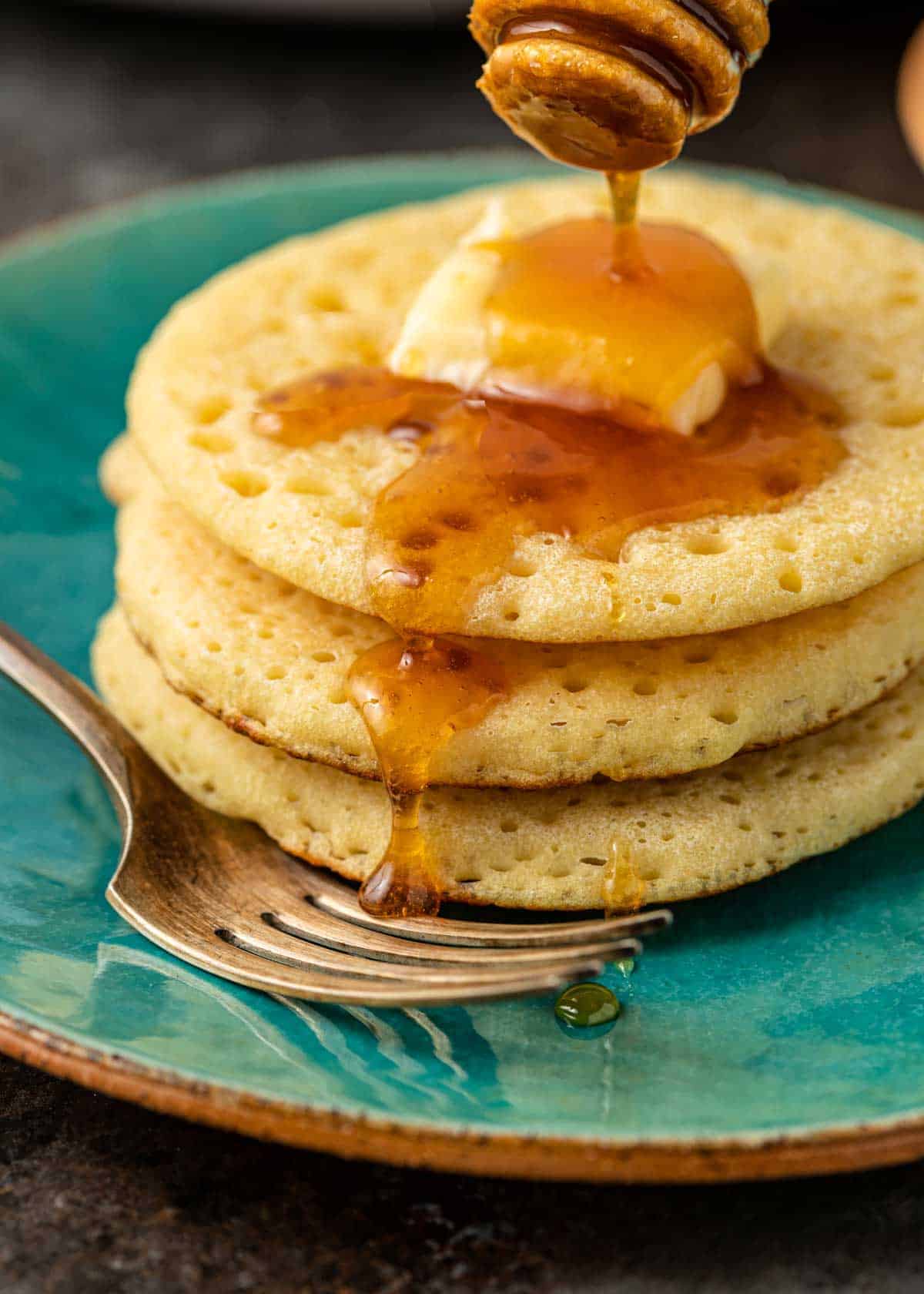
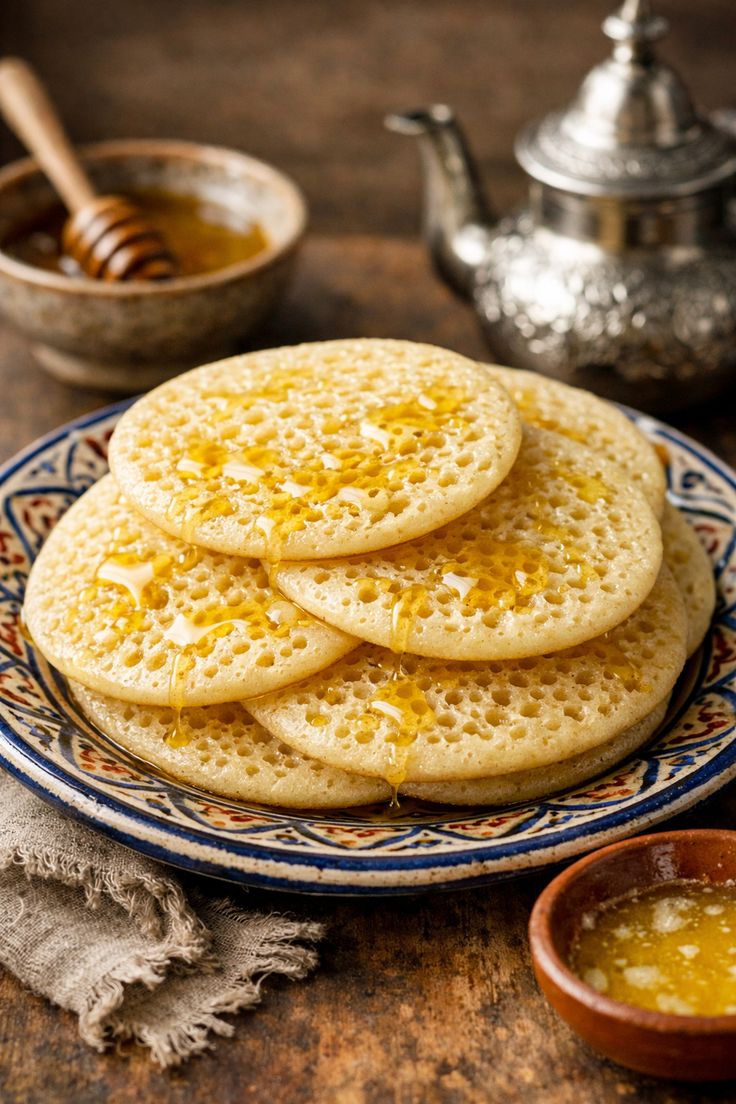
Baghrir, Morocco’s beloved “thousand-hole” semolina pancakes, are light, spongy, and perfect for soaking up honey-butter. Inspired by North African home cooking, this approachable version suits weeknight breakfasts, leisurely brunch, or afternoon tea. The flavor is gently sweet, buttery, and a little floral if you add orange blossom water. You’ll cook baghrir on one side only, so the top forms tiny craters while the bottom stays tender. Follow the simple steps below to get an airy batter, even bubbles, and a soft, elastic texture. This guide shows you exactly when to pour, when to lower the heat, and how to keep pancakes from sticking or deflating—ideal for new cooks.
Supermarket-Friendly Ingredients for Baghrir
Note: Metric weights are most accurate; cup measures are provided for convenience.
For the pancakes (12–14 pieces)
- 300 g (about 1 3/4 cups) fine semolina (not coarse)
- Substitute: Use medium semolina if needed; blend longer for a smoother batter.
- 50 g (1/3 cup) all-purpose flour (optional, for extra tenderness)
- Substitute: Use fine durum flour or more semolina; texture will be slightly chewier.
- 12 g (1 tablespoon) granulated sugar
- Substitute: Honey or maple (same weight) works; mix into warm water first.
- 7 g (2 1/4 teaspoons) instant yeast
- Substitute: 9 g (3 teaspoons) active dry yeast; bloom in warm water 5–10 minutes.
- 8 g (2 teaspoons) baking powder
- Tip: Ensures plentiful holes and a light crumb.
- 3 g (1/2 teaspoon) fine salt
- 650 ml (2 3/4 cups) warm water, 38–43°C / 100–110°F
- Adjust: Add 2–4 tablespoons more water if the batter seems thick after resting.
- 1 teaspoon orange blossom water (optional; may be hard-to-find)
- 1 teaspoon neutral oil (for lightly wiping the pan, if needed)
For the honey-butter drizzle
- 120 ml (1/2 cup) honey
- Substitute: Date syrup for a deeper flavor.
- 60 g (1/4 cup / 4 tablespoons) unsalted butter
- Vegan substitute: 60 ml (1/4 cup) mild olive oil or culinary argan oil (traditional but often hard-to-find).
- Pinch of salt
- Optional: 1 teaspoon orange blossom water (may be hard-to-find)
How to Make Baghrir (Step-by-Step)
- Warm the water: Heat water to 38–43°C / 100–110°F. It should feel warm, not hot. This activates the yeast without killing it.
- Blend the batter: In a blender (or large bowl with a whisk), add warm water, semolina, flour, sugar, yeast, salt, baking powder, and orange blossom water if using. Blend on high for 60–90 seconds until completely smooth. The mixture should look creamy and pourable.
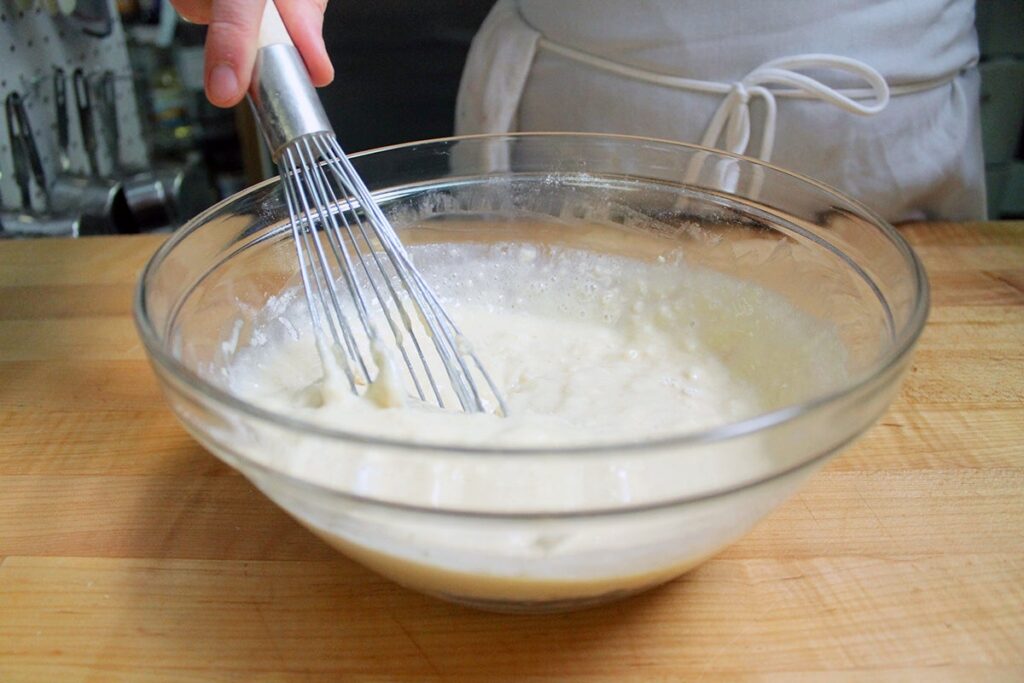
- Rest to activate: Pour batter into a large bowl. Cover loosely. Rest 20–30 minutes at room temperature until a light foam forms on top and tiny bubbles appear throughout. The batter should be like heavy cream; whisk in 1–2 tablespoons water if thick.
- Preheat the pan: Set a large nonstick skillet or crêpe pan over medium-low heat for 3 minutes. Test with a few drops of water—they should sizzle gently, not jump.
- First pancake test: Stir the batter once to redistribute bubbles (do not overmix). Pour 1/4 cup (60 ml) batter into the dry pan. Do not spread. Cook uncovered. Holes should appear within 30–60 seconds.
- Adjust heat: If holes appear but close up, lower the heat slightly. If the bottom browns before the surface dries, lower the heat. If no holes form, the pan is too cool or batter is too thick—raise heat slightly or whisk in 1–2 tablespoons water.
- Cook through (one side only): Continue cooking 2–4 minutes until the surface is matte and dry with many open holes, and the bottom is pale with light golden speckles. Do not flip.
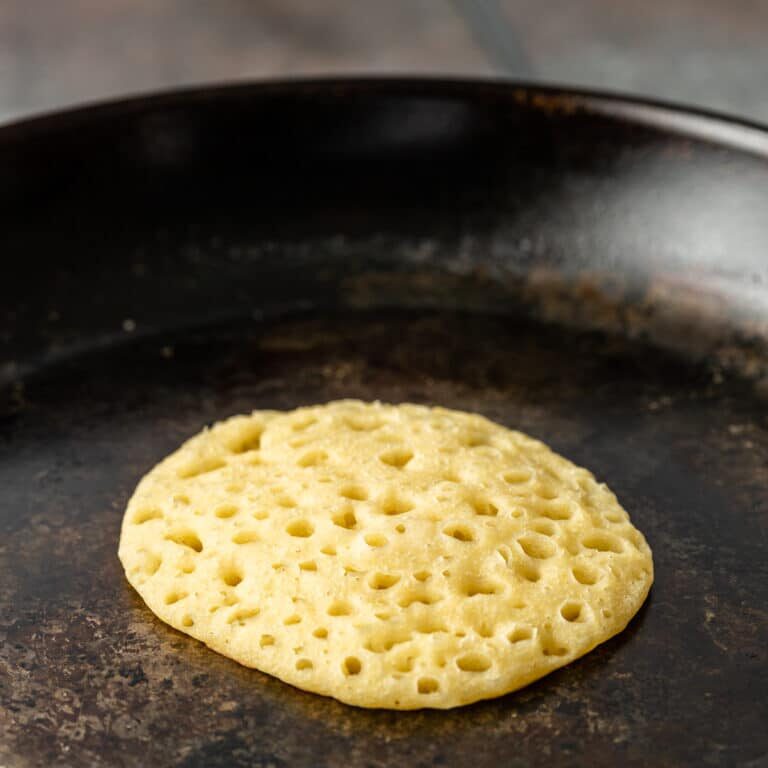
- Cool properly: Lift with a thin spatula. Place cooked baghrir in a single layer on a clean towel or rack to prevent sticking. Avoid stacking while hot.
- Repeat: Wipe the pan very lightly with oil only if needed to prevent sticking. Cook remaining batter, adjusting heat as you go.
- Make the drizzle: In a small saucepan, melt butter with honey over low heat until just bubbling, 1–2 minutes. Stir in a pinch of salt and optional orange blossom water. Keep warm.
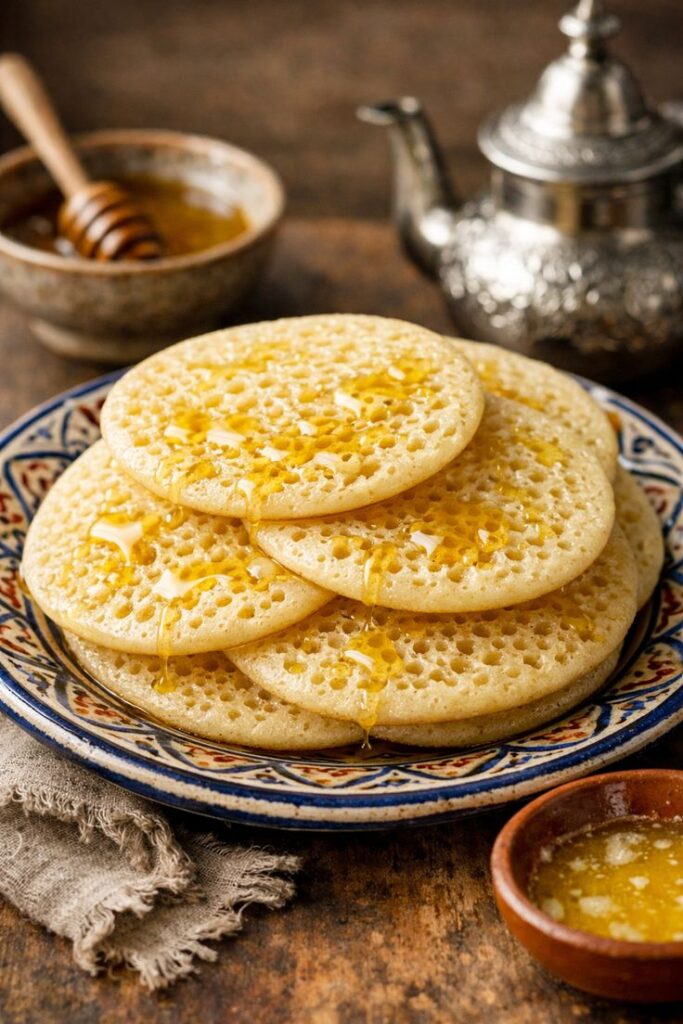
- Serve: Arrange warm baghrir on a plate. Spoon over honey-butter so it seeps into the holes. Fold or roll to serve.
What to Expect
- Texture: Spongy and elastic with a “honeycomb” top; tender and moist inside.
- Flavor: Mildly sweet, buttery, and slightly floral if using orange blossom water. The browned spots add a gentle nuttiness from semolina.
Ways to Change It Up
- Vegetarian/Vegan: Use maple or date syrup and olive or argan oil instead of butter. Brush warm baghrir with oil to keep them supple.
- Spicier or Milder: For gentle spice, add 1/2 teaspoon ground cinnamon or a pinch of ginger to the batter; for a milder profile, skip orange blossom water.
- Faster Version: Use slightly warmer water (still below 43°C / 110°F) and rest just 15–20 minutes in a warm spot. Or replace yeast with 2 teaspoons additional baking powder for an instant version (texture will be less elastic).
- Nutty & Traditional Touch: Drizzle with warm honey mixed with 1–2 tablespoons culinary argan oil (hard-to-find but classic in parts of Morocco).
- Sesame-Almond Finish: Sprinkle toasted sesame seeds and slivered almonds over the honey-butter for crunch.
Serving & Storage
Serve with fresh fruit, yogurt, or a side of mint tea. Baghrir are excellent plain, with honey-butter, or with amlou (almond–argan spread) when available.
- Storage (room temp): Cool completely; keep covered up to 6 hours.
- Storage (fridge): Up to 3 days in an airtight container with parchment between layers.
- Freeze: Up to 2 months; freeze in a single layer, then bag with parchment.
- Reheat: Steam 30–60 seconds, or microwave covered with a damp towel 10–20 seconds. A warm, covered skillet on very low heat also works.
Cultural & Historical Context
Baghrir is enjoyed across Morocco and the broader Maghreb, often for breakfast, afternoon tea, or festive occasions like Ramadan evenings. The name references its signature “thousand holes,” created by a yeast-raised semolina batter cooked on one side. Regional toppings range from honey-butter to amlou, and some households use lightly fermented batters for extra tang. This recipe is an approachable adaptation inspired by traditional methods rather than a claim to authenticity. Learn more: Baghrir on Wikipedia and cultural notes on Taste of Maroc.
Conclusion
If you made these Baghrir, please rate the recipe and share how it went. I’d love to hear about your experience, any tweaks you made, or tips you discovered along the way. Questions? Ask in the comments and I’ll be happy to help troubleshoot and offer advice to ensure your Baghrir turns out perfectly every time. Your feedback helps me improve the recipe and supports others in the community. Thank you for cooking along!
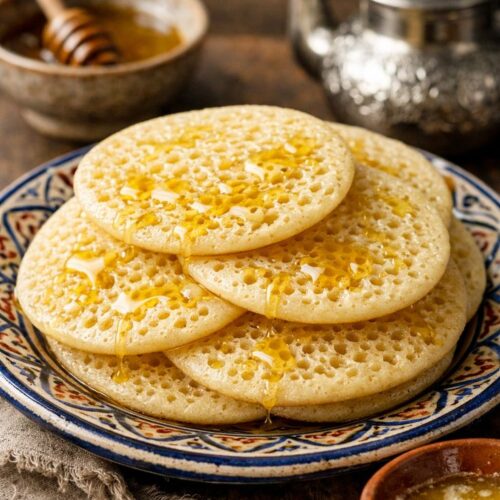
Easy Baghrir for Beginners: Honey-Soaked Moroccan Pancakes

Equipment
- Blender Or large mixing bowl + whisk
- Large bowl for resting the batter + cover (towel/plate)
- Nonstick skillet or crêpe pan
- ¼-cup measure or small ladle they portion ~60 ml per pancake
- Thin spatula
- Cooling rack or clean towel
- Small saucepan + spoon
Ingredients
- 300g g Fine semolina not coarse. Use medium semolina if needed; blend longer for a smoother batter.
- 50 g All-purpose flour optional, for extra tenderness
- 12 g Granulated sugar
- 7 g Instant yeast
- 8 g Baking powder Ensures plentiful holes and a light crumb.
- 3 g Fine salt
- 650 ml Warm water, 38–43°C / 100–110°F
- teaspoon Orange blossom water optional; may be hard-to-find
- teaspoon Neutral oil for lightly wiping the pan, if needed
- 120 ml Honey Substitute: Date syrup for a deeper flavor.
- 60 g Unsalted butter
- 60 ml Mild olive oil **Vegan substitute**
- 60 ml Culinary argan oil **Vegan substitute** Might be hard to find (We provided a link to get it)
- 1 teaspoon Orange blossom water Optional (may be hard to find)
Instructions
- Warm the water: Heat water to 38–43°C / 100–110°F. It should feel warm, not hot. This activates the yeast without killing it.
- Blend the batter: In a blender (or large bowl with a whisk), add warm water, semolina, flour, sugar, yeast, salt, baking powder, and orange blossom water if using. Blend on high for 60–90 seconds until completely smooth. The mixture should look creamy and pourable.
- Rest to activate: Pour batter into a large bowl. Cover loosely. Rest 20–30 minutes at room temperature until a light foam forms on top and tiny bubbles appear throughout. The batter should be like heavy cream; whisk in 1–2 tablespoons water if thick.
- Preheat the pan: Set a large nonstick skillet or crêpe pan over medium-low heat for 3 minutes. Test with a few drops of water—they should sizzle gently, not jump.
- First pancake test: Stir the batter once to redistribute bubbles (do not overmix). Pour 1/4 cup (60 ml) batter into the dry pan. Do not spread. Cook uncovered. Holes should appear within 30–60 seconds.
- Adjust heat: If holes appear but close up, lower the heat slightly. If the bottom browns before the surface dries, lower the heat. If no holes form, the pan is too cool or batter is too thick—raise heat slightly or whisk in 1–2 tablespoons water.
- Cook through (one side only): Continue cooking 2–4 minutes until the surface is matte and dry with many open holes, and the bottom is pale with light golden speckles. Do not flip.
- Cool properly: Lift with a thin spatula. Place cooked baghrir in a single layer on a clean towel or rack to prevent sticking. Avoid stacking while hot.
- Repeat: Wipe the pan very lightly with oil only if needed to prevent sticking. Cook remaining batter, adjusting heat as you go.
- Make the drizzle: In a small saucepan, melt butter with honey over low heat until just bubbling, 1–2 minutes. Stir in a pinch of salt and optional orange blossom water. Keep warm.
- Serve: Arrange warm baghrir on a plate. Spoon over honey-butter so it seeps into the holes. Fold or roll to serve.



Leave a Reply