
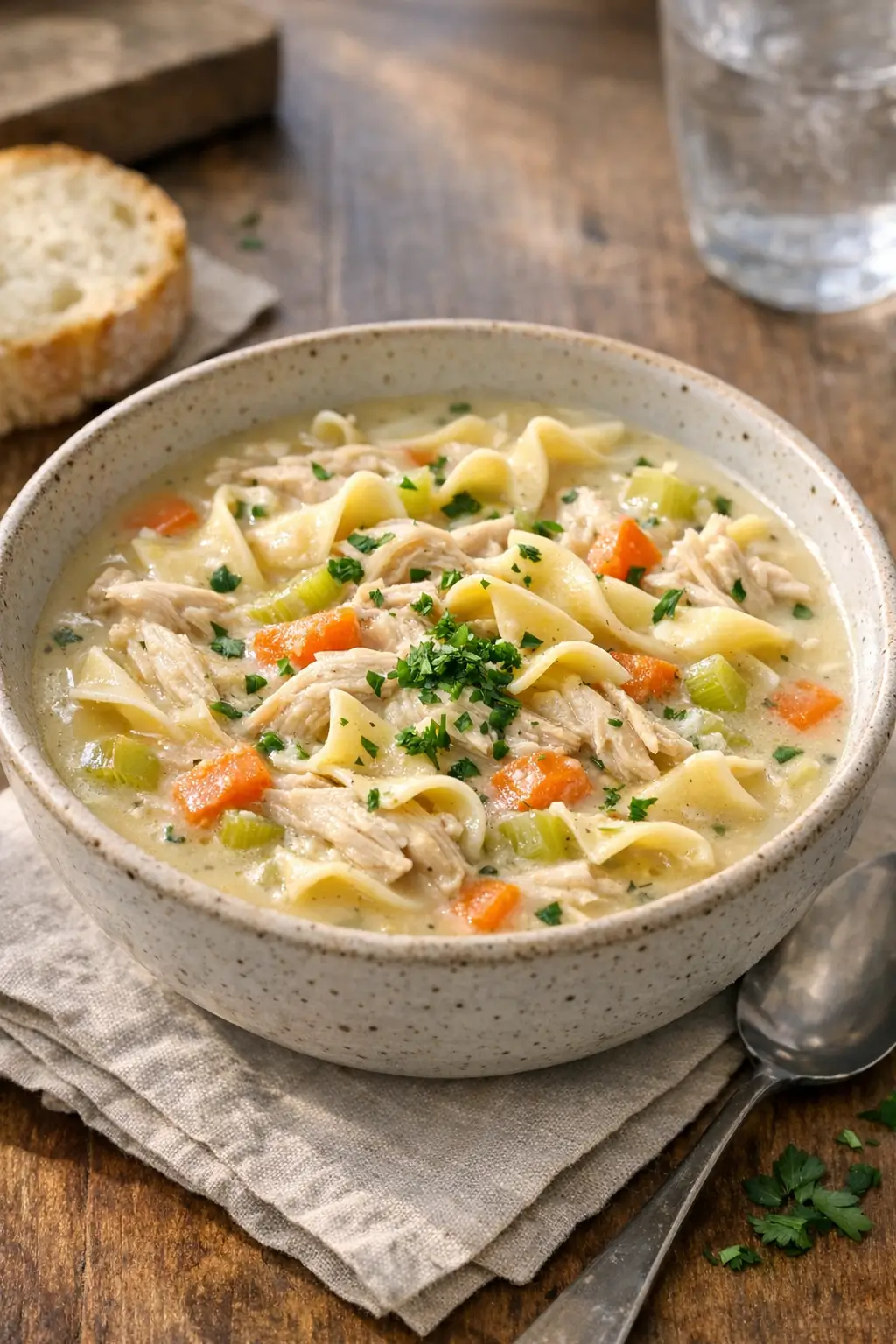
A bowl of easy creamy chicken noodle soup is weeknight comfort without the fuss. You get the familiar savory broth, tender chicken, and soft noodles, finished with a gentle creaminess that doesn’t feel heavy. Expect a calm, soothing flavor profile with carrots, celery, and thyme doing quiet work in the background.
If you’re staring at a rotisserie chicken and a busy evening, start by shredding the meat and chopping the mirepoix so the pot can move quickly. If you have small kids or a tiny kitchen, measure the noodles and cream first—those are the two moments that benefit from focus. This version builds body with a simple butter–flour roux and finishes with cream for a velvety texture that stays spoonable.
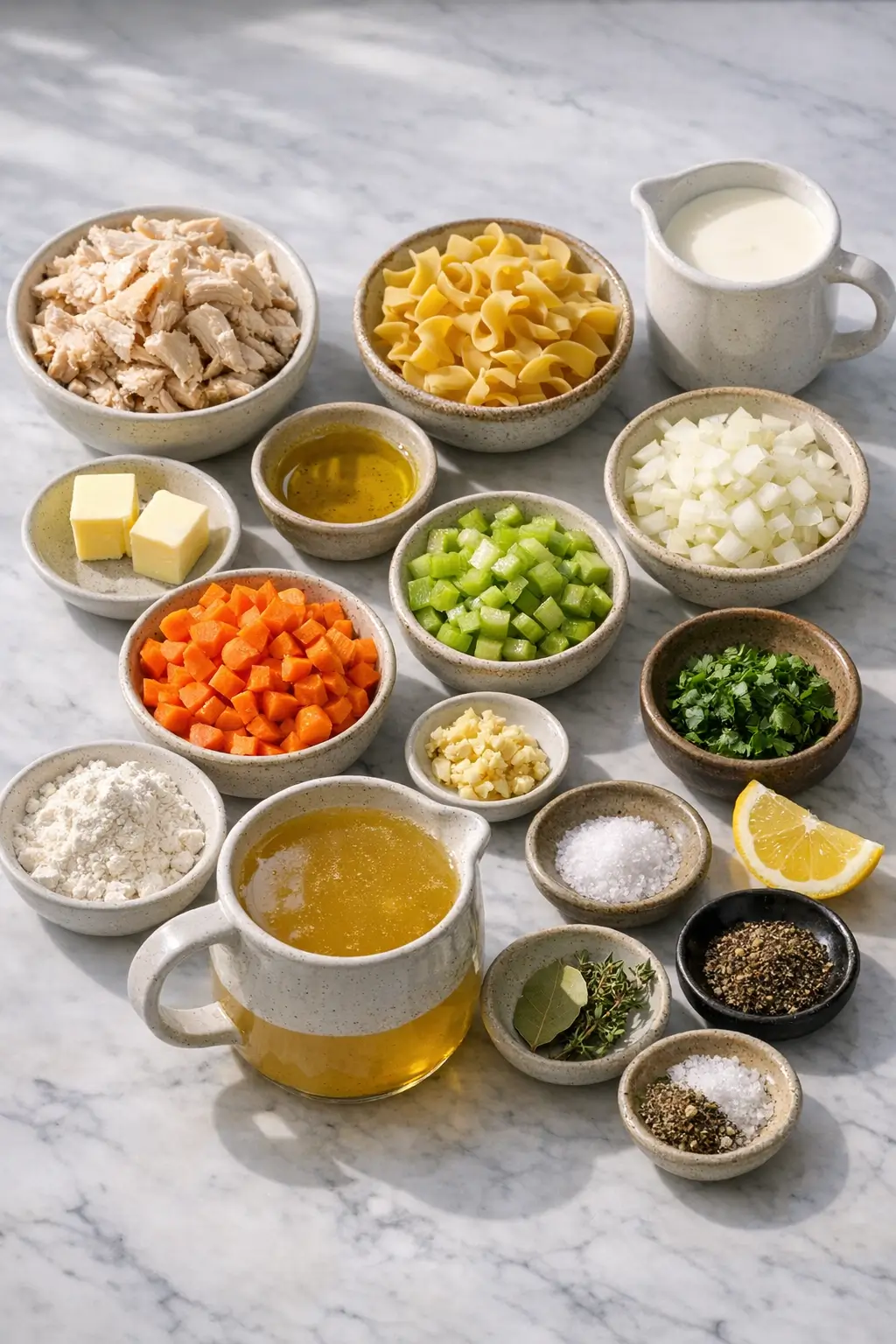
Ingredients
-
2 tablespoons (28 g) unsalted butter — for the roux and flavor
-
1 tablespoon (15 ml) olive oil — helps the aromatics soften evenly
-
1 medium (150 g) yellow onion, diced small
-
2 medium (150 g total) carrots, diced small
-
2 ribs (100 g) celery, diced small
-
3 cloves garlic, minced
-
3 tablespoons (24 g) all-purpose flour — thickens the broth
-
6 cups (1.4 L) low-sodium chicken stock or broth
-
1 bay leaf
-
3–4 sprigs fresh thyme or 1 teaspoon dried thyme
-
2 cups (250 g) cooked shredded chicken (rotisserie works well) — or 12 oz (340 g) boneless skinless chicken thighs, simmered in the soup then shredded
-
2 cups (120 g) wide egg noodles — dry weight
-
1 cup (240 ml) half-and-half or 3/4 cup (180 ml) heavy cream — richness without overpowering
-
1 teaspoon kosher salt, plus more to taste
-
1/2 teaspoon freshly ground black pepper
-
1 tablespoon (15 ml) fresh lemon juice — optional, brightens the finish
-
2 tablespoons (8 g) chopped fresh parsley — optional garnish
-
Substitutions:
-
Gluten-free: use 2 tablespoons (16 g) cornstarch mixed with 3 tablespoons (45 ml) cold water instead of flour; add after simmering the broth.
-
Dairy-free: swap olive oil for butter and use unsweetened oat creamer or cashew cream.
-
Noodles: any short pasta (ditalini, rotini) works; adjust cooking time to package directions.
-
Herbs: dried thyme and a pinch of oregano mimic the fresh mix.
Kitchen note: Egg noodles keep drinking broth as they sit. If you expect leftovers, cook noodles separately in salted water and add to bowls when serving.
Step-by-Step Instructions for Easy Creamy Chicken Noodle Soup
- Soften the aromatics. Set a Dutch oven or 5–6 quart pot over medium heat. Add the butter and oil. When the butter foams, stir in the onion, carrots, and celery with a pinch of salt. Cook 5–7 minutes, stirring occasionally, until the onions look translucent and the carrots start to soften.
- Bloom the garlic and build the roux. Add the garlic and cook 30 seconds until fragrant. Sprinkle in the flour and stir to coat the vegetables. Cook 1–2 minutes, scraping the bottom so the roux smells toasty, not raw.
- Whisk in the broth gradually. Pour in about 1 cup (240 ml) of stock while whisking to dissolve the roux, then add the rest. Drop in the bay leaf and thyme. Bring to a gentle simmer over medium heat.
- Cook the chicken (if using raw). If you’re starting with raw thighs, slide them into the pot now. Simmer 12–15 minutes, or until they register 165°F/74°C. Transfer to a plate, shred with forks, and return to the pot.
- If using cooked chicken. Wait to add it until after the noodles are done so it stays tender. Keep the soup at a gentle simmer.
- Add noodles and simmer. Stir in the egg noodles and cook according to package time (usually 6–8 minutes), stirring once or twice to prevent sticking. Taste the broth and add salt as needed.
- Finish with cream. Lower the heat to medium-low. Stir in the half-and-half or heavy cream and the shredded cooked chicken. Warm just until steamy and cohesive, 2–3 minutes. Do not boil after adding dairy.
- Season and brighten. Add black pepper and lemon juice if you like a fresher finish. Remove bay and thyme stems. Adjust salt.
- Serve. Ladle into warm bowls and top with parsley. If you held back separate noodles, add a scoop to each bowl before pouring on the soup.
Kitchen note: If the soup thickens more than you like, thin with hot stock or water 1/4 cup (60 ml) at a time. If it’s too thin, simmer uncovered for a few minutes before adding cream, or whisk 1 teaspoon cornstarch into 2 teaspoons cold water and stir it in, then simmer 1 minute.
What to Expect
The broth lands in the middle ground—cozy and lightly velvety rather than stew-thick. The roux adds body that clings to the noodles but stays sip-able. Expect noodles to be fully tender, not al dente; egg noodles soften fast and that’s part of their charm here.
Flavor is gentle and savory. Chicken stock, thyme, and bay provide foundation, while a small splash of lemon brightens the finish. Cream rounds edges without tipping into richness that coats the palate.
Results vary with brand and cookware. Some store-bought stocks are saltier than others; season in layers and taste again after the cream goes in. A wide pot evaporates faster than a narrow one, so you may need an extra splash of stock to keep the texture right.
Ways to Change It Up
- Veg-forward and meatless: Swap chicken for 2 cups (300 g) sautéed mushrooms and 1 cup (30 g) baby spinach. Use vegetable stock and finish with a spoonful of miso off the heat for depth.
- Extra cozy and richer: Stir in 1/4 cup (25 g) grated Parmesan at the end for a creamy, savory note inspired by pantry-friendly approaches used in some kitchens. If you like this trick, you may also enjoy the technique-forward notes in Build Kitchen Confidence and Upgrade Your Meals with Simple, Proven Techniques.
- Lighter dairy: Use 1/2 cup (120 ml) evaporated milk plus 1/2 cup (120 ml) stock for a thinner, still creamy finish that reheats smoothly.
- Mild-to-spicy: For gentle warmth, add 1/4 teaspoon red pepper flakes with the garlic. For more heat, bloom 1/2 teaspoon cayenne in the roux.
- Herb switch: Dill changes the soup’s personality; stir in 1 tablespoon chopped fresh dill with the parsley for a classic deli-leaning note.
- Simpler stock and chicken: If you want to poach chicken and make a quick broth at once, see the poaching approach in Hainanese Chicken Rice for Fragrant, Comforting Meals; the technique translates well to weeknight broth-making.
Serving and Storage
Serve the soup hot with crusty bread, buttered toast, or simple greens. A crisp side salad offsets the creaminess nicely. For a speedy, crunchy pairing, try our Cucumber Salad That Stays Crunchy in 15 Minutes or a heartier bowl like Italian Chopped Sandwich Salad for Busy Weeknight Cravings.
Leftovers keep well for 3 days in the refrigerator. Cool the soup, then store in airtight containers. Reheat gently over medium-low heat, stirring often until hot. Add a splash of stock or water to loosen if needed.
For freezing, skip the noodles and cream in the base batch. Freeze the broth-with-chicken portion for up to 2 months. Reheat, add fresh noodles to simmer, then finish with cream.
Kitchen note: If you plan for leftovers, boil the noodles separately and store them in a little olive oil. Combine in bowls as you reheat to keep texture intact.
Cultural Context
Chicken noodle soup appears across North American tables in countless forms, many descended from European chicken soups and adapted with noodles in the 20th century. Variations of chicken soup are global—from Scottish cock‑a‑leekie to Korean samgyetang—and the dish often carries a reputation for care when someone is under the weather. One well-known study found that chicken soup could inhibit neutrophil chemotaxis in vitro, hinting at a modest anti‑inflammatory effect; it’s a helpful read for the science-minded: Chicken soup inhibits neutrophil chemotaxis (Chest, 2000). For a concise look at cultural breadth, see Smithsonian’s overview of chicken soups around the world: A Journey Around the World, as Told Through Chicken Soup.
Common Questions and Troubleshooting
- My soup is too thick. What now? Thin gradually with hot stock or water, 2–4 tablespoons at a time, and simmer 1 minute. Add salt only after thinning so you don’t overshoot.
- The dairy looks slightly separated. Did I ruin it? Not necessarily. Tiny speckles can appear if the soup got too hot. Lower the heat, whisk in a splash of cream, and it usually smooths out. Next time, keep it just below a simmer after adding cream.
- Can I use chicken breast? Yes. Simmer boneless breasts in step 4 for 10–12 minutes until 165°F/74°C, then shred. Breasts are leaner and can dry out; add them back only at the end to rewarm.
- How do I make it gluten-free? Skip the roux. Simmer the broth, then stir in a cornstarch slurry (see Ingredients) and cook 1 minute to thicken before adding noodles. Use gluten-free pasta.
- Can I use milk instead of cream? Whole milk works, but it’s more prone to curdling. Keep the heat low, and consider adding 1 tablespoon butter with the milk to stabilize.
- The noodles soaked up all my broth overnight. How do I save it? Add 1–2 cups (240–480 ml) hot stock while reheating until it returns to a soupier consistency. Season to taste.
- What if I only have canned chicken? Drain well and add at the end with the cream to avoid overcooking. Taste and adjust salt; canned chicken can be brinier.
- Can I add frozen vegetables? Absolutely. Stir in 1 cup (150 g) frozen peas or mixed vegetables during the last 2 minutes of simmering.
Conclusion
This pot is designed for real weeknights: straightforward steps, common ingredients, and a creamy finish you can adjust to your taste. If you make it, leave a comment and a rating—your notes on noodle timing, herb swaps, and reheating help other home cooks. Share what worked for you and any smart tweaks you discovered along the way.



Leave a Reply