
Introduction
Hainanese Chicken Rice is a beloved staple across Malaysia and Singapore, with roots tracing back to Hainan in southern China. In Malaysia, it’s enjoyed for lunch or dinner at kopitiams and hawker centers, often paired with a bright chili sauce and cooling cucumber. This recipe delivers silky, gently poached chicken, glossy ginger‑garlic rice cooked in aromatic broth, and a lively sauce for dipping. Expect clean, savory flavors with hints of sesame, star anise, and white pepper. Crafted for home cooks, this Hainanese Chicken Rice method keeps ingredients accessible while staying true to the spirit of the dish’s comforting balance of chicken, rice, and broth.
Ingredients
INGREDIENTS – Hainanese Chicken Rice
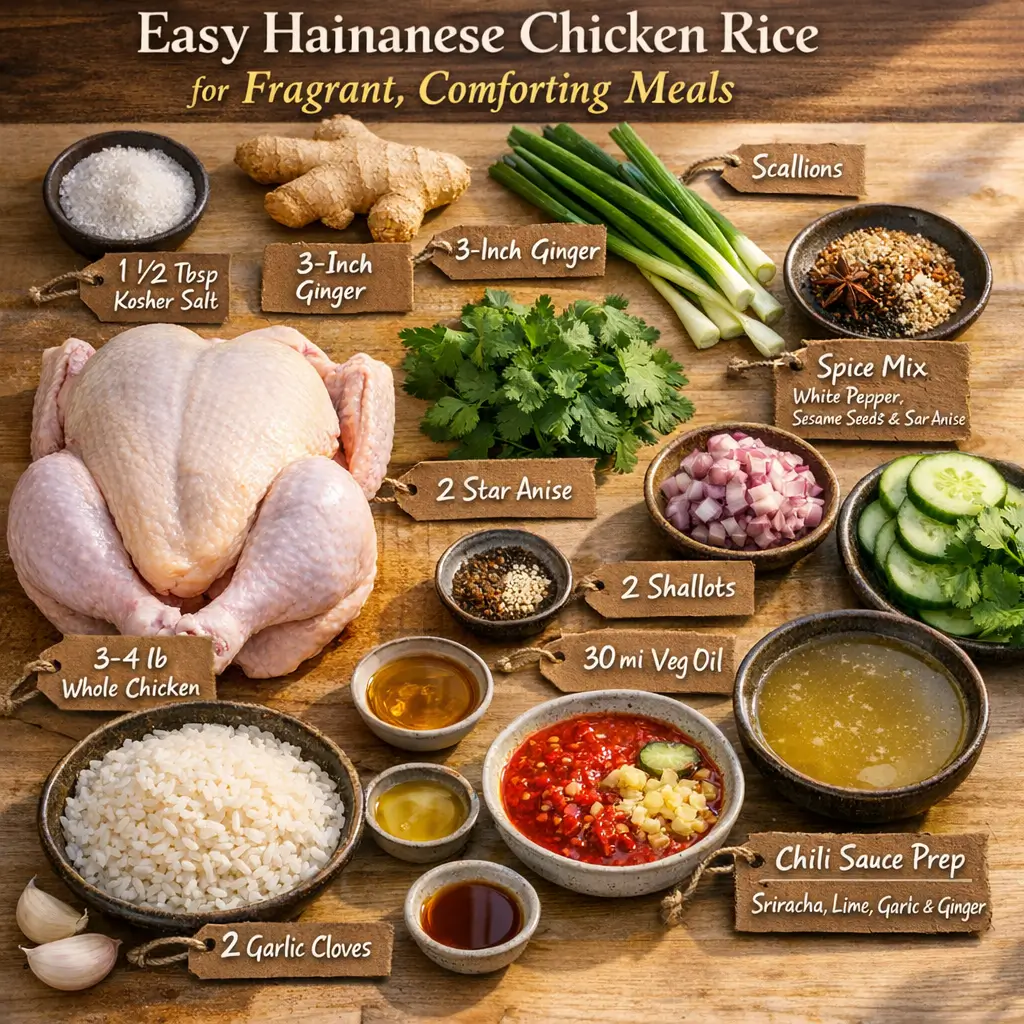
Chicken & Rice
- 1 (3–4 lb / 1.4–1.8 kg) whole chicken
- 1 1/2 tablespoons (22
ml) kosher salt
Fine sea salt works; use a touch less by volume. - 1 (3-inch / 7.5 cm) piece ginger, thinly sliced (5–6 pieces)
- 2 whole garlic cloves (for poaching)
- 1 bunch scallions (spring onions)
- 2 star anise pods
If unavailable, you may omit. - 1/4 teaspoon (1 ml) ground white pepper
Black pepper can substitute in a pinch. - 1 tablespoon (15 ml) sesame oil (for chicken)
- 2 tablespoons (30 ml) vegetable oil
- 2 shallots, finely chopped
- 2 garlic cloves, finely chopped (for rice)
- 1 (1-inch / 2.5 cm) piece ginger, finely chopped
-
2 cups (480 ml) jasmine rice, rinsed 2–3 times
Long‑grain white rice works if jasmine isn’t available. - 1 tablespoon (15 ml) sesame oil (for rice)
- 2 teaspoons (10 ml) soy sauce
- 1/2 teaspoon (2 ml) kosher salt
- 2 pandan leaves, optional
If you can’t find pandan, simply omit. - 1 cucumber, thinly sliced, for serving
- 1 bunch cilantro, for serving
Chili Sauce
- 5 tablespoons (75 ml) sriracha
Or use chili‑garlic sauce or sambal oelek for a chunkier heat. - 3 tablespoons (45 ml) chicken broth (reserved from poaching)
- 1 teaspoon (5 ml) soy sauce
- 2 teaspoons (10 ml) fresh lime juice or rice vinegar
- 1 garlic clove, finely chopped
- 1 (1-inch / 2.5 cm) piece ginger, finely chopped
Step-by-Step Instructions
Follow these beginner-friendly steps adapted from the source recipe, with clear visual cues so you know exactly what to look for at each stage.
- Cook the chicken (poach): Trim excess fat from the chicken, especially near the cavity; reserve the fatty trimmings. Rub the chicken all over with the kosher salt, seasoning inside the cavity as well. Stuff the cavity with the sliced ginger, 2 whole garlic cloves, the scallion bunch, and star anise. Place the chicken breast‑side down in a large pot and cover fully with cold water (about 4 quarts/3.8 liters). Bring to a boil, then immediately lower to a gentle simmer. Cover and cook 20–25 minutes. Visual cue: the skin turns opaque and the leg joint moves freely. Optional check: a thermometer at the thigh should read at least 160°F/71°C before resting.
- Shock and season: Transfer the chicken to an ice bath for 1 minute to stop the cooking and firm the skin. Pat dry and rub the skin lightly with 1 tablespoon (15 ml) sesame oil for sheen and flavor. Set aside to rest while you make the rice and sauce.
- Reduce the broth: Skim the pot and add the white pepper to the poaching liquid. Bring to a boil and reduce by about half; this concentrated broth will both cook the rice and be served as a simple, aromatic soup.
- Start the rice: In a clean pot, render the reserved chicken fat over low heat for about 5 minutes until a few spoonfuls of fat coat the pan; discard any solids. Add 2 tablespoons (30 ml) vegetable oil. Sauté the chopped shallots 2–3 minutes until translucent and fragrant, then stir in the chopped garlic and ginger for about 1 minute, avoiding browning. Stir the rinsed, drained rice into the aromatics and cook 1–2 minutes until each grain looks glossy.
- Simmer the rice: Stir in 1 tablespoon (15 ml) sesame oil, soy sauce, salt, and pandan leaves (if using). Pour in enough hot chicken broth to cover the rice by 1/2 inch (about 1.3 cm), reserving 3 tablespoons/45 ml for the chili sauce. Bring to a boil over high heat, then reduce to a gentle simmer, cover, and cook about 15 minutes, until the rice is fluffy, glistening, and the grains are separate. Rest uncovered 5 minutes, then taste and adjust seasoning.
- Make the chili sauce and prep garnishes: In a bowl, mix sriracha, lime juice (or rice vinegar), chopped garlic, chopped ginger, and the reserved 3 tablespoons (45 ml) chicken broth until smooth. Slice the cucumber and pick a few sprigs of cilantro. Carve the chicken into neat slices or bite‑size pieces.
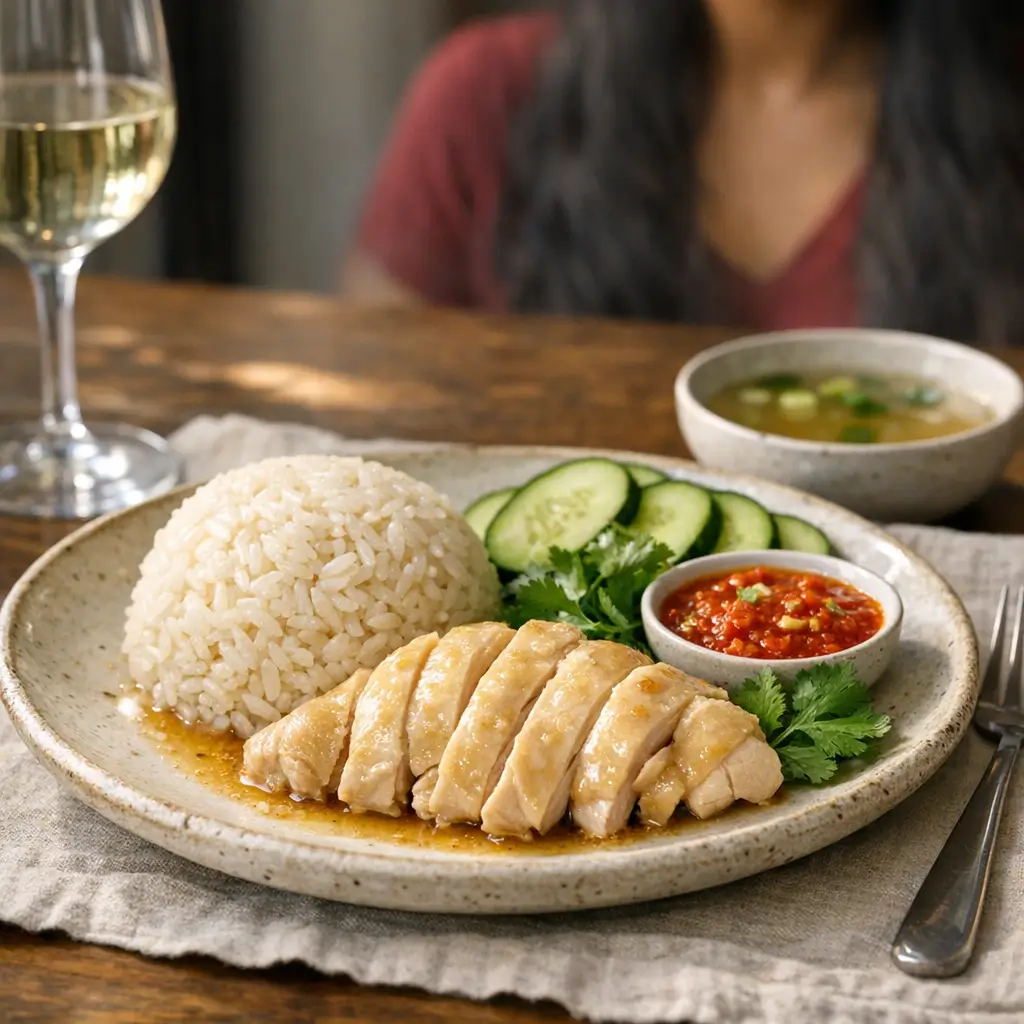
- Plate and serve: For a hawker‑style presentation, pack the rice into a small bowl and unmold to form a neat mound on each plate. Add sliced chicken, a generous spoonful of chili sauce on the side, and cucumber plus cilantro for freshness. Ladle some of the hot, aromatic broth into small bowls and serve alongside.
What to Expect
- Texture: The chicken is tender and silky, with springy skin from the brief ice bath. The rice should be plush and slightly oily, each grain distinct, thanks to the ginger‑garlic fat and broth.
- Flavor: Clean, savory chicken flavor leads, with warming ginger and garlic in the rice, gentle anise from the star anise, nuttiness from sesame, and a bright, spicy kick from the chili‑ginger‑garlic sauce. Every element is balanced rather than heavy.
Ways to Change It Up
- Vegetarian or vegan: Swap the whole chicken for firm tofu or poached oyster mushrooms served over the same ginger‑garlic rice. Use good vegetable broth to cook the rice and for serving. For the chili sauce, replace chicken broth with vegetable broth or water and add a pinch of sugar to balance.
- Spicier or milder: For more heat, stir a teaspoon of sambal oelek or minced fresh chiles into the chili sauce, or add a dash of white pepper to the rice. For milder palates, reduce the sriracha and increase lime juice or rice vinegar for brightness without extra heat.
- Faster shortcut: Use pre‑made low‑sodium chicken broth for the rice and soup, and quickly poach bone‑in chicken thighs instead of a whole bird (they cook through faster and stay juicy). If you skip rendering chicken fat, warm a tablespoon of neutral oil with a dab of store‑bought chicken fat (schmaltz) for similar richness.
Serving & Storage
- Serving: Hainanese Chicken Rice is best served warm, with a small bowl of the aromatic broth and plenty of chili sauce on the side. Add extra soy sauce and a few drops of sesame oil at the table if you like a richer finish.
- Storage: Refrigerate chicken, rice, and broth separately in airtight containers within 2 hours of cooking. They keep well for 3–4 days. For longer storage, freeze the broth up to 3 months. To reheat rice, sprinkle with a little water and steam or microwave loosely covered until hot and fluffy. Reheat chicken gently in hot broth to keep it moist.
Cultural Context
Hainanese Chicken Rice migrated from Hainan, China, to the Malay Peninsula with Hainanese communities, gaining popularity in Malaysia and Singapore through kopitiams and hawker centers. Malaysian versions often feature fragrant rice cooked with ginger, garlic, and sometimes pandan, plus a chili‑garlic‑ginger sauce and cucumber. The dish highlights resourceful cooking—using the chicken to create broth, rice, and soup—while celebrating clear, layered flavors. Today it’s a staple across Malaysia’s urban and small‑town eateries, widely enjoyed at lunch and dinner without being tied to festivals or specific occasions.
Conclusion
If you make this, leave a rating and a comment to share how it went—did you try pandan in the rice, a tofu swap, or a spicier chili sauce? Your notes help other home cooks succeed with Hainanese Chicken Rice and discover new variations.



Leave a Reply