
Introduction
Parmigiana di Melanzane, known in English as Eggplant Parmesan, hails from southern Italy where eggplant, basil, and tomato are summertime staples. You’ll find it on Italian tables as a first course, side, or main—served hot, warm, or even at room temperature. This version focuses on the essentials: tender fried eggplant layered with a bright basil-tomato sauce and a grating cheese for a savory, bronzed top. Expect balanced richness rather than a heavy casserole; every bite is silky, saucy, and aromatic with basil. Below you’ll find clear steps and supermarket ingredients to help you confidently recreate this beloved dish at home.
INGREDIENTS
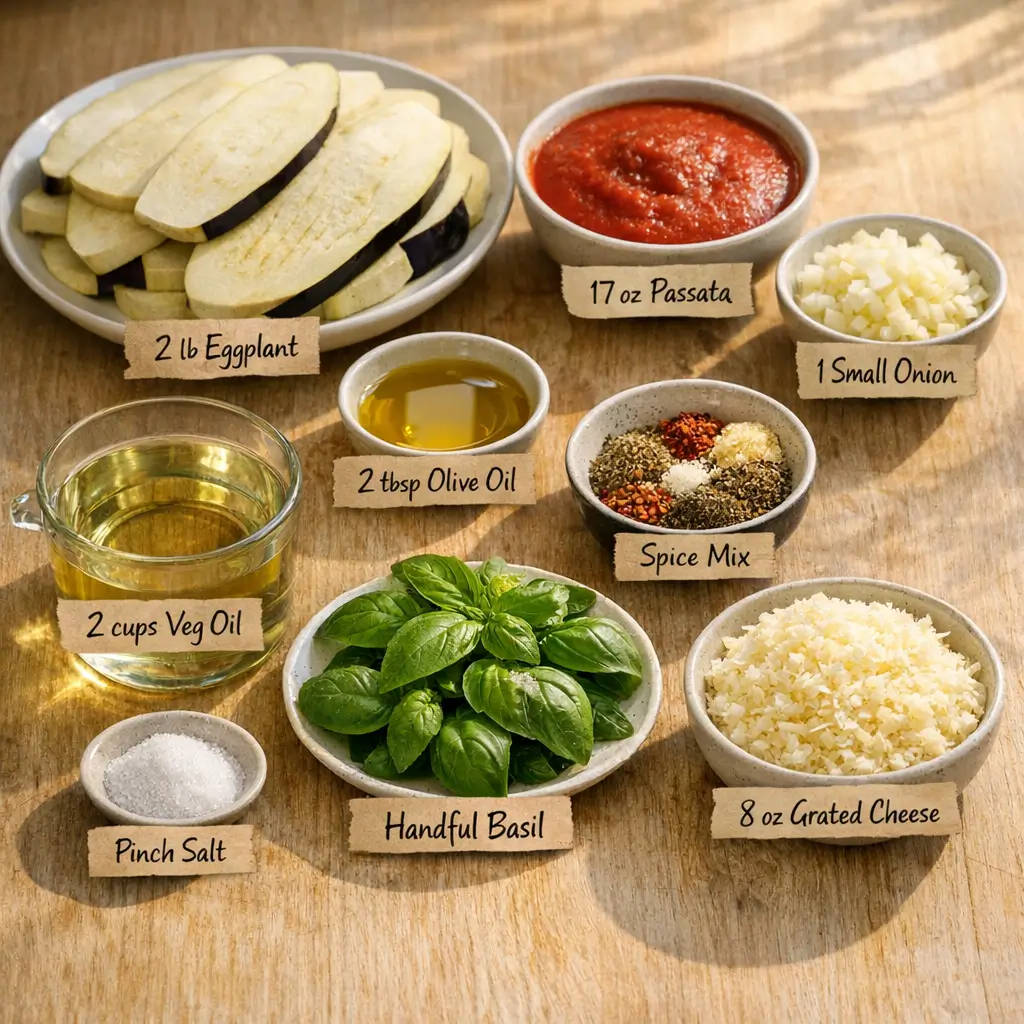
- 2 lb / 1 kg eggplant (about 2 large), peeled and sliced lengthwise
- 1 pinch fine salt, plus more for salting the eggplant
- 1 small yellow onion, finely chopped
- 2 tbsp / 30 ml extra-virgin olive oil
- 17 oz / 500 g tomato passata (puréed tomatoes)
- 1 generous handful fresh basil leaves
- 2 cups / 500 ml neutral vegetable oil (such as canola, sunflower, or peanut) for frying
- 8 oz / 220 g semi-aged caciocavallo cheese, grated
Substitution: use grated Parmesan if caciocavallo isn’t available.
Notes on ingredients
- Passata is a smooth, strained tomato purée sold in bottles or boxes; look for it near canned tomatoes.
- The recipe’s cheese profile is savory and gently tangy. If using Parmesan, choose a finely grated texture for even melting.
STEP-BY-STEP INSTRUCTIONS
1) Salt and drain the eggplant (about 1 hour)
- Peel the eggplants and slice lengthwise into 1/3-inch-thick (about 8–9 mm) slices.
- Layer the slices in a colander, sprinkling each layer generously with salt. Place a plate on top with a can or other weight to press. Let stand for 1 hour. You’ll see a brownish liquid weep out.
- Rinse slices under cold water to remove excess salt. Pat completely dry with clean kitchen towels or paper towels.
Visual cue: After salting, slices feel more pliable and shed less moisture when pressed.
2) Make the basil-tomato sauce (about 25 minutes)
- While the eggplant drains, heat the extra-virgin olive oil in a medium saucepan over medium heat. Add the finely chopped onion and sauté gently until soft and translucent but not browned.
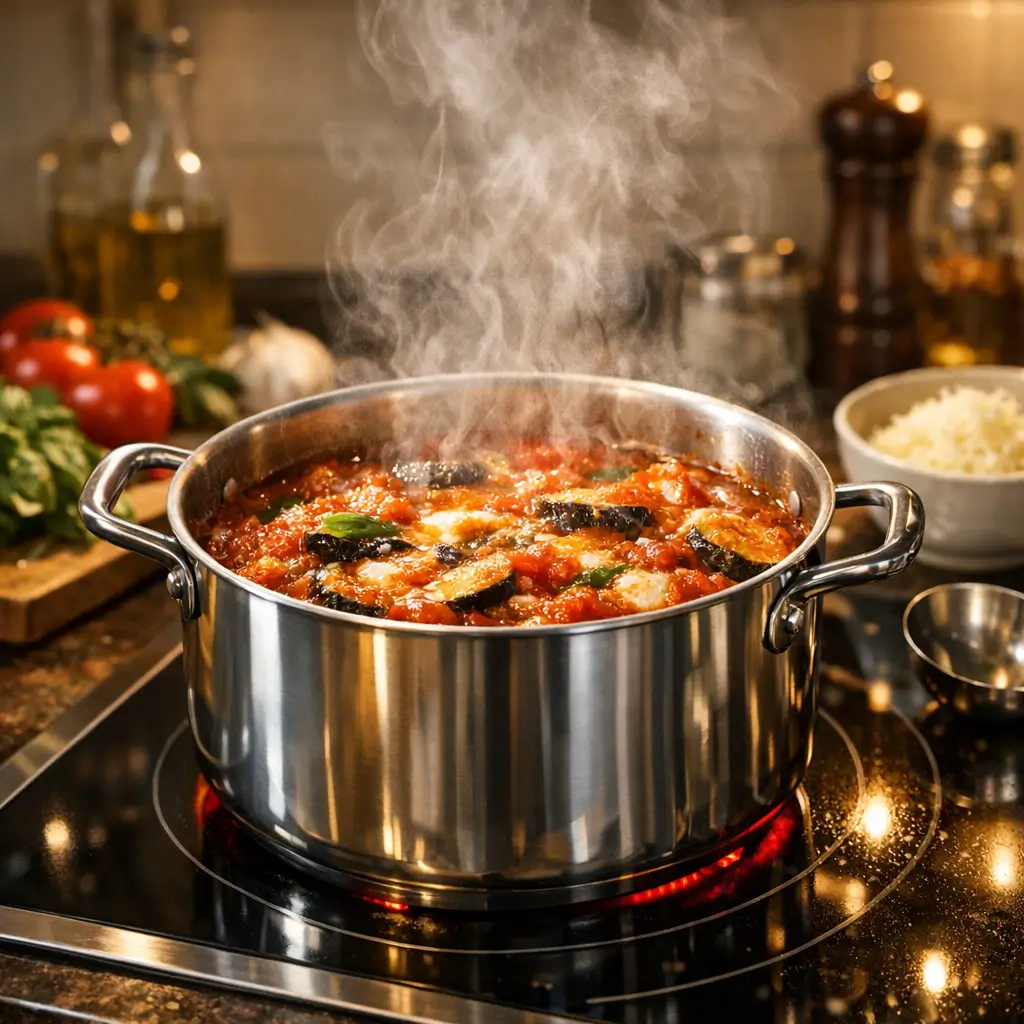
- Stir in the passata, 6–8 basil leaves, and a good pinch of salt. Simmer uncovered for at least 25 minutes, or until the sauce thickens to a spoon-coating consistency. Set aside.
Visual cue: Sauce should be bright red, glossy, and thick enough to leave a trail when a spoon is drawn through it.
3) Fry the eggplant slices
- Pour the vegetable oil into a wide, deep saucepan so you can fry 3–4 slices at a time. Heat over medium-high.
- Test the oil: a small cube of eggplant should sizzle immediately on contact.
- Fry 3–4 slices at a time until evenly golden brown on both sides, a few minutes per side. Transfer to paper towels to drain and cool slightly.
Visual cue: Look for uniform golden edges and a flexible, tender center that bends without breaking.
4) Layer and bake
- Heat the oven to 350°F (180°C).
- Spoon a thin layer of tomato sauce over the bottom of a rectangular or oval baking dish (a lasagna-style dish works well).
- Add a single layer of fried eggplant, then spoon over more tomato sauce, scatter a few torn basil leaves, and add a handful of grated cheese.
- Repeat layers—eggplant, sauce, basil, cheese—ending with a slightly more generous layer of cheese on top.
- Bake 25–30 minutes, until bubbling at the edges with a lightly golden crust.
- Let the dish rest 15–20 minutes before slicing and serving.
Visual cue: The top should be lightly browned with visible bubbling around the edges; the layers hold together after the short rest.
WHAT TO EXPECT (Parmigiana di Melanzane)
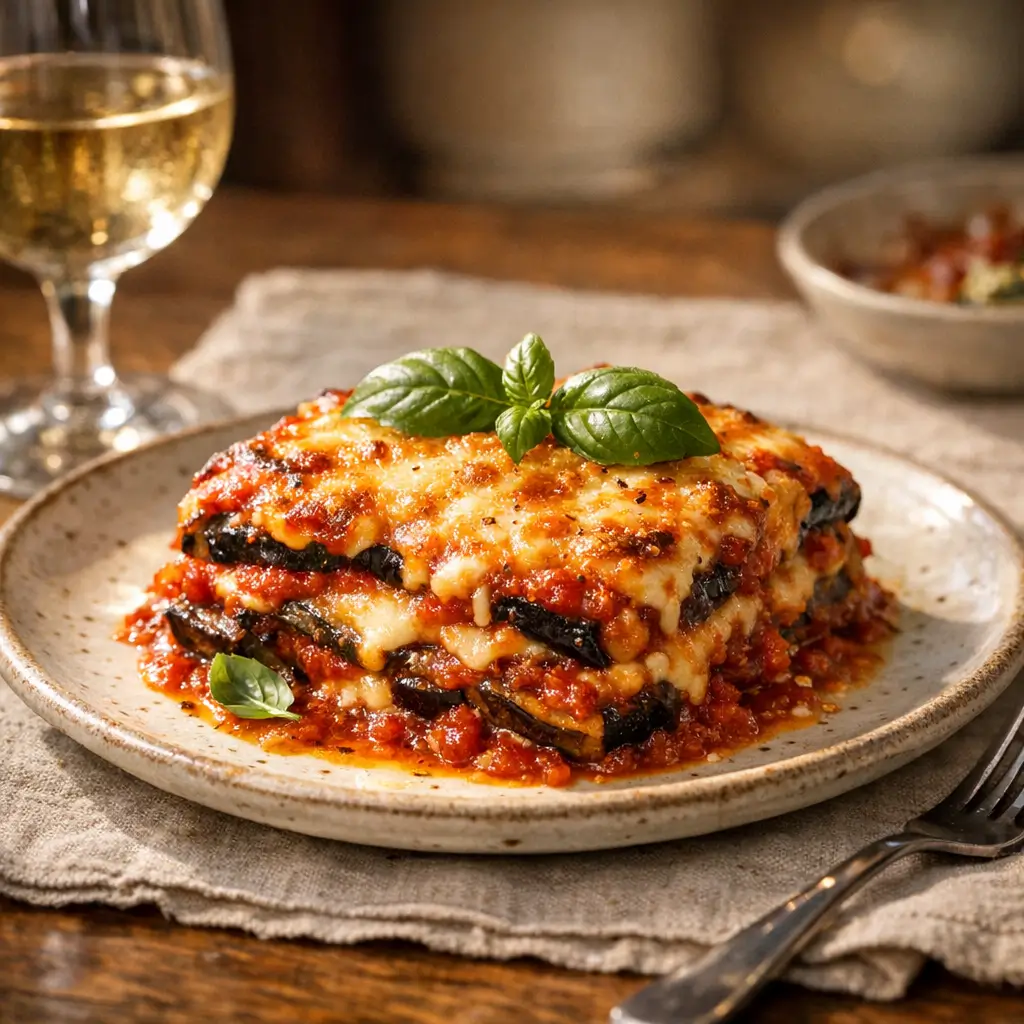
- Texture: Expect supple, silky layers of eggplant that slice cleanly yet remain tender. The top forms a delicate, bronzed crust from the grated cheese; underneath, the sauce stays saucy rather than dry.
- Flavor: Bright, sweet-savory tomato balances the gentle bitterness of eggplant. Basil perfumes each layer. Caciocavallo (or Parmesan) adds a nutty, salty depth without overwhelming the vegetable and tomato.
WAYS TO CHANGE IT UP
- Vegetarian or vegan option: The base recipe is vegetarian. For a dairy-free version, swap the grated cheese for your favorite plant-based melting cheese plus a tablespoon or two of nutritional yeast for savoriness. Keep the layering and baking steps the same.
- Spicier or milder: For heat, add 1/4–1/2 teaspoon red pepper flakes to the tomato sauce as it simmers. For an even gentler profile, simmer the passata a little longer and add a few extra basil leaves to accent sweetness.
- Faster shortcut: Instead of frying, brush the salted, rinsed, and dried eggplant slices with oil and roast on two sheet pans at 425°F (220°C) until soft and lightly browned, flipping once. You’ll lose a touch of richness from frying but gain speed and less stovetop cleanup.
SERVING & STORAGE
Serving
- Portion as a main with a leafy salad and crusty bread, or present smaller squares as a first course or side. It’s excellent warm or at room temperature, which makes it convenient for gatherings.
- Garnish with a few extra basil leaves just before serving for aroma and color.
Storage
- Refrigerate leftovers in an airtight container up to 3–4 days. Reheat, covered, in a 350°F (180°C) oven until warmed through and bubbling at the edges, or microwave individual portions until hot.
- To freeze: Cool completely, wrap tightly (or portion into freezer-safe containers), and freeze up to 2 months. Thaw overnight in the refrigerator and reheat covered at 350°F (180°C) until hot and bubbly.
- Make-ahead note: The dish improves slightly after resting; baking a few hours ahead and serving warm or at room temperature is common.
CULTURAL CONTEXT
Parmigiana di Melanzane is closely associated with southern Italy, particularly Sicily and Campania, where eggplant thrives and basil-tomato sauces are staples. The name likely derives from “parmiciana,” referring to overlapping wooden window shutters—an image echoed by the layered eggplant slices. Across regions and households, versions vary: some cooks finish with an egg-and-cheese mixture over the top or scatter breadcrumbs for crunch; others prefer different cheeses like caciocavallo or provola. It’s often served as an antipasto, side, or main course, and is welcome hot, warm, or cooled to room temperature.
CONCLUSION
If you make this Parmigiana di Melanzane, share how it turned out: Did you fry or roast the eggplant? Which cheese did you use? Leave a rating and a comment so other home cooks can learn from your experience. Buon appetito!



Leave a Reply