
If you love a fast, comforting dinner with big flavor, this sweet‑spicy pan of chewy rice cakes delivers. Tteokbokki is the beloved Korean street‑food dish that cooks in one pan with pantry sauces and simple add‑ins. You’ll make a quick broth, simmer rice cakes until bouncy‑tender, and finish with fish cake and scallions for texture.
Expect a glossy, brick‑red sauce that clings to every bite. Heat is adjustable, and the method is forgiving once you know two things: keep the rice cakes moving so they don’t stick, and don’t walk away while the sauce thickens near the end.
This is ideal for busy weeknights or casual weekends. It suits new cooks who want a reliable path to a street‑style favorite and seasoned home cooks who appreciate speed without sacrificing taste.
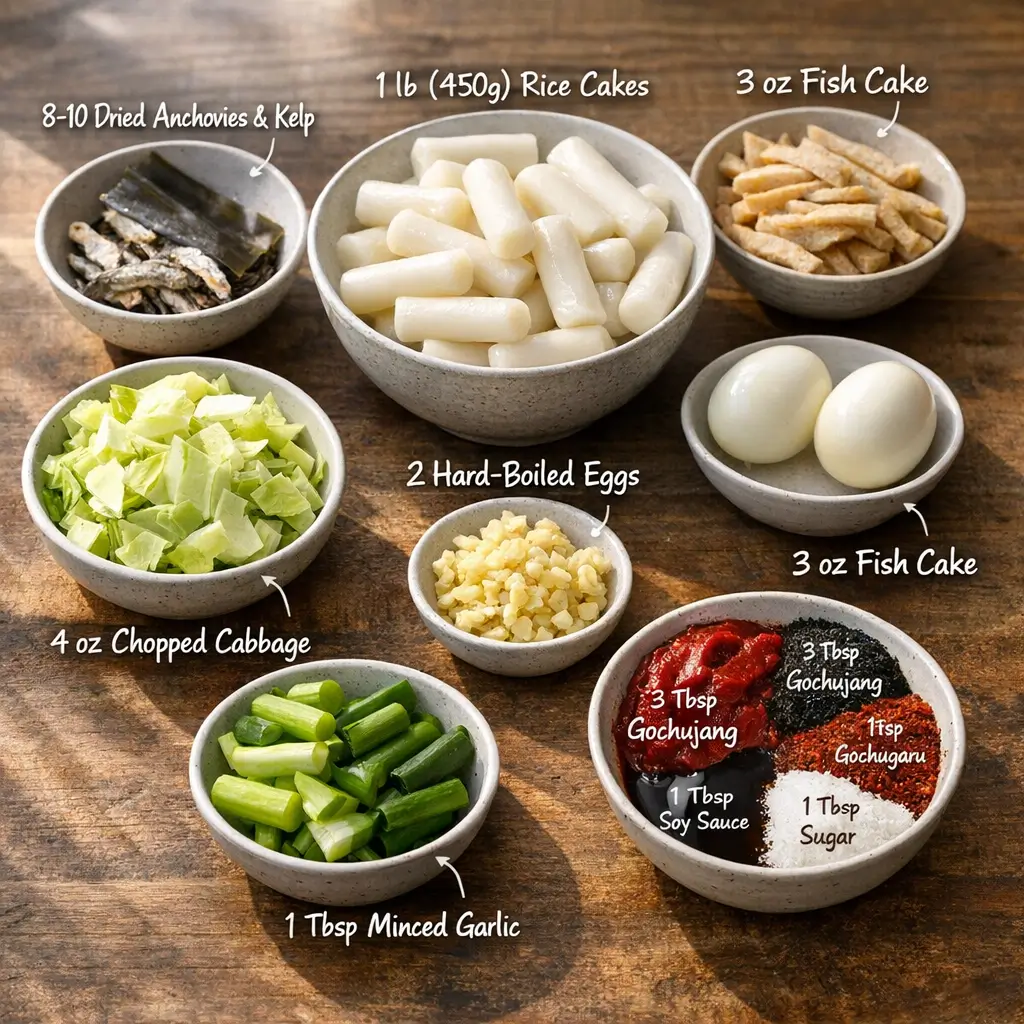
INGREDIENTS
- 1 lb (450 g) Korean cylinder rice cakes (tteokbokki tteok), fresh, refrigerated, or frozen — main starch and texture
- 1–2 sheets (3–4 oz / 85–115 g) Korean fish cake (eomuk), cut into bite‑size strips — savory chew
- 4 oz (115 g) green cabbage, roughly chopped — sweetness and crunch
- 2 scallions, cut into 2‑inch (5 cm) pieces — fresh bite
- 1 Tbsp (15 g) minced garlic — aromatic depth
- 2 hard‑boiled eggs, peeled — optional, classic add‑in
Anchovy‑kelp broth (or use a substitute below):
- 4 cups (960 ml) water
- 8–10 medium dried anchovies, heads and guts removed (about 0.5 oz / 15 g)
- 1 piece dried kelp (dasima/kombu), about 3‑inch (7–8 cm) square
- Substitute: Use low‑sodium vegetable or chicken broth, or a Korean broth packet. Water also works; the sauce will be lighter but still tasty.
Sauce (mix in a small bowl):
- 3 Tbsp (50 g) gochujang (Korean red chili paste)
- 1–2 tsp (2–6 g) gochugaru (Korean chili flakes), to taste — adds heat without extra salt
- 1 Tbsp (15 ml) soy sauce — seasoning backbone
- 1–2 Tbsp (12–24 g) sugar — balances heat; use toward your sweetness preference
- 1 Tbsp (15 ml) corn syrup or rice syrup — optional sheen and body; add another 1 Tbsp sugar if skipping
Finish (optional):
- A drizzle of neutral oil if your pan tends to stick
- Toasted sesame seeds for serving
Notes on ingredients and sourcing:
- Refrigerated or frozen rice cakes often feel very firm. A quick soak helps them soften evenly.
- Fish cake is sold in thin sheets in the freezer or refrigerated section of Korean/Asian markets. Skip it for vegetarian/vegan, or swap in pan‑fried tofu strips.
- Gochujang brands vary in heat; start with 3 Tbsp and adjust gochugaru to taste.
STEP-BY-STEP INSTRUCTIONS
- Make a quick broth (8–10 minutes): In a wide pan or deep skillet (11–12 in / 28–30 cm), add the water, dried anchovies, and kelp. Bring to a boil over medium‑high heat, then reduce to a lively simmer for 8–10 minutes. Remove the anchovies and kelp with tongs. You should have about 2½–3 cups (600–720 ml) liquid left.
- Sensory cue: the broth should smell briny and savory, not fishy. If it smells too strong, splash in ¼ cup (60 ml) water.
-
Combine the sauce: While the broth simmers, stir together gochujang, gochugaru, soy sauce, sugar, and syrup (if using) in a small bowl until smooth. This prevents clumps later.
-
Prime the rice cakes: If using refrigerated or frozen rice cakes, soak them in warm tap water for 10–15 minutes while the broth cooks. Drain just before adding. Fresh, soft rice cakes can skip this step.
-
Build the base: Stir the sauce mixture into the hot broth until dissolved. Bring back to a gentle boil over medium‑high heat.
- Watch‑out: gochujang can stick to the pan if added dry. Dissolving in a bowl first helps it melt quickly.
- Cook the rice cakes (8–12 minutes): Add the drained rice cakes. Boil, stirring frequently with a wooden spoon or silicone spatula to prevent sticking. Keep the heat brisk so the sauce reduces as the rice cakes soften.
- Sensory cues: Rice cakes go from rigid to springy‑chewy. When pressed with a spoon, they should dent but bounce back. The sauce will turn glossy and start to cling.
- Timing varies by brand and thickness. If the pan looks dry before the rice cakes are tender, add ¼–½ cup (60–120 ml) hot water to loosen and continue.
- Add aromatics and mix‑ins (4–6 minutes): Stir in cabbage, garlic, and fish cake. Continue to cook, stirring, until the cabbage wilts, fish cake warms through, and the sauce thickens to a ketchup‑like consistency that coats everything. Add the scallions during the final 2–3 minutes. Nestle in boiled eggs if using.
- Sensory cues: You’re looking for a shiny, thick sauce that slowly runs off a spoon, not a watery pool.
-
Taste and adjust: Sample the sauce. Add a pinch of sugar if the heat feels sharp, a splash of soy sauce for salt, or a teaspoon of gochugaru for extra kick. If it’s thicker than you like, splash in hot water, 1–2 tablespoons at a time, and stir.
-
Serve hot: Transfer to shallow bowls. Garnish with sesame seeds if you like. Eat right away while the rice cakes are bouncy.
Beginner safeguards:
- Don’t leave the pan unattended in the last few minutes. The sauce can thicken quickly and catch on the bottom.
- If rice cakes stick, lower the heat slightly, scrape gently, and add a splash of water. Avoid high‑sugar sauces on a scorching burner.
- If using a nonstick skillet, avoid metal utensils that can scratch the coating.
WHAT TO EXPECT (tteokbokki)
- Texture: The rice cakes should be chewy and bouncy, with a tender center. A slight stickiness on the surface is normal and part of the appeal.
- Sauce: Aim for glossy, thick, and clingy—not soupy. It should coat the spoon and leave a red sheen on the pan. If you prefer extra sauce for dipping, keep back ½–1 cup (120–240 ml) of the broth and add only after the rice cakes are tender.
- Flavor balance: Sweet‑spicy with savory depth from the broth and gochujang. Gochugaru provides controllable heat. Fish cake adds a mild seafood savor; cabbage contributes sweetness.
- Variability: Gochujang brands range from mild to hot; rice cakes vary in dryness and thickness. Your stove and pan also matter: a wide pan reduces faster than a narrow pot, and gas burners tend to cook hotter than electric.
WAYS TO CHANGE IT UP
-
Vegetarian or vegan: Use vegetable broth or water, omit fish cake, and add 6–8 oz (170–225 g) mushrooms or pan‑fried tofu strips. A few drops of soy sauce or a dash of vegan dashi powder can replace the savory note of anchovy broth. Flavor trade‑off: the sauce will be lighter but still satisfying.
-
Spicier or milder: For gentle heat, skip gochugaru and keep gochujang at 2–3 Tbsp. To turn it up, add 1–2 extra teaspoons gochugaru or a small pinch of Korean green chili. Trade‑off: more heat can mask sweetness; rebalance with ½–1 tsp sugar if needed.
-
Faster, one‑pan shortcut: Use 2½–3 cups (600–720 ml) low‑sodium broth (vegetable or chicken) instead of making anchovy‑kelp broth. You’ll be eating 10 minutes sooner. Trade‑off: slightly less depth of flavor.
-
Extra saucy or soup‑style: Add another cup (240 ml) of broth and simmer less for a looser, spoonable version. This is great with a side of steamed rice.
-
Add noodles (rabokki): Stir in half a brick of instant ramen during the last 3–4 minutes. Increase broth by ½ cup (120 ml). Expect a starchier, thicker sauce.
-
Cheese finish: Off the heat, scatter ½ cup (50 g) shredded low‑moisture mozzarella over the top, cover 1–2 minutes to melt, and serve. Trade‑off: richer, less traditional flavor.
SERVING AND STORAGE
Serving ideas:
- Serve in warm bowls so the sauce stays fluid. Top with scallions and sesame seeds.
- Common pairings include crisp yellow pickled radish (danmuji), kimchi, simple cucumber salad, or skewered fish cakes simmered in broth (eomuk‑tang).
- For a fuller meal, add a soft‑boiled egg per person or a handful of blanched greens on the side.
Storage:
- Best eaten right away; rice cakes firm up as they cool.
- Refrigerate leftovers in a shallow, airtight container for up to 2 days. They will be denser and less bouncy.
- To reheat, place in a small saucepan with a few tablespoons of water or broth, cover, and simmer gently, stirring occasionally, until loosened and hot. Avoid microwaving straight from the fridge; the rice cakes heat unevenly and can harden.
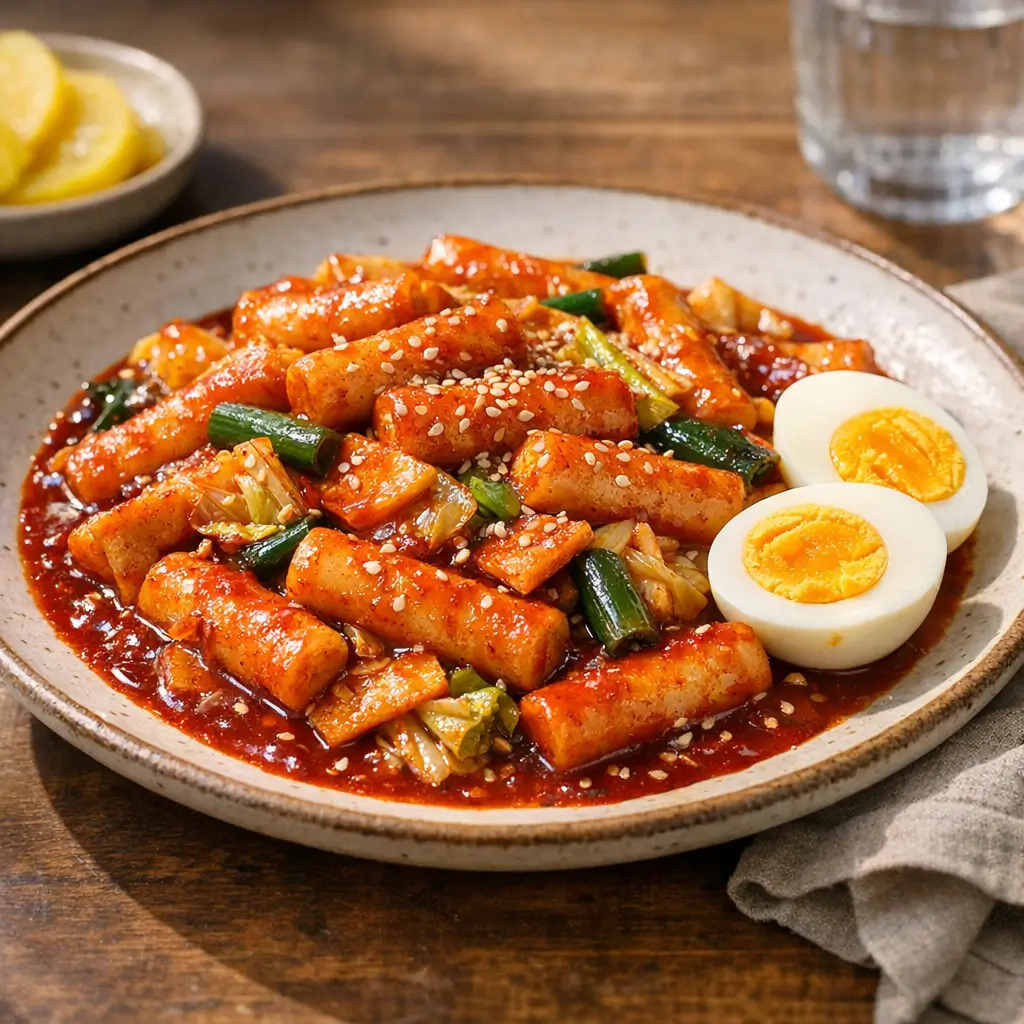
CULTURAL CONTEXT: Tteokbokki
Tteokbokki shows up in bunsikjip (snack shops) and pojangmacha (tent stalls) across South Korea, and has many regional spins. A non‑spicy soy‑sauce version known as gungjung tteokbokki appears in historical records of the Joseon era. For a concise background on how the dish evolved and where it’s eaten today, see this overview from the Korean Food Promotion Institute’s magazine (Hansik). To understand the late‑night stall culture where spicy tteokbokki is often enjoyed, this short article on pojangmacha (street tents) is a useful explainer (Wikipedia).
COMMON QUESTIONS AND TROUBLESHOOTING
-
The sauce thickened before my rice cakes were soft. What now? Add ¼–½ cup (60–120 ml) hot water and keep simmering, stirring often. Next time, reduce the heat slightly once the sauce starts to cling, and keep small splashes of water handy.
-
My rice cakes stayed hard in the center. Why? Some refrigerated or frozen brands dry out and need a longer soak. Cover with warm water for 20–30 minutes before cooking, or soak in cold water for an hour. Cook until the center no longer feels chalky when you bite it.
-
Can I make this without anchovies or kelp? Yes. Use vegetable or chicken broth, or even plain water. The result will be a little less savory but still balanced; adjust soy sauce and sugar to taste. For a vegan boost, add mushrooms or a pinch of vegan dashi powder.
-
How spicy is this as written? With 3 Tbsp gochujang and 1 tsp gochugaru, it’s a comfortable medium. Reduce or omit gochugaru for milder heat; for kids, start with 2 Tbsp gochujang and add sweetness to taste.
-
Can I double the recipe? Yes, but use a wider pan or cook in two batches so the sauce reduces properly. Crowded pans steam instead of reduce, leading to pale sauce and undercooked rice cakes.
-
What if I can’t find fish cake? Skip it or use pan‑fried tofu strips. Sliced mushrooms also work. Expect the overall flavor to be lighter.
-
Why is my sauce grainy? Undissolved gochujang can clump. Mix the sauce ingredients together before adding to the pan, and stir until fully dissolved in the hot broth.
-
How do I pack leftovers for lunch? Reheat gently on the stovetop with a splash of water until loose and hot. Pack in a thermos or insulated container; expect firmer texture by lunchtime.
CONCLUSION
This pan of sweet‑spicy, chewy rice cakes is weeknight‑friendly, flexible, and deeply satisfying. If you try it, leave a comment with your heat tweaks, broth choices, or add‑ins you enjoyed. Your notes help other home cooks dial in their perfect bowl.



Leave a Reply