
This skillet is a fast, comforting way to bring café-style flavors home. Eggplant Shakshuka combines soft, olive oil–kissed eggplant with a warmly spiced tomato sauce and eggs nestled on top.
The appeal is simple: one pan, pantry spices, and a short simmer that still tastes slow-cooked. You’ll get gentle heat from cumin and paprika (plus optional harissa), a lush sauce, and set whites with runny yolks.
It’s inspired by shakshuka served across North Africa and the Middle East, and it fits anywhere from brunch to a quick weeknight dinner. If you like cozy, saucy meals and have 40 minutes, this belongs in rotation.
Ready to cook? Let’s break down the steps so the eggs land exactly how you like them.
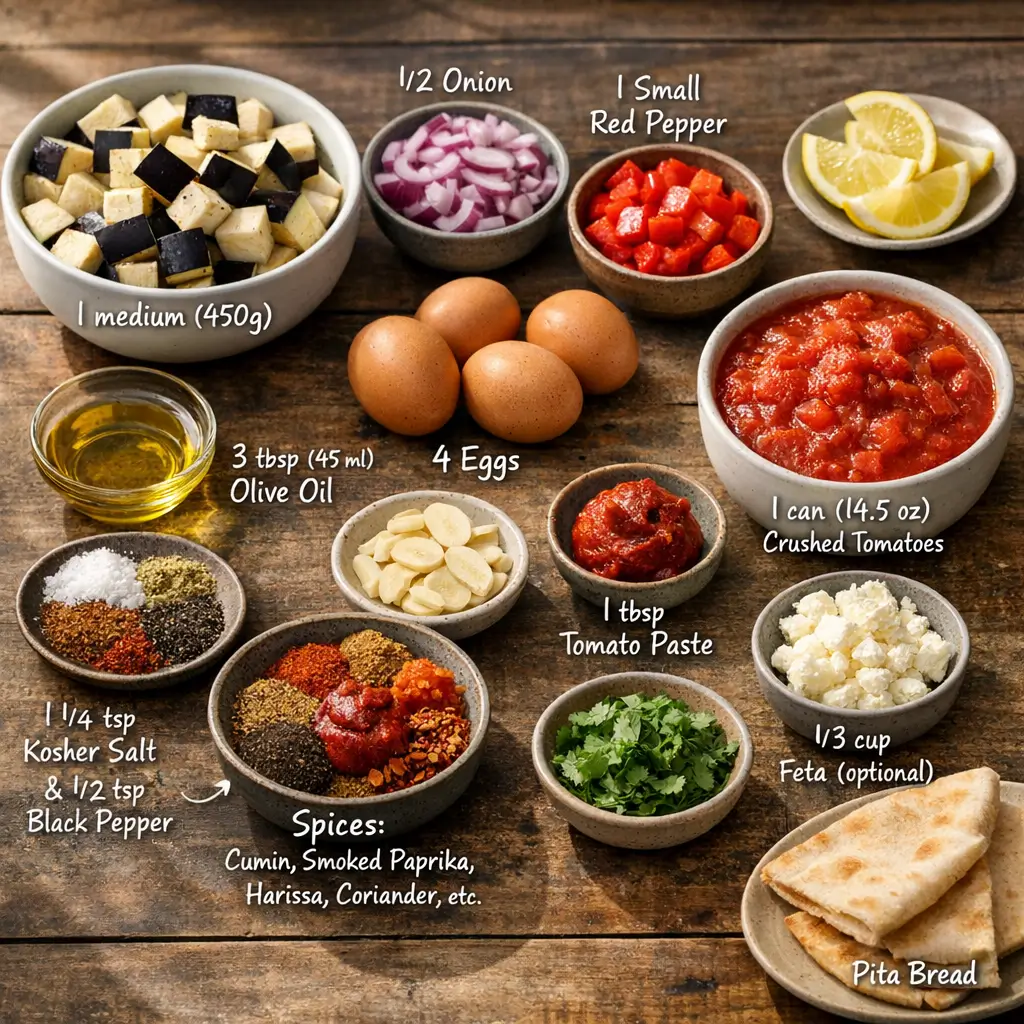
Ingredients for Eggplant Shakshuka
Serves 2–4
- Extra-virgin olive oil: 3 tablespoons (45 ml), plus more to finish — for sautéing and flavor
- Globe or Italian eggplant, cut in 3/4-inch (2 cm) cubes: 1 medium (about 1 lb / 450 g)
- Kosher salt: 1 1/4 teaspoons (6 g), divided, plus more to taste
- Black pepper: 1/2 teaspoon (2 g)
- Red onion, thinly sliced or chopped: 1/2 medium (about 100 g)
- Red bell pepper, chopped (optional but adds sweetness): 1 small (about 120 g)
- Garlic, thinly sliced or minced: 3 cloves
- Tomato paste: 1 tablespoon (16 g) — boosts depth
- Canned tomatoes (crushed or whole peeled, crushed by hand): 1 can 14.5 oz (410 g)
- Ground cumin: 1 teaspoon (2 g)
- Smoked paprika: 1 teaspoon (2 g)
- Ground coriander (optional): 1/2 teaspoon (1 g)
- Harissa paste (optional, to taste): 1–2 teaspoons (5–10 g); or use red pepper flakes for a milder adjustable heat
- Sugar (optional): 1/2 teaspoon (2 g) — balances acidity if needed
- Large eggs: 4
- Feta, crumbled (optional): 1/3 cup (50 g)
- Fresh cilantro or flat-leaf parsley, chopped: 2 tablespoons (8 g)
- Lemon wedges (optional): 2–4 — bright finish
- Warm pita or crusty bread, for serving
Optional quick-prep tip: If your eggplant tastes bitter or gets floppy when cooked, soak cubes in lightly salted water (about 4 cups/1 L water + 1 tablespoon/15 g kosher salt) for 10–15 minutes, then drain and pat very dry before step 1. This seasons and firms the pieces.
Step-by-Step Instructions
-
Preheat (if baking the eggs). Set oven to 375°F/190°C. If you prefer a fully stovetop method, you can skip the oven and use a tight-fitting lid later.
-
Brown the eggplant. Heat 2 tablespoons oil in a large oven-safe skillet (10–12 in/25–30 cm; enamel-coated or stainless steel is ideal). Add eggplant in an even layer with a pinch of salt. Cook over medium-high, stirring every 1–2 minutes, until the cubes are spotty-golden and beginning to soften, 6–8 minutes. Transfer to a bowl. If the pan looks dry, add the remaining 1 tablespoon oil.
- Sensory cue: You want light browning and edges that look satin-soft, not mushy. If the eggplant is absorbing oil like a sponge, don’t keep adding fat — let it sear and it will release later.
-
Soften aromatics. Add onion and bell pepper (if using) with a pinch of salt. Cook over medium heat until translucent and lightly sweet, 3–5 minutes. Stir in garlic and cook just until fragrant, 30–45 seconds.
-
Bloom the spices. Stir in tomato paste, cumin, smoked paprika, and coriander (if using). Cook, stirring, until the paste darkens slightly and smells toasty, about 60 seconds. Add harissa now if you like heat and stir 30 seconds more.
- Warning: This step moves fast. Keep heat at medium so the garlic and paste don’t scorch. If they threaten to catch, splash in a tablespoon of water to cool the pan.
- Simmer the sauce. Add canned tomatoes (plus any juices) and sugar if your tomatoes taste sharp. Season with 1/4 teaspoon salt and the black pepper. Bring to a lively simmer and cook uncovered until slightly thickened, 8–10 minutes, stirring occasionally.
- Sensory cue: The spoon should leave a trail that slowly fills in. If it looks watery, give it a few more minutes. If it reduces too much, add 2–3 tablespoons water.
-
Return the eggplant. Stir the browned eggplant into the sauce and simmer 3–5 minutes more to mingle flavors. Taste and adjust salt/heat. The mixture should be spoonable but not soupy.
-
Add the eggs. Use the back of a spoon to make 4 shallow wells. Crack 1 egg into a small cup, then slide it into a well (this prevents shells and lets you position yolks). Repeat with remaining eggs. Sprinkle a pinch of salt over the eggs.
-
Cook the eggs.
- Oven method (gentle, even set): Transfer the skillet to the oven and bake until whites are just set and yolks jiggle when nudged, 8–12 minutes. Start checking at 8 minutes; timing depends on skillet thickness and how hot your sauce was when it went in.
- Stovetop method (faster): Cover with a tight lid and cook over low heat until whites are set and yolks are still glossy, 5–8 minutes. Rotate the pan once to even out hot spots.
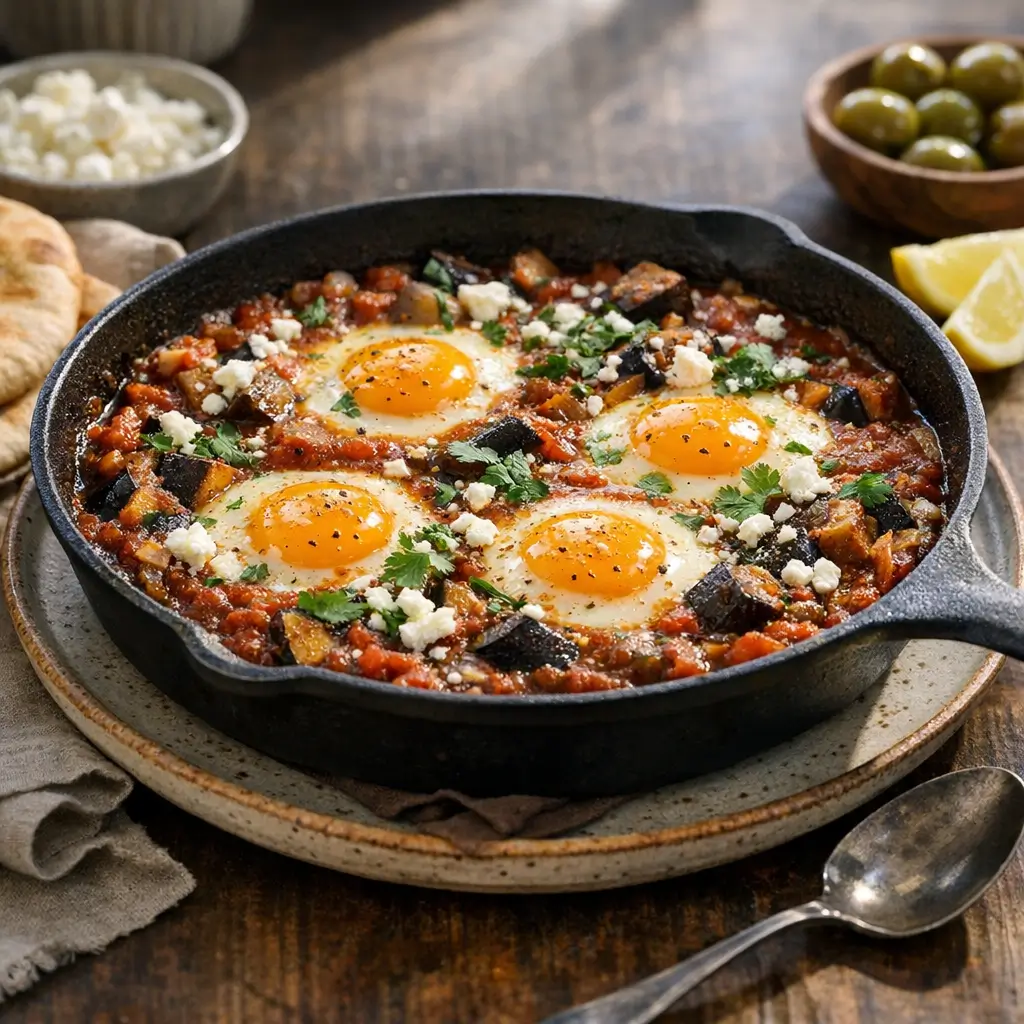
- Finish and serve. Off the heat, crumble over feta (if using), shower with herbs, and drizzle with a little olive oil. Squeeze lemon on top if you like brightness. Serve directly from the skillet with warm pita or crusty bread.
- Safety note: Avoid unfinished cast iron for long tomato simmers; acidity can pull metallic flavors. Enameled cast iron or stainless steel is safer.
What to Expect
-
Texture: The eggplant should be tender and custardy inside, not fried-crisp. The sauce is thick enough to cradle eggs without them sinking.
-
Flavor: Warm spices first, then sweet-tart tomatoes and smoky paprika. Harissa adds gentle heat and aroma; feta brings salty tang.
-
Natural variation: Harissa brands vary wildly in salt and spice; start with less and taste. Pan size matters too — a wider skillet sets eggs faster and reduces sauce more quickly; a smaller one keeps things saucier.
Ways to Change It Up
-
Plant-based version: Skip the eggs and feta. Add a can of drained chickpeas with the eggplant in step 6 or top bowls with spoonfuls of silken tofu. Trade the drizzle of olive oil for a tahini-lemon swirl. Trade-off: You’ll miss the richness of yolks, so don’t skimp on olive oil and acidity.
-
Spicier or milder: For more heat, stir in extra harissa or a chopped fresh chili with the onions. To go mild, omit harissa and use sweet paprika only. Trade-off: Less heat means the sauce leans sweeter; balance with lemon or a pinch more salt.
-
Faster weeknight shortcut: Use a high-quality jarred marinara in place of the canned tomatoes and tomato paste, then season with cumin, paprika, and a little harissa. Simmer just 5 minutes before adding eggs. Trade-off: A bit less depth, but you’ll save 10–12 minutes.
-
Veggie add-ins: Fold in a handful of spinach during the last minute of simmering or add diced zucchini with the onions. Trade-off: Extra veg adds water; cook down to keep the sauce thick enough for eggs.
-
Cheese switch: Swap feta for goat cheese, halloumi cubes, or skip cheese entirely if your harissa is salty. Trade-off: Softer cheeses melt into the sauce; halloumi stays squeaky and salty.
Serving and Storage
Serve family-style in the skillet with pita, crusty bread, or warmed flatbreads. A crisp cucumber-tomato salad, labneh or plain yogurt, and olives make it a complete meal.
Leftovers are best as sauce only. If you anticipate extras, cook only the eggs you’ll eat and refrigerate the remaining sauce up to 4 days. Reheat sauce gently until bubbling and add fresh eggs as before.
Already-cooked eggs don’t reheat well — whites toughen and yolks go chalky. If you have leftover egg-topped portions, warm low and slow and expect firmer yolks.
Cultural Context
Shakshuka is widely enjoyed across North Africa and the Middle East, with eggs simmered in a robust tomato-pepper base and seasoned with warm spices. Its origins are debated among Tunisian, Libyan, Algerian, and other regional foodways, and the dish has traveled widely through migration and café culture.
For a concise overview of the dish’s history and regional variants, see this encyclopedia-style entry: Shakshouka.
For a look at a Yemeni-style interpretation (where the eggs are often scrambled into the sauce and spiced with hawaij), this feature from a major U.S. newspaper offers context: Washington Post: Yemeni shakshuka.
Common Questions and Troubleshooting
-
My sauce is watery. What went wrong? Likely under-reduced tomatoes or eggplant that released water. Keep the sauce at a lively simmer until a spoon leaves a trail, and pat eggplant very dry after the optional soak. A teaspoon of tomato paste can rescue thin sauce.
-
The eggs overcooked while I waited for the whites to set. How do I fix this? Start with hot, slightly thickened sauce before adding eggs. Cover (or bake) so the tops cook gently. Pull the pan when whites are set but yolks still wobble — carryover heat will finish them.
-
I don’t have harissa. What can I use? Use red pepper flakes or a pinch of cayenne for heat and add a bit more smoked paprika for aroma. You can also stir in a spoonful of mild chili paste (like sambal) and adjust salt.
-
Can I use fresh tomatoes? Yes. Use 4–5 medium ripe tomatoes (about 700 g), chopped, and add an extra 1 tablespoon (16 g) tomato paste to concentrate flavor. Cook a few minutes longer to reduce juices.
-
Is brining the eggplant necessary? Not always. Younger eggplants are mild and cook up tender. The brief salted-water soak helps season and firm cubes (especially larger/globe types) and is helpful if your eggplant sometimes turns mushy.
-
My skillet isn’t oven-safe. Now what? Finish on the stovetop with a tight lid over low heat. Rotate the pan once during cooking to even out hot spots and help eggs set uniformly.
-
Can I make it ahead? Make the sauce up to 4 days ahead and refrigerate. Reheat to a bubble, then add and cook the eggs just before serving. Fully cooked eggs don’t store well.
-
What if I prefer fully set yolks? Bake or steam a couple minutes longer and tent the pan with foil during a short rest; the yolks will firm without overcooking the whites too much.
Conclusion
You now have a reliable, flexible method for a weeknight-friendly skillet that feels special. If you try this, leave a comment and a rating, and share how you adjusted the spice or add-ins to fit your table — the best part of dishes like this is how easily they adapt to your kitchen.



Leave a Reply