
If you love dessert that sips like a milkshake and eats like a sundae, this layered falooda milkshake will earn a spot in your warm‑weather rotation. You’ll get cool, rose‑scented milk, silky vermicelli, bloomed basil seeds, and a gentle crunch of pistachios in every strawful.
It’s inspired by the falooda glasses popular across South Asia, often ordered after dinner or on hot afternoons. At home, it’s a great “special” weekend treat or a make‑ahead finish for a celebration. The method is straightforward, especially for cooks who like visual payoff without complicated steps. Expect an indulgent, creamy drink with floral sweetness, tender noodles, and light nuttiness—not delicate, but wonderfully refreshing.
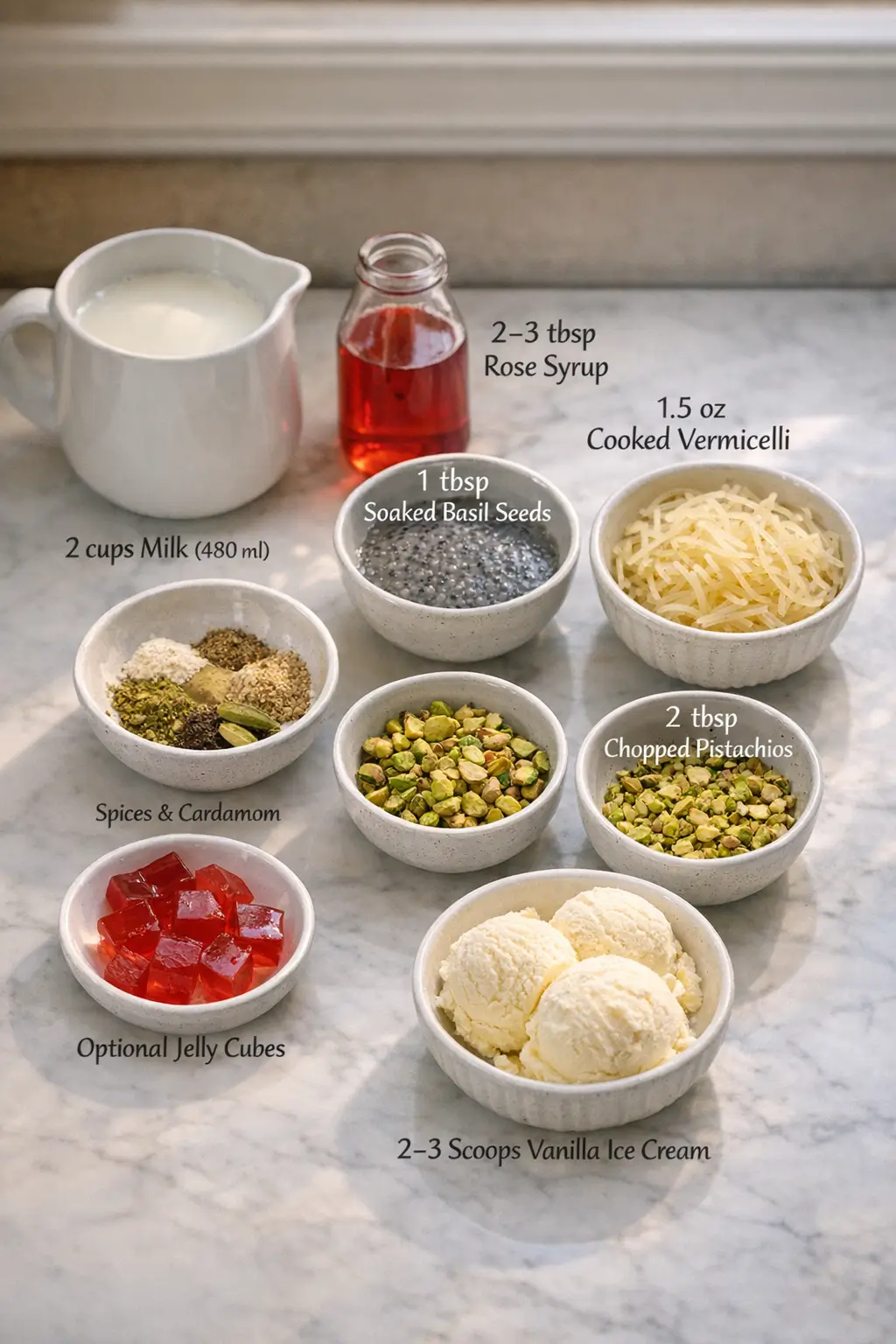
INGREDIENTS — Falooda Milkshake
- 2 cups (480 ml) cold whole milk — richness and body.
Use 2% or unsweetened almond/oat milk for a lighter glass; flavor will be less creamy. - 2 to 3 tablespoons (30–45 ml) rose syrup — classic flavor and pink hue.
Brands vary in sweetness; start with 2 tbsp and adjust to taste. Rooh Afza or Mapro both work. - 1 tablespoon (10 g) sweet basil seeds (sabja/tukmaria) — bouncy, chia‑like texture.
*If unavailable, *chia seeds* bloom similarly but taste more neutral.* - 1.5 ounces (40 g) falooda sev or thin vermicelli — the signature noodles.
*Cornstarch‑based falooda sev gives the chewiest bite; *thin wheat or rice vermicelli* also works.* - 2 to 3 scoops (about 200 g) vanilla ice cream — for creaminess and soft layering.
Kulfi is a richer swap if you prefer denser, frozen‑custard vibes. - 2 tablespoons (16 g) chopped unsalted pistachios or almonds — light crunch.
*Use *cashews* if that’s what you have; avoid heavily salted nuts.* - Optional but nice: 2 to 3 tablespoons (30–45 g) rose or strawberry jelly cubes; a pinch of ground cardamom; 1 to 2 tablespoons (15–30 ml) condensed milk for extra sweetness.
Water for soaking and boiling
Notes on sourcing: Look for falooda sev, sabja seeds, and rose syrup at South Asian grocers or international aisles. Online options are common in the U.S.; check that rose syrup lists rose/floral flavoring rather than only “mixed fruit.”
STEP-BY-STEP INSTRUCTIONS
-
Bloom the basil seeds.
Add the basil seeds to a small bowl with 1/2 cup (120 ml) cold water. Stir once to prevent clumping. Rest 15 to 20 minutes until each seed develops a clear, jelly‑like halo with a tiny black dot in the center. If any dry spots remain, add another splash of water and wait 5 minutes.
Caution: Don’t skip the stir at the start—dry seeds clump and never hydrate evenly. -
Cook the sev or vermicelli.
Bring 4 cups (1 liter) of water to a boil. Break the sev into 1–2 inch (2.5–5 cm) lengths. Boil 3 to 5 minutes for falooda sev or 4 to 6 minutes for very thin wheat/rice vermicelli, just until soft with a slight bite. Drain immediately and rinse under cold water to halt cooking.
Sensory cue: Properly cooked noodles feel slippery and flexible, not mushy or sticky. -
Chill the components.
Spread the drained sev on a plate so it doesn’t clump. Refrigerate the sev and bloomed seeds for 10 to 15 minutes while you prepare the milk. Colder parts layer more cleanly and help keep the ice cream from melting too fast. -
Mix the rose milk.
In a jug, stir together the cold milk and 2 tablespoons (30 ml) rose syrup. Taste and add up to 1 tablespoon (15 ml) more if your syrup is less sweet or less aromatic. If using cardamom, whisk in a pinch now. Chill while you set up the glasses. -
Prepare your glasses.
Tall, clear 12–16 oz (350–475 ml) glasses show the layers best. If using jelly cubes, add 1 tablespoon (15 g) to the base of each glass. A few ice cubes are optional for extra chill, but they slightly dilute the milk. -
Layer thoughtfully.
For 2 large glasses, divide the components as follows:
- 1 to 2 teaspoons bloomed basil seeds in the bottom
- 2 to 3 tablespoons cooked sev
- 1 to 1.5 teaspoons chopped nuts
- A small drizzle of rose syrup for color “streaks”
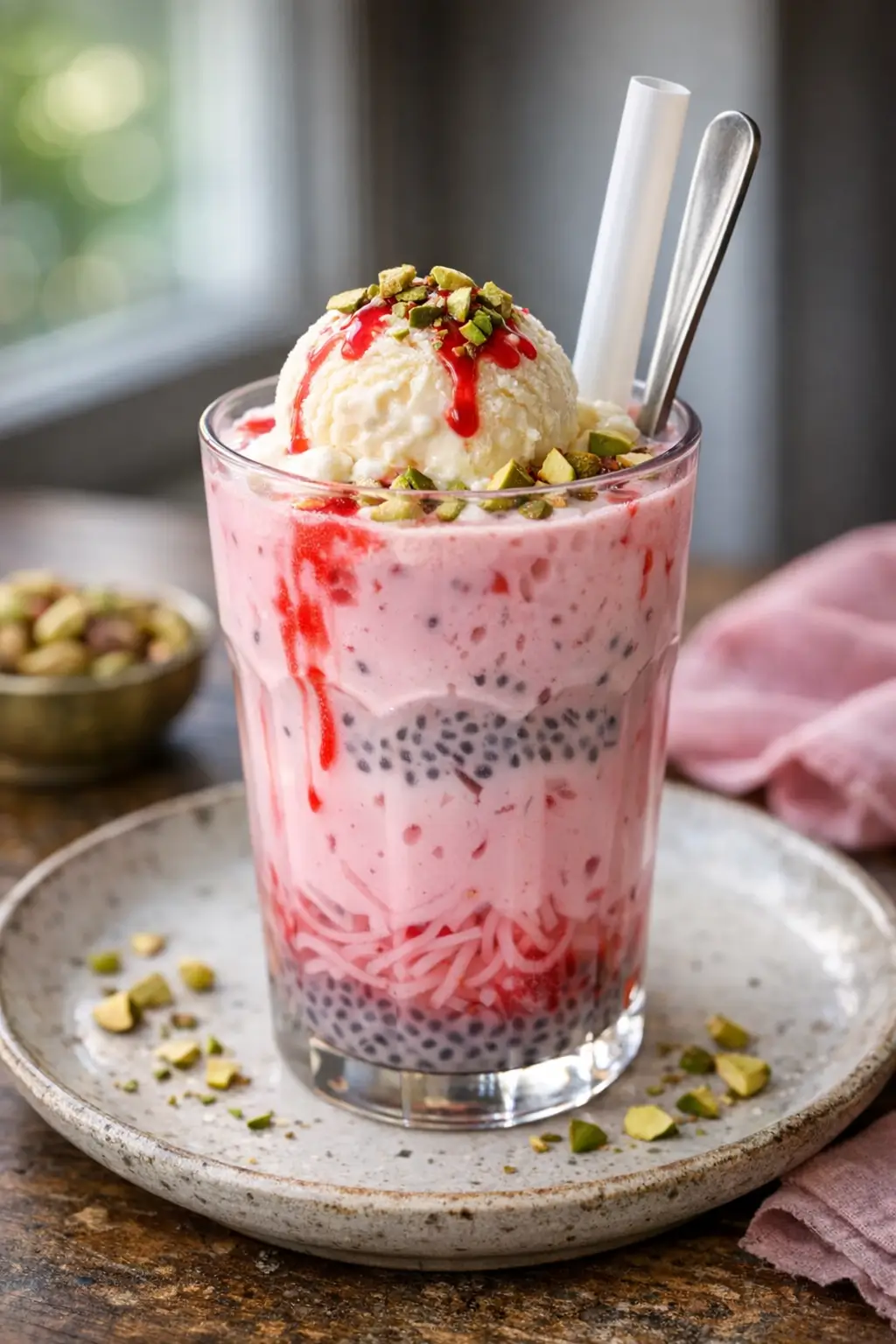
Repeat those mini‑layers if your glasses are tall. Slowly pour in rose milk to fill the glasses two‑thirds full. Top with a scoop of vanilla ice cream. Finish with more nuts and an optional extra thread of rose syrup.
- Serve right away.
Provide long spoons and wide straws if you have them. Stir lightly at the table so the basil seeds and sev mingle with the melting ice cream.
Timing notes:
- Basil seeds need at least 15 minutes to fully bloom; they can sit in water up to 1 hour.
- Sev cooks fast. Start checking at 3 minutes to avoid a mushy texture.
- Assembled glasses look sharp for about 5 minutes before the ice cream begins to soften into the milk; that’s part of the charm.
Beginner safeguards:
- Measure rose syrup conservatively. Too much can taste perfumey or medicinal.
- Rinse sev cold after boiling; skipping the rinse makes clumping likely.
- Keep milk and glasses cold so layers hold longer.
WHAT TO EXPECT
The final texture is multi‑layered: cool, drinkable milk; soft, slippery noodles; pop‑like basil seeds; and a light crunch from nuts. It’s not meant to be perfectly stratified in the glass, and gentle mixing at the table is normal.
Flavor sits in the sweet‑floral zone. Rose syrup leads, balanced by dairy, with vanilla from the ice cream and a toasty nuttiness. If you add cardamom, expect a warm, aromatic edge that reads as dessert‑like rather than spicy.
Variations happen. Falooda sev made from cornstarch gives the bounciest, almost jellylike chew; thin wheat vermicelli is softer and more familiar. Syrup brands differ widely in color and intensity, so two tablespoons may be plenty for one brand and barely pink for another. Whole milk tastes richer than 2%, and plant milks change both color and body.
WAYS TO CHANGE IT UP
-
Vegetarian or vegan adapted: Swap the milk for unsweetened almond or oat milk and use a dairy‑free vanilla ice cream. Many rose syrups are vegan, but check the label for honey. Plant milks are thinner, so add 1 tablespoon (15 ml) condensed coconut milk or a scoop of dairy‑free vanilla to the milk to mimic creaminess.
-
Spicier or milder: For a spicier profile, stir a pinch (1/8 tsp) of ground cardamom into the milk and garnish with a few saffron strands bloomed in 1 tsp warm milk. For a milder, kid‑friendly glass, reduce rose syrup slightly and skip cardamom; the vanilla ice cream will carry the flavor.
-
Faster or simplified: Use pre‑cooked shelf‑stable “falooda noodles” or very thin angel‑hair pasta snapped into short lengths and boiled 2 minutes. Or skip the jelly and nuts to cut prep to 10 minutes—basil seeds, rose milk, and ice cream still deliver the signature experience.
Trade‑offs: Shortcuts reduce visual drama and textural contrast. Vegan versions are delicious but less creamy; plant milks can mute the pink slightly.
SERVING AND STORAGE
Serve immediately in tall glasses with long spoons. A wide reusable boba straw helps pull noodles and seeds through the milkshake.
Pairs well with salty or spicy mains—grilled kebabs, chaat, or curry nights. The floral, chilled sweetness acts like a palate cooler.
Leftovers keep best as components. Refrigerate cooked sev, bloomed basil seeds, and rose milk separately for up to 24 hours. Stir seeds if they settle. Assembled falooda milkshakes do not store well; the ice cream melts and textures muddle. Re‑chill the milk and sev before re‑layering for the cleanest look.
CULTURAL CONTEXT
Falooda glasses show up in many parts of South Asia and share ancestry with the Persian dessert faloodeh. For a concise overview of the South Asian drink‑dessert and its components, see this neutral background summary on Falooda. For readers curious about older Persian ice‑house engineering that enabled frozen desserts in hot climates, the Encyclopaedia Iranica entry on the yakhchāl explains how ice was stored and used long before modern refrigeration. These resources provide context without prescribing a single “right” way to layer or flavor your glass.
COMMON QUESTIONS AND TROUBLESHOOTING
-
My basil seeds are gritty in the center. What went wrong?
They weren’t fully bloomed. Stir them into cold water at the start and allow at least 15 to 20 minutes. If you used warm water, the outer gel can set before the interior hydrates. Soak a few minutes longer and stir again. -
The sev clumped after cooking. How do I fix it?
Rinse under cold water right after draining, then toss with a teaspoon of cold milk to separate strands. If it’s still clumpy, chop lightly with a knife—texture will be slightly shorter but still enjoyable in the glass. -
How sweet should it be?
Sweetness depends on brand of rose syrup and the richness of your ice cream. Start with less syrup, taste, and add more by the teaspoon. If the color looks pale but flavor is right, add one or two drops of pink food color rather than more syrup. -
Can I make it nut‑free?
Yes. Skip the nuts or replace with pumpkin seeds or toasted coconut chips for crunch. Always check labels on rose syrup for potential allergen warnings. -
Can I prepare anything ahead?
Absolutely. Cook and chill the sev up to 24 hours ahead. Bloom basil seeds up to 1 hour before serving. Combine the milk and syrup and chill earlier in the day. Assemble just before serving. -
How do I make it extra thick like a true milkshake?
Blend the rose milk with 1 scoop of ice cream until slushy, pour into glasses, then layer sev, basil seeds, and the remaining scoop on top. Expect faster melting with this approach. -
What if I can’t find falooda sev?
Use very thin wheat or rice vermicelli, broken into short pieces. Cook slightly al dente so the noodles hold their shape in the glass. -
My drink tastes too floral. Can I save it?
Stir in extra cold milk or add a small scoop of vanilla ice cream to dilute. Next time, measure the syrup, and add more gradually.
CONCLUSION
Falooda milkshake rewards a few simple steps with impressive layers and a refreshing mix of textures. If you try it, leave a comment with your tweaks—extra jelly, saffron, plant‑based swaps, or a brand of rose syrup you love. Your notes help other home cooks dial in the glass that suits their kitchen and taste.



Leave a Reply