
A Fourth of July Trifle with Berries and Cream is one of those desserts that looks impressive but is very forgiving to assemble. It’s essentially layers of soft cake, lightly sweet vanilla cream, and juicy red and blue berries in a clear dish so the colors show off at the table.
This style of trifle shows up at a lot of American summer cookouts and patriotic holidays, especially the Fourth of July, because it uses seasonal berries and doesn’t require turning on the oven if you start with store-bought cake. It suits newer bakers, busy parents, or anyone with a small kitchen who still wants a festive dessert that feeds a crowd.
If it’s a hectic weeknight or you’re juggling kids and side dishes, cube the cake and wash the berries first so they’re ready when you mix the cream. If you’re assembling ahead, pay attention to how juicy your berries are so the cake turns pleasantly soft, not soggy.
Ingredients
Serves 6–8 (about a 3-quart / 2.8 L trifle dish)
For the berries
- 350 g / 12 oz fresh strawberries, hulled and sliced
- 200 g / 7 oz fresh blueberries
- 150 g / 5 oz fresh raspberries (optional but visually nice)
- 2–3 Tbsp (25–40 g) granulated sugar, to taste
- 1 Tbsp (15 ml) fresh lemon juice
For the cake layer
- 1 large store-bought angel food cake (about 400–450 g / 14–16 oz), cut into 2–3 cm / 1-inch cubes or use pound cake for a richer trifle
For the vanilla cream
- 225 g / 8 oz cream cheese, softened to room temperature
- 75 g / 6 Tbsp granulated sugar
- 1 tsp pure vanilla extract
- 360 ml / 1½ cups heavy whipping cream, very cold
- 1 pinch fine salt (balances the sweetness)
For topping (optional but recommended)
- A few extra whole berries for the top
- Fresh mint sprigs for garnish
Substitution notes:
- Cake: Angel food cake keeps the trifle light and airy; store-bought pound cake or simple sponge cake works if you prefer something richer.
- Cream cheese: Full-fat works best. Neufchâtel can be used for a slightly lighter texture, though it may be a bit softer.
- Heavy cream: Look for cream labeled at least 33–36% fat. In a pinch, whipping cream works but may not hold as long.
- Berries: Use any good mix of strawberries, blueberries, raspberries, or blackberries. Frozen berries can work if fully thawed and well-drained, but the colors will bleed more.
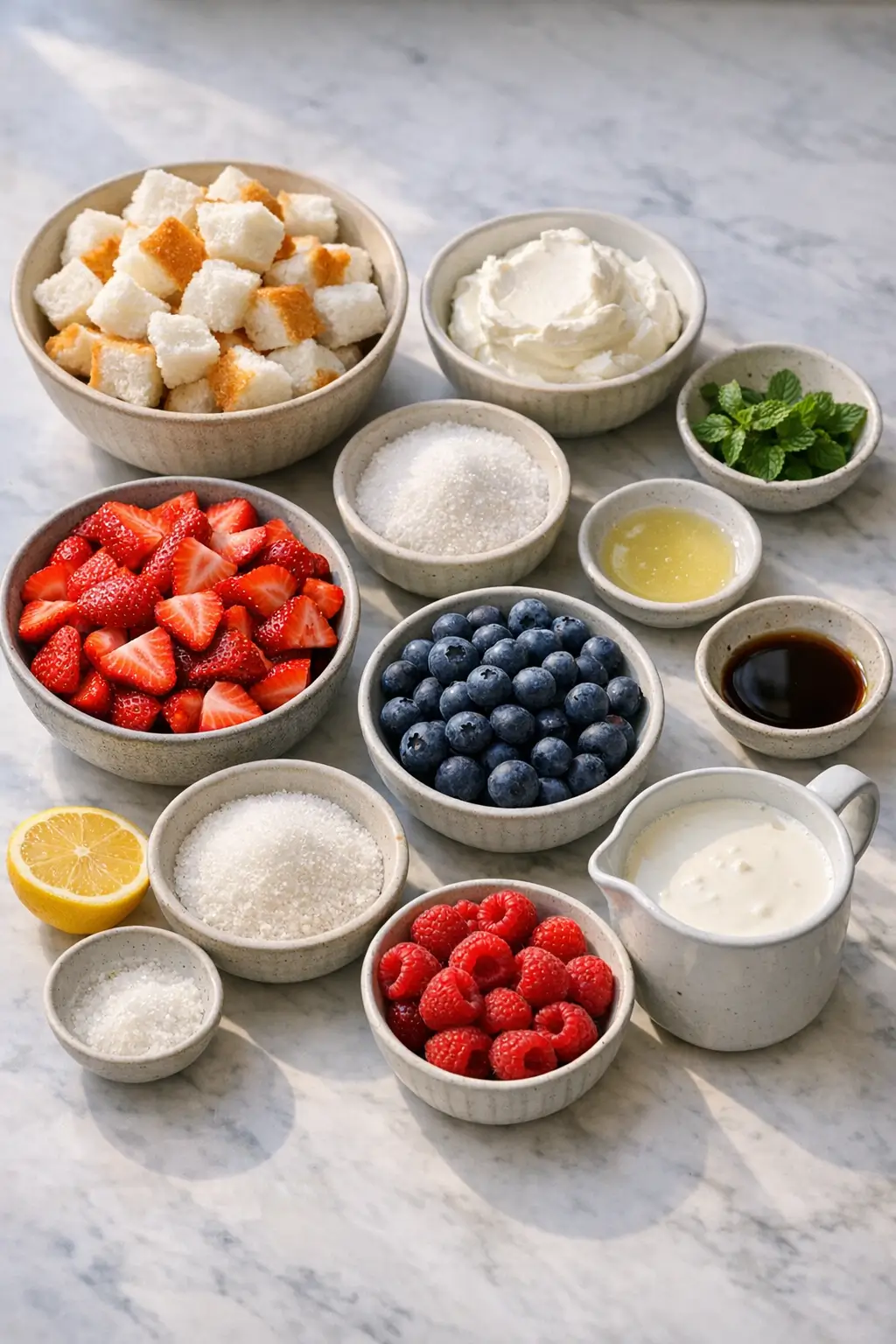
Step-by-Step Instructions for Fourth of July Trifle with Berries and Cream
-
Prep and macerate the berries
Rinse the strawberries, blueberries, and raspberries gently under cold water, then pat very dry with paper towels. Slice the strawberries and place all the berries in a medium bowl. Sprinkle with the sugar and lemon juice, then toss gently. Let them sit for 15–20 minutes, stirring once or twice, until some juices start to collect at the bottom. -
Cube the cake
While the berries rest, cut the angel food cake into even cubes, about 2–3 cm / 1 inch. You want soft but distinct pieces so they stack and trap the cream. Set aside in a large bowl. -
Soften the cream cheese
Place the softened cream cheese, sugar, vanilla, and salt in a large mixing bowl. Beat with a hand mixer or stand mixer on medium speed for 2–3 minutes, scraping the bowl as needed, until smooth and no lumps remain. -
Whip the cream separately
In another chilled bowl, pour in the heavy cream. Whip on medium-high speed until it reaches soft-to-medium peaks, about 2–4 minutes depending on your mixer. The cream should hold a soft shape when the beaters are lifted but still look silky, not grainy.
Kitchen note: If the cream looks curdled or grainy, it’s been overwhipped. Gently fold in 1–2 tablespoons of fresh liquid cream to smooth it back out before you continue.
-
Fold the cream into the cream cheese base
Add about one-third of the whipped cream to the cream cheese mixture and beat on low or fold with a spatula to loosen it. Then gently fold in the remaining whipped cream in 2–3 additions, using broad strokes from the bottom of the bowl up and over, until no streaks remain. -
Taste and adjust the sweetness
Spoon a small taste of the cream. If it’s not sweet enough for you, sift in another 1–2 Tbsp (10–20 g) sugar and fold again briefly. Keep in mind the berries and cake also contribute sweetness, so this cream is meant to be lightly sweet. -
Drain off excess berry juice (if needed)
Check the berry bowl. If there’s a lot of liquid pooled at the bottom, scoop the berries into a clean bowl with a slotted spoon. Save a few tablespoons of juice to brush lightly over the cake cubes if you like, but avoid adding all the liquid or the trifle will end up soggy. -
Start layering: cake first
Place about one-third of the cake cubes in the bottom of a clear 3-quart trifle dish (or a large glass bowl). Arrange them in an even layer. If using a glass with a narrow base, gently press the cubes together so there aren’t large gaps. -
Add berries, then cream
Spoon about one-third of the berries evenly over the cake, aiming to show red and blue against the sides of the dish. Dollop one-third of the cream over the berries and spread it gently to the edges with an offset spatula or the back of a spoon. -
Repeat the layers
Repeat the sequence—cake, berries, cream—two more times. Aim to end with a generous layer of cream on top. You may have a few stray cake cubes or berries left; keep them for snacking or tuck them into the center.
Kitchen note: If your dish is smaller than 3 quarts, make thinner layers and stop when it’s nearly full, leaving at least 1–2 cm / ½ inch at the top so the cream doesn’t overflow when you cover it.
-
Create a festive top layer
Arrange whole or halved strawberries and plenty of blueberries on top of the final cream layer. Many cooks like to create stripes or a simple flag pattern for the Fourth of July, but a scattered mix of red and blue still looks very celebratory. Add a few mint sprigs if using. -
Chill to set the layers
Cover the trifle dish tightly with plastic wrap. Refrigerate for at least 2 hours, and up to 6–8 hours, so the flavors meld and the cake absorbs a bit of moisture from the cream and berries. -
Serve straight from the dish
Just before serving, remove the plastic wrap. Use a large spoon to scoop down through all the layers and serve into small bowls or dessert glasses. You’ll lose the perfect stripes when you scoop, which is normal. The goal is a bit of cake, cream, and fruit in every portion.
Kitchen note: If transporting this trifle to a cookout, keep it well-chilled in an insulated bag or cooler and don’t leave it out at room temperature for more than 2 hours, since it contains dairy and fresh berries.
What to Expect
The finished trifle has soft, spoonable layers. Angel food cake becomes tender and almost custardy around the edges where it touches the cream, while the center of each cube stays slightly bouncy.
The cream is richer than plain whipped cream thanks to the cream cheese, but still light enough that a serving doesn’t feel heavy in hot weather. You’ll taste a balance of vanilla, gentle tang from the cream cheese, and bright acidity from the lemon-tossed berries.
Berry textures vary. Very ripe berries will bleed their juices more and create pink swirls in the cream. Firmer berries hold their color in neat bands. Both outcomes are fine; they simply look a bit different in the bowl.
Kitchen note: If you assemble this more than 8 hours ahead, expect the bottom layer of cake to get quite soft and the red berries to tint the cream. It will still be tasty, just more blended and pudding-like.
Ways to Change It Up
-
A lighter, yogurt-forward version
Swap half of the cream cheese (about 115 g / 4 oz) for 170 g / ¾ cup thick Greek yogurt. Whisk the yogurt separately until smooth, then fold it into the cream cheese mixture before adding the whipped cream. The result is tangier, slightly less sweet, and a bit looser, but still stable for a few hours in the fridge. -
Extra-berry, lower-cake variation
Use only half the amount of cake and double the berries. Keep the cream layer amounts the same. This leans more toward a fruit-and-cream parfait and is helpful if you have very sweet, peak-season berries and want to highlight them. -
Richer, more decadent trifle
Replace the angel food cake with pound cake. The texture will be denser and more buttery, and the cake will soak up more moisture—especially if you brush the layers lightly with leftover berry juices. This version is less airy but feels closer to a no-bake cheesecake with berries. -
Milder for kids or very sweet tooths
Skip the lemon juice in the berries and increase the sugar in the cream by 1–2 Tbsp (10–20 g). This reduces the tang and pushes the flavor toward classic strawberry shortcake in a bowl.
Serving and Storage
This trifle is usually served chilled as a dessert at Fourth of July gatherings, barbecues, and summer potlucks. It pairs well with grilled foods because the cool cream and fruit contrast nicely with smoky mains.
Offer small bowls or dessert glasses and a large serving spoon. Because the layers are soft, there’s no clean “slice,” just generous scoops.
For sides or accompaniments, simple options like grilled corn, coleslaw, or a light salad keep the meal from feeling too heavy before dessert. A pitcher of iced tea or lemonade also balances the sweetness nicely.
Leftovers keep well covered in the refrigerator for up to 2 days. After the first day, the cake will be very soft and the colors may bleed, but the flavor remains good.
For reheating, there’s nothing to heat here—serve leftovers straight from the fridge. If the top has wept a little liquid, you can gently blot the surface with a paper towel and add a few fresh berries to refresh the look.
Kitchen note: Because of the fresh berries and whipped cream, this dessert does not freeze well. Thawing tends to break the cream and make the berries mushy.
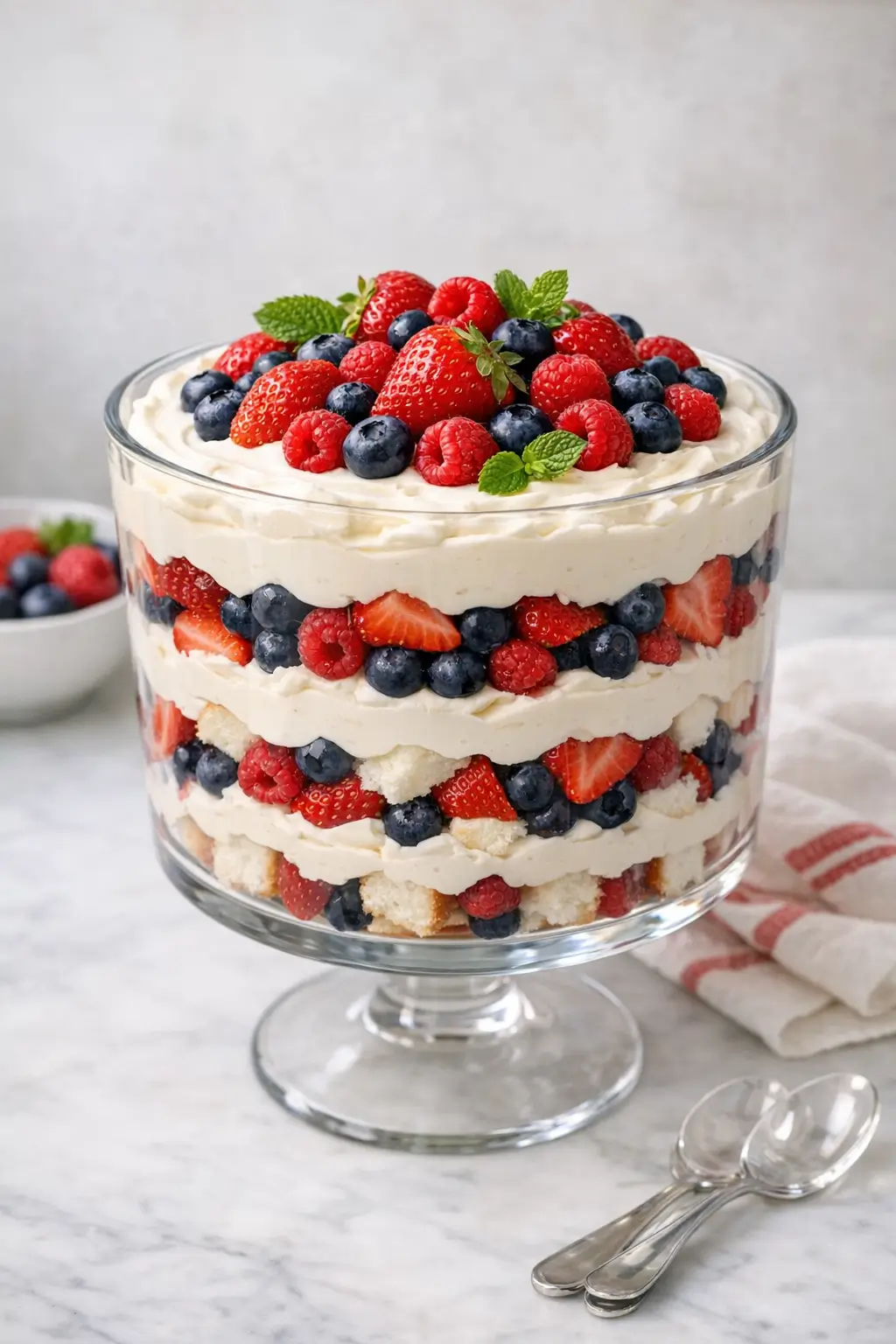
Cultural Context
Trifles trace back to English desserts made with layers of sponge cake, custard, and cream, often soaked with fortified wine or sherry. Over time, the concept spread and adapted in many countries as a flexible layered dessert.
For a concise overview of the traditional trifle’s evolution, see this entry from the Oxford Companion to Food via Oxford Reference.
In the United States, berry trifles appear frequently around summer holidays when strawberries and blueberries are in season. The red, white, and blue color scheme made them especially popular for the Fourth of July as a casual, shareable dessert that reads as patriotic without requiring intricate decoration.
For more on how American Independence Day foods evolved toward colorful, symbolic dishes, the Smithsonian’s overview of holiday food traditions is a useful starting point: Smithsonian profile of Fourth of July food traditions.
Common Questions and Troubleshooting
My trifle turned out watery at the bottom. What went wrong?
Most often, the berries were very juicy and all their liquid went into the dish. Next time, let the berries macerate and then transfer them with a slotted spoon, leaving most of the juice behind. Also avoid using still-warm cake, which releases extra moisture.
The cream layer seems loose. How can I fix it?
If the cream looks too soft when you’re folding, chill the bowl for 15–20 minutes, then whip briefly on low speed to firm it up. In the future, make sure the cream is very cold before whipping and stop at soft-to-medium peaks so it doesn’t deflate while folding.
Can I make this the night before?
Yes, but aim for no more than about 8 hours in the fridge for the best texture. After that, the cake will be very soft and the berries will bleed more into the cream. If you need more lead time, prep each component separately and assemble the trifle on the day of serving.
Can I use frozen berries?
You can, but thaw them completely in a colander and blot gently with paper towels. Expect more color bleeding and softer fruit. In that case, it helps to keep the trifle a bit more chilled and assemble closer to serving time.
How do I scale this recipe for a bigger crowd?
For a large party, you can double all the components and use an oversized trifle dish or two medium glass bowls. Watch the chilling time; a taller, larger trifle may need closer to 4 hours to cool through the center.
Is there a way to reduce the richness?
Use half the cream cheese amount and increase the berries, or try the yogurt variation described above. You can also lightly sweeten the berries and skip any extra sugar in the cream to keep the overall dessert a bit lighter.
Conclusion
A Fourth of July Trifle with Berries and Cream offers a clear, manageable path from simple components to a festive centerpiece dessert. Once you’ve made it once, you can adjust the sweetness, cake type, and berry mix to suit the people you cook for and what looks good at the market.
If you try this version, share how you layered yours, what berries you used, or any tweaks you made in the comments. Thoughtful feedback and star ratings also help other home cooks gauge how this trifle fits into their own holiday table.
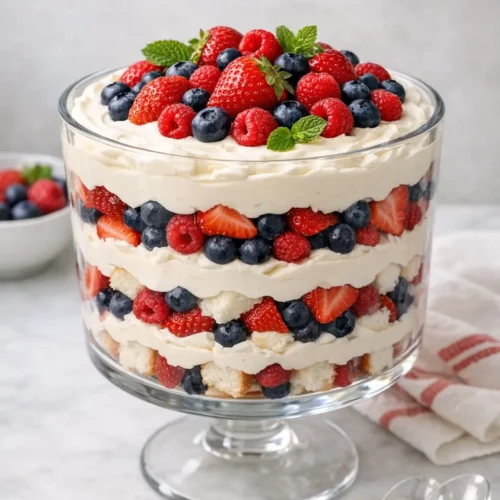
Fourth of July Trifle with Berries and Cream

Equipment
- 3-quart (2.8 L) trifle dish or large glass bowl
- Medium Bowl
- Large mixing bowl
- Chilled mixing bowl
- Hand mixer or stand mixer
- Rubber spatula
- Slotted spoon
- Offset spatula or spoon
- Plastic wrap
Ingredients
For the berries
- 350 g fresh strawberries hulled and sliced
- 200 g fresh blueberries
- 150 g fresh raspberries optional
- 2–3 Tbsp granulated sugar to taste (25–40 g)
- 1 Tbsp fresh lemon juice (15 ml)
For the cake layer
- 1 large store-bought angel food cake about 400–450 g (14–16 oz), cut into 2–3 cm / 1-inch cubes
For the vanilla cream
- 225 g cream cheese softened to room temperature
- 75 g granulated sugar (about 6 Tbsp)
- 1 tsp pure vanilla extract
- 360 ml heavy whipping cream very cold (1½ cups)
- 1 pinch fine salt
For topping (optional but recommended)
- extra whole berries for the top
- fresh mint sprigs for garnish
Instructions
- Prep and macerate the berries: Rinse strawberries, blueberries, and raspberries gently under cold water, then pat very dry. Slice the strawberries and place all berries in a medium bowl. Sprinkle with the sugar and lemon juice, toss gently, and let sit 15–20 minutes, stirring once or twice, until juices begin to collect.
- Cube the cake: Cut the angel food cake into even 2–3 cm / 1-inch cubes. Set aside in a large bowl.
- Soften the cream cheese: In a large mixing bowl, beat the softened cream cheese, sugar, vanilla, and salt with a hand mixer or stand mixer on medium speed for 2–3 minutes, scraping the bowl as needed, until smooth and lump-free.
- Whip the cream separately: In another chilled bowl, whip the cold heavy cream on medium-high until soft-to-medium peaks form, about 2–4 minutes (silky, not grainy).
- Fold the cream into the cream cheese base: Add about one-third of the whipped cream to the cream cheese mixture and beat on low or fold to loosen. Gently fold in the remaining whipped cream in 2–3 additions until no streaks remain.
- Taste and adjust sweetness: Taste the cream and, if needed, fold in an additional 1–2 Tbsp (10–20 g) sugar.
- Drain off excess berry juice (if needed): If a lot of liquid has pooled, transfer berries with a slotted spoon to a clean bowl, leaving most juice behind. Optionally reserve a few tablespoons of juice to brush lightly over cake cubes.
- Start layering (cake first): Place about one-third of the cake cubes in the bottom of a clear 3-quart trifle dish (or large glass bowl) in an even layer, gently pressing to minimize gaps if needed.
- Add berries, then cream: Spoon about one-third of the berries over the cake, then dollop one-third of the cream on top and spread gently to the edges with an offset spatula or the back of a spoon.
- Repeat the layers: Repeat cake, berries, cream two more times, ending with a generous cream layer on top.
- Create a festive top layer: Decorate the top with whole or halved strawberries and plenty of blueberries (stripes/flag pattern optional). Add mint sprigs if using.
- Chill to set: Cover tightly with plastic wrap and refrigerate at least 2 hours (and up to 6–8 hours) for the layers to meld and set.
- Serve: Scoop down through all layers with a large spoon and serve in small bowls or dessert glasses.



Leave a Reply