
Busy brunch prep or weeknight dinner is exactly when Garlic Herb Roasted Asparagus earns its place on the menu. You get tender-crisp spears, plenty of garlicky flavor, and fresh herbs in about 15 minutes, without babysitting a pan on the stove.
If your evening is already packed, start by preheating the oven and trimming the asparagus so it’s ready to slide in as soon as the main dish comes out. Hosting brunch? Mix the oil, garlic, and herbs ahead, then all you have to do is toss and roast.
This side fits neatly next to eggs, quiche, fish, chicken, or a rich main like French Onion Soup with Deep Flavor, Simple Steps. Expect lightly browned tips, bright green stalks, and a clean lemon-herb finish rather than anything heavy or saucy.
Ingredients
Serves 3–4 as a side
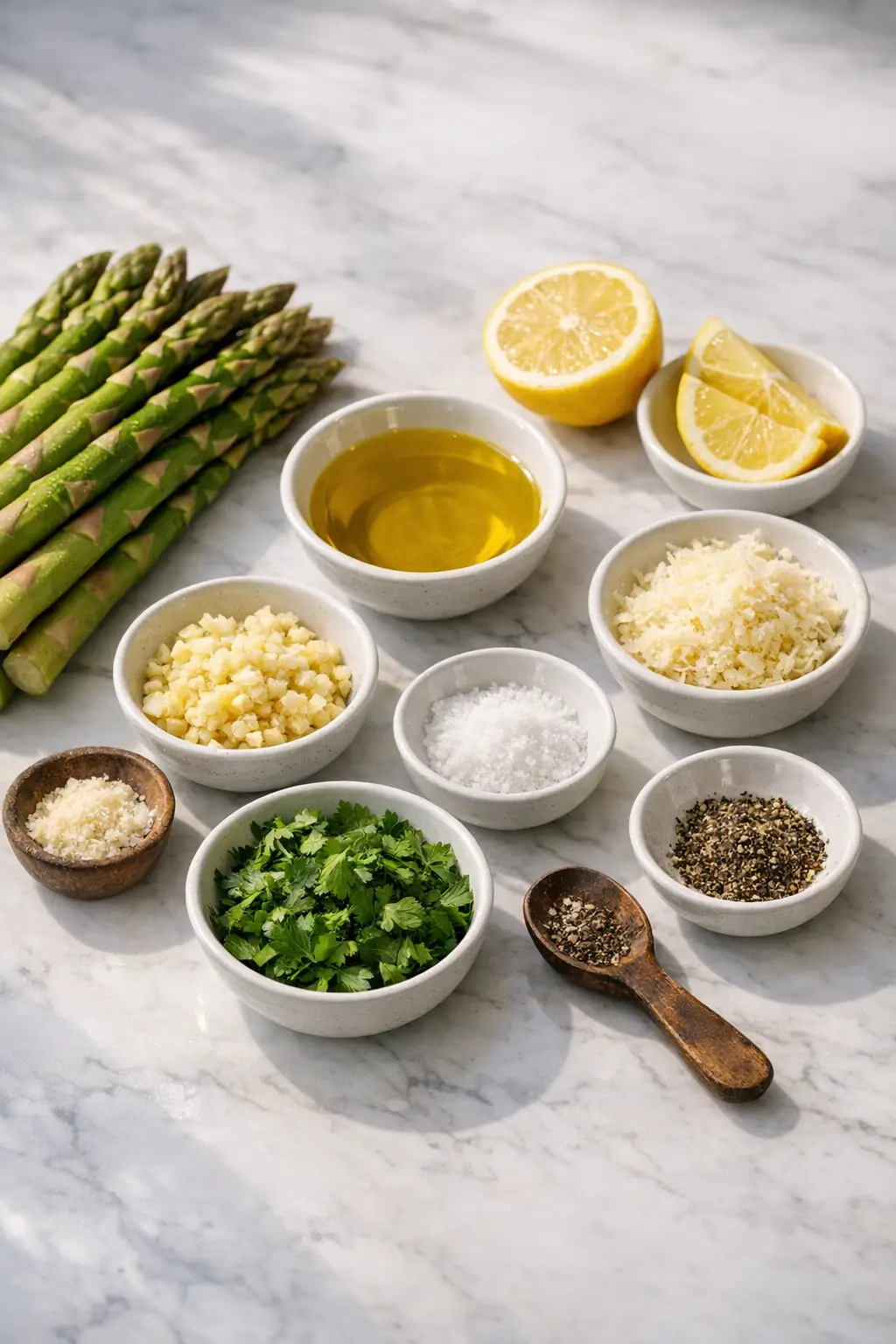
- 450 g / 1 lb asparagus (1 medium bunch), woody ends trimmed; choose medium-thick spears for best texture
- 2 tbsp olive oil (extra-virgin if you like a fruitier flavor)
- 3 garlic cloves, finely minced (about 1 tbsp), for assertive garlic flavor
- 1 1/2 tbsp finely chopped fresh flat-leaf parsley, plus more for garnish
- 1/2 tsp fine sea salt, or to taste
- 1/4 tsp freshly ground black pepper
- 1–2 tsp fresh lemon juice, plus extra lemon wedges for serving
- Optional but nice for brunch: 2 tbsp finely grated Parmesan cheese or similar hard cheese, sprinkled on just before or after roasting for a salty, nutty finish
Substitutions and small tweaks
- Herbs: Swap parsley for finely chopped chives, thyme, or a mix. Dried Italian seasoning works in a pinch; use 1 tsp.
- Garlic: If fresh garlic tends to burn in your oven, use 1/2 tsp garlic powder instead, adding it with the herbs.
- Dairy-free: Simply skip the Parmesan; the lemon, garlic, and herbs carry plenty of flavor.
Step-by-Step Instructions for Garlic Herb Roasted Asparagus
-
Preheat the oven and prep the pan.
Heat the oven to 220°C / 425°F with a rack in the middle. Line a large rimmed baking sheet with parchment for easier cleanup, or leave it unlined for slightly better browning. -
Trim the asparagus.
Rinse the asparagus and pat dry thoroughly so it roasts instead of steaming. To trim, bend one spear near the base until it snaps; use that as a guide to cut the rest so you remove the tough woody ends. -
Mix the garlic-herb oil.
In a small bowl, combine the olive oil, minced garlic, chopped parsley, salt, pepper, and 1 tsp lemon juice. Stir well so the garlic and herbs are evenly distributed.
Kitchen note: If your garlic tends to scorch in the oven, spoon most of it on top of the spears rather than directly touching the pan, or reserve half the garlic to toss in during the last 3–4 minutes of roasting.
-
Coat the asparagus.
Spread the asparagus in a single layer on the baking sheet. Drizzle all of the garlic-herb oil over the spears, then use clean hands or tongs to roll them around until every stalk is lightly coated. If using Parmesan, sprinkle half of it over the spears now. -
Roast quickly.
Roast for 8–12 minutes, depending on spear thickness, until the asparagus is bright green, just tender when pierced with the tip of a knife, and the tips are starting to brown. Thin spears can be ready in about 7–8 minutes; very thick ones may need up to 12. -
Finish and taste.
Remove the pan from the oven. If using Parmesan and you didn’t add it earlier, sprinkle it on while the asparagus is hot so it melts slightly. Squeeze on another 1 tsp lemon juice if needed and toss gently.
Kitchen note: Taste one spear before serving. If it seems flat, it usually needs a pinch more salt or a few extra drops of lemon rather than more garlic.
- Serve right away.
Transfer the asparagus to a warm platter, scraping any garlicky-herb oil from the pan over the top. Serve immediately with extra lemon wedges. For brunch, slide the platter between a pan of eggs and a carb like crusty bread or leftover Cornish Pasty Made Easy: Flaky, Hearty, Freezer-Ready warmed in the oven.
What to Expect
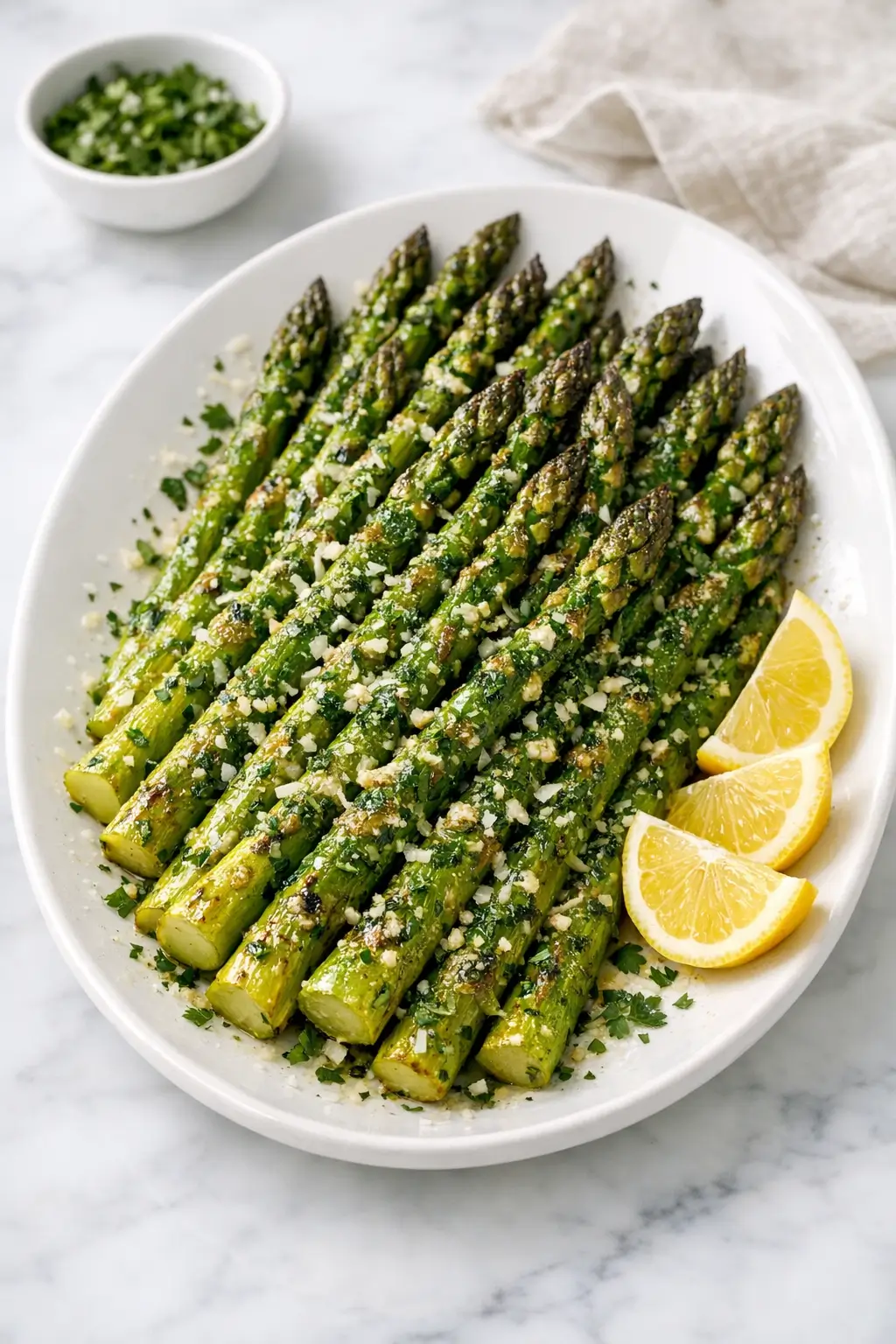
Roasting quickly at a high temperature gives you tender centers with just a bit of snap left in the stalks. The tips become slightly crisp and browned rather than soft or soggy.
Flavor-wise, expect a clean, grassy asparagus base with prominent garlic and a fresh, almost peppery note from the parsley. Lemon keeps everything bright without turning the dish into a full-on lemon side.
Different ovens and pan types can change the results slightly. A dark, unlined baking sheet may brown the bottoms faster, while a heavy stainless pan might need an extra minute or two. Parmesan will melt into soft, salty spots, not a thick crust, because this is a fast-roasted side.
Ways to Change It Up
-
Vegetarian and vegan variations.
The base recipe is already vegetarian, and it’s vegan if you skip the Parmesan. For more richness without dairy, whisk 1 tbsp nutritional yeast into the oil with the herbs, or serve the asparagus alongside a plant-forward main like Tuscan White Bean Soup with Kale in 35 Minutes. -
Make it milder or kid-friendlier.
Use 1 clove of garlic instead of three, or swap in 1/4–1/2 tsp garlic powder for a softer flavor. You can also roast the asparagus plain with just oil, salt, and pepper, and toss with the herbs and a tiny bit of lemon right before serving. -
Spicier, brunch-ready version.
Add 1/4 tsp red pepper flakes to the garlic-herb oil and finish the roasted asparagus with an extra grind of black pepper. This works especially well alongside rich egg dishes or something creamy like Creamy Broccoli Cheddar Soup Done Right in 35 Minutes. -
Even faster stovetop-oven hybrid.
If you’re really short on time, sear the asparagus briefly in a hot skillet with 1 tbsp oil for 2–3 minutes to get color, then move it to the baking sheet, toss with the garlic-herb oil, and roast for just 5–6 minutes. This shaves a couple of minutes off the oven time while still using one main pan.
Kitchen note: With the faster method, keep the garlic in larger pieces or use garlic powder to avoid burning in the hotter initial sear.
- Cheesy company version.
For a more indulgent take, roast as directed, then top with a generous handful of grated Parmesan and a few small butter dots during the last 2 minutes of roasting. The cheese melts and lightly browns, and the butter adds gloss, which looks nice on a brunch table.
Serving and Storage
Garlic Herb Roasted Asparagus is at its best hot from the oven, when the tips are crisp and the interior is still juicy. It’s a natural fit for spring brunch with poached or soft-scrambled eggs, quiche, or savory crêpes like French-Style Savory Crêpes with Melty Cheese & Veg.
For dinner, pair it with roasted chicken, pan-seared fish, or a saucy main like Butter Chicken at Home with Silky, Balanced Sauce. It also cuts through richer dishes such as creamy pastas or gratins.
Leftovers keep reasonably well even if they lose a bit of snap. Cool completely, then store in an airtight container in the fridge for up to 3 days.
To reheat, place on a baking sheet and warm in a 190°C / 375°F oven for 5–7 minutes until heated through. The microwave works in a pinch (about 30–45 seconds), but expect softer stalks.
Kitchen note: Avoid freezing; the texture of thawed asparagus tends to be stringy and waterlogged, especially once it’s been roasted.
Cultural Context
Asparagus has been valued in many parts of Europe and the Mediterranean for centuries as a seasonal spring vegetable. Historical records show it being cultivated in ancient Greece and Rome, often served simply to highlight its natural flavor rather than hiding it in complex sauces.
A brief overview of its history and traditional uses can be found through resources like the British Asparagus history page, which outlines how it became a spring marker in European cuisines.
Roasting with olive oil, garlic, and herbs reflects broader Mediterranean cooking habits that rely on a few aromatics and good-quality produce. Modern brunch and bistro menus frequently feature roasted asparagus alongside eggs, grilled meats, and grains, especially in late winter and spring when fresh local spears are available.
Common Questions and Troubleshooting
My asparagus turned out limp and stringy. What went wrong?
Usually this means it was either overcooked or the spears were very thin and needed less time. Next time, start checking at 7 minutes and pull a spear as soon as it’s bright green and just tender. Very thin asparagus can roast in under 8 minutes.
The garlic burned on the pan. How can I prevent that?
Keep most of the garlic on top of the spears instead of on the bare metal, or stir half of it into the oil and add the rest halfway through roasting. Using slightly larger garlic pieces instead of a paste also helps.
Can I use dried herbs instead of fresh?
Yes. Use about 1 tsp dried parsley or Italian seasoning in place of the fresh herbs, and mix it into the oil so it can hydrate a bit before roasting. Dried herbs taste more concentrated, so avoid overdoing them.
How do I scale this recipe up for a crowd?
Use two baking sheets so the asparagus still has room to roast in a single layer. If the pans are crowded, the spears steam and soften instead of browning. Rotate the pans halfway through if your oven has hot spots.
Can I prep this in advance for brunch?
You can trim and wash the asparagus up to a day ahead and store it wrapped in a clean towel in the fridge. Mix the garlic, herbs, oil, salt, and pepper up to several hours ahead. Toss everything together right before roasting so the salt doesn’t draw too much moisture out of the spears.
Is it safe to eat leftover roasted asparagus cold?
Yes, as long as it was cooled promptly and stored properly. Cold roasted asparagus is good sliced and added to salads, grain bowls, or sandwiches for up to 3 days after cooking.
Kitchen note: If serving leftovers cold, taste for seasoning again; chilling can mute flavors, so a fresh squeeze of lemon or pinch of salt can wake them back up.
Conclusion
Garlic Herb Roasted Asparagus is one of those rare sides that feels brunch-worthy but slots easily into a busy weeknight. With a short ingredient list and a fast roast, it’s a practical way to use spring asparagus without a lot of hands-on time.
If you try it, leave a comment and rating to share how it fit into your meal. I’m always interested in the tweaks home cooks make—extra herbs, a different cheese, or spices you tried—so others can benefit from real-world variations too.
Garlic Herb Roasted Asparagus in 15 Minutes

Equipment
- Rimmed baking sheet
- Parchment paper (optional)
- Small bowl
- Tongs
- Knife
Ingredients
- 450 g asparagus 1 lb; woody ends trimmed (about 1 medium bunch)
- 2 tbsp olive oil
- 3 cloves garlic finely minced (about 1 tbsp)
- 1 1/2 tbsp fresh flat-leaf parsley finely chopped, plus more for garnish
- 1/2 tsp fine sea salt or to taste
- 1/4 tsp freshly ground black pepper
- 1–2 tsp fresh lemon juice plus extra lemon wedges for serving
- 2 tbsp Parmesan cheese finely grated, optional
Instructions
- Preheat the oven to 220°C / 425°F with a rack in the middle. Line a large rimmed baking sheet with parchment (optional) or leave unlined for slightly better browning.
- Rinse the asparagus and pat very dry. Trim by snapping one spear to find the break point, then cut the rest to remove tough woody ends.
- In a small bowl, mix the olive oil, minced garlic, parsley, salt, pepper, and 1 tsp lemon juice until evenly combined.
- Arrange asparagus in a single layer on the baking sheet. Drizzle with the garlic-herb oil and toss/roll until evenly coated. If using Parmesan, sprinkle half over the spears now.
- Roast 8–12 minutes (depending on thickness) until bright green, just tender when pierced, and tips are starting to brown.
- Remove from the oven. If using Parmesan and you didn’t add it earlier, sprinkle it on while hot. Add another 1 tsp lemon juice if needed and toss gently; adjust salt to taste.
- Serve immediately, scraping any garlicky herb oil from the pan over the top. Serve with extra lemon wedges.



Leave a Reply