
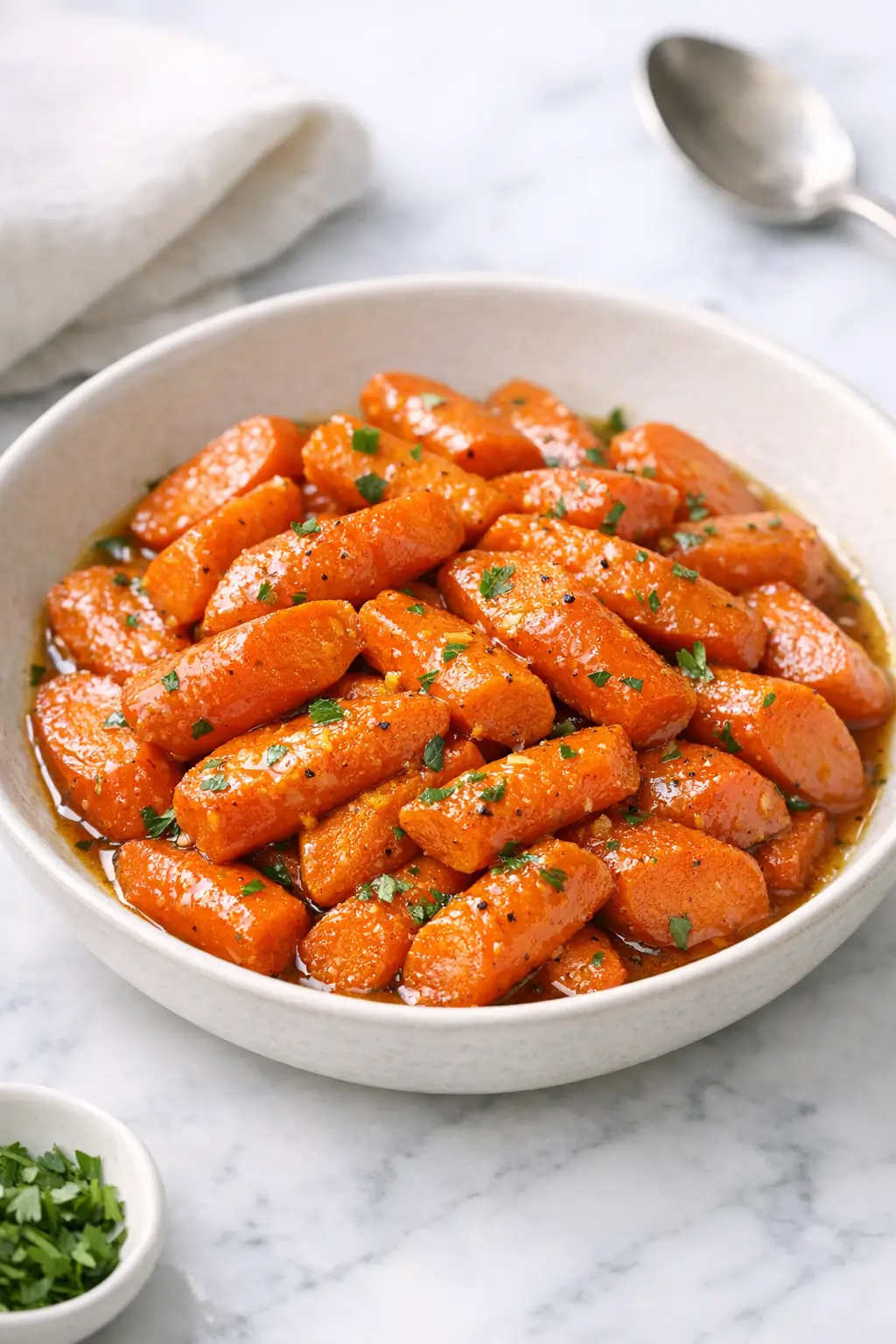
Bright glazed carrots with orange and honey hit that sweet spot between weeknight-easy and holiday-worthy. The citrus keeps the sweetness lively, the honey adds gentle shine, and the carrots stay tender with a bit of bite so they never feel mushy.
If you’re squeezing this into a busy spring dinner or Easter spread, start by peeling and cutting the carrots so they’re ready to go. If you have kids circling the kitchen or limited stovetop space, you can even par-cook the carrots earlier in the day and glaze them just before serving.
This side dish is common on roast-dinner tables in Europe and North America and shows up often at autumn and winter holidays, though the orange makes it especially nice for spring menus. The recipe suits newer cooks who want a reliable, forgiving side as well as more experienced cooks who care about texture and balance.
Ingredients
Serves 3–4 as a side
Carrots
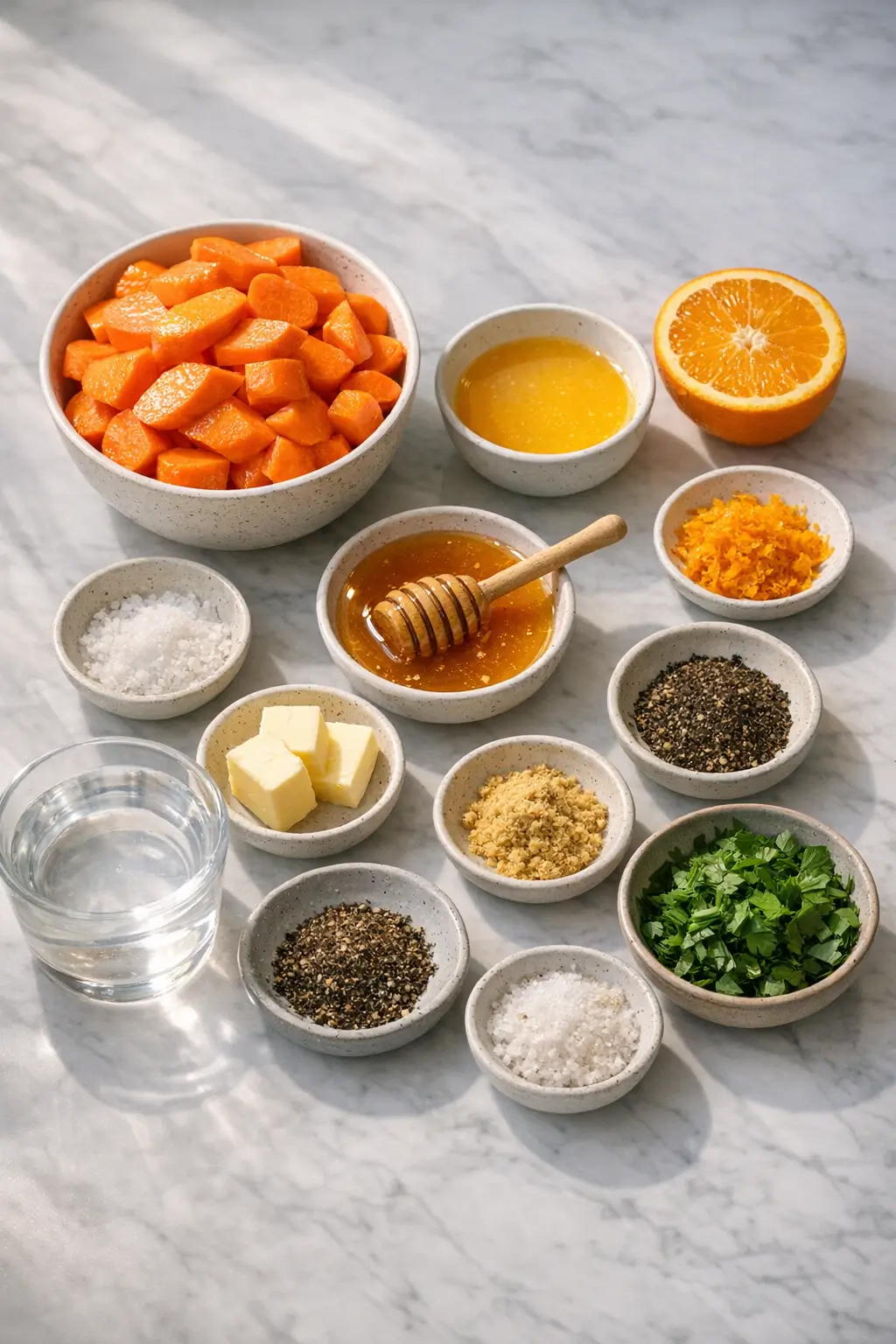
- 700 g / 1½ lb carrots, peeled, cut on a diagonal into 1–1.5 cm (½-inch) thick slices or small batons
- 480 ml / 2 cups water (for simmering; you’ll reduce most of it away)
- 1 tsp fine sea salt, divided (start with ½ tsp in the pan, finish to taste)
Orange-honey glaze
- 30 g / 2 tbsp unsalted butter
- 30 ml / 2 tbsp honey
- 60 ml / ¼ cup freshly squeezed orange juice (about ½ medium orange)
- 1 tsp finely grated orange zest (from the same orange)
- ½ tsp ground ginger or 1 tsp finely grated fresh ginger for a sharper kick
- ¼ tsp freshly ground black pepper
Optional finishers
- 1–2 tbsp chopped fresh parsley or chives for color and freshness
- For a more savory note, use 1–2 tsp fresh thyme leaves instead of parsley
- For a subtle heat, add a pinch of red pepper flakes when you add the honey
Kitchen note: Cut the carrots as evenly as you reasonably can. If some pieces are much thinner, they’ll go soft before the thicker ones are just-tender.
Step-by-Step Instructions for Glazed Carrots With Orange and Honey
-
Prep the carrots and aromatics.
Peel the carrots and trim the ends. Slice them on a slight diagonal into roughly ½-inch pieces, or cut into similar-size batons. Finely grate the orange zest, then juice the orange. Measure out the honey, butter, ginger, salt, and pepper so they’re ready. -
Start the carrots in a wide pan.
Choose a wide skillet or sauté pan with high sides so the carrots sit mostly in a single layer. Add the carrots, 2 cups (480 ml) water, ½ teaspoon salt, and the butter. Place over medium-high heat and bring to a simmer. -
Simmer until just tender.
Reduce the heat to medium and cook, uncovered, 10–12 minutes, stirring occasionally. You’re aiming for carrots that are just-tender when pierced with the tip of a knife but still hold their shape. If your slices are thicker, this may take a few extra minutes.
Kitchen note: If the water boils hard the whole time, the liquid will evaporate before the carrots are tender. Keep the simmer active but not aggressive; adjust the heat as needed.
-
Add the orange, honey, and seasoning.
Once the carrots are just-tender and most of the water has reduced to a thin layer at the bottom, add the honey, orange juice, orange zest, ground or fresh ginger, and black pepper. Stir to coat everything evenly. -
Reduce to a glossy glaze.
Keep the heat at medium or medium-high and cook, stirring every minute or so, for 6–10 minutes. The liquid will bubble, thicken, and gradually cling to the carrots. Scrape the bottom of the pan with a spatula as you stir so no sugars scorch. -
Adjust seasoning and texture.
Taste a carrot and a bit of the glaze. Add a pinch or two of the remaining salt if needed. If the glaze tastes a bit sharp, cook for another minute so the flavors round out. If it feels too thick or tacky, splash in 1–2 teaspoons of water or extra orange juice and toss until smooth again. -
Finish with herbs.
Turn off the heat and stir in chopped parsley, chives, or thyme if using. The residual warmth will wake up the herbs without wilting them completely. -
Serve warm.
Transfer the glazed carrots to a warm serving dish, scraping all the syrupy glaze over the top. Serve right away, or cover loosely and hold for up to 20–30 minutes; they’ll stay warm and glossy.
Kitchen note: If you need to make these ahead, undercook the carrots slightly in step 3 so they’re still quite firm. Reheat gently with a splash of water or orange juice until hot and perfectly tender.
What to Expect
These glazed carrots finish tender but not collapsing, with a bit of resistance at the center if you slice them about ½ inch thick. Thinner slices will soften more, so expect a softer texture if you cut them very small.
Flavor-wise, the dish leans sweet but balanced. The orange juice and zest add brightness and a little acidity, the ginger brings gentle warmth, and the salt and pepper keep the sweetness from feeling like dessert.
Different pans behave differently. A heavy stainless or cast-iron pan will hold heat and may reduce the glaze faster, while a thin pan might need a slightly lower flame to prevent hot spots. Some honeys taste more floral, some darker and more robust; either works, but stronger honey will read more intensely in the finished glaze.
Ways to Change It Up
-
Make it dairy-free or vegan.
Swap the butter for an equal amount of olive oil or a neutral oil. The glaze will be slightly less creamy and more straightforwardly sweet, but still coats the carrots well. For a more complex flavor, use half olive oil and half neutral oil. -
Spicier version.
Add ¼–½ teaspoon red pepper flakes or a small pinch of cayenne when you add the honey and orange juice. The gentle heat plays well with the sweetness and works nicely alongside roasts or rich mains like Chicken Fajitas Tonight: Juicy, Sizzling, Weeknight-Easy. -
Milder, kid-friendly option.
Skip the ginger entirely and go lighter on the orange zest. Use only ½ teaspoon zest and taste the glaze before adding more. This gives you mostly buttery-sweet carrots with just a hint of citrus. -
Oven finish for extra browning.
After reducing the glaze on the stovetop, transfer the carrots and all their syrupy juices to a parchment-lined baking sheet. Roast at 400°F / 200°C for 8–10 minutes, turning once. The edges will caramelize a bit more, adding some chew and deeper flavor.
Kitchen note: If you roast the glazed carrots, watch closely in the last few minutes. The honey can go from bronzed to bitter if left unattended.
- Simplified weeknight version.
Use pre-peeled baby carrots, increase the water by ½ cup, and simmer a little longer until tender. The shape is less refined, but the method is almost entirely hands-off and pairs neatly with quick mains like Easy Creamy Chicken Noodle Soup, One-Pot Comfort.
Serving and Storage
These glazed carrots fit especially well with roast chicken, turkey, or pork, and they’re a natural companion for spring dinners and holiday spreads. The citrus brightness is a good contrast to richer mains and creamy sides like Creamy Lemon Orzo With Parmesan in 25 Minutes or buttery mashed potatoes.
For color, try serving them alongside green vegetables such as Garlic Herb Roasted Asparagus in 15 Minutes or a simple salad. The glossy carrots also sit nicely on a platter of other roasted vegetables, where the orange glaze can lightly coat everything.
Leftovers keep well. Cool completely, then store in an airtight container in the refrigerator for up to 4 days. Reheat gently in a small pan over low heat with a splash of water or orange juice, stirring until warmed through and the glaze has loosened.
You can also reheat, covered, in a 300°F / 150°C oven for 10–15 minutes. Avoid the microwave on high power, which can make the glaze boil and turn patchy.
Kitchen note: If the glaze looks too thick or sticky after chilling, add a teaspoon or two of water or orange juice while reheating. Stir until the carrots look shiny and lightly sauced again, not gummy.
Cultural Context
Glazed or candied carrots have a long history as a vegetable side dish in Europe and the United States, where cooks have often simmered carrots with butter and sugar, sometimes adding orange juice or other acidic ingredients for balance. This style of dish became common on roast-dinner tables and at holiday meals in the 19th and 20th centuries as sugar and citrus became more accessible.
Carrots themselves have an even longer story. They originated in Central Asia and spread westward, with orange varieties becoming popular in Europe and North America over the last few centuries. For a concise overview of glazed or candied carrots as a side dish, see this short entry on glazed carrots and candied carrots. For broader carrot history, including how the modern orange carrot became dominant, this educational piece on carrot origins from Quatr.us is useful: where carrots come from and how they spread globally.
Common Questions and Troubleshooting
My glaze turned very thick and tacky. How do I fix it?
Too much water has evaporated or the heat was slightly too high near the end. Take the pan off the heat and stir in 1–3 teaspoons of water or orange juice, a little at a time, until the glaze loosens and moves freely around the pan again.
The carrots are soft but the glaze is still runny. What now?
Keep the heat at medium and let the liquid bubble for a few more minutes, stirring every minute. You’re waiting for visible reduction: the bubbles will look thicker and slower, and you should see a shiny coating forming on the carrots themselves.
Can I use maple syrup instead of honey?
Yes. Replace the honey with an equal amount of maple syrup. The glaze will be a bit less sticky and carry a maple flavor, but it still plays nicely with orange and works well next to roasted meats or vegetarian mains.
What if I only have bottled orange juice?
You can use it, though fresh juice and zest give a brighter flavor. If the bottled juice is sweetened, taste before adding all the honey and consider reducing the honey by 1 teaspoon to keep the sweetness in check.
How far in advance can I make these for a holiday meal?
You can cook the carrots and glaze up to 1 day ahead. Cool completely, store covered in the fridge, then reheat gently with a splash of water or juice, stirring until hot and glossy. Aim to keep the carrots slightly undercooked when you first make them so they don’t turn mushy when reheated.
Can I use frozen carrots?
It works, but the texture will be softer and more uniform. Skip most of the initial water, add just ¼ cup (60 ml) to the pan with the frozen carrots and butter, and cook off the excess moisture before adding the honey and orange.
Conclusion
Glazed carrots with orange and honey are a practical way to bring color and gentle sweetness to the table, whether you’re cooking for a weeknight dinner or a holiday crowd. The method is flexible, forgiving, and easy to adjust for your preferred balance of citrus, spice, and sweetness.
If you try these, leave a comment and rating so other home cooks can see how they worked for you. I’m always interested in how people adapt them—extra ginger, different herbs, or new pairings—so feel free to share your tweaks and serving ideas in detail.
Glazed Carrots With Orange and Honey Tonight

Equipment
- Wide skillet or sauté pan with high sides
- Spatula
- Microplane or fine grater
- Citrus juicer (optional)
- Knife and cutting board
Ingredients
Carrots
- 700 g carrots peeled, cut on a diagonal into 1–1.5 cm (1/2-inch) thick slices or small batons
- 480 ml water for simmering
- 1 tsp fine sea salt divided
Orange-honey glaze
- 30 g unsalted butter
- 30 ml honey
- 60 ml freshly squeezed orange juice about 1/2 medium orange
- 1 tsp finely grated orange zest
- 1/2 tsp ground ginger or 1 tsp finely grated fresh ginger
- 1/4 tsp freshly ground black pepper
Optional finishers
- 1–2 tbsp fresh parsley or chives chopped, optional
- fresh thyme leaves optional; use 1–2 tsp instead of parsley
- red pepper flakes optional; add a pinch when adding honey
Instructions
- Prep the carrots and aromatics. Peel the carrots and trim the ends. Slice on a slight diagonal into roughly 1/2-inch pieces, or cut into similar-size batons. Finely grate the orange zest, then juice the orange. Measure out the honey, butter, ginger, salt, and pepper so they’re ready.
- Start the carrots in a wide pan. Use a wide skillet or sauté pan with high sides so the carrots sit mostly in a single layer. Add the carrots, water, 1/2 teaspoon salt, and the butter. Place over medium-high heat and bring to a simmer.
- Simmer until just tender. Reduce heat to medium and cook, uncovered, 10–12 minutes, stirring occasionally, until carrots are just-tender but still hold their shape (thicker slices may take a few extra minutes).
- Add the orange, honey, and seasoning. When carrots are just-tender and most of the water has reduced to a thin layer, add honey, orange juice, orange zest, ginger, and black pepper. Stir to coat evenly.
- Reduce to a glossy glaze. Keep heat at medium to medium-high and cook, stirring every minute or so, 6–10 minutes, until the liquid bubbles, thickens, and clings to the carrots. Scrape the bottom as you stir to prevent scorching.
- Adjust seasoning and texture. Taste a carrot and the glaze. Add remaining salt a pinch at a time if needed. If glaze tastes sharp, cook 1 minute more. If too thick, splash in 1–2 teaspoons water or extra orange juice and toss until smooth.
- Finish with herbs. Turn off heat and stir in chopped parsley, chives, or thyme if using.
- Serve warm. Transfer to a warm serving dish, scraping all glaze over the top. Serve right away, or cover loosely and hold for up to 20–30 minutes.


Leave a Reply