
If you like pastries that shatter under a fork but stay soft in the middle, Greek Bougatsa delivers. Buttery phyllo bakes around a thick vanilla‑lemon semolina custard and the whole pie is showered with powdered sugar and cinnamon right before serving. It’s at home on a breakfast table or as a cozy dessert after dinner.
If you’re juggling a busy week, start by thawing the phyllo and setting out the butter to melt—those two steps remove the only real stress point. Short on time? Make the custard first so it has a few minutes to cool while you prep the pan. Expect crisp layers, a custard that slices cleanly but stays plush, and a warm cinnamon finish.
Ingredients
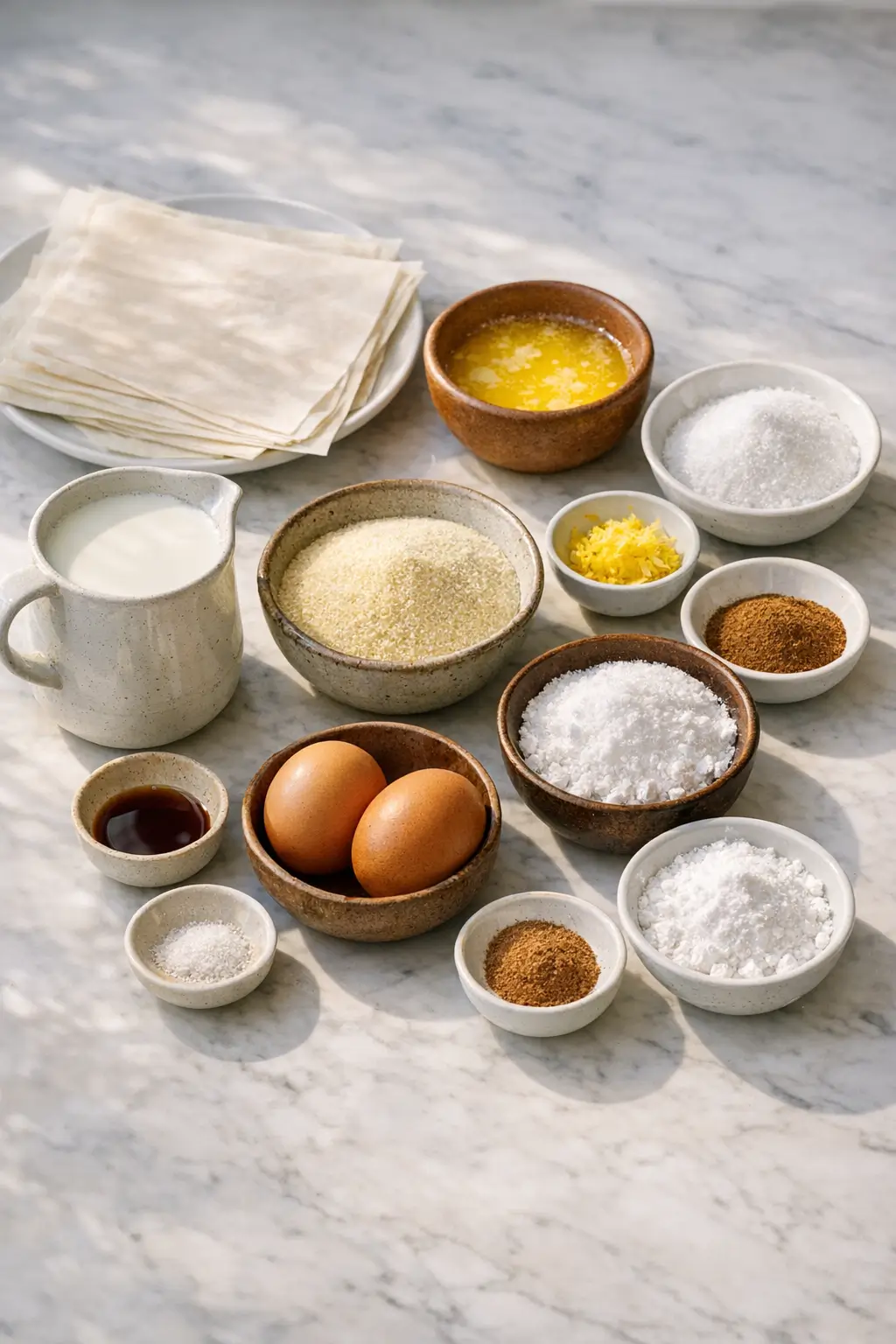
- 8–10 sheets (about 225–250 g / 8–9 oz) phyllo dough, thawed in the fridge overnight, then at room temp 30 minutes (structure)
- 90 g / 6 tbsp unsalted butter, melted and divided (crisping and flavor)
- 600 ml / 2½ cups whole milk (body for custard)
- 130 g / ⅔ cup fine semolina (thickener with gentle grain)
- 100 g / ½ cup granulated sugar (sweetness)
- 2 large eggs, room temperature (richness and set)
- 1 tsp vanilla extract (aroma)
- 1 tsp finely grated lemon zest (brightness to balance sweet)
- ¼ tsp fine salt (rounds flavor)
- For finishing: powdered sugar and ground cinnamon, to taste
Substitutions and notes:
- Semolina: Fine semolina is classic. Cream of wheat/farina works in equal volume for a softer, smoother custard.
- Dairy: 2% milk will set slightly softer; plant milk plus plant butter will work for a dairy‑light version—choose a richer, unsweetened option like oat or cashew and add a spoon of neutral oil for body.
- Phyllo: Any supermarket phyllo is fine. If sheets are much larger than your pan, trim or fold.
- Pan: 20 cm / 8‑inch square metal pan (or similar 1.5–2 qt baking dish).
Kitchen note: Keep phyllo covered with a barely damp towel while you work. If the towel is more than slightly damp, the sheets get sticky and tear; if it’s dry, they crack.
Step-by-Step Instructions for Greek Bougatsa
- Heat the oven and prep the pan. Set a rack in the center and preheat to 175°C / 350°F (or 160°C / 325°F if using a glass dish). Brush the bottom and sides of an 8‑inch square pan with some melted butter.
- Start the custard. In a medium saucepan, whisk together milk, sugar, salt, vanilla, and lemon zest. Warm over medium heat, stirring occasionally, until steaming but not boiling.
- Thicken with semolina. While whisking, rain in the semolina. Keep whisking over medium heat until the mixture thickens to a soft pudding, 3–5 minutes. It should leave clear lines when you drag a whisk through it and give a soft “plop” bubble.
- Finish and temper the eggs. Off the heat, whisk in 2 tbsp of the melted butter. In a small bowl, beat the eggs. Slowly whisk about ½ cup of hot custard into the eggs to temper, then whisk this egg mixture back into the pot. Return to low heat for 30–60 seconds, whisking just until silky. Do not boil. Transfer custard to a shallow bowl; press plastic wrap directly on the surface while you set up the phyllo.
- Build the bottom layers. Lay one phyllo sheet in the buttered pan and brush lightly with butter, especially the corners and edges. Repeat with 3 more sheets (4 total), alternating orientation so the corners don’t stack in the same place. If sheets overhang, let them drape; they’ll fold over later.
- Add the custard. Remove the plastic wrap and give the custard a quick whisk. Scrape it into the pan, smoothing into an even layer. Fold any long overhang toward the center to snug the filling.
- Top and seal. Layer 4–5 more phyllo sheets on top, brushing each with butter. Tuck in edges so the pie is neatly sealed. Brush the top with any remaining butter. Using a sharp knife, lightly score the surface into 9 squares to guide slicing and encourage steam to escape.
- Bake. Bake 28–35 minutes (metal pan) or 35–42 minutes (glass), until the top is rich golden brown and the corners are crisp. If the top is browning faster than the center sets, tent loosely with foil for the last 5–10 minutes.
- Rest, dust, and serve. Cool 10–15 minutes so the custard firms enough to slice. Generously dust with powdered sugar and cinnamon. Cut along the scored lines and serve warm.
Kitchen note: Custard that’s too loose in the pot won’t fully set in the oven. Stop cooking only when whisk tracks briefly hold and bubbles “burp” slowly; under‑thickened custard leads to leaks and soggy layers.
What to Expect
The top phyllo should be brittle and audibly crisp, with thin, toasty layers that flake. The custard slices cleanly and holds its shape, but it won’t be rigid; expect a plush, spoon‑pudding feel in the very center.
Flavor skews toward creamy and gently sweet, with vanilla and lemon balancing the butter. The cinnamon and powdered sugar on top provide aroma and a faint crunch—the classic finish.
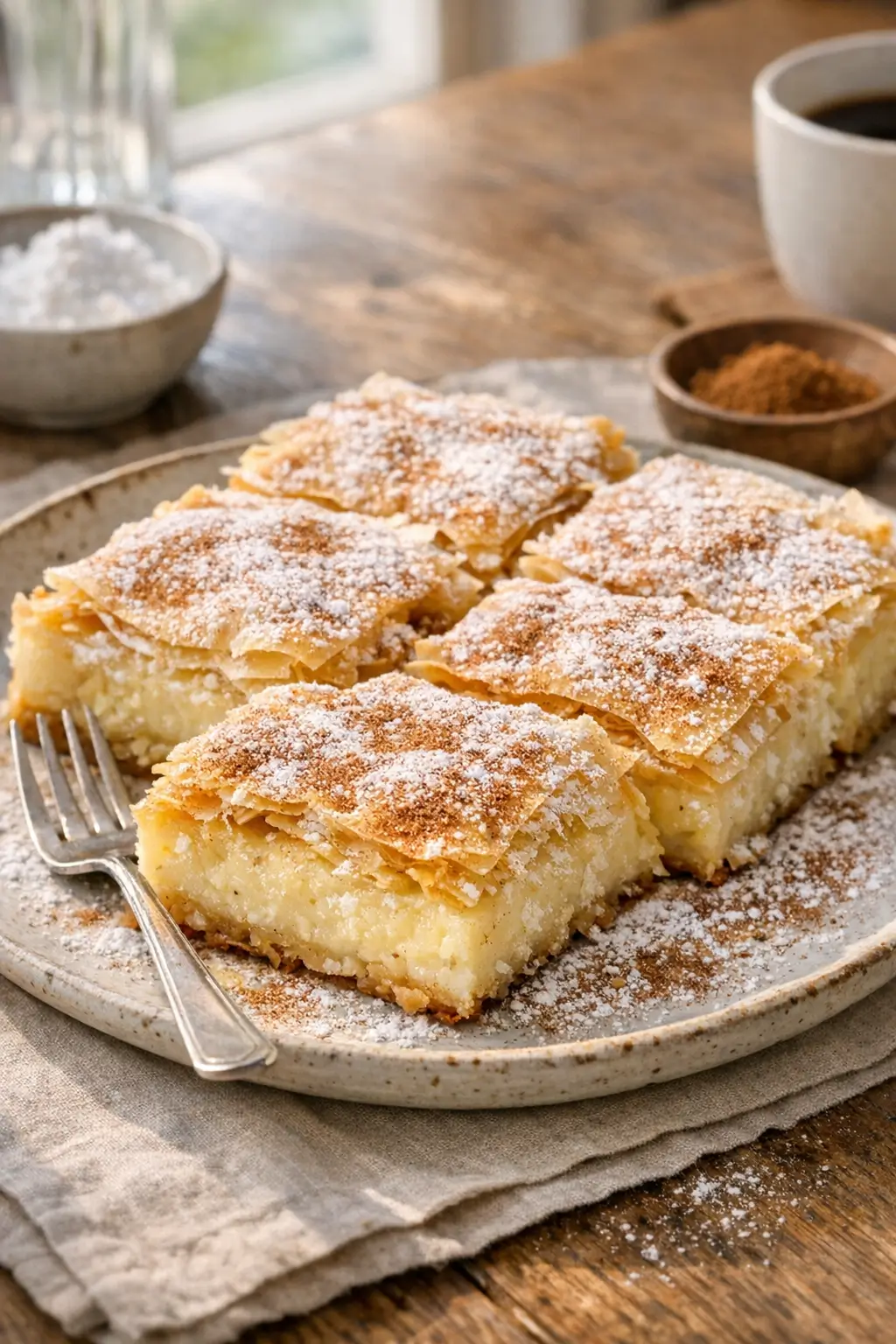
Results vary slightly by tools and brands. Thicker or drier phyllo needs more butter to brown well. Fine semolina yields a tender custard with a delicate grain, while farina (cream of wheat) makes a smoother, softer set. Metal pans brown the bottom more evenly than glass, which insulates and may require a few extra minutes.
Ways to Change It Up
- Dairy‑light or vegan: Use a rich, unsweetened plant milk such as oat or cashew, skip the eggs, and add 1 tbsp cornstarch whisked into the cool milk before heating to help set. Brush phyllo with plant butter or neutral oil. The custard will be softer and less glossy but still sliceable once cooled.
- Warmer spice or citrus: Swap vanilla for ¼ tsp ground cardamom, add a pinch of mastiha if you keep it on hand, or trade lemon zest for orange zest. These tilt the aroma without changing texture.
- Even faster assembly: Ruffle the phyllo instead of flat layering—scrunch each sheet, drizzle with butter, add custard, then top with more ruffled sheets. It bakes slightly quicker and looks rustic. Texture is airier but a touch less tidy to slice.
For more phyllo handling practice and shaping ideas, see techniques in Tunisian Brik à l’Oeuf with Crisp Phyllo, Fast and layering cues in Moroccan-Style Chicken Phyllo Pie.
Serving and Storage
Serve Greek‑style: warm, dusted generously with powdered sugar and cinnamon. It’s often enjoyed for breakfast or as a coffee‑break pastry. A small spoon of tart yogurt or fresh berries on the side brings contrast if you’re serving it as dessert.
Leftovers keep best in the refrigerator, lightly covered, for up to 3 days. Expect the sugar dusting to melt in the fridge; redust after reheating. Re‑crisp slices on a baking sheet at 175°C / 350°F for 8–12 minutes (or 160°C / 325°F for glass or air‑fryer baskets at 160–170°C / 320–340°F for 6–8 minutes). Avoid the microwave; it softens the layers.
To freeze, bake and cool completely, then wrap individual squares tightly and freeze up to 1 month. Reheat from frozen at 175°C / 350°F for 15–20 minutes, then finish with sugar and cinnamon.
Kitchen note: If reheating makes the top brown too quickly while the center is still cool, tent with foil during the first half of reheating, then remove the foil to re‑crisp.
Cultural Context
Bougatsa is closely associated with northern Greece—especially Thessaloniki—where bakeries cut it into small squares and serve it warm, dusted with sugar and cinnamon. The pastry has roots in Byzantine and Asia Minor traditions; many techniques for hand‑stretched dough traveled with refugees to northern Greek cities in the early 20th century. For a concise overview of the pastry and its variations across Greece, see the entry for Bougatsa. For a local perspective on how it became a signature taste of Thessaloniki, the city’s tourism board offers a brief history here: Bougatsa of Thessaloniki.
Common Questions and Troubleshooting
- My custard stayed runny after baking. What went wrong? Most likely it wasn’t cooked enough on the stovetop. Keep whisking until it’s thick like soft pudding and whisk tracks hold. Eggs also help it set—use room‑temperature eggs and be sure to temper so they incorporate smoothly.
- The bottom was soggy. How can I fix that next time? Use a metal pan for better bottom heat, bake on the center rack, and make sure the custard is hot‑thick going into the pan. Also brush butter lightly but evenly; pools of butter between sheets can soften layers.
- My phyllo tore while layering. Is that a problem? Not at all. Overlap torn areas and keep going. Once baked, the layers fuse and you won’t notice small rips. If sheets crack from dryness, cover them better between steps.
- Can I use puff pastry instead of phyllo? You can, but it becomes a different style of custard pie—taller and breadier, less shattery. Bake until deep golden, and cool longer so the custard settles.
- I only have cream of wheat. Will it work? Yes. Use the same volume as semolina, whisked in slowly. The set will be softer and silkier with a bit less grain.
- Can I make it ahead? Assemble and bake the same day for best texture. If you need to get ahead, make the custard up to 24 hours in advance; press plastic directly on the surface and refrigerate. Rewarm gently until just stirrable before assembling.
- Is syrup ever used on this pie? Some Greek custard phyllo pies, such as galaktoboureko, are soaked in syrup after baking. Bougatsa is typically finished with powdered sugar and cinnamon rather than syrup.
For other easy, sliceable desserts with helpful custard‑set cues, you might like Weeknight French Clafoutis with Juicy Cherries, Simplified or the high‑heat method in Basque Cheesecake Made Easy: Burnt Top, Creamy Center.
Conclusion
If you’ve been curious about working with phyllo, this is a forgiving place to start. The custard thickens quickly, the assembly is straightforward, and even imperfect layers bake into something beautiful. When you make it, leave a comment with your timing, pan, and any small twists you tried—your notes help other home cooks dial it in next time.
Greek Bougatsa Made Easy: Crisp Phyllo, Creamy Semolina

Equipment
- 8-inch (20 cm) square metal pan (or similar baking dish)
- Medium saucepan
- Whisk
- Pastry brush
- Small bowl (for eggs)
- Shallow bowl (to cool custard)
- Plastic wrap
- Sharp knife
- Aluminum foil (optional, for tenting)
Ingredients
- 8–10 sheets phyllo dough about 225–250 g (8–9 oz); thawed in the fridge overnight, then at room temperature 30 minutes
- 90 g unsalted butter melted and divided (about 6 tbsp)
- 600 ml whole milk about 2 1/2 cups
- 130 g fine semolina about 2/3 cup
- 100 g granulated sugar about 1/2 cup
- 2 large eggs room temperature
- 1 tsp vanilla extract
- 1 tsp lemon zest finely grated
- 1/4 tsp fine salt
- powdered sugar for finishing, to taste
- ground cinnamon for finishing, to taste
Instructions
- Heat the oven and prep the pan. Set a rack in the center and preheat to 175°C / 350°F (or 160°C / 325°F if using a glass dish). Brush the bottom and sides of an 8-inch square pan with some melted butter.
- Start the custard. In a medium saucepan, whisk together milk, sugar, salt, vanilla, and lemon zest. Warm over medium heat, stirring occasionally, until steaming but not boiling.
- Thicken with semolina. While whisking, rain in the semolina. Keep whisking over medium heat until the mixture thickens to a soft pudding, 3–5 minutes. It should leave clear lines when you drag a whisk through it and give a soft “plop” bubble.
- Finish and temper the eggs. Off the heat, whisk in 2 tbsp of the melted butter. In a small bowl, beat the eggs. Slowly whisk about 1/2 cup of hot custard into the eggs to temper, then whisk this egg mixture back into the pot. Return to low heat for 30–60 seconds, whisking just until silky. Do not boil. Transfer custard to a shallow bowl; press plastic wrap directly on the surface while you set up the phyllo.
- Build the bottom layers. Lay one phyllo sheet in the buttered pan and brush lightly with butter, especially the corners and edges. Repeat with 3 more sheets (4 total), alternating orientation so the corners don’t stack in the same place. If sheets overhang, let them drape; they’ll fold over later.
- Add the custard. Remove the plastic wrap and give the custard a quick whisk. Scrape it into the pan, smoothing into an even layer. Fold any long overhang toward the center to snug the filling.
- Top and seal. Layer 4–5 more phyllo sheets on top, brushing each with butter. Tuck in edges so the pie is neatly sealed. Brush the top with any remaining butter. Using a sharp knife, lightly score the surface into 9 squares to guide slicing and encourage steam to escape.
- Bake. Bake 28–35 minutes (metal pan) or 35–42 minutes (glass), until the top is rich golden brown and the corners are crisp. If the top is browning faster than the center sets, tent loosely with foil for the last 5–10 minutes.
- Rest, dust, and serve. Cool 10–15 minutes so the custard firms enough to slice. Generously dust with powdered sugar and cinnamon. Cut along the scored lines and serve warm.



Leave a Reply