
If you like playful dinners that still deliver comfort, Honeycomb Pasta Cake is a great fit. Rigatoni stand upright in a small pan, get stuffed with ricotta, topped with marinara and mozzarella, and baked until the edges crisp and the middle turns creamy.
Expect a sliceable pasta that’s both weeknight-friendly and impressive for guests. The method borrows from baked pasta traditions but keeps the assembly simple. Great for visual cooks and busy families who want a fun project with reliable pay-off. The flavor leans sweet-savory from tomatoes and dairy, with a browned, cheesy cap and tender tubes underneath. This version is scaled for 2–4 servings so you’re not swimming in leftovers.
INGREDIENTS — Honeycomb Pasta Cake
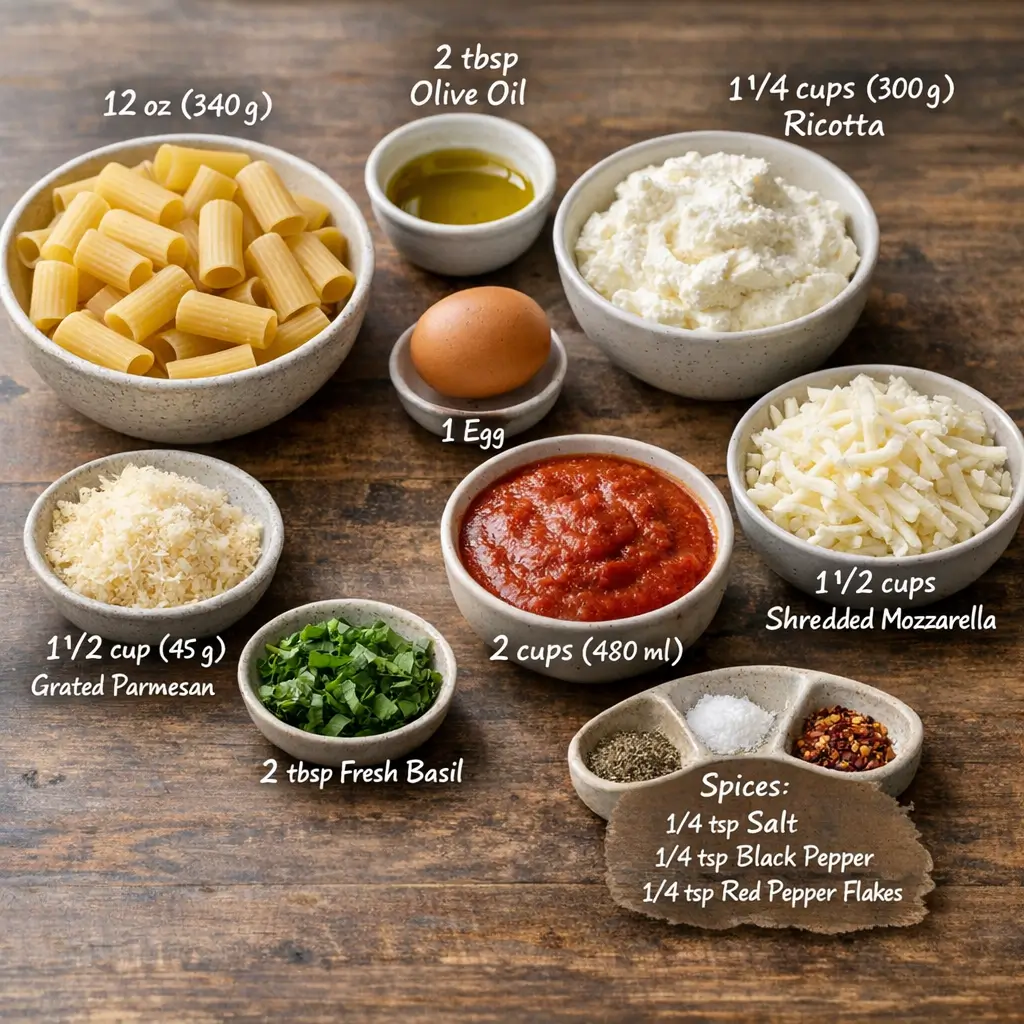
- Rigatoni: 12 oz (340 g) — large tubes hold their shape best.
- Extra-virgin olive oil: 2 tbsp (30 ml) — for tossing pasta and greasing pan.
- Whole-milk ricotta: 1 1/4 cups (300 g) — creamy filling that helps slices hold.
- Large egg: 1 — binds ricotta.
- Finely grated Parmesan or Pecorino Romano: 1/2 cup (45 g) — savory depth in filling and on top.
- Smooth marinara sauce (jarred or homemade): 2 cups (480 ml) — choose a thicker, not watery, sauce.
- Low-moisture mozzarella, shredded: 1 1/2 cups (170 g) — for that bubbly, browned lid.
- Kosher salt: 2 tsp (for pasta water) + 1/4 tsp for the filling.
- Black pepper: 1/4 tsp, plus more to taste.
- Crushed red pepper flakes: 1/4 tsp (optional) — gentle heat.
- Fresh basil or parsley, chopped (optional): 2 tbsp (8 g) — for garnish.
Substitutions
- Ricotta: use part-skim ricotta, or drain looser ricotta in a fine sieve 20–30 minutes.
- Parmesan: swap with Pecorino Romano for a sharper bite.
- Mozzarella: dairy-free shreds work; they brown less but still melt.
- Marinara: a vodka sauce or meatless tomato-basil sauce both work if fairly thick.
- Gluten-free: sturdy GF rigatoni can be used; boil even shorter for very al dente.
Special equipment
- 7- to 8-inch springform pan (ideal for 2–4 servings), heavy-duty foil, and a rimmed baking sheet. A 8×4-inch loaf pan also works; serve directly from the pan if not using a springform.
STEP-BY-STEP INSTRUCTIONS
1) Prep the pan and heat the oven.
- Heat oven to 375°F (190°C). Wrap the outside bottom of a 7–8-inch springform with a tight layer of foil to catch leaks. Lightly oil the inside. Set the pan on a foil-lined, rimmed sheet.
2) Boil the pasta very al dente.
- Bring a large pot of well-salted water to a boil (it should taste distinctly salty). Add rigatoni and cook 2–3 minutes less than package “al dente” time; you want firm tubes that stand upright. Drain well.
- Toss pasta with 1 tbsp (15 ml) olive oil on a sheet pan to cool and prevent sticking. Let cool until comfortable to handle.
3) Mix the ricotta filling.
- In a bowl, whisk ricotta, egg, Parmesan, salt, black pepper, and red pepper flakes (if using) until smooth. Transfer to a pastry bag or a zip-top bag; snip a small corner for piping. If you don’t want to pipe, keep a small spoon handy.
4) Stand the pasta upright.
- Pack cooled rigatoni upright in the prepared springform. Take your time to fill gaps; a snug fit keeps the “cake” sliceable.
5) Pipe the ricotta.
- Pipe a little ricotta into each tube until most are filled. Don’t overfill to the top; leave a few millimeters for sauce to seep in. If spooning, dab the mixture across the surface and nudge it into tubes with a clean pinky or the handle of a spoon.
6) Add marinara and cheese.
- Spoon about 1 1/2 cups (360 ml) marinara over the top, nudging so some sauce trickles into the tubes. You may not need all the sauce depending on pan size and pasta brand. Sprinkle with mozzarella, then a light dusting of extra Parmesan.
7) Bake.
- Cover loosely with foil, tented so it doesn’t touch cheese. Bake 20 minutes covered, then uncover and bake 15–20 minutes more, until the top is deeply golden and the edges are bubbling. If your oven runs cool, add 5 minutes; if you want more color, broil for 1–2 minutes watching closely.
8) Rest and unmold.
- This is the moment that makes or breaks clean slices. Cool on a rack 10–15 minutes before unclasping the springform. Slide a thin knife around the edge first, then lift off the ring. Slice with a sharp knife or small serrated knife.
Safeguards and realism
- Springform pans can leak. The double-foil + sheet-pan setup is your insurance.
- Overcooked pasta collapses. Aim for firm tubes at the boil stage—undercook rather than overcook.
- Resist rushing the rest. Slices set as steam escapes; cutting early can cause a slump.
WHAT TO EXPECT WITH HONEYCOMB PASTA CAKE
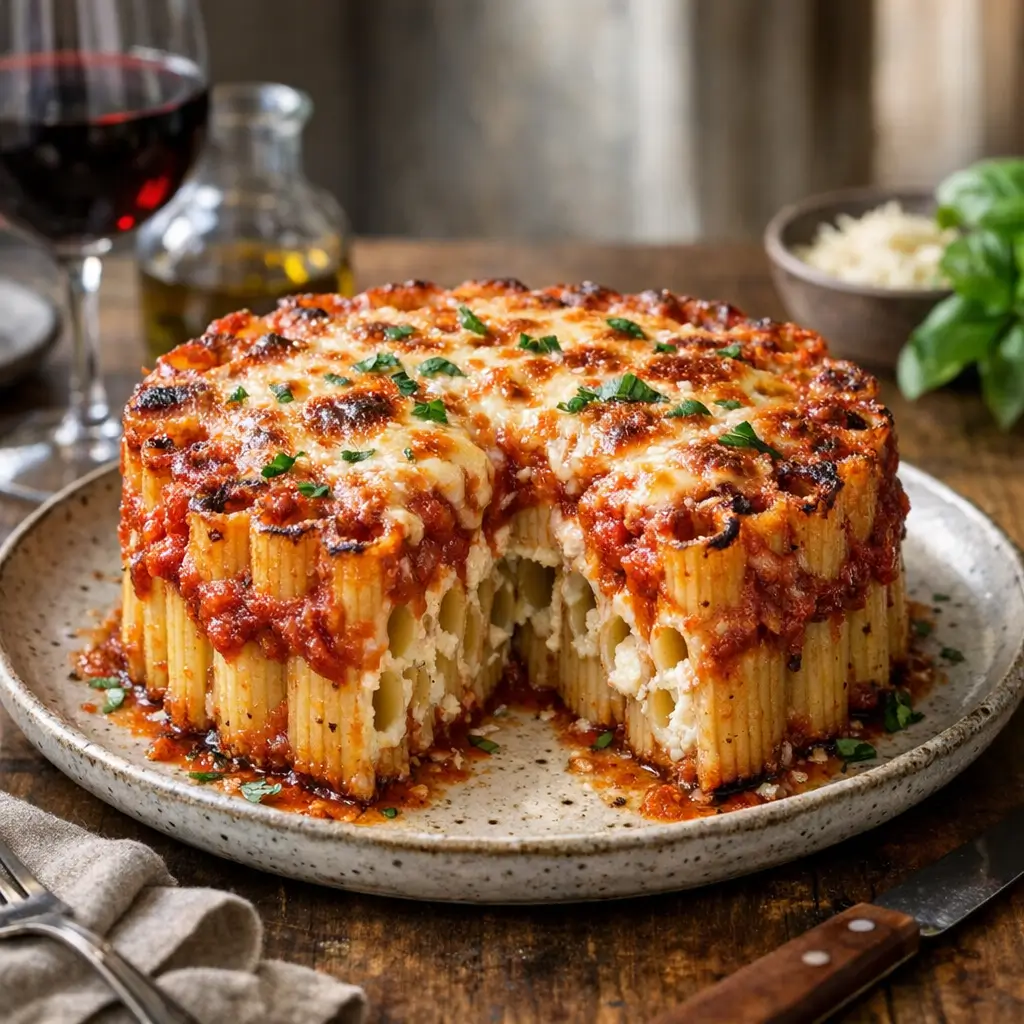
The top should be blistered and bronzed, with a little crunch where cheese meets the pan. Inside, expect tender tubes with creamy ricotta centers and sauce weaving between them.
Slices hold together if you packed the pasta tightly and let the “cake” rest. A little tumbling of a few tubes is normal and doesn’t affect flavor.
The taste balances tomato sweetness, dairy richness, and a salty-savory finish from Parmesan. Brands of ricotta vary—drier ricotta gives cleaner slices, looser ricotta tastes lush but may ooze slightly. Jarred marinara thickness also matters; a thicker sauce yields tidier wedges.
WAYS TO CHANGE IT UP
- Vegetarian/vegan-leaning: Use almond- or tofu-based ricotta and dairy-free mozzarella. Sautéed mushrooms or spinach (well-squeezed dry) can be tucked into some tubes. Trade-off: vegan cheeses melt but brown less.
- Spicier or milder: For heat lovers, stir 1–2 tsp Calabrian chile paste into the marinara or add more red pepper flakes. For very mild palates, omit flakes entirely and choose a sweeter marinara.
- Faster, fewer steps: Skip piping. Toss rigatoni with the ricotta mixture in a bowl, pack upright, then top with sauce and cheese. Trade-off: less dramatic filling in every tube, but you save 10 minutes and cleanup is easier.
- Meaty variation: Spoon a cup of warmed meat sauce over the ricotta-filled tubes before adding marinara, or mix crumbled browned Italian sausage into the sauce. Trade-off: richer and heartier; slices may be a bit looser unless the sauce is thick.
SERVING AND STORAGE
Serve as a main with a crisp salad (shaved fennel or a simple green salad) and garlic bread. A sprinkle of fresh basil or parsley at the table adds brightness.
For clean slices, use a small serrated knife and a gentle sawing motion. Wipe the blade between cuts.
Leftovers keep up to 4 days refrigerated in a covered container. Reheat slices in a 300°F (150°C) oven, covered, for 12–15 minutes until warmed through. Microwave reheating is convenient but can soften the crust; re-crisp under the broiler briefly if desired.
Freezing: Individual slices can be wrapped and frozen up to 1 month. Expect ricotta to turn slightly grainy after thawing; the dish still tastes good. Reheat from thawed for best texture.
CULTURAL CONTEXT
Standing rigatoni upright in a pan is a modern, internet-popular presentation, but the flavor profile sits comfortably within the wider world of Italian-style baked pastas, or pasta al forno. Those dishes—think lasagne or regional timballo—layer pasta, sauce, and cheese before baking. For background on pasta’s long history in the U.S., the National Pasta Association outlines key milestones, from early factories to modern trends (National Pasta Association: History). For context on baked pasta traditions, read more about pasta al forno as a general category (overview of pasta al forno). These references are educational, not prescriptive for this variation.
COMMON QUESTIONS AND TROUBLESHOOTING
- My noodles collapsed when I unmolded. What happened?
Usually the pasta was boiled too long or the “cake” wasn’t packed tightly. Next time, undercook by 2–3 minutes and take a minute to tuck short or broken pieces into gaps. Let it rest at least 10 minutes before releasing the ring. - The center looks watery. Can I fix it?
Yes. Cover loosely with foil and bake another 5–10 minutes. For future batches, choose a thicker marinara and drain or briefly whisk ricotta if it looks very wet. Drier ricotta and firmer pasta equal tidier slices. - Do I have to pipe the ricotta into each tube?
No. Piping gives the most even filling, but spooning and nudging the mixture into the tubes works fine. Or take the “faster” variation and toss ricotta with the pasta before packing. - I ran out of rigatoni before the pan was full.
Use a smaller diameter pan (7-inch), pack more snugly, or fill the outer ring and tuck short pieces in the center. Different brands vary in size, so having a small handful of extra rigatoni cooked is helpful. - Can I use ziti or penne instead of rigatoni?
Short answer: you can, but it’s harder. Ziti is smoother and narrower, penne is slanted—both make upright packing and clean slices trickier. Rigatoni’s ridges and width are ideal. - Make-ahead tips?
Assemble up to the point of baking and refrigerate, covered, for up to 24 hours. Add 5–10 minutes to the first covered bake to heat through. For best results, hold the mozzarella topping and add it right before baking. - How do I keep the springform from leaking?
Wrap the outside with heavy-duty foil and place on a rimmed sheet. A parchment circle on the bottom inside can also help. Don’t skip the sheet pan.
CONCLUSION
If you try this, leave a comment with how it went and what you tweaked—pan size, sauce type, or any add-ins. Your notes help other home cooks, and they might inspire a new variation for your next Honeycomb Pasta Cake night.



Leave a Reply