
Irish colcannon is what happens when mashed potatoes become the main event instead of a background side. Fluffy potatoes get folded with soft cabbage or kale, sweet scallions, and plenty of butter and black pepper. It’s a classic Irish dish that shows up on many St. Patrick’s Day tables, but it’s just as useful any time you want a cozy, budget-friendly side.
If you’re walking in the door after work, start by getting the potatoes straight into salted water; you can slice the cabbage and scallions while they simmer. Cooking with kids underfoot or in a small kitchen? Aim to finish the bacon first so the fat is ready for sautéeing the greens without extra pans.
Ingredients
Serves 4 as a generous side (or 2–3 as a main with eggs or sausages)
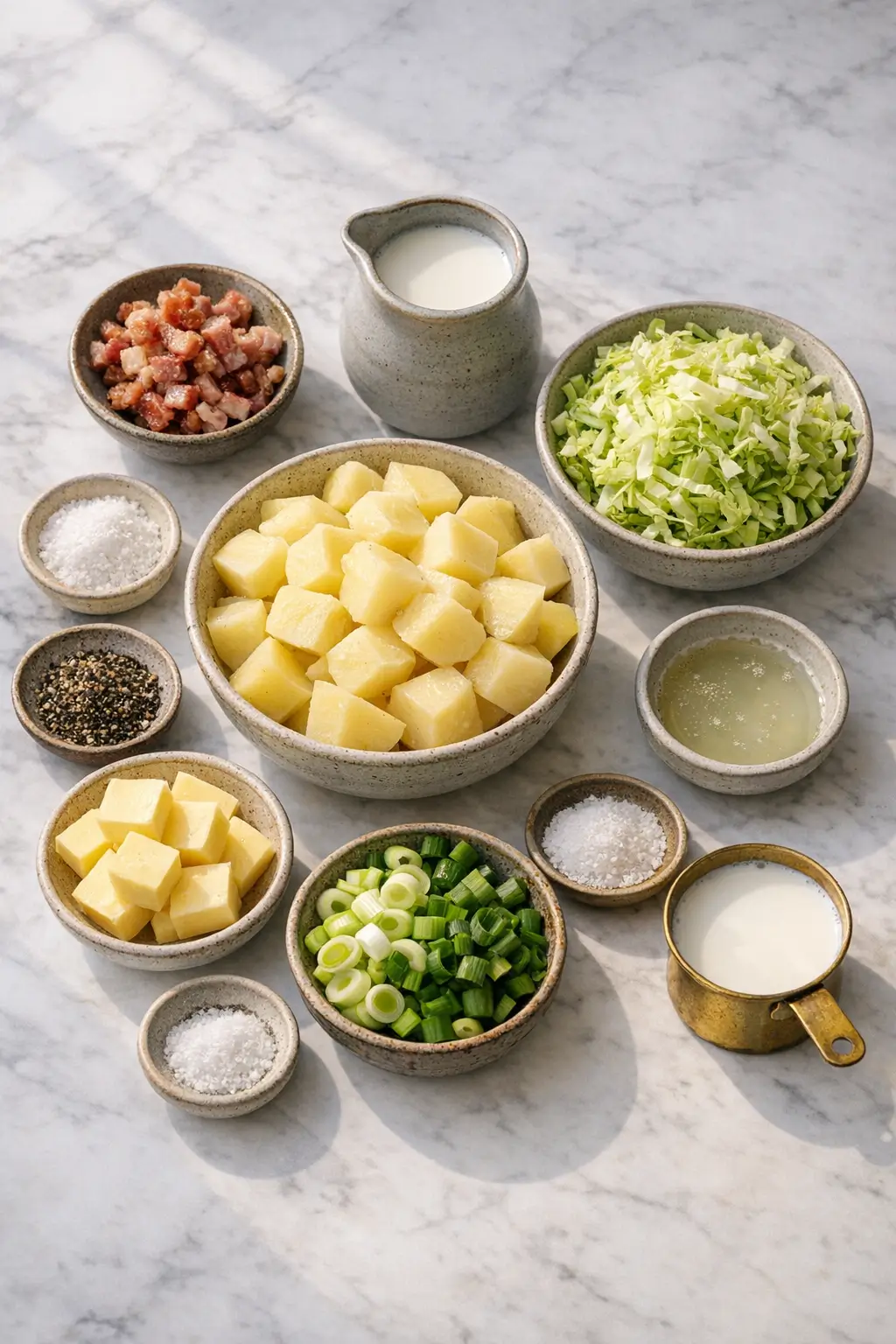
- 900 g / 2 lb floury potatoes (Russet or Yukon Gold), peeled and cut into 1.5–2.5 cm / ¾–1 inch chunks – for fluffy mash that still holds structure
- 60 g / 4 Tbsp unsalted butter, divided – some for the mash, some for finishing
- 120 ml / ½ cup whole milk or half-and-half – warmed with the butter so the potatoes stay silky
- 200–250 g / 4 packed cups shredded green cabbage or curly kale, ribs removed and sliced thin – the “green” in the colcannon
- 3–4 scallions (spring onions), thinly sliced – white and green parts separated
- 2–3 slices streaky bacon, diced (optional) – for a smoky, salty finish
- ½ tsp fine sea salt, plus more for the cooking water – adjust to taste
- ½–1 tsp freshly ground black pepper, or to taste – this dish can handle a generous grind
- 30–60 ml / 2–4 Tbsp reserved potato cooking water (as needed) – to loosen the mash without losing flavor
Substitutions and notes:
- Potatoes: Use other starchy potatoes if Russet or Yukon aren’t available; avoid waxy salad potatoes, which give a gluey texture when mashed.
- Dairy-free: Use a rich oat or soy milk and a plant-based butter; flavor will be a bit less plush, so season with an extra pinch of salt and pepper.
- Cabbage vs. kale: Savoy or plain green cabbage and curly kale all work. Kale will stay a touch firmer and more vivid green.
- Bacon: Skip it to keep the dish vegetarian, or replace with a spoon of bacon fat if you keep some in the fridge.
Step-by-Step Instructions for Irish colcannon
-
Prep and start the potatoes.
Place the peeled, chunked potatoes in a large pot and cover with cold water by about 2.5 cm / 1 inch. Add a generous handful of salt (the water should taste pleasantly salty, like broth).
Set over medium-high heat and bring to a boil, then reduce to a simmer. Cook 15–20 minutes, until a knife slides in with almost no resistance.
-
Warm the milk and butter.
While the potatoes simmer, combine 3 Tbsp of the butter and the milk or half-and-half in a small saucepan or microwave-safe jug. Gently heat until the butter just melts, then keep warm over very low heat or covered off the heat.
You don’t want this mixture boiling; warm dairy absorbs better and keeps the potatoes fluffy instead of sticky.
-
Cook the bacon (if using).
Place the diced bacon in a large skillet over medium heat. Cook, stirring occasionally, until the fat has rendered and the pieces are golden and crisp, 6–8 minutes.
Use a slotted spoon to transfer the bacon to a paper towel–lined plate. Leave 1–2 Tbsp of the bacon fat in the skillet, pouring off any excess.
-
Sauté the greens and scallions.
In the same skillet with the bacon fat (or 1 Tbsp butter if skipping bacon), add the sliced white and light green parts of the scallions and cook 1–2 minutes until just softened.
Add the shredded cabbage or kale along with a pinch of salt. Sauté, tossing frequently, until the greens are wilted and tender with a little texture left, about 5–7 minutes for cabbage or 7–10 minutes for kale. Stir in the scallion tops and cook 1 minute more. Turn off the heat.
Kitchen note: If the pan looks dry or the greens start to brown in spots before they soften, add a tablespoon of water and quickly toss. This steams them gently and prevents bitter, scorched edges.
-
Drain and dry the potatoes.
When the potatoes are tender, reserve a mug of the cooking water, then drain the potatoes well in a colander.
Return them to the hot, empty pot and set over very low heat for 1–2 minutes, shaking occasionally, to let excess moisture steam off. This step is important for keeping the mash light.
-
Mash with warm dairy.
Take the pot off the heat. Pour in about two-thirds of the warm milk-butter mixture and start mashing with a potato masher or ricer (avoid a blender or food processor, which will make them gluey).
Add more of the milk mixture as needed to reach a smooth, fluffy consistency. If you like looser colcannon, splash in a little reserved potato water.
-
Season generously.
Stir in ½ tsp salt and a good ½ tsp black pepper, then taste. Adjust with more salt or pepper until the potatoes taste well-seasoned on their own.
-
Fold in the greens and bacon.
Tip the sautéed greens and scallions into the mashed potatoes. Use a spatula or wooden spoon to fold everything together, keeping some marbling of green rather than stirring into a uniform color.
Add the crisp bacon pieces and fold again, reserving a few for the top if you like.
-
Finish with butter and serve.
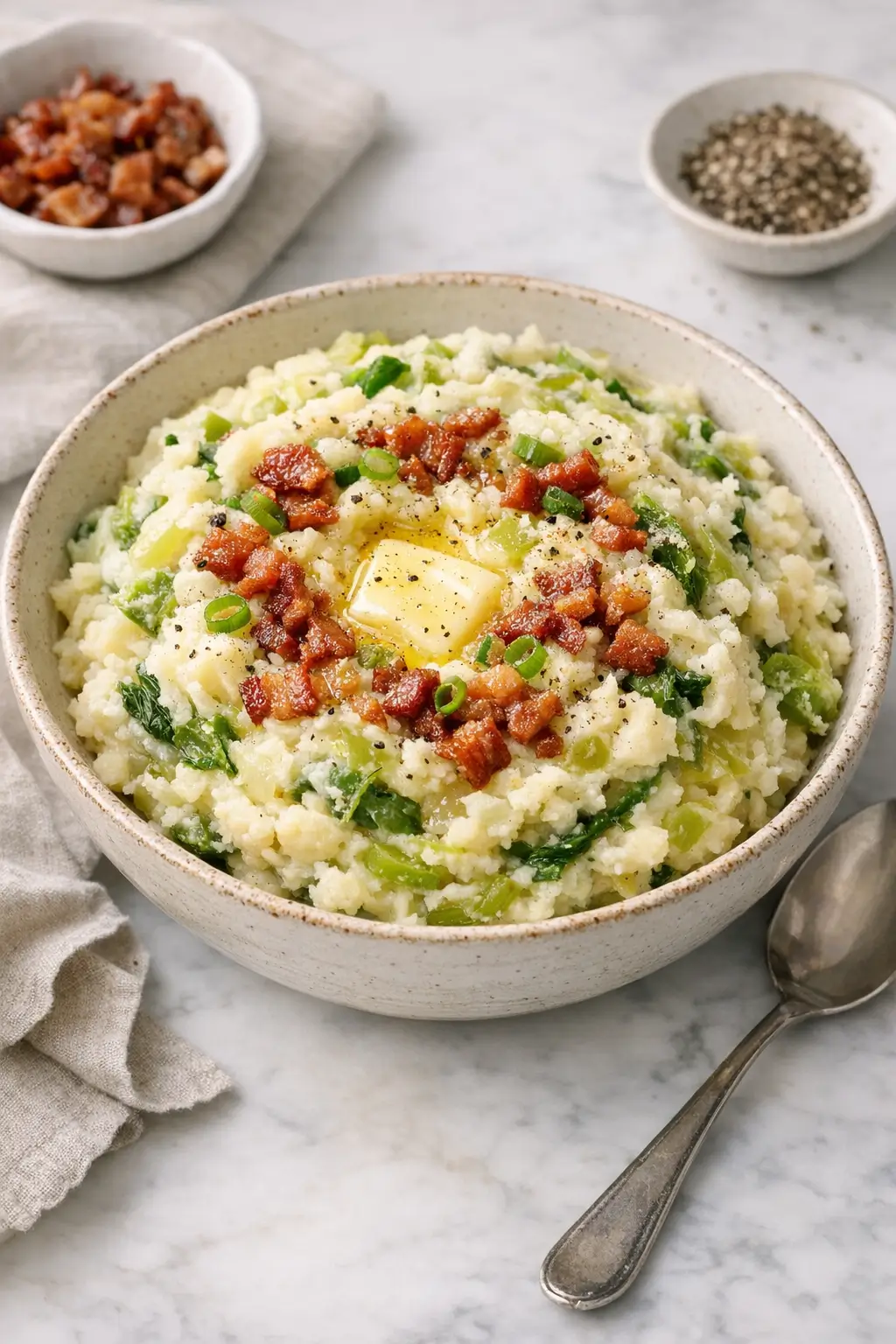
Spoon the colcannon into a warm serving bowl. Dot the top with the remaining 1 Tbsp butter, letting it melt into little pools.
Finish with a final grind of black pepper and any reserved scallions or bacon. Serve hot.
Kitchen note: If you’re coordinating this with a roast or stew, you can keep the colcannon warm for up to 30 minutes in a covered, heatproof bowl set over a pot of barely simmering water. Stir once or twice so the bottom doesn’t dry out.
What to Expect
Colcannon sits somewhere between rustic mash and full-on vegetable side. The potatoes should be smooth and airy, but you’ll get ribbons of tender cabbage or kale in every spoonful.
The flavor is simple and direct: buttery, gently oniony from the scallions, and a bit sweet from the cooked greens. Bacon, if you use it, adds smoke and salt that make the dish feel more substantial.
Texture can vary with your tools. A ricer gives a very fine, cloud-like mash, while a standard hand masher will leave a few small lumps, which many people find comforting and more traditional. Either way, it shouldn’t be gluey or sticky.
Kitchen note: If the potatoes do turn out heavier than you’d like, whisk in a splash of hot milk or potato water right before serving. This loosens the starches and brings some lightness back.
Ways to Change It Up
-
Vegetarian or vegan colcannon.
Skip the bacon and cook the greens in 1–2 Tbsp of olive oil or plant-based butter. For vegan, use dairy-free milk and vegan butter throughout. You’ll want to lean a bit more on salt, black pepper, and even a tiny squeeze of lemon to keep the flavors bright.
-
Extra-mild, kid-friendly version.
Use cabbage rather than kale, and cook it until very soft. Stir the scallions into the warm potatoes rather than sautéeing, so their flavor stays gentle. You can also reduce the black pepper and let adults add more at the table.
-
Bolder, greener colcannon.
Go heavier on kale and scallions, and add a small minced garlic clove when you sauté the onions if your family likes a bit more punch. This version pairs well with simply cooked salmon or grilled sausages.
-
Faster, simplified colcannon.
If you’re in a real hurry, start with leftover plain mashed potatoes. Warm them with a splash of milk, then fold in freshly sautéed greens and scallions plus extra butter. You lose a bit of the potato cooking water flavor, but it’s still a very workable weeknight shortcut.
-
Breakfast colcannon.
Press leftover colcannon into patties and pan-fry in a little oil or butter until crisp and browned on both sides. Top with fried or poached eggs for a hearty brunch.
Serving and Storage
Colcannon is typically served hot as a side dish, especially alongside sausages, roasted or braised meats, or hearty stews. It’s a natural fit for St. Patrick’s Day with bangers, seared pork chops, or a simple skillet of pan-fried ham.
On a weeknight, it also works as a main component if you add protein on top—think soft-fried eggs, leftover roast chicken, or seared tofu for a vegetarian option. For another cozy potato-forward dinner idea, these Irish Boxty Potato Pancakes with Scallion Sour Cream bring similar flavors in a crisp-edged format.
Leftover colcannon keeps well. Cool completely, then transfer to an airtight container and refrigerate for up to 4 days.
To reheat, warm gently on the stovetop over low heat or in the microwave, adding a spoonful of milk or water to loosen as needed and stirring occasionally so it heats evenly. You can also repurpose leftovers into savory potato cakes, as mentioned above.
Freezing is possible but will change the texture slightly, making it a bit looser and grainier when thawed. If you do freeze it, pack into a freezer-safe container, press plastic wrap directly onto the surface, and freeze for up to 2 months. Thaw overnight in the fridge and reheat slowly with extra milk and butter.
Kitchen note: Avoid repeated freezing and thawing. If you plan to make a big batch ahead for a holiday, freeze it in smaller portions so you only reheat what you need.
Cultural Context
Colcannon belongs to a family of Irish potato dishes that combine mashed potatoes with another staple ingredient. It traditionally mixes potatoes with kale or cabbage, plus butter and milk or cream, sometimes enriched further with scallions or bacon. Historical references describe it as an economical, filling food eaten especially in colder months.
The dish has long associations with festivals. In the past, colcannon was often served around Halloween, or Samhain, and sometimes hid small tokens inside as a kind of fortune-telling game. Colcannon also frequently appears on modern St. Patrick’s Day tables as a recognizable Irish side made from accessible ingredients. For more on its background, see this overview of colcannon from the history and description of the Irish dish, and a related article on champ, a similar potato-and-scallion mash, from the history of champ in Ireland.
Common Questions and Troubleshooting
My colcannon turned out gluey. What happened?
Gluey mashed potatoes usually come from overworking the potatoes or using the wrong tool. A blender or food processor releases too much starch. Next time, stick to a hand masher or ricer, and mash just until smooth. Also make sure the potatoes are well-drained and dried briefly over low heat before adding milk and butter.
The greens taste bitter. How can I fix that?
Kale especially can be slightly bitter if undercooked or if it browns too hard in the pan. Cook it until fully wilted and tender, adding a splash of water to help it steam if needed. A little extra butter and salt will also balance the flavor, and a small squeeze of lemon at the end can brighten things up.
Can I make colcannon ahead for a holiday meal?
Yes. Prepare the recipe fully, then cool, cover, and refrigerate for up to 24 hours. Reheat gently in an oven-safe dish at 175°C / 350°F, covered, for 20–30 minutes until hot, stirring once halfway. Stir in a splash of warm milk or a bit of melted butter before serving to refresh the texture.
How do I keep the potatoes from getting lumpy?
Cut the potatoes into even-sized chunks so they cook at the same rate, and simmer until a knife goes in easily. If you like them very smooth, use a ricer rather than a standard masher. A few rustic lumps are normal, but big chunks usually mean the potatoes needed a couple more minutes in the water.
What can I serve with colcannon to make it a full meal?
It’s flexible. Serve it with grilled sausages, crispy chicken thighs, or a pan of Dublin Coddle One-Pot Sausage Supper Made Easy for a full Irish-inspired spread. For a lighter pairing, a bright salad or a simple vegetable side works well because the potatoes are already rich.
Kitchen note: If you’re pairing colcannon with a salty main like bacon or sausages, under-salt the potatoes slightly, then taste everything together at the table before adding more.
Conclusion
Colcannon is one of those recipes that rewards a few small details: starting with floury potatoes, warming the dairy, and giving the greens just enough time in the pan. Once those pieces are in place, it’s a forgiving, adaptable side that works on both busy weeknights and special occasions.
If you try this version, leave a comment and rating to share how it went in your kitchen. I’d especially love to hear if you tried it with kale, swapped in plant-based ingredients, or turned the leftovers into crisp breakfast cakes with eggs on top.
Irish Colcannon Mashed Potatoes with Cabbage

Equipment
- Large pot
- Colander
- Large skillet
- Potato masher or ricer
- Small saucepan or microwave-safe jug
- Slotted spoon (if using bacon)
- Spatula or wooden spoon
Ingredients
- 900 g floury potatoes (Russet or Yukon Gold) peeled and cut into 1.5–2.5 cm / 3/4–1 inch chunks
- 60 g unsalted butter divided
- 120 ml whole milk or half-and-half warmed
- 200–250 g shredded green cabbage or curly kale if using kale, remove ribs and slice thin
- 3–4 scallions (spring onions) thinly sliced; white and green parts separated
- 2–3 slices streaky bacon diced (optional)
- 1/2 tsp fine sea salt plus more for the cooking water, to taste
- 1/2–1 tsp freshly ground black pepper to taste
- 30–60 ml reserved potato cooking water as needed
Instructions
- Prep and start the potatoes. Place the peeled, chunked potatoes in a large pot and cover with cold water by about 2.5 cm / 1 inch. Add a generous handful of salt (the water should taste pleasantly salty, like broth). Bring to a boil over medium-high heat, then reduce to a simmer and cook 15–20 minutes, until a knife slides in with almost no resistance.
- Warm the milk and butter. While the potatoes simmer, combine 3 Tbsp of the butter and the milk or half-and-half in a small saucepan or microwave-safe jug. Gently heat until the butter just melts, then keep warm over very low heat or covered off the heat (don’t let it boil).
- Cook the bacon (if using). Cook diced bacon in a large skillet over medium heat until the fat has rendered and the pieces are golden and crisp, 6–8 minutes. Transfer bacon to a paper towel–lined plate with a slotted spoon. Leave 1–2 Tbsp bacon fat in the skillet and pour off any excess.
- Sauté the greens and scallions. In the same skillet with bacon fat (or 1 Tbsp butter if skipping bacon), cook the white and light green scallion parts for 1–2 minutes until softened. Add cabbage or kale with a pinch of salt and sauté until wilted and tender with a little texture left (about 5–7 minutes for cabbage or 7–10 minutes for kale). Stir in scallion tops and cook 1 minute more, then turn off the heat. If the pan looks dry or the greens brown before softening, add 1 Tbsp water and toss to steam.
- Drain and dry the potatoes. Reserve a mug of cooking water, then drain potatoes well in a colander. Return potatoes to the hot, empty pot and set over very low heat for 1–2 minutes, shaking occasionally, to steam off excess moisture.
- Mash with warm dairy. Take the pot off the heat. Add about two-thirds of the warm milk-butter mixture and mash with a potato masher or ricer (avoid a blender/food processor). Add more milk mixture as needed for a smooth, fluffy mash; loosen with a splash of reserved potato water if desired.
- Season generously. Stir in 1/2 tsp salt and about 1/2 tsp black pepper, then taste and adjust with more salt and pepper until well-seasoned.
- Fold in the greens and bacon. Fold the sautéed greens and scallions into the mashed potatoes, keeping some green marbling. Fold in the crisp bacon (if using), reserving a little for the top if you like.
- Finish with butter and serve. Spoon into a warm bowl and dot with the remaining 1 Tbsp butter. Finish with more black pepper and any reserved scallions or bacon. Serve hot.



Leave a Reply