
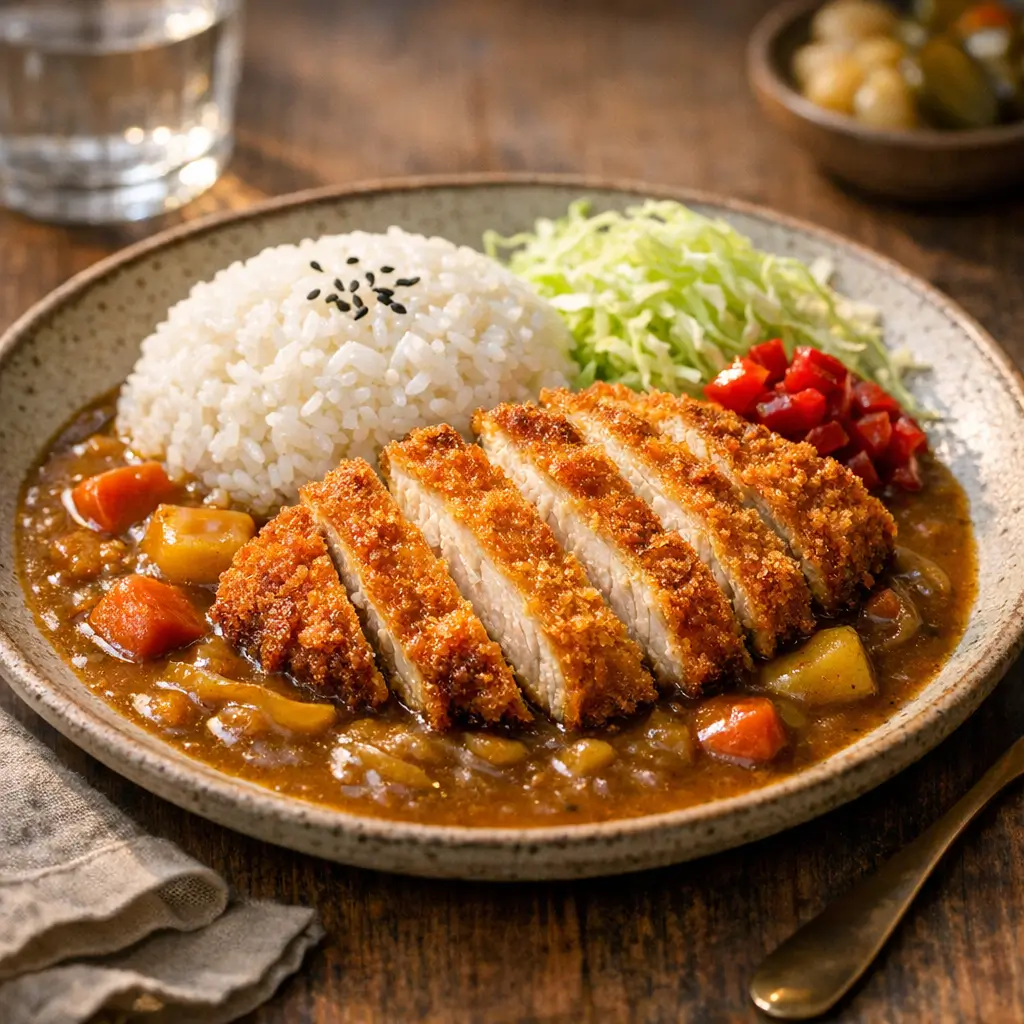
If you love a comforting plate that hits every note—crunchy, saucy, savory—Japanese Chicken Katsu Curry is the one to keep on repeat. Here, panko-crusted chicken stays shatteringly crisp while a velvety, gently spiced curry sauce pools around fluffy rice. Expect a family-friendly heat level and deeply aromatic sauce without an all-day simmer. Busy weeknight? This method stacks the steps so the curry finishes as the chicken comes out of the oil. Newer cooks will appreciate clear cues; experienced folks get options for tweaking spice and texture. You’ll find this dish at casual spots and curry houses, but it’s absolutely doable at home with supermarket staples like panko and boxed Japanese curry roux. The result is cozy and clean-tasting, with a lightly sweet backbone and warm spice.
INGREDIENTS
- For 3 to 4 servings
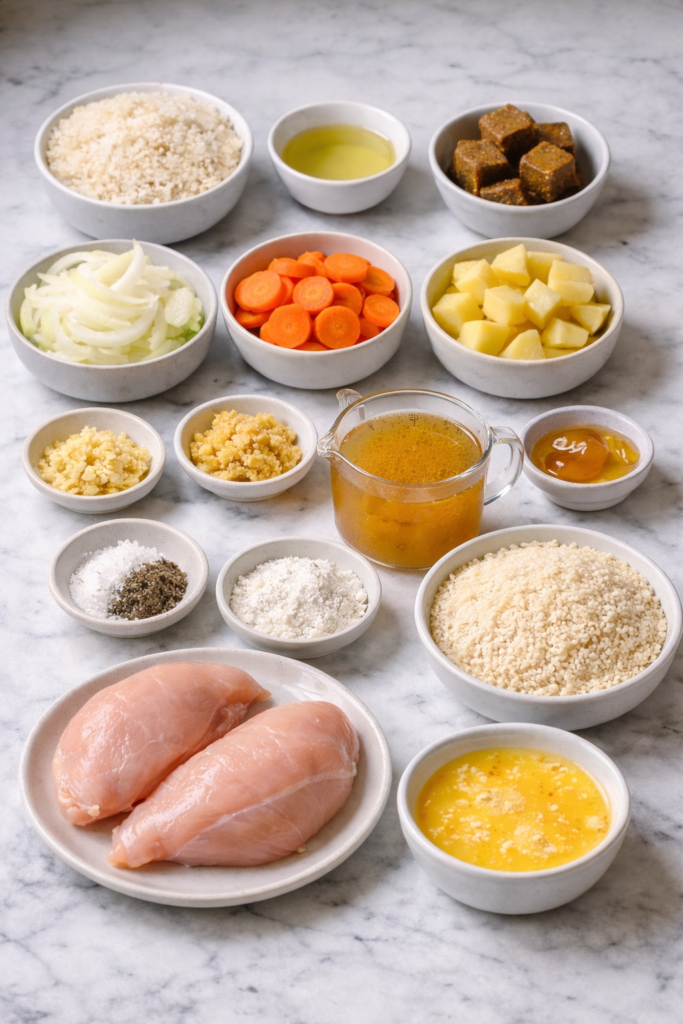
- Rice and curry sauce
- 1 1/2 cups (285 g) uncooked Japanese short-grain rice — for serving; yields about 4 1/2 cups cooked.
- 1 tablespoon (15 ml) neutral oil — helps onions caramelize without burning.
- 1 tablespoon (14 g) unsalted butter — rounds out the curry’s flavor. Use all oil to keep it dairy-free.
- 1 large yellow onion (about 10 oz/285 g), thinly sliced — sweetness and body.
- 2 medium carrots (about 7 oz/200 g), sliced 1/4 inch (6 mm) thick — classic veg in Japanese curry.
- 1 medium Yukon Gold potato (about 7 oz/200 g), cut into 1/2-inch (13 mm) cubes — optional, for heartier sauce. Skip for a smoother pour.
- 2 cloves garlic, minced (about 10 g) — aromatic base.
- 1 tablespoon (15 g) fresh ginger, finely grated — brightness and warmth.
- 3 cups (720 ml) low-sodium chicken stock or water — liquid for simmering.
- 6 Japanese curry roux cubes (about 3.8–4 oz/110 g total) — such as S&B Golden Curry or House Foods. Start with 4 cubes for milder/looser sauce; add more to taste.
- 1–2 teaspoons (5–10 ml) honey or sugar — optional, balances bitterness; adjust to taste.
- Chicken katsu
- 2 large boneless, skinless chicken breasts (about 1 1/2 lb/680 g total) — halved horizontally into 4 thin cutlets. Boneless thighs also work; cook time increases slightly.
- 1 teaspoon (6 g) fine salt, plus more to season breadcrumbs
- 1/2 teaspoon (2 g) black pepper
- 1/2 cup (65 g) all-purpose flour — first dredge. Use rice flour for a lighter, gluten-reduced crust.
- 2 large eggs, beaten — binder. For egg-free, whisk 3 tablespoons mayo with 3 tablespoons water as the “wash.”
- 2 cups (120 g) panko breadcrumbs — for signature crunch.
- 4 cups (1 liter) neutral frying oil — enough for 1 1/2 inches (4 cm) in a deep skillet or Dutch oven.
- To serve
- Finely shredded green cabbage (1–2 cups/70–140 g) — optional, adds crisp, fresh contrast.
- Fukujinzuke or rakkyo pickles, optional but classic.
STEP-BY-STEP INSTRUCTIONS
- Cook the rice first. Rinse the rice in 3–4 changes of water until mostly clear. Cook in a rice cooker or on the stovetop according to package directions. Keep warm. Rice can rest covered for up to 30 minutes without drying.
- Start the curry base. Warm the oil and butter in a medium pot over medium heat. Add the sliced onion with a pinch of salt. Cook, stirring occasionally, until soft and lightly golden at the edges, 8–10 minutes. It should smell sweet and look translucent with a few caramelized bits.
- Layer the vegetables and aromatics. Stir in carrots and potato; cook 2–3 minutes to glisten. Add garlic and ginger and cook just 30–45 seconds, until fragrant. Don’t brown the garlic; if it starts to color, lower the heat.
- Simmer. Pour in the stock (or water), scraping up any browned bits. Bring to a gentle boil, then reduce to a lively simmer. Cook uncovered until the carrots and potatoes are tender, 12–15 minutes. Timing varies with cube size and pot shape; test a carrot slice—tender but not mushy is the goal.
- Thicken with curry roux. Turn the heat to low. Ladle a cup of hot broth into a small bowl and dissolve 4 roux cubes in it, stirring until smooth. Return this slurry to the pot and stir gently; then add the remaining cubes one by one, tasting as you go. The sauce should lightly coat a spoon and feel silky, not pasty. If desired, stir in honey/sugar to soften any bitterness. Keep the curry at the lowest simmer while you fry the chicken; cover partially to avoid splatters.
- Prep the chicken. While the curry simmers, set up a 3-part breading station: flour in one shallow dish; beaten eggs in the second; panko in the third (season panko with a pinch of salt and pepper). Pat chicken dry. Season both sides with the 1 teaspoon salt and 1/2 teaspoon pepper.
- Dredge with care. Coat each cutlet lightly in flour, tapping off excess; dip in egg, letting extra drip; press firmly into panko to coat, then set on a wire rack for 5 minutes. Resting helps the crust adhere so it won’t slide off in the oil.
- Heat the oil. Pour 1 1/2 inches (4 cm) of oil into a deep skillet or Dutch oven. Heat to 350–360°F (175–182°C). Use a thermometer for accuracy; panko browns quickly if the oil is too hot. No thermometer? A breadcrumb should sizzle immediately and turn golden in about 60 seconds.
- Fry the katsu. Fry 1–2 cutlets at a time to avoid crowding. Cook 4–6 minutes on the first side until deeply golden, then flip and cook 3–5 minutes more. Exact timing depends on thickness; you’re aiming for 165°F (74°C) internal temperature. Transfer to a wire rack to drain. Sprinkle with a tiny pinch of salt while hot.
- Keep things crisp. If cooking in batches, hold cutlets on a sheet pan with a rack in a 250°F (120°C) oven. Avoid covering with foil (traps steam and softens the crust).
- Final curry check. If the curry thickened a bit too much while the chicken fried, whisk in hot water or stock a tablespoon at a time until it flows like light gravy. If it’s thin, simmer uncovered 2–3 minutes or add a little more roux.
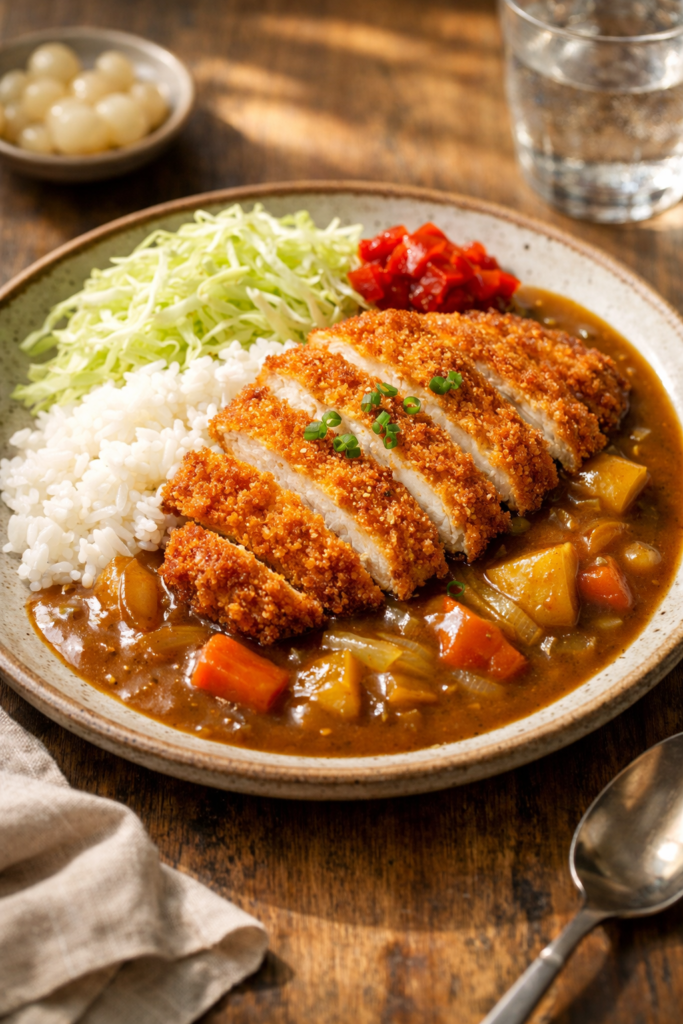
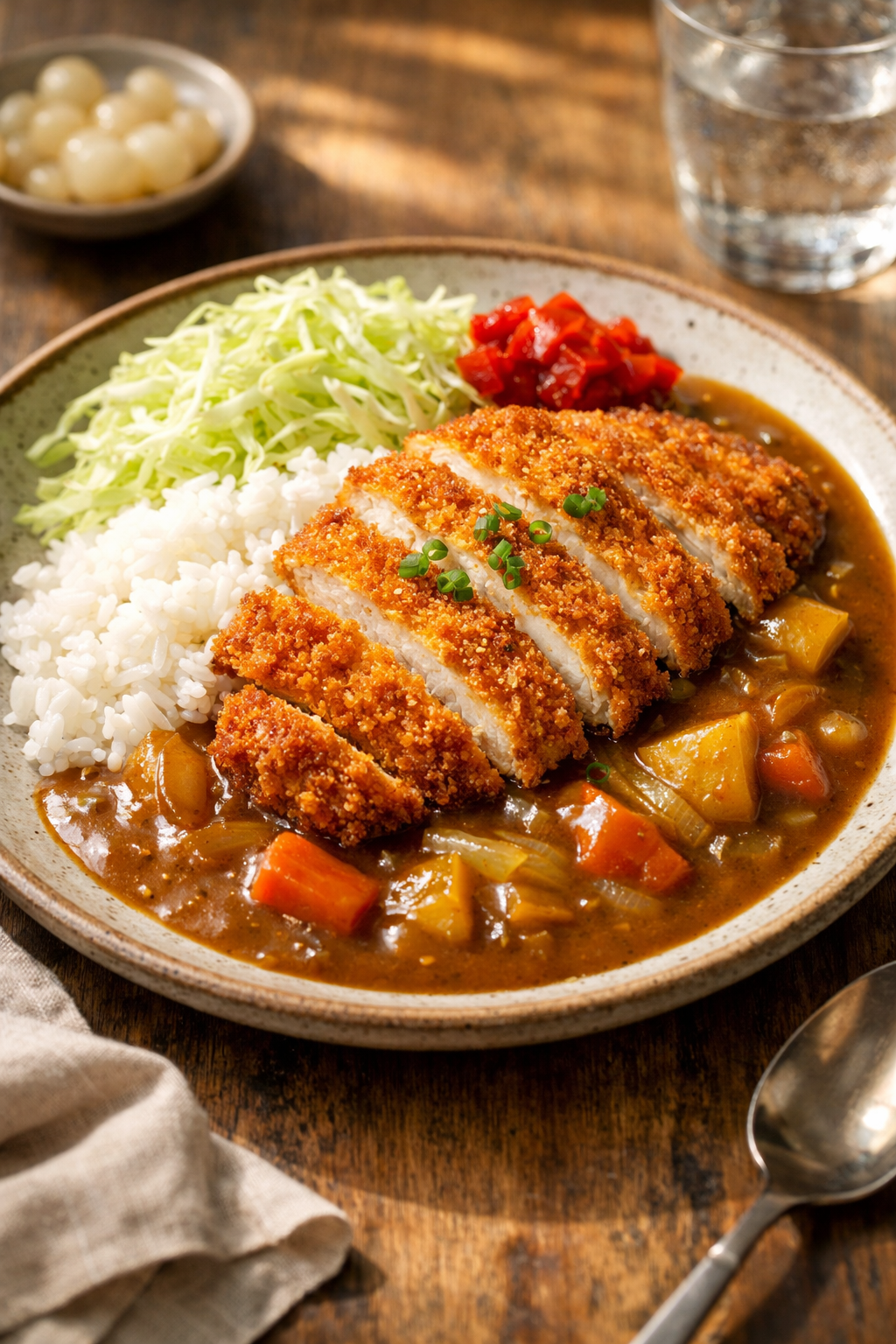
- Slice and plate. Slice katsu crosswise into 1/2-inch (12 mm) strips. Scoop rice into shallow bowls or plates, fan the chicken over the top, and ladle curry sauce alongside—keep some crust uncovered for maximum crunch. Add shredded cabbage and pickles if you like.
WHAT TO EXPECT (Japanese Chicken Katsu Curry)
- Texture: The chicken should be audibly crisp with a well-adhered crust that doesn’t peel off when sliced. The curry sauce is glossy and spoon-coating, more like gravy than a soupy stew.
- Flavor: This sauce leans savory with gentle warmth; Japanese roux blocks include a balanced blend of spices and a touch of sweetness. Ginger keeps it bright, and onion brings mellow depth.
- Variability: Brands of curry roux vary in salt and thickness. Pots with wider surfaces reduce faster, so you might need a splash more liquid. Chicken breasts pounded thinner cook faster but can dry if overcooked; thighs are more forgiving.
WAYS TO CHANGE IT UP
- Vegetarian or vegan: Swap chicken for firm tofu cutlets. Press, slice into slabs, pat dry, then bread and fry as directed. Use vegetable stock and plant butter (or all oil) for the curry. Expect a slightly lighter, cleaner finish and keep a closer eye on frying time—thin tofu browns quicker.
- Spicier or milder: Choose hot, medium, or mild curry roux. For more heat, stir in a pinch of cayenne or shichimi togarashi near the end of simmering. To tone it down, use fewer roux cubes and add a splash of milk or coconut milk to soften edges.
- Faster, low-mess option: Air-fry breaded cutlets at 400°F (200°C) for 10–14 minutes, flipping once, until 165°F (74°C). The crust is lighter and a touch drier than deep-fried, but still crisp. Or, buy frozen chicken katsu, bake per package, and focus on a scratch curry.
SERVING AND STORAGE
Serve with steamed rice and a small mound of shredded cabbage for freshness. A sprinkle of scallions or a drizzle of tonkatsu sauce on the chicken is optional but tasty.
Round out the plate with miso soup or a simple cucumber salad. Pickled ginger, fukujinzuke, or crunchy rakkyo onions add contrast.
Leftovers keep best when stored separately. Refrigerate curry sauce up to 4 days; rice up to 4 days; fried cutlets up to 2 days. Reheat sauce gently on the stovetop with a splash of water as needed. Re-crisp chicken on a rack at 350°F (175°C) for 10–12 minutes; avoid microwaving cutlets unless you accept a softer crust. Curry sauce freezes well for 2 months; the fried crust does not.
CULTURAL CONTEXT
Japanese curry developed during the late 19th and early 20th centuries, introduced via British naval cuisine and adapted to local tastes. It became a staple of school lunches and home cooking, often thickened with a ready-made roux for consistency and convenience. Pairing that curry with breaded cutlets is a popular canteen and diner-style combination known as katsu curry. For readers curious about the broader background, see this overview of Japanese curry’s history and style on Wikipedia and a very detailed entry on tonkatsu from ByFood. These are educational references, not recipes.
COMMON QUESTIONS AND TROUBLESHOOTING
- My breading fell off. What went wrong? Usually the cutlets were too wet, the flour layer was thick, or the crust didn’t rest before frying. Pat chicken dry, dust off excess flour, press well into panko, and rest the breaded cutlets 5 minutes so the crumbs hydrate and stick. Avoid flipping repeatedly in the oil.
- The curry is too thick. How do I fix it? Whisk in hot stock or water 1–2 tablespoons at a time over low heat until it flows like light gravy. Different roux brands thicken differently; add liquid gradually.
- The curry is too thin. What now? Simmer uncovered a few minutes to reduce. Or dissolve another small piece of roux in hot liquid and stir it in. Taste for salt after thickening—roux is seasoned.
- Can I bake the chicken instead of frying? Yes. Bake on a rack at 425°F (220°C) 14–18 minutes, flipping once, until 165°F (74°C). The crust is less richly browned than deep-fried and benefits from a light oil spray.
- Do I need potato in the sauce? No. Potato is common but optional. Skipping it gives a smoother sauce and speeds up cooking by a few minutes.
- Which curry roux should I buy? Any major brand works. Choose mild, medium, or hot based on preference. Blocks usually include serving guides; start with less, taste, and add more for body and salt.
- How do I keep chicken juicy? Even thickness is key. Halve breasts horizontally or gently pound to 1/2 inch (12 mm). Fry in 350–360°F (175–182°C) oil and pull at 165°F (74°C). Rest 3–5 minutes before slicing.
- Can I make parts ahead? Yes. The curry base reheats beautifully and even tastes better the next day. Bread the chicken a few hours ahead and refrigerate on a rack; fry just before serving to keep it crisp.
CONCLUSION
If you try this, leave a comment with how your timing and brand of roux worked, and what you paired it with. Share any adjustments—thighs vs. breasts, air-fried vs. deep-fried, or veg swaps—so other home cooks can benefit from your run-through.
Japanese Chicken Katsu Curry, Weeknight-Crispy and Cozy

Equipment
- Rice cooker or saucepan with lid
- Medium pot
- Deep skillet or Dutch oven
- Wire rack
- Instant-read thermometer
- Shallow dishes for breading
Ingredients
Rice and curry sauce
- 1 1/2 cups Japanese short-grain rice uncooked, for serving
- 1 tbsp neutral oil
- 1 tbsp unsalted butter
- 1 large yellow onion thinly sliced
- 2 medium carrots sliced 1/4 inch thick
- 1 medium Yukon Gold potato cut into 1/2-inch cubes (optional)
- 2 cloves garlic minced
- 1 tbsp fresh ginger finely grated
- 3 cups low-sodium chicken stock or water
- 6 cubes Japanese curry roux such as S&B Golden Curry or House Foods
- 1-2 tsp honey or sugar optional, to taste
Chicken katsu
- 2 large boneless, skinless chicken breasts halved horizontally into 4 thin cutlets
- 1 tsp fine salt plus more to season breadcrumbs
- 1/2 tsp black pepper
- 1/2 cup all-purpose flour
- 2 large eggs beaten
- 2 cups panko breadcrumbs season with a pinch of salt and pepper
- 4 cups neutral frying oil for about 1 1/2 inches of oil in pan
To serve
- 1-2 cups green cabbage finely shredded (optional)
- fukujinzuke or rakkyo pickles optional
Instructions
- Cook the rice first: rinse rice in 3–4 changes of water until mostly clear, then cook in a rice cooker or on the stovetop according to package directions. Keep warm.
- Start the curry base: warm oil and butter in a medium pot over medium heat. Add sliced onion with a pinch of salt and cook, stirring occasionally, until soft and lightly golden at the edges (about 8–10 minutes).
- Layer vegetables and aromatics: stir in carrots and potato and cook 2–3 minutes. Add garlic and ginger and cook 30–45 seconds until fragrant (don’t brown the garlic).
- Simmer: add stock (or water), bring to a gentle boil, then reduce to a lively simmer. Cook uncovered until vegetables are tender, about 12–15 minutes.
- Thicken with curry roux: lower heat. Dissolve 4 roux cubes in a ladle of hot broth until smooth, stir back into the pot, then add remaining cubes one by one, tasting as you go. Add honey/sugar if desired. Keep curry at the lowest simmer while you cook the chicken.
- Prep the chicken: set up a breading station with flour, beaten eggs, and panko (season panko with a pinch of salt and pepper). Pat chicken dry and season with salt and pepper.
- Dredge: coat each cutlet lightly in flour (tap off excess), dip in egg, then press firmly into panko. Rest breaded cutlets on a wire rack for 5 minutes.
- Heat the oil: pour about 1 1/2 inches of oil into a deep skillet or Dutch oven and heat to 350–360°F (175–182°C).
- Fry the katsu: fry 1–2 cutlets at a time. Cook 4–6 minutes on the first side until deeply golden, flip, and cook 3–5 minutes more until 165°F (74°C) internally. Drain on a wire rack and sprinkle with a tiny pinch of salt.
- Keep crisp (optional): if frying in batches, hold cutlets on a rack on a sheet pan in a 250°F (120°C) oven; don’t cover with foil.
- Final curry check: if curry is too thick, whisk in hot water or stock 1 tablespoon at a time until it flows like light gravy; if too thin, simmer uncovered 2–3 minutes or dissolve in a bit more roux.
- Slice and plate: slice katsu into 1/2-inch strips. Serve rice in bowls or plates, fan chicken over rice, and ladle curry alongside (leave some crust uncovered). Add cabbage and pickles if using.



Leave a Reply