
If you love silky carbonara and bouncy udon, this weeknight-friendly bowl brings them together in the best way. Japanese-Style Miso Carbonara Udon swaps spaghetti for chewy udon and stirs white miso into the classic egg-and-cheese sauce for extra umami.
It’s the kind of dinner that feels special but cooks fast. In about 30 minutes, you’ll crisp bacon or pancetta, boil udon, and toss everything with a glossy, peppery sauce.
Expect a rich, savory bite with gentle sweetness from white miso. The noodles stay pleasantly chewy, and the sauce stays creamy without cream. This recipe suits busy home cooks who want reliable results using supermarket staples and a single skillet plus a pot.
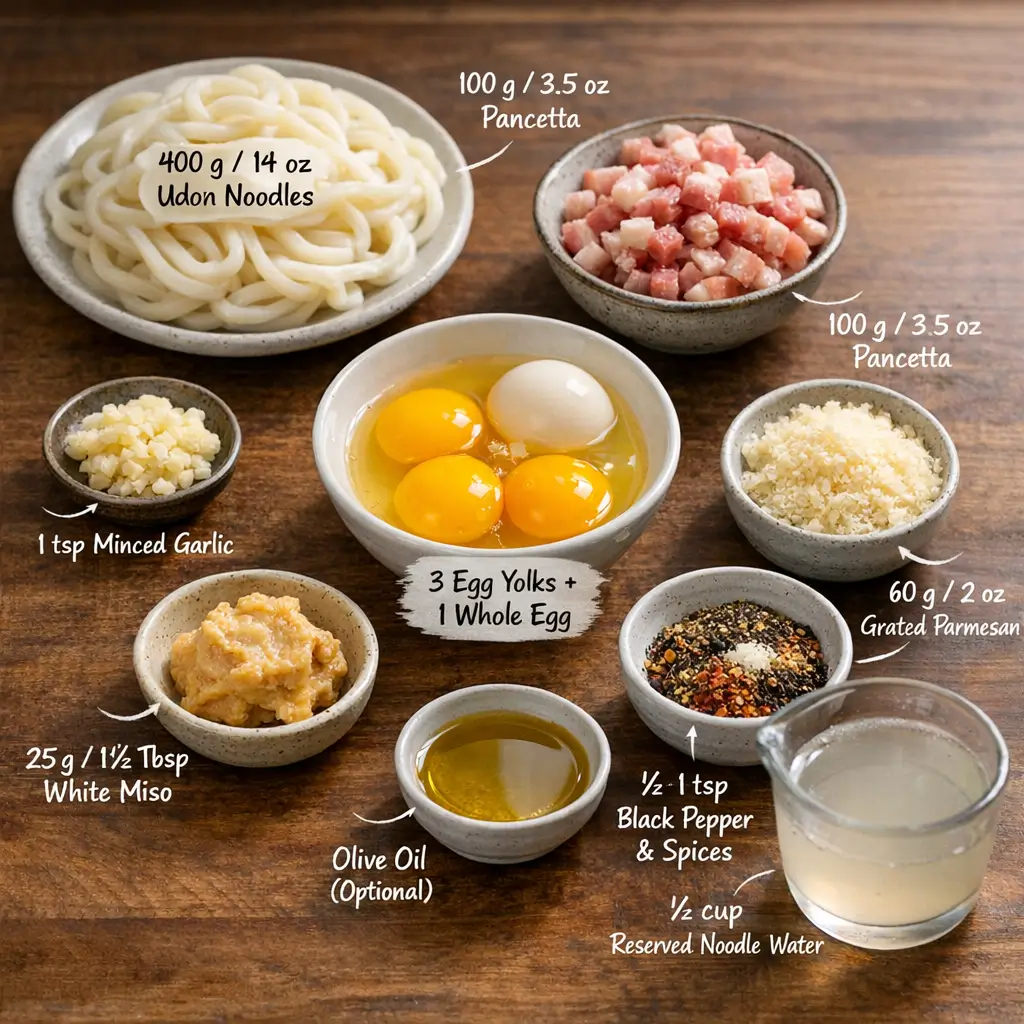
INGREDIENTS (Japanese-Style Miso Carbonara Udon)
- 400 g / 14 oz fresh or frozen udon noodles (about 2 individual 200 g/7 oz packs)
- Sub: 200 g / 7 oz dried udon; cook longer as directed on the package.
- 100–120 g / 3.5–4 oz diced pancetta or thick-cut bacon
- Sub: guanciale when available; flavor is porkier and saltier, so reduce added salt.
- 1 small garlic clove, finely minced (about 3 g / 1 tsp)
- Optional but helpful for aroma; add off heat to avoid bitterness.
- 3 large egg yolks + 1 large whole egg (room temperature)
- Room-temp eggs combine more easily and resist curdling.
- 60 g / 2 oz very finely grated Parmesan or Pecorino Romano
- Parmesan is milder; Pecorino is saltier and sharper—use less salt elsewhere if using Pecorino.
- 25 g / 1½ Tbsp white miso (shiro miso)
- Sub: awase miso; for red miso (aka miso), start with 15 g / 1 Tbsp because it’s stronger.
- ½–1 tsp freshly ground black pepper, to taste
- 120 ml / ½ cup hot noodle cooking water, reserved (you may not use it all)
- 1–2 tsp olive oil, only if your bacon/pancetta is very lean
- Fine salt, for the boiling water only (you may not need any in the sauce)
- Optional garnishes: thinly sliced scallions, nori strips, toasted sesame seeds, extra grated cheese, or a pinch of togarashi
STEP-BY-STEP INSTRUCTIONS — Japanese-Style Miso Carbonara Udon
1) Mix the sauce base.
- In a medium bowl, whisk the egg yolks, whole egg, miso, grated cheese, and black pepper until completely smooth and thick. It should look like a loose paste with no miso lumps.
- Tip: If your miso is stiff, mash it first with 1 teaspoon of warm water so it dissolves easily later.
2) Start the pork.
- Place pancetta or bacon in a large, cold skillet. Turn heat to medium and cook, stirring occasionally, until fat renders and the pieces are golden and crisp, 6–8 minutes.
- If there’s more than about 2 tablespoons of fat, spoon out the excess. You want enough fat to coat the noodles but not drown them.
3) Scent the fat (briefly).
- Reduce heat to low. Stir in the minced garlic and cook just 20–30 seconds until fragrant. Do not brown it. Turn the skillet off. Leave the pork and fat in the pan.
4) Boil the udon.
- Meanwhile, bring a large pot of well-salted water to a boil.
- Fresh or frozen udon: loosen in boiling water 1–2 minutes until just tender, then separate strands with chopsticks or tongs.
- Dried udon: cook per package, typically 8–10 minutes, until tender with a slight bite.
- Reserve at least 1 cup (240 ml) noodle water. Drain the noodles well.
5) Temper the egg mixture.
- Whisk 2–3 tablespoons of the very hot noodle water into the egg-miso mixture in a slow stream while whisking constantly. This warms the eggs slightly so they thicken smoothly later.
6) Bring it together off the heat.
- Return the skillet with pork to low heat for 30 seconds to rewarm the fat, then turn the heat off. Add the well-drained noodles and toss until coated in the pork fat.
- Immediately pour the tempered egg-miso-cheese mixture over the noodles. Toss vigorously with tongs for 60–90 seconds, scraping the pan to emulsify the fat into the sauce. The residual heat from the noodles should thicken the sauce until it clings like melted ice cream.
- If the sauce looks tight or clumpy, add hot noodle water 1 tablespoon at a time, tossing between additions, until glossy and silky. If it looks soupy, keep tossing for another 15–30 seconds; it will thicken as it cools.
7) Taste and finish.
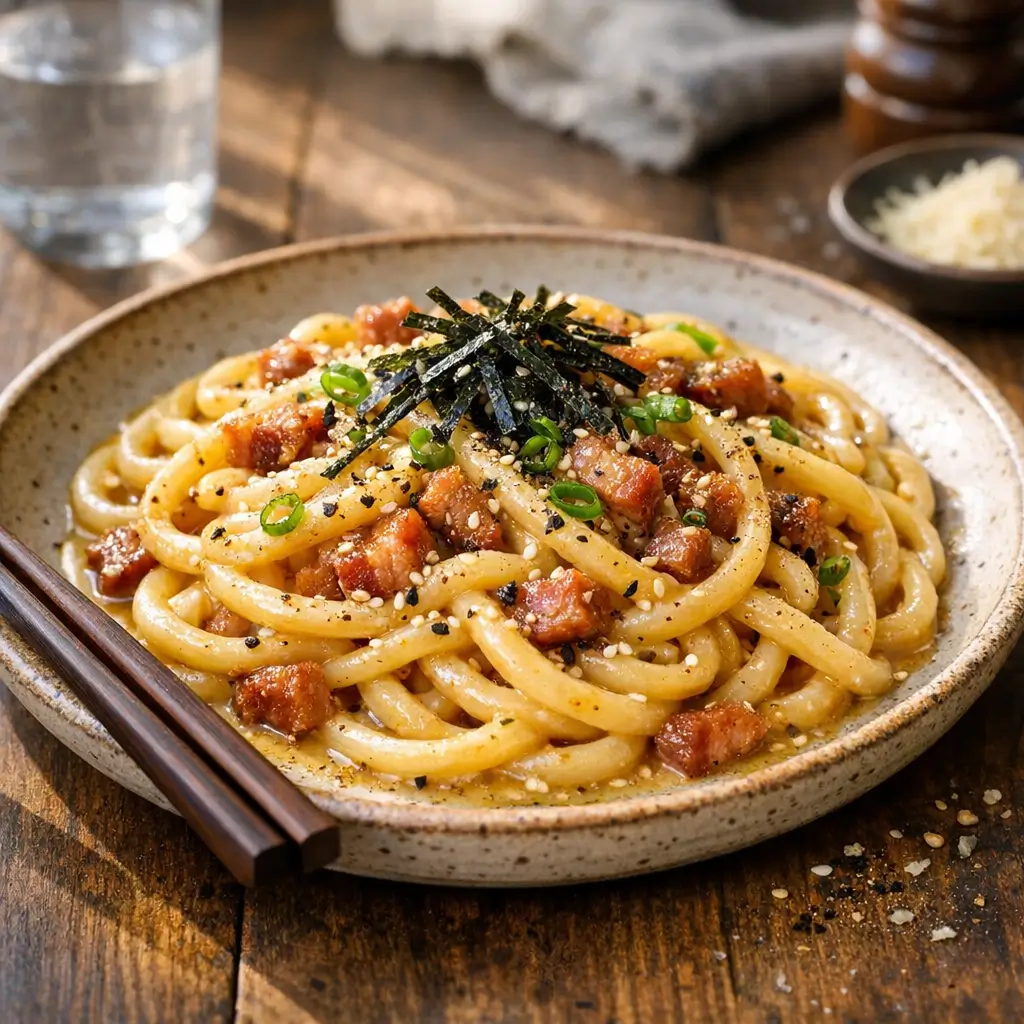
- Taste before adding any salt—miso, cheese, and pork are salty. Adjust pepper. Garnish with scallions, nori, toasted sesame, extra cheese, or a pinch of togarashi.
Safety note: Carbonara moves fast. Keep the pan off heat when you add the egg mixture to avoid scrambling. If you’re nervous, transfer noodles to a large bowl and toss there instead of in the hot skillet.
WHAT TO EXPECT
-
Texture: The sauce should be glossy, not gloppy, and coat the udon evenly. Udon remains bouncy-chewy; that contrast with the creamy sauce is the point.
-
Flavor: Think classic carbonara—egg, cheese, cured pork—plus miso’s gentle sweetness and savory depth. Black pepper brings a peppery edge; use more if you enjoy a cacio e pepe vibe.
-
Variability: Frozen udon tends to be softer and more absorbent than vacuum-sealed shelf-stable udon; it drinks up sauce faster. Dried udon is firmer and may need an extra spoon of noodle water to stay silky. Pecorino makes the dish saltier and sharper than Parmesan.
WAYS TO CHANGE IT UP
-
Vegetarian or vegan-friendly
-
Mushrooms instead of pork: Sear 200 g / 7 oz sliced shiitakes or creminis in 1 tablespoon olive oil until deeply browned and crisp at the edges. Add 1 teaspoon light soy sauce for savoriness. Proceed with the recipe.
-
Vegan sauce swap: Whisk 200 g / 7 oz soft silken tofu, 2 Tbsp white miso, 2 Tbsp nutritional yeast, 1 Tbsp olive oil, and ½ tsp black pepper until smooth. Warm gently with the udon off heat and loosen with noodle water. Expect a slightly lighter, less eggy finish, but still creamy.
-
Spicier or milder
-
For heat-lovers: Add ½–1 tsp togarashi or a pinch of red pepper flakes to the egg-miso mixture, or finish with a spoon of chili crisp. Sichuan peppercorn lends a subtle tingle if you enjoy that twist.
-
For milder palates: Use Parmesan instead of Pecorino, go lighter on the black pepper, and stick with white miso.
-
Faster or simpler
-
Bowl method: After crisping pork, transfer noodles and rendered fat to a large, room-temperature mixing bowl. Add the egg-miso-cheese mixture and toss hard. This removes the skillet heat from the equation and is gentler for beginners.
-
1-pan shortcut: If using fresh or frozen udon, you can pour a splash of water into the pork pan and steam-separate the bricks before adding the tempered egg mixture. Watch closely—steam can overheat eggs quickly.
Trade-offs: Chili heat and Pecorino emphasize salt; adjust miso down slightly. Plant-based versions are creamier than they are eggy. The bowl method is safest but cools faster, so pre-warm serving bowls with hot water.
SERVING AND STORAGE
-
Serve immediately in warm bowls. Carbonara thickens as it sits; a spoon of hot noodle water can loosen it at the table.
-
Pair with a bright, crunchy side to cut the richness: a citrusy cucumber salad, steamed greens with a squeeze of lemon, or simply blanched snap peas. A crisp lager, chilled green tea, or cold barley tea is refreshing here.
-
Leftovers: Chill quickly in a shallow container and refrigerate up to 2 days. Reheat gently over low heat with a splash of water, tossing constantly just until warmed. The sauce will be thicker and less glossy on day two—still tasty, just different. Not recommended for freezing.
CULTURAL CONTEXT
This dish blends techniques and ingredients from two cuisines. Udon are thick wheat noodles with deep regional roots in Japan, especially in Kagawa Prefecture, often nicknamed “Udon Prefecture.” For a brief look at how climate and agriculture shaped Sanuki udon culture, see this overview from Kagawa University’s Institute for Education, Research and Regional Cooperation: Sanuki Udon cultural background.
Miso is a fermented paste made from soybeans, koji, and salt. Its color and taste vary with the koji and aging time. An English explainer from the Sendai miso makers’ association outlines how miso is classified and produced: What is miso? Types and characteristics.
COMMON QUESTIONS AND TROUBLESHOOTING
-
My sauce scrambled. Can I save it?
-
Usually, heat was too high or the pan was too hot. Take the pan off heat immediately and splash in 1–2 tablespoons cold milk or water, then toss briskly. It won’t be perfect, but it will smooth out. Next time, toss in a large bowl off heat.
-
Do I need cream?
-
No. The creaminess comes from eggs, cheese, and starchy noodle water. Adding cream dulls the miso and can make the sauce heavy.
-
Which miso works best?
-
White miso (shiro) gives the most balanced, slightly sweet umami. Awase miso is fine. Red miso is stronger; use less and expect a saltier, more robust flavor.
-
Can I use spaghetti instead of udon?
-
Yes. Cook 200 g / 7 oz spaghetti to al dente and proceed. You’ll need slightly more noodle water to keep the sauce loose.
-
Is raw egg safe?
-
The residual heat from the noodles thickens the sauce, but eggs are not fully cooked. Use fresh, high-quality eggs; pasteurized shell eggs are a cautious choice. Avoid for those who must not consume undercooked eggs.
-
How do I avoid overly salty results?
-
Salt only the boiling water lightly. Taste before adding any extra salt. Pecorino, pancetta, and miso all bring salt.
-
My sauce is gluey.
-
It likely reduced too much. Add hot noodle water 1 tablespoon at a time and toss off heat until it relaxes. Also avoid pre-shredded cheese with anti-caking starches—they don’t melt as smoothly.
-
Can I make parts ahead?
-
You can dice the pork and grate the cheese up to 2 days ahead. Mix the egg-miso-cheese base right before cooking; otherwise it thickens and separates.
CONCLUSION
If you try this, leave a comment with the udon you used (fresh, frozen, or dried) and any tweaks—extra pepper, mushroom swap, or your favorite garnish. Your notes help other home cooks get confident with the timing and heat, which is the only tricky part of this bowl. Happy cooking!



Leave a Reply