
Simple lemon garlic asparagus shows off what spring produce already does well: tender spears, a little char, and bright citrus to cut through richer mains.
If it’s a busy weeknight, start by heating the oven and washing the asparagus right away—those two moves get most of the work behind you. Hosting a holiday meal? Prep the spears and lemon-garlic oil earlier in the day so all you’re doing at dinnertime is sliding a pan into the oven.
Expect a side that’s light but savory, with just enough garlic to be present without overpowering the asparagus.
Ingredients
Serves 3–4 as a side
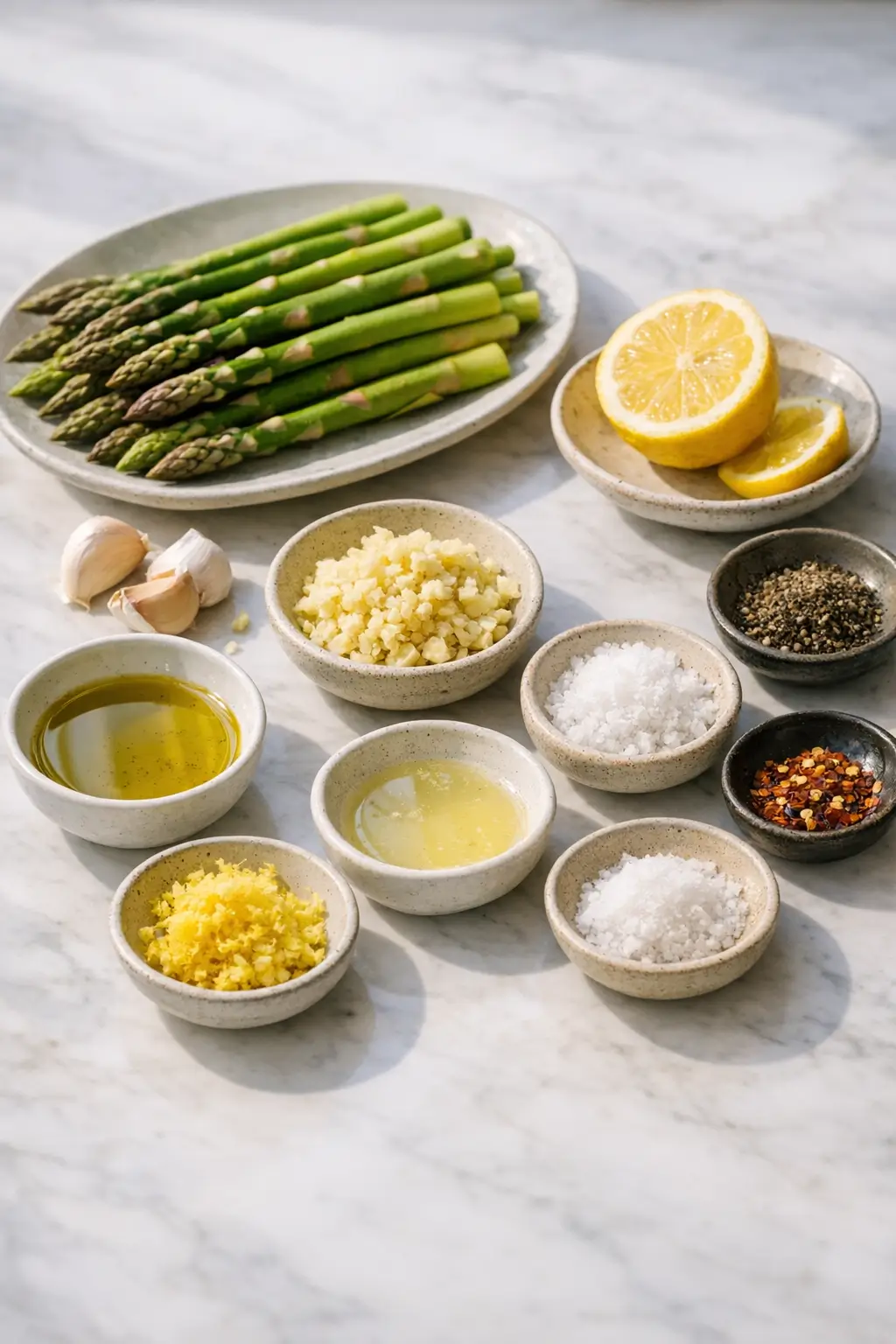
- 450 g / 1 lb asparagus (1 medium bunch), woody ends trimmed
- 2 tbsp (30 ml) extra-virgin olive oil – helps with browning and carries the lemon and garlic
- 2–3 garlic cloves, finely minced (about 1 tbsp) – for a gentle garlicky bite; use 1 tsp garlic powder if you prefer milder, more even flavor
- 1 tsp finely grated lemon zest (from about 1/2 lemon)
- 1–2 tbsp fresh lemon juice (start with 1 tbsp, add more to taste after roasting)
- 1/2 tsp kosher salt, plus more to taste
- 1/4 tsp freshly ground black pepper
- Optional but nice:
- 1–2 tbsp finely grated Parmesan – adds a salty, nutty finish; use a vegetarian-friendly hard cheese if needed
- Pinch red pepper flakes – for a gentle background heat
- 1–2 tsp extra-virgin olive oil, to drizzle after roasting if the pan looks dry
Step-by-Step Instructions for Lemon Garlic Asparagus
-
Preheat the oven and prepare the pan
Heat the oven to 220°C / 425°F with a rack in the middle. Line a large rimmed baking sheet with parchment for easier cleanup, or use it unlined for a slightly deeper char. -
Trim the asparagus
Rinse the asparagus and pat dry thoroughly. Bend one spear near the base until it snaps; use that length as a guide to cut the rest. Discard the tough ends. -
Make the lemon-garlic oil
In a small bowl, combine the olive oil, minced garlic, lemon zest, salt, pepper, and a pinch of red pepper flakes if using. Stir to distribute the garlic evenly. -
Toss to coat
Arrange the asparagus on the baking sheet in a single layer. Pour the lemon-garlic oil over the spears and use your hands or tongs to toss until each spear is lightly coated.
Kitchen note: If the spears are crowded or stacked, they’ll steam instead of roast. If your pan looks packed, split the asparagus between two baking sheets.
-
Roast until just tender
Roast for 8–12 minutes, depending on thickness. Thin spears lean toward 8 minutes; very thick ones can take up to 12. The asparagus is ready when it’s bright green, crisp-tender in the center, and the tips are just starting to brown. -
Finish with lemon juice
Immediately squeeze 1 tbsp lemon juice over the hot asparagus and toss on the pan.Taste a spear. If it needs more brightness, add up to 1 tbsp additional lemon juice and another small pinch of salt.
-
Add Parmesan (optional) and serve
If using Parmesan, sprinkle it over the asparagus while still hot so it softens slightly.Transfer to a warm platter and serve right away.
Kitchen note: If you prefer softer asparagus, turn off the oven and leave the pan inside for an extra 3–4 minutes after roasting. Check every couple of minutes so the tips don’t burn.
What to Expect
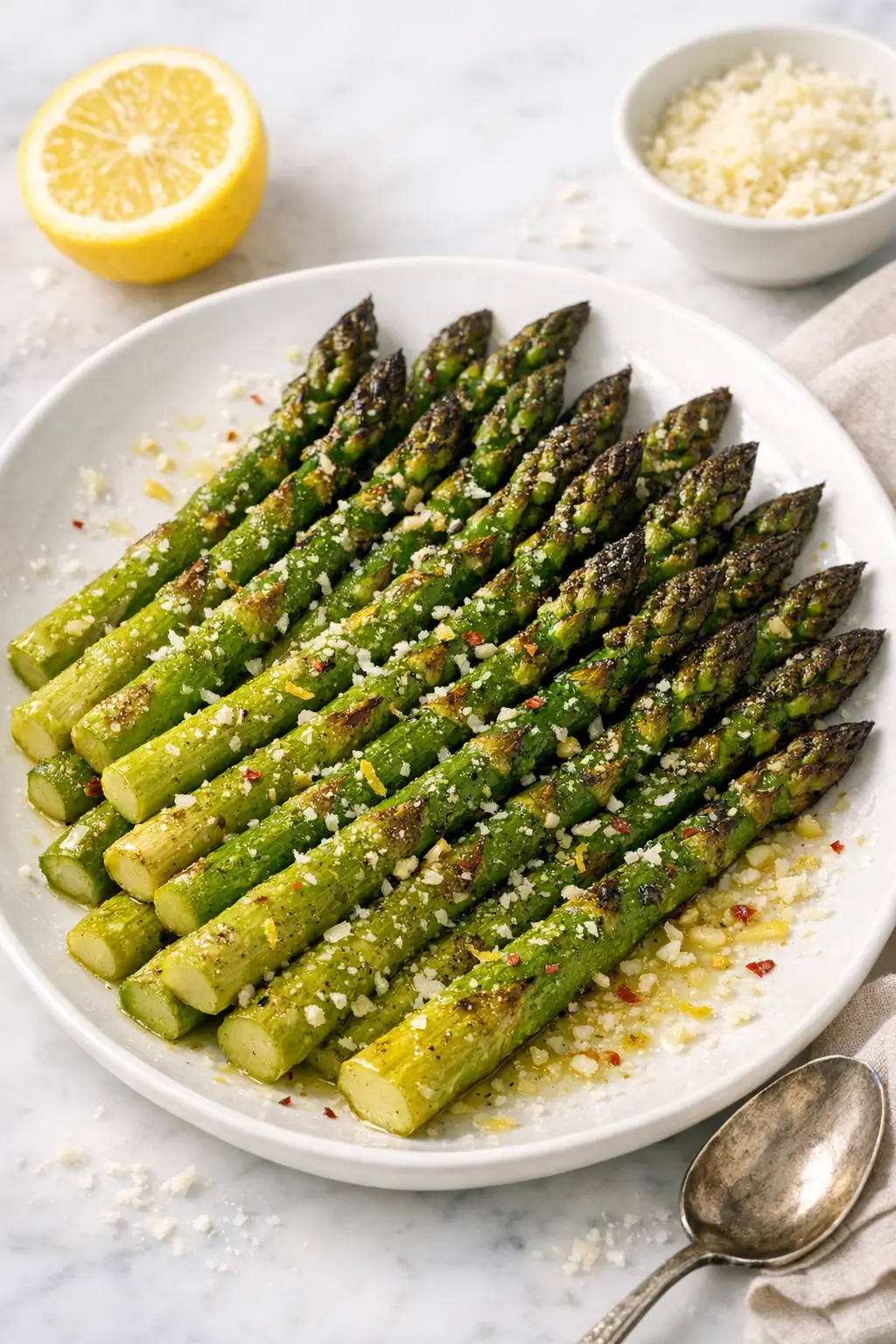
This lemon garlic asparagus stays on the lighter side: a glossy coating of oil rather than a heavy sauce.
The tips should be a little crisp and browned, while the stalks have a tender bite in the center.
Flavor-wise, you’ll get grassy asparagus first, then citrus, then a gentle garlic warmth. Parmesan, if you use it, adds saltiness and a bit of umami, but it shouldn’t bury the lemon.
Different ovens brown vegetables differently. A hotter-running oven may add more char at the same time mark, so if you know yours runs hot, start checking at 7 minutes.
Kitchen note: Asparagus can go from just-right to limp quickly. If you’re unsure, pull the pan when the thickest spear bends slightly when lifted with tongs but doesn’t flop.
Ways to Change It Up
-
Make it dairy-free and vegan
Skip the Parmesan and finish with a drizzle of good extra-virgin olive oil and a sprinkle of toasted sliced almonds or chopped pistachios instead. Nutritional yeast can add a light cheesy note if you like that flavor. -
Turn up the heat
Add 1/4–1/2 tsp red pepper flakes to the lemon-garlic oil before roasting, or finish with a drizzle of mild chili crisp. The garlic and lemon stand up well to spice, so the asparagus still tastes bright. -
Milder and kid-friendly
Use just 1 small garlic clove or 1/2 tsp garlic powder and roast the asparagus at 400°F / 200°C for a couple of minutes longer for a softer texture. This slightly gentler roast can be easier for kids or anyone who prefers less bite. -
Faster stovetop version
If your oven is already busy, sauté the asparagus instead. Heat 1.5 tbsp olive oil in a large skillet over medium-high, add trimmed asparagus in a single layer, and cook 5–7 minutes, turning occasionally, until bright green with a few browned spots. Stir in the garlic during the last minute so it doesn’t burn, then take off the heat, add lemon juice, and season.
Serving and Storage
Lemon garlic asparagus is most often served as a simple side with spring mains like roast chicken, salmon, or lamb, and it’s right at home on an Easter or Passover table.
It pairs especially well with richer dishes like Creamy Lemon Orzo With Parmesan or as a bright contrast to a bowl of Tuscan White Bean Soup with Kale.
Serve it warm or at room temperature. If you’re feeding a group, you can roast two trays at once; rotate them halfway through cooking for even color.
Leftovers keep covered in the fridge for up to 3 days. The texture softens, but the flavor stays good.
To reheat, warm in a 180°C / 350°F oven for 5–7 minutes or in a covered skillet with a splash of water. Avoid microwaving for more than 20–30 seconds at a time or the asparagus can turn mushy.
Kitchen note: If you plan to serve leftovers in salads or grain bowls, undercook the asparagus by 1–2 minutes on the initial roast so it lands at the right texture after reheating.
Cultural Context
Asparagus is one of the classic markers of spring across much of Europe and North America. Its short season has made it a kind of “first green” vegetable in markets and on restaurant menus.
Roasting asparagus with oil, citrus, and aromatics like garlic fits into a broader pattern of European and North American cooking that treats early vegetables simply, relying on high heat and basic seasonings rather than heavy sauces. The vegetable also shows up in many regional dishes from soups to tarts, especially in countries like France and Germany, where asparagus season is widely noted. For an overview of asparagus’ history and cultivation, see this article from the Royal Horticultural Society: asparagus growing and background.
Common Questions and Troubleshooting
Why is my asparagus stringy or woody?
Stringiness usually means the woody ends weren’t trimmed far enough, or the asparagus was past its prime. Make sure you snap or cut off the tough bottom section. Thicker spears can also need an extra minute or two in the oven.
Can I make lemon garlic asparagus ahead for a holiday meal?
You can trim and wash the asparagus, dry it well, and whisk together the lemon-garlic oil up to a day ahead. Store both separately in the fridge. Roast just before serving so the texture stays crisp-tender. If you must roast earlier, undercook by a couple of minutes, then rewarm on a hot tray for 3–5 minutes before serving.
What if my garlic burned?
Very finely minced garlic can scorch if it sits exposed on the pan. Next time, toss it thoroughly with the oil so it clings to the spears, and keep the oven at 425°F, not higher. If just a few bits went too dark, pick them off; the rest of the pan is usually still usable.
Can I use frozen asparagus?
Frozen asparagus won’t roast quite the same, but you can get acceptable results. Roast from frozen at 220°C / 425°F on a very hot, preheated sheet pan so the surface dries quickly. Expect softer spears and less char.
How do I adjust for very thin or very thick asparagus?
Very thin spears can be done in as little as 6–7 minutes; start checking early so they don’t collapse. Thick stalks can need 12–14 minutes, especially if your oven runs cool. Use color and texture—bright green, slightly bendy, and tender when pierced with a knife—as your main guides.
Can I skip the lemon?
You can, but you’ll lose some freshness. If you’re out of lemons, a splash of white wine vinegar or sherry vinegar added after roasting can stand in. Start with 1–2 teaspoons and adjust to taste.
Conclusion
Lemon garlic asparagus is the kind of spring side that fits around whatever else you’re cooking, from weeknight chicken to a larger holiday spread.
Once you’ve made it a couple of times, you’ll be able to judge doneness mostly by sight, adjusting the timing to whatever size asparagus your market has that week.
If you cook this, leave a comment and a rating, and share how you adjusted the garlic, lemon, or cook time to match your kitchen and crowd.
Lemon Garlic Asparagus Side for Spring Meals

Equipment
- Oven
- Large rimmed baking sheet
- Parchment paper (optional)
- Small bowl
- Tongs
Ingredients
- 450 g asparagus woody ends trimmed (1 medium bunch; about 1 lb)
- 2 tbsp extra-virgin olive oil
- 2–3 cloves garlic finely minced (about 1 tbsp); or use 1 tsp garlic powder for milder flavor
- 1 tsp lemon zest finely grated (from about 1/2 lemon)
- 1–2 tbsp fresh lemon juice start with 1 tbsp; add more to taste after roasting
- 1/2 tsp kosher salt plus more to taste
- 1/4 tsp freshly ground black pepper
- 1–2 tbsp Parmesan finely grated (optional)
- red pepper flakes pinch (optional)
- 1–2 tsp extra-virgin olive oil to drizzle after roasting if the pan looks dry (optional)
Instructions
- Heat the oven to 220°C / 425°F with a rack in the middle. Line a large rimmed baking sheet with parchment for easier cleanup, or use it unlined for a slightly deeper char.
- Rinse the asparagus and pat dry thoroughly. Bend one spear near the base until it snaps; use that length as a guide to cut the rest. Discard the tough ends.
- In a small bowl, combine the olive oil, minced garlic, lemon zest, salt, pepper, and a pinch of red pepper flakes if using. Stir to distribute the garlic evenly.
- Arrange the asparagus on the baking sheet in a single layer. Pour the lemon-garlic oil over the spears and use your hands or tongs to toss until each spear is lightly coated. If the spears are crowded or stacked, they’ll steam instead of roast; if your pan looks packed, split the asparagus between two baking sheets.
- Roast for 8–12 minutes, depending on thickness, until bright green and crisp-tender and the tips are just starting to brown.
- Immediately squeeze 1 tbsp lemon juice over the hot asparagus and toss on the pan. Taste and add up to 1 tbsp additional lemon juice and another small pinch of salt if needed.
- If using Parmesan, sprinkle it over the asparagus while still hot so it softens slightly. Transfer to a warm platter and serve right away. For softer asparagus, turn off the oven and leave the pan inside an extra 3–4 minutes, checking so the tips don’t burn.



Leave a Reply