
You know those nights when you want something fast, soothing, and big on flavor with minimal cleanup? Miso Butter Noodles check every box. Slick, springy noodles get tossed in a buttery, umami-rich sauce and finished with a shower of crispy garlic and scallions.
Inspired by Japanese home-style pantry pasta and wafu-style noodle dishes, this 30-minute meal fits right into busy weeknights or low-effort weekends. It’s satisfying without being heavy, and it welcomes add-ins like sautéed mushrooms or a handful of spinach.
If you’re a cook who likes clear steps and reliable results, you’ll appreciate the straightforward method here. Expect silky noodles, a glossy sauce that clings, and balanced savoriness from white miso.
INGREDIENTS
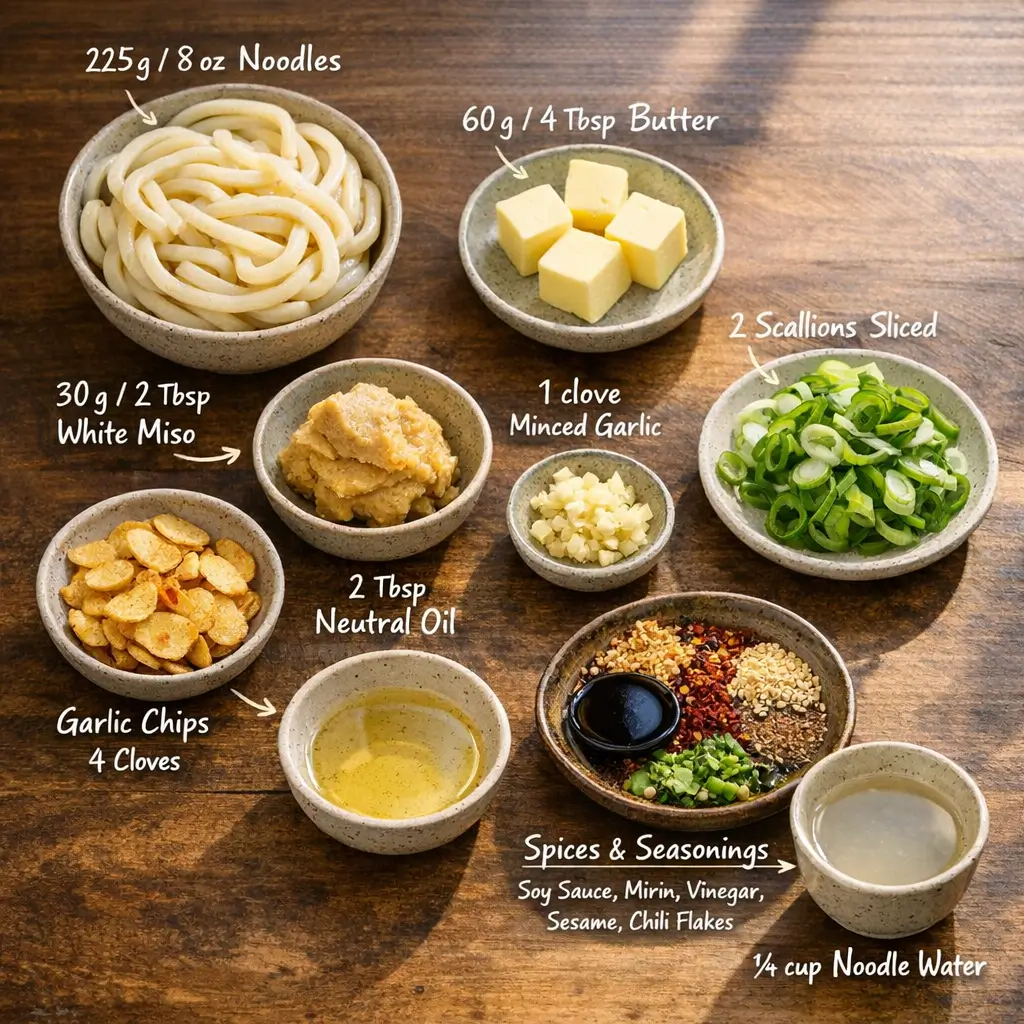
- 225 g / 8 oz thick wheat noodles such as frozen udon, fresh ramen, or spaghetti (choose what you have)
- Using udon makes the dish extra bouncy; spaghetti gives a firmer bite.
- Gluten-free: use rice noodles, and choose a certified gluten-free miso and tamari.
- 60 g / 4 Tbsp unsalted butter, divided
- Butter creates body and gloss; we add it in stages for a stable sauce.
- Dairy-free/vegan: use plant-based butter with a neutral flavor.
- 30 g / 2 Tbsp white (shiro) miso paste
- White miso is mild and slightly sweet, great for beginners; red miso is bolder and saltier.
- 4 garlic cloves, thinly sliced into chips (for topping)
- 1 garlic clove, finely minced (for the sauce)
- 2 Tbsp neutral oil (for frying the garlic; canola or vegetable)
- 1–2 tsp soy sauce, to taste
- Adds depth and color; start small and adjust because miso is salty.
- Use tamari if avoiding gluten.
- 1 tsp mirin (optional)
- A touch of sweetness rounds the sauce;
- No mirin? Mix 1 tsp water with ½ tsp sugar and ½ tsp rice vinegar.
- 1–2 tsp rice vinegar or lemon juice (optional, to brighten)
- 60–120 ml / ¼–½ cup reserved noodle cooking water
- Used to loosen and emulsify the sauce.
- 2 scallions (spring onions), thinly sliced
- 1 tsp toasted sesame seeds or crumbled nori (optional)
- Chili crisp or shichimi togarashi, to taste (optional heat)
STEP-BY-STEP INSTRUCTIONS
- Cook the noodles.
- Bring a large pot of well-salted water to a boil. Cook noodles just shy of package time (usually 1 minute less), so they finish in the sauce. Scoop out ½ cup (120 ml) starchy cooking water before draining.
- Sensory cue: the noodles should be tender but still springy.
- Make crispy garlic chips (optional but recommended).
- Add the neutral oil and 1 Tbsp butter to a wide skillet over medium-low heat. When the butter melts and looks foamy, add the sliced garlic in an even layer. Fry gently, stirring, until the slices turn pale golden, 2–4 minutes.
- Important: pull the garlic the moment it turns light gold; it will darken further off heat. Transfer chips to a paper towel. Reserve the garlicky fat in the pan.
- Build a quick miso-butter base.
- Reduce the heat to low. Add the minced garlic to the skillet and cook 15–30 seconds until fragrant but not browned.
- In a small bowl, whisk the miso with 2–3 Tbsp hot noodle water until smooth. This slurry prevents clumps and keeps miso from scorching.
- Emulsify the sauce.
- Add the miso slurry to the skillet along with 2 Tbsp butter. Whisk or stir while the mixture becomes glossy. Add more noodle water, a splash at a time, until the sauce looks creamy and coats the spoon without breaking.
- Tip: if the sauce looks greasy, add a spoonful of water and keep stirring; if too thin, simmer briefly.
- Season and finish the noodles.
- Add the drained noodles directly to the skillet. Toss vigorously with tongs, adding more butter (up to 1 Tbsp more) and splashes of noodle water as needed to create a silky coating.
- Season with soy sauce (start with 1 tsp) and, if using, mirin. Taste; adjust with a few drops of rice vinegar or lemon for brightness.
- Plate and garnish.
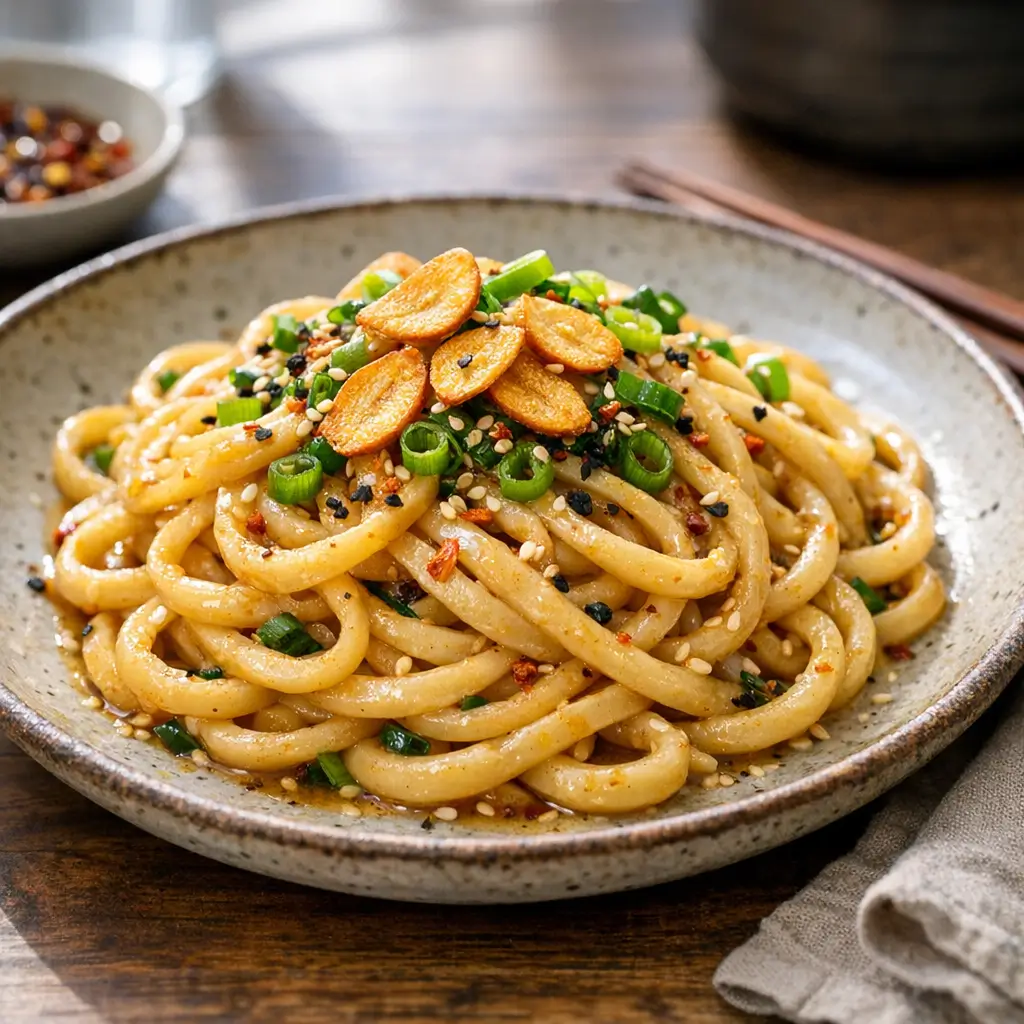
- Divide noodles into bowls. Top with the crispy garlic chips, scallions, and sesame seeds or nori. Add chili crisp or shichimi if you enjoy heat.
- Serve right away.
- Butter sauces set as they cool; the texture is best while hot and glossy.
WHAT TO EXPECT FROM MISO BUTTER NOODLES
The sauce should be glossy and cling to the noodles rather than pooling. It will taste buttery first, then savory from miso, with gentle sweetness if you used mirin.
Texture varies with noodle choice. Frozen udon stays plush and chewy; spaghetti remains al dente and slightly firmer; fresh ramen lands in between. All work, but they absorb water at different rates, so you may need a touch more or less cooking water.
Saltiness can vary by miso brand and style. White miso is usually milder; red or mixed miso will read saltier and earthier. That’s why the soy sauce amount is flexible.
WAYS TO CHANGE IT UP
-
Vegetarian or vegan adapted
-
Replace butter with a high-quality plant-based butter and use tamari. Add sautéed mushrooms or pan-crisped tofu for extra substance. Flavor stays savory, with slightly less dairy richness.
-
Spicier or milder
-
For heat, bloom ½–1 tsp chili crisp or a pinch of shichimi in the butter. For a milder bowl, skip the crispy garlic and rely on the minced garlic only, or reduce to ½ clove.
-
Faster or simplified
-
Use “straight-to-wok” or microwaveable udon. Skip the garlic chips and stir the minced garlic directly into the butter. Dinner is on the table 5–7 minutes sooner, though you’ll miss the textural crunch.
-
Greens and veg
-
Toss in baby spinach, snow peas, or finely shredded cabbage during the last minute of cooking. They wilt quickly and keep the dish light.
-
Protein add-ins
-
Stir in flaked canned tuna, rotisserie chicken, or a jammy egg. These turn it into a fuller meal with minimal extra prep.
SERVING AND STORAGE
Serve in warm bowls to keep the sauce fluid. A simple cucumber salad, blistered shishitos, or roasted broccoli make easy sides. Citrus wedges (lemon or yuzu if you have it) add a bright finishing note.
Leftovers keep up to 3 days in an airtight container, though noodles will soften. Reheat gently over low heat with 1–2 Tbsp water to re-loosen the sauce. Re-crisping garlic chips isn’t practical; store them separately and use as-is for crunch.
CULTURAL CONTEXT
Miso is a fermented paste of soybeans (sometimes with rice or barley) that delivers glutamate-driven umami. For a concise overview of miso’s umami components and fermentation, see the Umami Information Center’s page on miso (read more).
Dishes like this reflect a broader category of Japanese-influenced, Western-adapted noodles and pastas often called wafu-style, which blend pantry staples such as soy sauce, miso, and butter. For background on Japanese food culture as a whole, UNESCO recognizes washoku as an element of Intangible Cultural Heritage, emphasizing seasonality, balance, and respect for ingredients (learn more).
COMMON QUESTIONS AND TROUBLESHOOTING
-
My sauce looks greasy or split. Can I fix it?
-
Usually, yes. Off heat, add 1–2 Tbsp hot noodle water and whisk vigorously; the starch helps re-emulsify butter and miso. Keep heat low once the miso is in—boiling can cause separation.
-
It’s too salty. What now?
-
Add more unsalted butter and a splash or two of noodle water to dilute, then balance with a few drops of rice vinegar or lemon. Next time, start with less soy or choose a milder miso.
-
Can I use red or mixed miso instead of white?
-
You can. Expect a stronger, saltier flavor and a deeper color. Reduce the soy sauce and taste as you go. If the sauce leans too earthy, brighten with acid.
-
Which noodles are best?
-
Frozen udon for chew, spaghetti for convenience, fresh ramen for springiness. Avoid very thin noodles (like somen) which may turn soft quickly and won’t hold as much sauce.
-
Can I make this gluten-free?
-
Use rice noodles and tamari, and verify your miso is certified gluten-free (some misos include barley or wheat).
-
Do I need mirin?
-
No. It rounds the edges, but a tiny pinch of sugar and a splash of rice vinegar offer similar balance.
-
How do I avoid burning the garlic chips?
-
Keep the heat moderate, stir often, and pull them when pale gold. They continue to darken off heat. Dark brown chips taste bitter.
-
Can I add cheese?
-
It’s not traditional, but a small spoon of Parmesan melts in nicely and adds body—use sparingly and adjust salt.
CONCLUSION
If you make a bowl, leave a comment with your tweaks—your noodle choice, miso type, or favorite add-ins. Ratings and notes from real home kitchens help everyone dial in the timing, seasoning, and texture they prefer.



Leave a Reply