
Make these at-home, no-bake bars when a chocolate craving meets limited time and dishes. Dubai chocolate bars combine silky dairy-free chocolate, crisp shredded phyllo, and a pistachio–tahini filling that’s nutty, slightly salty, and deeply satisfying.
You’ll see them in cafés and dessert shops influenced by Middle Eastern flavors. They land somewhere between a candy bar and a plated dessert, great after dinner, for gifting, or as a special afternoon pick‑me‑up.
If you like simple methods with big payoff, this one’s for you. The steps are straightforward and flexible for different kitchens and tools. Expect a chilled bar with a firm snap, a crunchy center, and a melt-in-the-mouth finish—not fussy, just delicious.
INGREDIENTS
Yield: 8 small bars (serves 3–4)
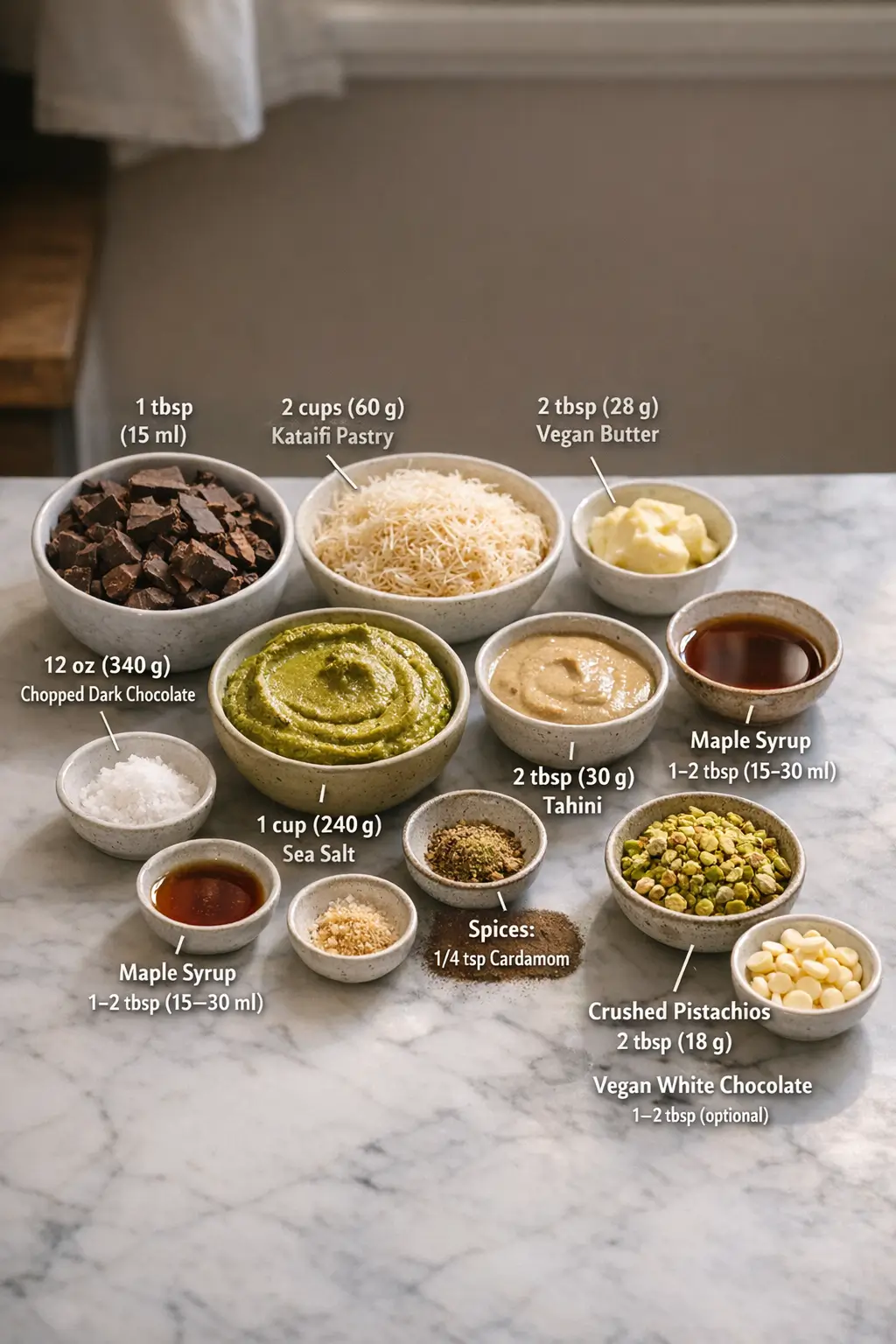
- Dairy‑free dark chocolate (60–70% cacao), chopped — 12 oz (340 g); for shell
- Refined coconut oil — 1 tbsp (15 ml); helps the chocolate coat smoothly
- Kataifi/shredded phyllo pastry, thawed if frozen, loosely packed — 2 cups (about 60 g); for crunch
- Vegan butter or neutral oil (avocado, grapeseed) — 2 tbsp (28 g); to toast kataifi
- Smooth pistachio cream or pistachio butter (unsweetened, dairy‑free) — 1 cup (240 g); for filling
- Tahini (well‑stirred) — 2 tbsp (30 g); rounds out sweetness
- Fine sea salt — 1 pinch; balances flavors
- Pure maple syrup — 1–2 tbsp (15–30 ml), optional; adds sweetness if your chocolate is very dark
- Ground cardamom — 1/4 tsp (1 g), optional; aromatic lift
- Crushed pistachios — 2 tbsp (18 g), optional; garnish
- Vegan white chocolate — 1–2 tbsp (14–28 g), optional; for a decorative drizzle
Ingredient notes and realistic swaps:
- Kataifi is sold as shredded phyllo; you’ll find it in Middle Eastern, Greek, or international freezer cases. If unavailable, use crushed plain cornflakes, crisp rice cereal, or lightly crushed shredded wheat. Texture changes a bit but still gives a pleasant crunch.
- Pistachio cream can be jarred or homemade. If using very thick pistachio butter, loosen with 1–2 tsp neutral oil.
- Tahini lends bitterness to balance sweetness; almond or sunflower seed butter works in a pinch, but flavor skews differently.
- Coconut oil in the shell keeps it easy for beginners. Omit for a firmer shell if you temper chocolate (advanced option).
STEP-BY-STEP INSTRUCTIONS — Dubai chocolate bars
1) Prep your pan or molds.
- Use 8 chocolate‑bar molds, or line a 8×4‑inch (20×10 cm) loaf pan with parchment, leaving overhang for lifting. Clear fridge space now—these set best when they can chill undisturbed.
2) Toast the kataifi for the crunch layer.
- Heat a medium skillet over medium heat. Add vegan butter or oil. When melted, add kataifi and toss constantly until evenly golden, 5–8 minutes. It should smell toasty and feel lighter. Spread on a plate to cool completely.
- Watch closely: thin strands can burn on hot spots. If parts darken too quickly, lower heat and keep the strands moving.
3) Mix the pistachio–tahini filling.
- In a bowl, stir pistachio cream, tahini, salt, and, if using, cardamom and maple syrup. Fold in the cooled kataifi. The mixture should be thick, scoopable, and slightly sticky; it should mound on a spoon. If it looks oily or loose, fold in a small handful of extra kataifi.
4) Melt the chocolate for the shell.
- Place 2/3 of the dark chocolate (about 8 oz/225 g) in a dry, heatproof bowl. Microwave at 50% power in 20–30 second bursts, stirring between each, until mostly melted. Stir in the coconut oil and the remaining 1/3 chocolate until smooth.
- Alternatively, set the bowl over barely simmering water (don’t let steam or water touch the chocolate). Any water droplet can seize chocolate—keep tools bone dry.
5) Coat the molds or make a base layer.
- If using molds: Spoon a thin layer of melted chocolate into each cavity and tilt to coat sides. The coating should be opaque but not thick; aim for about 1–2 mm. Chill 10–15 minutes until just set but still slightly tacky.
- If using a loaf pan: Pour in enough chocolate to cover the base in a thin, even sheet (about half of your melted chocolate). Chill 10–15 minutes until set.
6) Add the filling.
- Divide the pistachio–tahini–kataifi mixture among the molds (or spread evenly in the loaf pan), leaving 1/8–1/4 inch (3–6 mm) at the top for the final chocolate layer. Press gently to level without compressing all the crunch.
7) Seal with more chocolate.
- Rewarm chocolate briefly if needed. Cover the filling fully, tapping the mold/pan on the counter to knock out air bubbles and to settle the chocolate into gaps. Scrape excess for a neat finish. Chill until firm, 45–60 minutes.
8) Unmold and finish.
- Flex silicone molds to release bars. If using a loaf pan, lift the slab by the parchment and cut into bars with a warm knife. Drizzle with melted vegan white chocolate and sprinkle pistachios if you like. Chill 5 minutes to set.
Timing note: Colder kitchens set the shell faster but can make chocolate dull on the surface. Warmer rooms need a few extra minutes of chill time. Either way, store bars cold unless you tempered the chocolate.
Beginner safeguards:
- Work in small batches. If chocolate thickens while you fill, return it to gentle heat for 10–15 seconds and stir.
- Don’t overfill molds—leaving headspace prevents leaks when the top layer goes on.
- Cool kataifi completely before mixing with pistachio cream, or steam will soften the crunch.
WHAT TO EXPECT
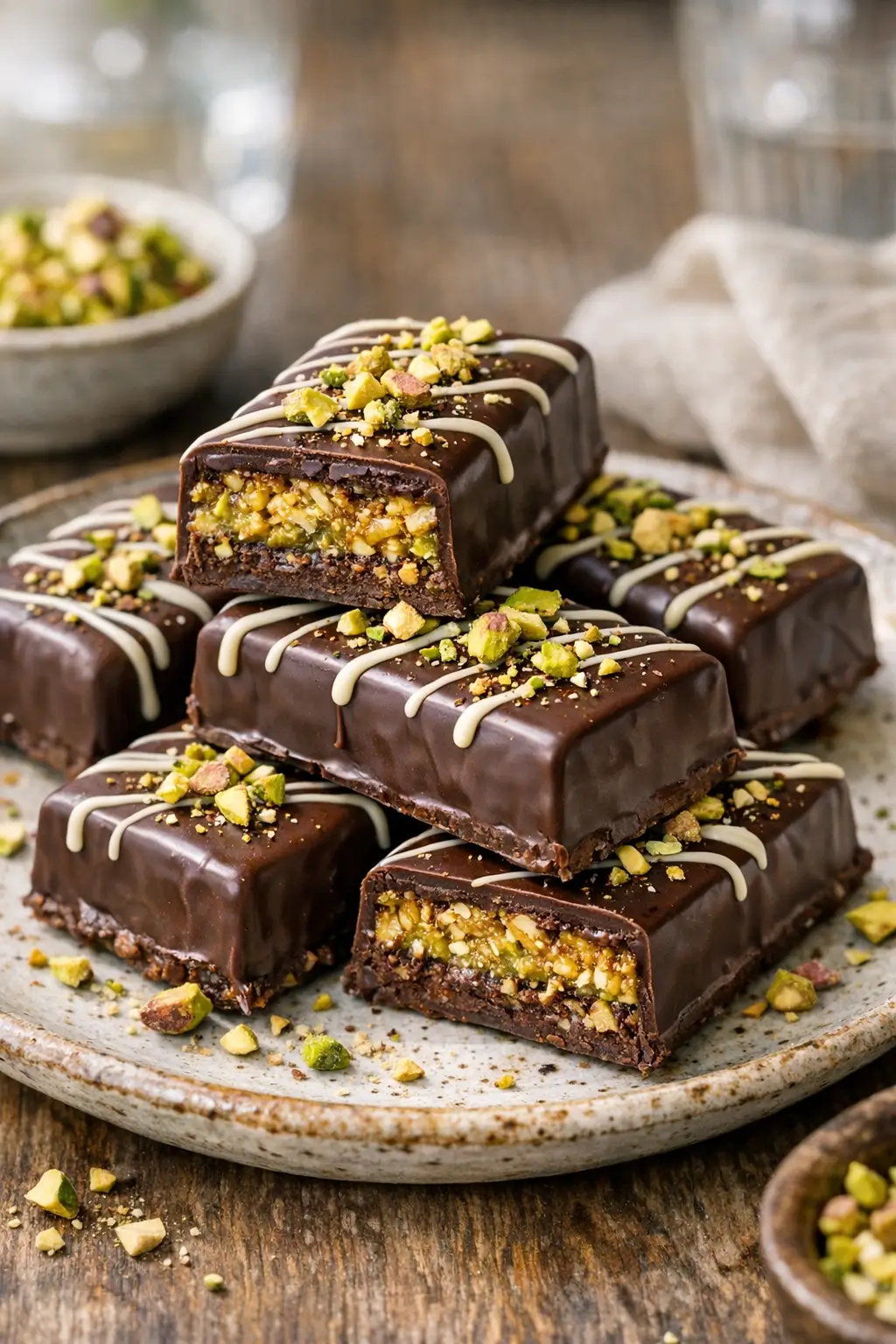
The shell has a clean snap when chilled, softening slightly at room temperature. Inside, the filling is creamy with fine crispy bits—think nutty ganache meets flaky cereal bar.
Flavor sits at the intersection of bittersweet chocolate, roasted pistachio, and sesame from tahini. The maple syrup and cardamom are optional accents; add only if your chocolate is very dark or you enjoy a gentle spice note.
Variability happens. Some pistachio creams are sweetened and loose, others thick and 100% nuts; that alone changes texture and sweetness. Chocolate chips can melt thicker than chopped bars. Coconut oil yields an easier melt and softer bite; skipping it gives a firmer shell but is slightly harder to work with.
WAYS TO CHANGE IT UP
- Vegan and nut‑free: Swap pistachio cream for smooth sunflower seed butter and stir in roasted pepitas for color. The result is earthier and less aromatic but still creamy and crunchy.
- Spicier or milder: Add a pinch of Aleppo pepper or crushed pink peppercorn for a floral, gentle heat. For milder flavor, omit cardamom and maple syrup and choose a 60% cacao chocolate.
- Faster, simplified version: Skip molding. Make a slab in a parchment‑lined 8×4‑inch pan—base chocolate, filling, top chocolate—then chill and slice. It’s quicker, slightly less tidy, and the chocolate edges may look rustic, but flavor and crunch stay the same.
- Gluten‑free option: Traditional kataifi contains wheat. Use crisp rice cereal or certified gluten‑free cornflakes for the crunch; texture is airier and less feathery but remains satisfying.
- Extra‑green look: For a classic green drizzle, melt vegan white chocolate and tint with oil‑based green coloring. Water‑based colors can seize chocolate, so use sparingly if that’s all you have.
SERVING AND STORAGE
Serve bars straight from the fridge for the best snap, or let them sit 5–8 minutes if you prefer a softer bite. They pair especially well with espresso, mint tea, or a glass of cold oat milk. Fresh berries cut the richness.
For a neat presentation, warm a knife under hot water, dry thoroughly, and slice. Wipe the blade between cuts to keep layers defined.
Storage: Because the shell isn’t tempered, keep bars refrigerated in an airtight container for up to 1 week. For longer storage, freeze up to 2 months; freeze on a tray until solid, then transfer to a container with parchment between layers. Thaw in the fridge to reduce condensation. Note that frozen‑then‑thawed kataifi softens slightly; the bars will still taste great but won’t be as shatter‑crisp.
CULTURAL CONTEXT
This confection draws on beloved Middle Eastern ingredients—especially kataifi (shredded phyllo) and pistachio used in knafeh—reimagined inside chocolate. For background on knafeh’s history and how kataifi came to define its texture, see this overview from Smithsonian Magazine, which traces the dessert’s documented roots and evolution through the region’s culinary traditions: The TikTok-Famous Dubai Chocolate and knafeh’s origins.
For a concise, neutral reference on knafeh, including regional names and how modern riffs relate, you can also read: Knafeh (encyclopedic entry). These are not recipes, but helpful snapshots of context.
COMMON QUESTIONS AND TROUBLESHOOTING
-
My shell looks streaky or dull. What happened?
-
Chocolate set cold without tempering will lose some shine. That’s normal for a home, no‑bake method. To improve appearance next time, cool the melted chocolate slightly before coating, avoid very cold molds, and minimize fridge drafts. Tempering is optional but more advanced.
-
The filling seeped into the chocolate and caused thin spots.
-
The bottom layer probably wasn’t fully set or you pressed the filling too hard. Chill the base until it’s firm to the touch and keep a thin chocolate “lip” up the sides of the mold to contain the filling.
-
My kataifi turned soft after a day.
-
Moisture is the culprit. Toast the strands to a deep golden color and cool completely before mixing. Store the finished bars chilled in an airtight container with parchment between layers. Freezing and thawing softens kataifi slightly—that’s expected.
-
I can’t find kataifi. What’s the best substitute?
-
Use crisp rice cereal, crushed cornflakes, or lightly crushed shredded wheat. The texture is less feathery but still crunchy. Avoid sweetened cereals, which can make the bars cloying.
-
Can I make these without coconut products?
-
Yes. Use vegan butter instead of coconut oil for toasting the kataifi, and skip the coconut oil in the shell. The shell will be a touch firmer and slightly more prone to hairline cracks when you slice it—chill well and cut with a warm, dry knife.
-
How sweet should pistachio cream be?
-
Brands vary. Taste yours: if it’s unsweetened, add maple syrup to taste. If it’s sweetened, you may not need any added sweetener at all.
-
Do I need special molds?
-
No. A small loaf pan lined with parchment makes a tidy slab you can cut into bars. Molds simply give a polished shape and make unmolding easier.
CONCLUSION
You don’t need specialty skills or a long ingredient list to recreate this trendy treat at home. If you try these, leave a comment with what worked in your kitchen, any swaps you made, and how crisp you liked the kataifi. Your tweaks help other home cooks get great results, too.



Leave a Reply