
On busy evenings when you want something light but still comforting, pea and mint soup earns its place on the table. Using frozen peas and fresh mint, this pea and mint soup comes together quickly, tastes bright, and works just as well as a starter for guests as it does as a simple solo lunch.
If you’re racing the clock, start by getting your stock heating while you slice your onions; that overlap buys you 5 extra minutes. Cooking with kids around or in a tiny kitchen? Clear one safe chopping area and keep the blender unplugged until you’re ready to purée.
The flavor here is fresh, gently sweet from the peas, and rounded out with a bit of potato and onion for body. You can serve it hot in cooler weather or chilled on warmer days, and it’s friendly to both new cooks and experienced ones who just need a reliable, fast soup.
Ingredients
Serves 3–4 as a starter, 2–3 as a main
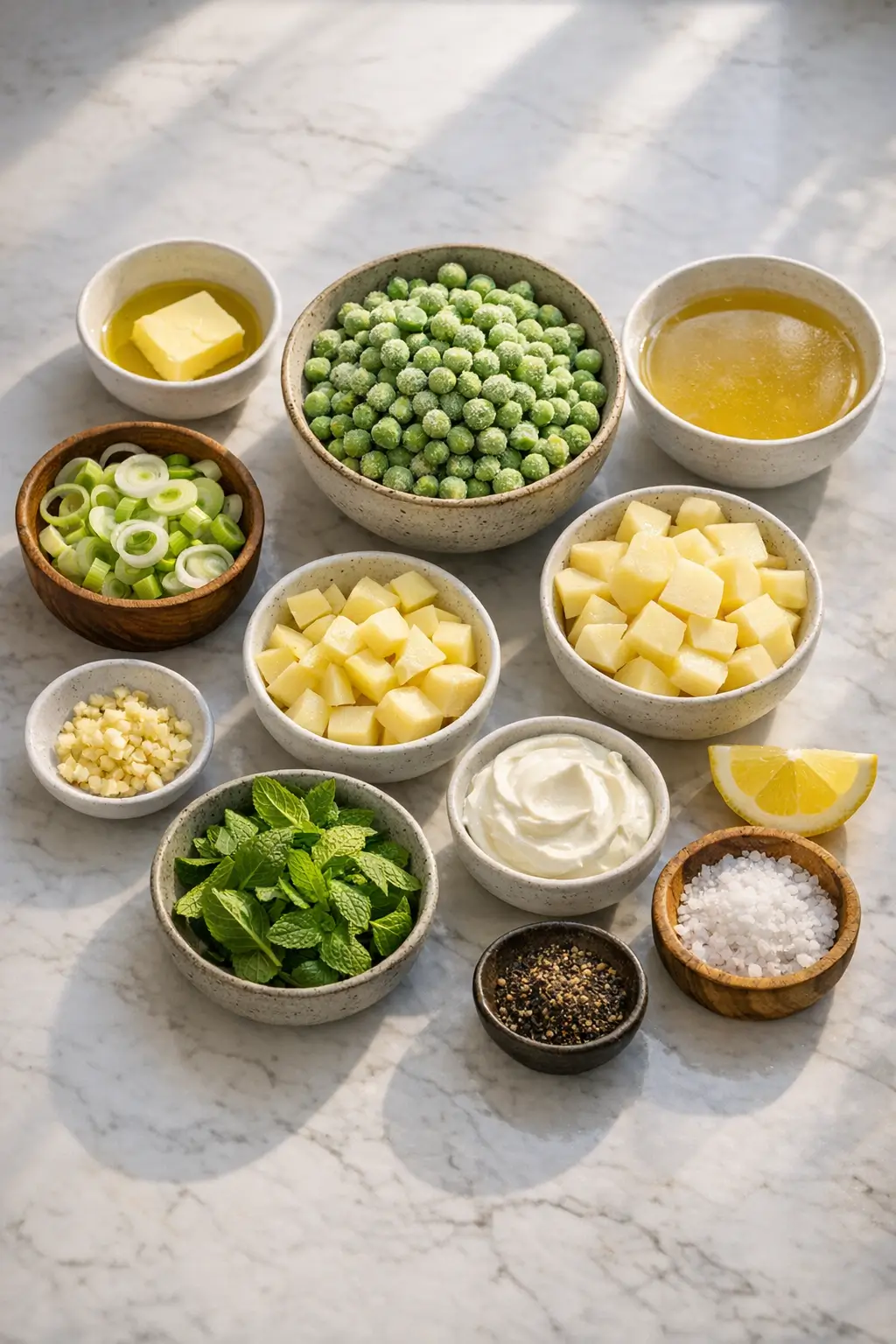
- 1 tbsp olive oil or unsalted butter (for sautéing)
- 3 spring onions / scallions, trimmed and sliced (or 1/2 small yellow onion, chopped)
- 1 small (about 150 g / 5 oz) potato, peeled and diced (adds creaminess without loads of dairy; can swap in 2 tbsp uncooked rice)
- 1 small garlic clove, finely chopped or grated
- 3 cups (about 400 g) frozen peas, no need to thaw
- 3 cups (720 ml) light vegetable or chicken stock
- 1/4–1/3 cup (10–15 g) packed fresh mint leaves, roughly torn (start smaller if you prefer a milder mint flavor)
- 2–3 tbsp crème fraîche, sour cream, or Greek yogurt (for richness and serving; use plant-based yogurt for dairy-free)
- 1–2 tsp fresh lemon juice, or to taste
- Fine sea salt and freshly ground black pepper, to taste
Optional garnishes
- A few extra peas, quickly blanched
- Extra mint leaves
- Swirl of cream, yogurt, or olive oil
- Crumbled goat cheese or crispy bacon bits for a non-vegetarian version
Kitchen note: Use a lighter stock (homemade or low-sodium). Very dark or salty stock can overpower the delicate pea and mint flavor.
Step-by-Step Instructions for pea and mint soup
-
Soften the onion base.
Set a medium saucepan (about 2–3 quarts) over medium heat. Add the olive oil or butter. When it’s warm, add the sliced spring onions and a pinch of salt.
Cook for 3–4 minutes, stirring often, until softened and translucent but not browned. This builds gentle sweetness without competing with the peas.
-
Add potato and garlic.
Stir in the diced potato and cook for 2 minutes, letting it coat in the fat. Add the chopped garlic and cook only 30 seconds, just until fragrant.
Kitchen note: If the garlic starts to brown, quickly splash in a tablespoon of stock to cool the pan down. Bitter garlic will dominate a delicate soup like this.
-
Pour in stock and simmer.
Add the stock and bring everything up to a gentle boil. Once boiling, reduce to a simmer, cover loosely with a lid, and cook for 10–12 minutes, or until the potato is completely tender when pierced with the tip of a knife.
If your stove runs hot, keep the simmer low to prevent reducing the stock too much.
-
Add the peas briefly.
Add the frozen peas straight from the freezer. Bring the soup back to a simmer and cook for 3–5 minutes, just until the peas are bright green and tender.
You don’t want the peas to cook for long; overcooking dulls both the color and fresh taste.
-
Finish with mint and acidity off the heat.
Turn off the heat. Add the torn mint leaves and 1 teaspoon of lemon juice to start.
Let the soup sit for 2–3 minutes so the mint can infuse slightly without turning bitter.
-
Blend until smooth.
Use an immersion blender directly in the pot to blend the soup until smooth and velvety. If using a traditional blender, let the soup cool for a couple of minutes, then blend in batches, filling the jug only halfway and venting the lid.
Blend until you reach your preferred texture, either completely smooth or with a bit of texture.
-
Stir in creaminess and season.
Stir in 2 tbsp crème fraîche, sour cream, or Greek yogurt. Taste, then add more lemon juice, salt, and pepper as needed. The flavor should be lightly sweet from the peas, with a fresh mint backbone and enough acidity to keep it lively.
If the soup is thicker than you like, whisk in a splash more hot stock or water, a little at a time.
-
Serve hot or chilled.
For hot soup, gently rewarm over low heat until just steaming. Avoid letting it boil once the dairy is in to prevent curdling.
For chilled soup, cool to room temperature, then refrigerate for at least 2 hours. It will thicken as it chills, so whisk in a bit of cold stock or water just before serving if needed.
-
Garnish right before serving.
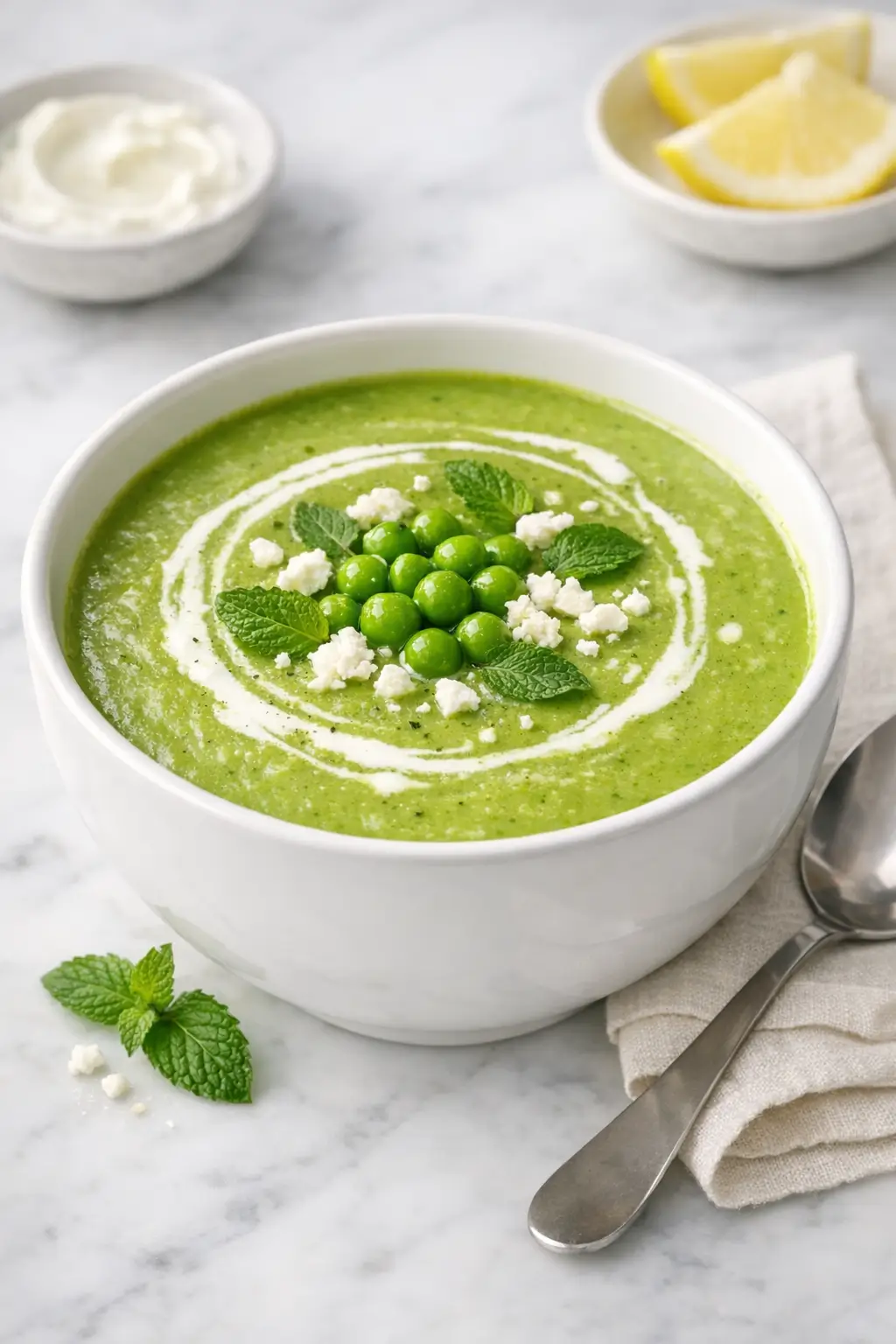
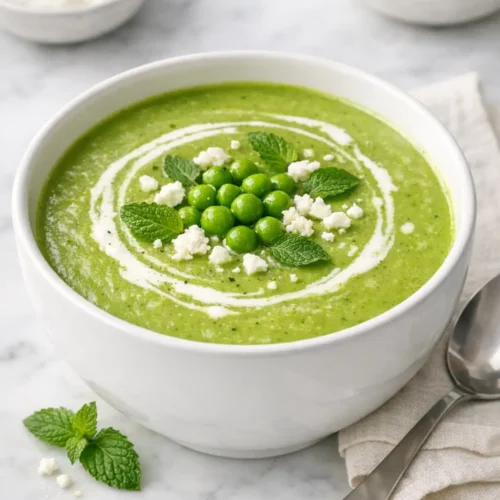
Ladle the soup into bowls. Top with a small spoonful of yogurt or crème fraîche, a few extra peas, and mint leaves. For a heartier bowl, scatter over crumbled goat cheese or crispy bacon.
A slice of crusty bread or a simple side like Garlic Herb Roasted Asparagus in 15 Minutes works well alongside if you’re turning this into a meal.
What to Expect
This pea and mint soup is smooth but not heavy. The small amount of potato gives it body and a lightly creamy mouthfeel without needing a lot of cream.
Flavor-wise, expect gentle sweetness from the peas, mild onion background, and a clean, cool note of mint. The lemon lifts everything so it doesn’t taste flat, especially if you’re serving the soup chilled.
Using different stocks or dairies will shift the character. A richer chicken stock will make it taste rounder and more savory, while vegetable stock keeps the flavor lighter and more purely green. Greek yogurt adds tang, crème fraîche is silkier, and sour cream lands somewhere in between.
Kitchen note: If your soup ever tastes a bit dull, don’t automatically add more salt first. Often, a tiny extra squeeze of lemon wakes up the flavors more effectively.
Ways to Change It Up
-
Vegan and dairy-free.
Use olive oil instead of butter and choose vegetable stock. Skip the crème fraîche and finish with a swirl of good olive oil or a spoonful of unsweetened plant-based yogurt. Check the label for added sugar; you want something neutral so the soup stays savory.
-
Extra-minty or very mild.
For a bolder mint flavor, increase the mint leaves to a generous 1/2 cup (about 20 g), added right at the end before blending. If you prefer mint as a whisper, keep it closer to 1/4 cup and add only half at first, then blend and taste before adding more.
-
Faster, five-ingredient style.
Skip the potato and dairy for a lighter, minimalist version. Gently sauté spring onions in oil, add peas and stock, simmer briefly, blend with mint, season, and finish with olive oil. The texture will be thinner but very fresh and bright.
-
Make it spicier or cozier.
For a bit of heat, add a pinch of red pepper flakes or a small chopped green chili when you add the garlic. To lean into comfort, add a small knob of butter at the end and serve with plenty of toasted bread, similar to how you might serve Easy Creamy Chicken Noodle Soup, One-Pot Comfort.
Serving and Storage
Pea and mint soup works well as a light starter before a richer main dish or as a simple meal with good bread and a crisp salad. In spring and early summer, it’s especially nice chilled as part of a lunch spread.
Pair it with crusty bread, cheese toast, or a grain salad. For a soup-and-salad dinner, something with citrus or herbs (like a lemony grain salad or simple green salad) balances the sweetness of the peas.
Leftover soup keeps well. Cool completely, then store in an airtight container in the fridge for up to 3 days.
To reheat, warm gently in a saucepan over low heat, stirring often, just until hot. If it has thickened, loosen with a splash of water or stock. Avoid boiling if you’ve added dairy, as it can split.
For longer storage, freeze in portions for up to 2–3 months. Thaw overnight in the fridge, then reheat as above. The color may soften slightly after freezing, but the flavor holds up.
Cultural Context
Pea soups appear in many cooking traditions, especially in regions where peas are an important crop. In parts of Europe, simple green pea soups often make use of fresh spring peas or widely available frozen peas, with herbs like mint used to emphasize their sweetness.
Mint is a common herb in European and Mediterranean cooking, used in both savory and sweet dishes. Its pairing with peas is particularly associated with British and wider European cooking, where it shows up in sides, salads, and soups. For a deeper look at the history of peas in European diets, the Science Museum in London offers a brief overview of food preservation and frozen foods on its site: this article on frozen foods.
You can also explore how herbs, including mint, have been used over time in European cuisines through resources like the Museum of London’s look at food history, which touches on changing ingredients and tastes.
Common Questions and Troubleshooting
My soup turned out dull in color. What happened?
Most likely the peas were cooked too long or simmered too hard. Overcooking peas causes them to lose the bright green color. Next time, keep the pea cooking window to 3–5 minutes and cool the soup slightly before blending.
The mint flavor is too strong. Can I fix it?
You can soften strong mint by adding more peas or potato (if you have extra) and a bit more stock, then re-blending. A spoonful of dairy, like yogurt or crème fraîche, also helps round out sharp herbal notes.
My soup tastes flat even though I salted it.
Pea soups often need both salt and acidity. Try adding another small squeeze of lemon juice, stir, and taste again. If it’s still flat, add a pinch more salt and a grind of black pepper.
The texture is grainy, not smooth.
This usually means it wasn’t blended long enough, or the blender wasn’t powerful enough. Blend in small batches until completely smooth, and if needed, push the soup through a fine mesh sieve for an ultra-silky finish.
Kitchen note: If you’re blending hot soup in a traditional blender, work in small batches, vent the lid, and hold a folded towel over the top. Trapped steam can cause the lid to pop and splatter hot soup.
Can I make this ahead for a dinner party?
Yes. Make the soup up to 2 days ahead, chill it, and reheat gently before serving, or serve it fully chilled. Add garnishes like yogurt, mint, and goat cheese just before it goes to the table.
Can I use fresh peas instead of frozen?
Absolutely. Blanch fresh peas in boiling water for 2–3 minutes until tender and bright, then proceed as directed. Fresh peas are sweeter but also more seasonal, while frozen peas are consistently sweet and convenient.
Conclusion
Pea and mint soup is a practical way to turn a bag of frozen peas and a handful of herbs into something that feels intentional instead of improvised. With a short ingredient list and flexible serving options, it fits easily into weeknights and casual lunches.
If you make this, I’d love to hear how you adjusted it for your kitchen—extra minty, fully vegan, served hot in winter or chilled in warm weather. Share your tweaks and questions in the comments so other home cooks can learn from your version too.
Pea and Mint Soup That Tastes Like Spring

Equipment
- Medium saucepan (2–3 quarts)
- Immersion blender or countertop blender
- Knife
- Cutting board
- Measuring cups and spoons
- Ladle
Ingredients
- 1 tbsp olive oil or unsalted butter for sautéing
- 3 spring onions / scallions trimmed and sliced (or 1/2 small yellow onion, chopped)
- 1 small potato peeled and diced (about 150 g / 5 oz); can swap in 2 tbsp uncooked rice
- 1 small garlic clove finely chopped or grated
- 3 cups frozen peas no need to thaw (about 400 g)
- 3 cups light vegetable or chicken stock about 720 ml
- 1/4–1/3 cup fresh mint leaves packed, roughly torn (about 10–15 g)
- 2–3 tbsp crème fraîche, sour cream, or Greek yogurt for richness and serving (use plant-based yogurt for dairy-free)
- 1–2 tsp fresh lemon juice or to taste
- fine sea salt to taste
- freshly ground black pepper to taste
Instructions
- Soften the onion base: Set a medium saucepan over medium heat. Add the olive oil or butter. When warm, add the sliced spring onions and a pinch of salt. Cook 3–4 minutes, stirring often, until softened and translucent but not browned.
- Add potato and garlic: Stir in the diced potato and cook 2 minutes. Add the chopped garlic and cook about 30 seconds, just until fragrant (if garlic browns, splash in a tablespoon of stock to cool the pan).
- Pour in stock and simmer: Add the stock and bring to a gentle boil. Reduce to a simmer, cover loosely, and cook 10–12 minutes, until the potato is completely tender.
- Add the peas briefly: Add frozen peas straight from the freezer. Return to a simmer and cook 3–5 minutes, just until peas are bright green and tender.
- Finish with mint and acidity off the heat: Turn off the heat. Add torn mint leaves and 1 teaspoon lemon juice to start. Let sit 2–3 minutes so the mint infuses.
- Blend until smooth: Use an immersion blender to purée until smooth and velvety. If using a countertop blender, cool briefly and blend in batches, filling only halfway and venting the lid.
- Stir in creaminess and season: Stir in 2 tablespoons crème fraîche, sour cream, or Greek yogurt. Taste and add more lemon juice, salt, and pepper as needed. If too thick, whisk in a splash of hot stock or water.
- Serve hot or chilled: For hot soup, gently rewarm over low heat until steaming (don’t boil after adding dairy). For chilled soup, cool to room temperature, then refrigerate at least 2 hours; whisk in a little cold stock or water before serving if needed.
- Garnish right before serving: Ladle into bowls and top with a spoonful of yogurt or crème fraîche, extra peas, and mint leaves (optional: goat cheese or crispy bacon).



Leave a Reply