
If you’ve been seeing pork egg roll in a bowl all over your feed, you’re not alone. This speedy one-pan dinner turns the best part of a takeout egg roll—the savory pork-and-cabbage filling—into a weeknight meal you can make in about 20 minutes.
Here’s the draw: familiar flavors (soy, sesame, garlic, ginger), hardly any chopping, and easy cleanup. It’s the kind of dish you’ll reach for on busy weeknights, before sports practice, or whenever you need a dependable fridge‑cleaner.
Expect tender-crisp cabbage, juicy pork, and a lightly glossy sauce that leans savory with a toasty sesame finish. It’s popular in American home kitchens and recently trended on TikTok, which makes sense: it’s budget‑friendly, fast, and flexible. Great for cooks of any level who want big flavor without fuss.
INGREDIENTS — Pork Egg Roll in a Bowl
-
Yield: 3 to 4 servings
-
Time: 20–25 minutes
-
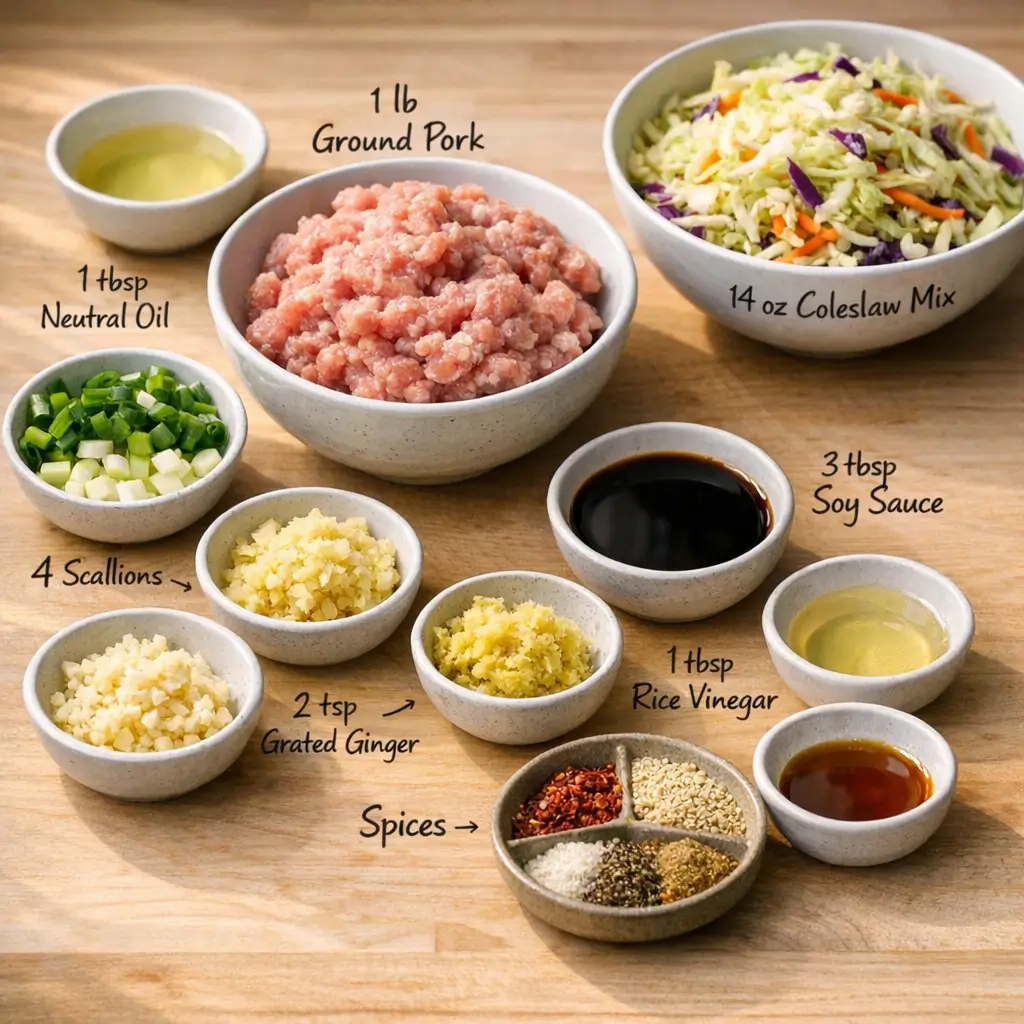
1 tablespoon (15 ml) neutral oil (canola, vegetable, or avocado) — for browning
-
1 pound (450 g) ground pork — rich flavor and fast cooking
-
4 scallions, thinly sliced, whites and greens separated — fresh bite and color
-
4 garlic cloves, finely minced — aromatic base
-
2 teaspoons (10 ml) fresh ginger, finely grated — warmth and zing
-
14 to 16 ounces (400–450 g) coleslaw mix or shredded green cabbage — the bulk of the dish
-
Sub: a mix of 300 g cabbage + 100 g shredded carrots, or broccoli slaw
-
3 tablespoons (45 ml) low‑sodium soy sauce — savory backbone
-
Sub: tamari for gluten‑free; coconut aminos for milder, sweeter flavor (reduce any added sugar)
-
1 tablespoon (15 ml) unseasoned rice vinegar — balances richness
-
Sub: 2 teaspoons (10 ml) lime juice
-
1 teaspoon (5 ml) toasted sesame oil — aromatic finish
-
1 to 2 teaspoons (5–10 ml) chili‑garlic sauce or sriracha, to taste — optional heat
-
Sub: a pinch of red‑pepper flakes or a spoon of chili crisp
-
1 tablespoon (15 ml) hoisin sauce — optional touch of sweetness and depth
-
Sub: 1 teaspoon (4 g) brown sugar if skipping hoisin
-
2 to 4 tablespoons (30–60 ml) water, as needed — to help wilt dry bagged slaw
-
Kosher salt and black or white pepper, to taste — final seasoning
Optional toppings and sides (choose a few):
- 2 tablespoons (16 g) roasted peanuts or cashews, chopped — crunch
- 1 teaspoon (3 g) toasted sesame seeds — aroma and texture
- Baked wonton strips or crispy chow‑mein noodles — a nod to classic egg roll crunch
- Steamed white or brown rice, or cauliflower rice; butter lettuce leaves for wraps
STEP-BY-STEP INSTRUCTIONS
- Prep aromatics and sauce.
- Slice scallions, keeping whites and greens separate. Mince garlic and grate ginger.
- In a small bowl, stir together soy sauce, rice vinegar, sesame oil, and hoisin (if using). Add chili‑garlic sauce to taste. Keep nearby.
- Brown the pork.
- Heat a large skillet or wok over medium‑high until hot. Add neutral oil, then ground pork.
- Break into small pieces with a spatula and let it sit briefly so it actually browns, 5–7 minutes total. Pork should be mostly cooked with some golden edges and very little moisture left.
- Tip: If your pork is very fatty, spoon off excess fat so the finished bowl isn’t greasy; leave a thin coating for flavor.
- Bloom the aromatics.
- Push the pork to one side. Add scallion whites, garlic, and ginger to the exposed surface. Stir until fragrant, 30–45 seconds. Avoid browning the garlic—if the pan is scorching, drop the heat to medium.
- Wilt the cabbage.
- Add coleslaw mix. Toss to combine with pork and aromatics.
- If the bagged slaw seems dry or the pan looks parched, splash in 2–4 tablespoons (30–60 ml) water. This quick steam helps the shreds soften without getting soggy.
- Cook, stirring occasionally, until the cabbage is tender‑crisp with a little bite, 3–5 minutes. Timing varies by pan size and how wet your slaw is.
- Sauce and reduce.
- Pour in the sauce mixture. Toss to coat everything evenly. Cook 1–2 minutes, stirring, until the liquid glossy‑coats the pork and cabbage and there’s no soupy puddle left in the pan.
- Taste. If it’s too salty, add a splash more water or a squeeze of lime. Want more savoriness? Add 1 teaspoon soy sauce.
- Finish and garnish.
- Take the pan off the heat. Drizzle in sesame oil if you saved it for the finish and fold through the scallion greens.
- Add heat with extra chili‑garlic sauce if you like. Top with sesame seeds, peanuts, and a handful of baked wonton strips for crunch.
- Serve.
- Spoon into bowls as‑is, over steamed rice, or tucked into lettuce cups. Serve with extra chili sauce at the table.
Safety and pacing notes:
- This moves fast once the pork is browned. Have the sauce mixed before the cabbage goes in.
- Bagged coleslaw dries out over time in the store. If it looks dull and papery, use the water‑splash trick and cut the cook time slightly to keep texture.
- Garlic can burn in seconds in a hot dry spot; add a small glug of oil if the pan is lean after draining pork fat.
WHAT TO EXPECT
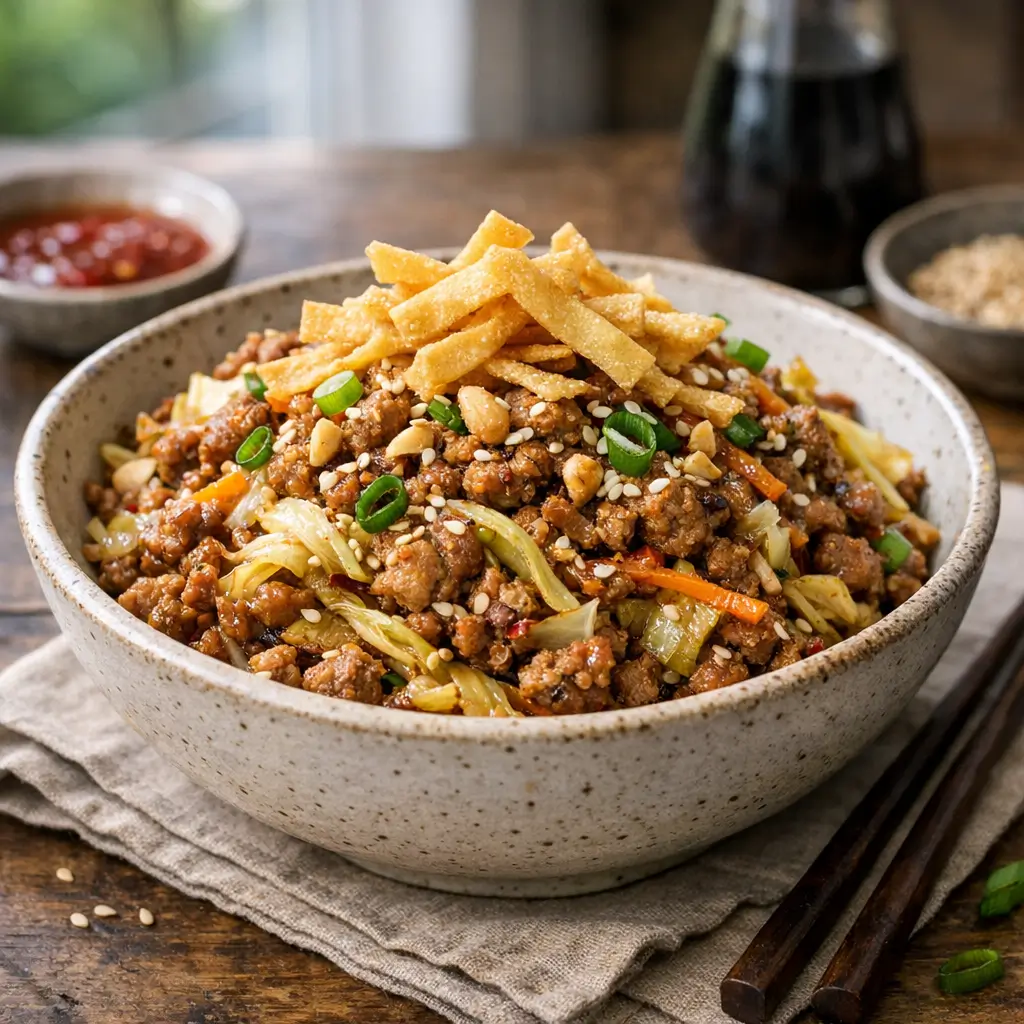
Texture: Pieces of pork should be juicy, not dry, and the cabbage should be wilted but still lightly crunchy. You’re aiming for a tender‑crisp bite rather than stewed cabbage. A few browned cabbage edges are welcome—they add roasty flavor.
Flavor: Savory soy and toasty sesame lead, with ginger and garlic in the background. A little vinegar brightens the bowl so it doesn’t feel heavy. If you add hoisin, expect a subtle sweetness. Chili‑garlic sauce gives a gentle kick without turning it into a spicy stir‑fry.
Variability: Results shift with pan size and heat level. A crowded small skillet will steam the slaw and keep it paler; a wide pan over higher heat gives more browning and sweeter cabbage notes. Different soy brands vary in saltiness—use low‑sodium to make seasoning easier and adjust to taste at the end.
WAYS TO CHANGE IT UP
-
Vegetarian or vegan:
-
Swap pork for extra‑firm tofu (14 oz/400 g), crumbled, or chopped mushrooms (12 oz/340 g). Brown in 1–2 tablespoons oil until deeply golden before adding aromatics. Use tamari or coconut aminos and skip hoisin if it contains animal products. Expect a slightly lighter, less fatty finish; add a teaspoon more sesame oil for richness.
-
Spicier or milder:
-
For heat lovers, add 1–2 teaspoons chili‑garlic sauce to the pan and finish with chili crisp. For a kid‑friendly version, omit the chili entirely and offer sriracha on the side so everyone can customize.
-
Faster or more streamlined:
-
Use pre‑minced garlic and ginger or ginger‑garlic paste. Choose bagged coleslaw mix to avoid chopping. Cook rice in the microwave or use pre‑cooked frozen rice to get dinner on the table even quicker.
-
Crunch factor options:
-
Bake wonton wrappers brushed with a touch of oil at 375°F/190°C for 6–8 minutes, then break into shards and scatter on top. Crushed roasted peanuts or sesame seeds add quick crunch without the oven.
-
Different meats:
-
Ground chicken or turkey work well; they’re leaner and may need an extra teaspoon of oil to brown. Ground beef brings a beef‑and‑broccoli vibe; drain excess fat so the sauce doesn’t taste greasy.
SERVING AND STORAGE
Serve it as a stand‑alone bowl, spooned over steamed rice, or tucked into lettuce cups for a lighter meal. It’s also great over cauliflower rice if you want more vegetables.
Fresh garnishes wake it up: sliced scallion greens, extra sesame seeds, a dash of chili oil, or a squeeze of lime. A side of quick‑steamed edamame or cucumber salad rounds out the plate without much effort.
Storage: Cool leftovers promptly, then refrigerate in a shallow, airtight container up to 3–4 days. Reheat in a skillet over medium heat with a splash of water to re‑gloss the sauce, 2–3 minutes, or microwave in short bursts, stirring to avoid over‑softening the cabbage.
Freezing isn’t ideal because cabbage loses its snap. If you’d like a freezer‑friendly option, cook and freeze just the browned, seasoned pork; add fresh slaw and sauce when reheating for a near‑fresh result.
CULTURAL CONTEXT
“Egg roll in a bowl” borrows flavors from the filling of the American Chinese egg roll—an appetizer that became popular in 1930s New York and spread nationwide. For background on Chinese restaurants’ role in U.S. food culture, the National Museum of American History offers a concise overview of Chinese American dining through its “Sweet & Sour” exhibition. Read more at the Smithsonian’s site.
Attribution for the egg roll’s exact origin varies, with research pointing to chefs in New York’s Chinatown during the early 20th century. For a newspaper‑sourced deep dive into competing claims, including Lum Fong’s, see this historical discussion from the Asian American civic newspaper Sampan: Who Invented the Eggroll?
COMMON QUESTIONS AND TROUBLESHOOTING
-
My bowl is watery. What happened?
-
Two likely causes: the slaw released a lot of moisture or you added sauce before the cabbage wilted. Cook a minute longer to reduce, stirring, or add a teaspoon of cornstarch mixed with a tablespoon of water and simmer 30 seconds. Next time, cook the cabbage to tender‑crisp before saucing and avoid covering the pan.
-
It tastes too salty. How can I fix it?
-
Stir in 1–2 teaspoons rice vinegar or water, then add a small pinch of brown sugar to balance if needed. Use low‑sodium soy next time and season to taste at the end.
-
There’s not enough crunch. Any quick ideas?
-
Toss on toasted sesame seeds, chopped peanuts, or baked wonton strips. Even a handful of crushed plain rice crackers adds texture.
-
Can I use plain cabbage instead of coleslaw mix?
-
Absolutely. Use about 14–16 oz (400–450 g) finely shredded green cabbage. Add a small carrot cut into matchsticks if you want color and light sweetness.
-
What if I only have ground turkey or chicken?
-
Both work; add an extra teaspoon of oil to help browning and watch the timing, as lean meats can overcook quickly. Taste and add a splash more sesame oil at the end for richness.
-
Is this gluten‑free?
-
Use certified gluten‑free tamari instead of soy sauce and confirm your hoisin or chili sauces are GF. Serve with rice, not wheat‑based noodles or wonton strips.
-
How do I meal‑prep it?
-
Portion into airtight containers over rice, keep sauces for drizzling separate, and refrigerate up to 4 days. Reheat gently to maintain cabbage texture. Many cooks like it even more on day two as the flavors mingle.
-
Can I add eggs?
-
Some versions scramble an egg into the pan. If you do, push the mixture to one side after saucing, add a beaten egg to the empty space, scramble softly, then fold in. It adds richness but makes the dish feel less like classic egg roll filling.
CONCLUSION
This pork egg roll in a bowl gives weeknight speed with familiar takeout flavor—and plenty of room to riff. If you cook it, leave a rating and share what you changed: heat level, crunch toppings, or your favorite add‑ins. Your notes help other home cooks and keep the conversation useful.



Leave a Reply