
A big bowl of potato salad with mustard and pickles is one of those side dishes that quietly holds a cookout together. This version leans tangy and creamy, with plenty of crunch from dill pickles and celery, and a mustard-forward dressing that stands up well to grilled meats.
If you’re juggling burgers on the grill and kids asking for plates, start this recipe by getting the potatoes on the stove and eggs in a second pot; those are the only parts that really need your attention. Once they’re cooling, you can chop the pickles and whisk the dressing at your own pace.
The flavor is bold but familiar: soft potatoes, a little snap from the pickles, and a creamy dressing that’s more zippy than sweet. It suits confident beginners and experienced cooks who want a reliable make-ahead side for barbecues, potlucks, and warm-weather dinners.
Ingredients
Serves 4 as a side
For the potatoes and mix-ins
- 900 g / 2 lb waxy or all-purpose potatoes (Yukon Gold or red potatoes), scrubbed
- 1 tsp fine salt (for the cooking water)
- 3 large hard-boiled eggs, cooled and peeled (optional but classic)
- 90 g / 3/4 cup finely diced dill pickles (about 3–4 small dill pickles)
- 30 ml / 2 tbsp dill pickle brine from the jar
- 60 g / 1/2 cup finely diced celery (about 2 small ribs)
- 40 g / 1/4 cup finely diced red or yellow onion
- 2 green onions, thinly sliced (optional, for freshness)
For the creamy mustard dressing
- 160 g / 2/3 cup mayonnaise
- 60 g / 1/4 cup sour cream or plain Greek yogurt
- 30 ml / 2 tbsp yellow mustard
- 10 ml / 2 tsp Dijon mustard (for a little extra depth)
- 15 ml / 1 tbsp apple cider vinegar or white wine vinegar
- 5 ml / 1 tsp additional dill pickle brine, plus more to taste
- 3 g / 1/2 tsp fine salt, plus more to taste
- 1.5 g / 1/4 tsp freshly ground black pepper
- 1 g / 1/4 tsp celery seed (optional but classic)
- 1/4 tsp smoked or sweet paprika, plus more for garnish (optional)
- Small handful fresh dill or parsley, chopped (about 2 tbsp, optional)
Substitutions and notes:
- Potatoes: Waxy potatoes (Yukon Gold, red) hold their shape best. Russet potatoes work but will be softer and more prone to crumbling.
- Mayonnaise: Use your preferred brand; light mayonnaise works but the dressing will be slightly thinner.
- Sour cream/Greek yogurt: Either adds tang and lightens the mayo. You can use all mayo if that’s what you have.
- Mustard: Yellow mustard gives nostalgic “cookout” flavor; all-Dijon makes it a little sharper and less sweet.
- Pickles: Dill pickles keep things tangy. Bread-and-butter pickles will give a sweeter profile.

Step-by-Step Instructions for Potato Salad with Mustard and Pickles
-
Boil the potatoes.
Cut the potatoes into bite-size chunks, about 2–3 cm / 1 inch pieces, leaving the skins on if they are thin and clean. Place them in a large pot, cover with cold water by about 2.5 cm / 1 inch, and stir in 1 tsp fine salt. Bring to a gentle boil over medium-high heat. -
Cook just until tender.
Lower the heat to maintain a steady simmer and cook the potatoes for 10–15 minutes, depending on the size of the pieces, until a knife slides in with just a little resistance and the edges are not falling apart.
Kitchen note: Overcooked potatoes turn to mash as you stir in the dressing. Start checking doneness early; if a potato piece breaks in half when you poke it with a fork, it’s ready.
-
Drain and steam-dry.
Drain the potatoes thoroughly in a colander, then return them to the warm pot off the heat. Let them sit uncovered for 5 minutes to steam off excess moisture. This helps them absorb flavor from the dressing instead of watering it down. -
Splash with pickle brine while warm.
Drizzle 30 ml / 2 tbsp pickle brine over the warm potatoes and gently toss with a spatula to distribute. The warm surface will pick up that tangy flavor quickly. Let the potatoes cool to just slightly warm or room temperature before adding the creamy dressing. -
Cook the eggs (if not already done).
While the potatoes cook, place the eggs in a small pot, cover with cold water, and bring to a boil. Once boiling, cover and reduce to a gentle simmer for 9–10 minutes. Transfer eggs to an ice bath or cold water to cool completely, then peel and chop into bite-size pieces. -
Prep the mix-ins.
Finely dice the dill pickles, celery, and onion. Slice the green onions if using. You want small, even pieces so that each bite has a mix of textures rather than big chunks of raw onion or pickle. -
Whisk the dressing.
In a medium bowl, whisk together the mayonnaise, sour cream or Greek yogurt, yellow mustard, Dijon mustard, vinegar, 5 ml / 1 tsp additional pickle brine, salt, pepper, celery seed (if using), and 1/4 tsp paprika. Taste and adjust: add a splash more brine for tang, a pinch more salt, or extra mustard for more bite.
Kitchen note: The dressing should taste slightly saltier and more acidic than you think is “correct.” Once it coats the potatoes, that intensity will mellow.
-
Combine potatoes and dressing.
Place the cooled potatoes in a large mixing bowl. Spoon about two-thirds of the dressing over them. Use a broad spatula to gently fold until the potatoes are well coated, taking care not to mash them. Add more dressing as needed to reach a creamy but not soupy consistency. -
Fold in pickles, celery, onion, and eggs.
Add the diced pickles, celery, onion, green onions, and chopped eggs to the bowl. Gently fold until everything is evenly distributed. Taste again and adjust seasoning with salt, pepper, or pickle brine. -
Chill to let flavors develop.
Cover the bowl and refrigerate for at least 1–2 hours, or up to 24 hours. The potato salad will thicken slightly as it chills and the flavors of mustard and pickles will deepen. -
Finish and serve.
Just before serving, give the salad a gentle stir, adding the reserved dressing if it looks dry. Sprinkle with a little extra paprika and chopped dill or parsley, if using, for color.
Kitchen note: If you’re serving this outdoors at a cookout, keep the bowl over a shallow pan of ice and avoid letting it sit at room temperature for more than 1–2 hours for food safety.
What to Expect
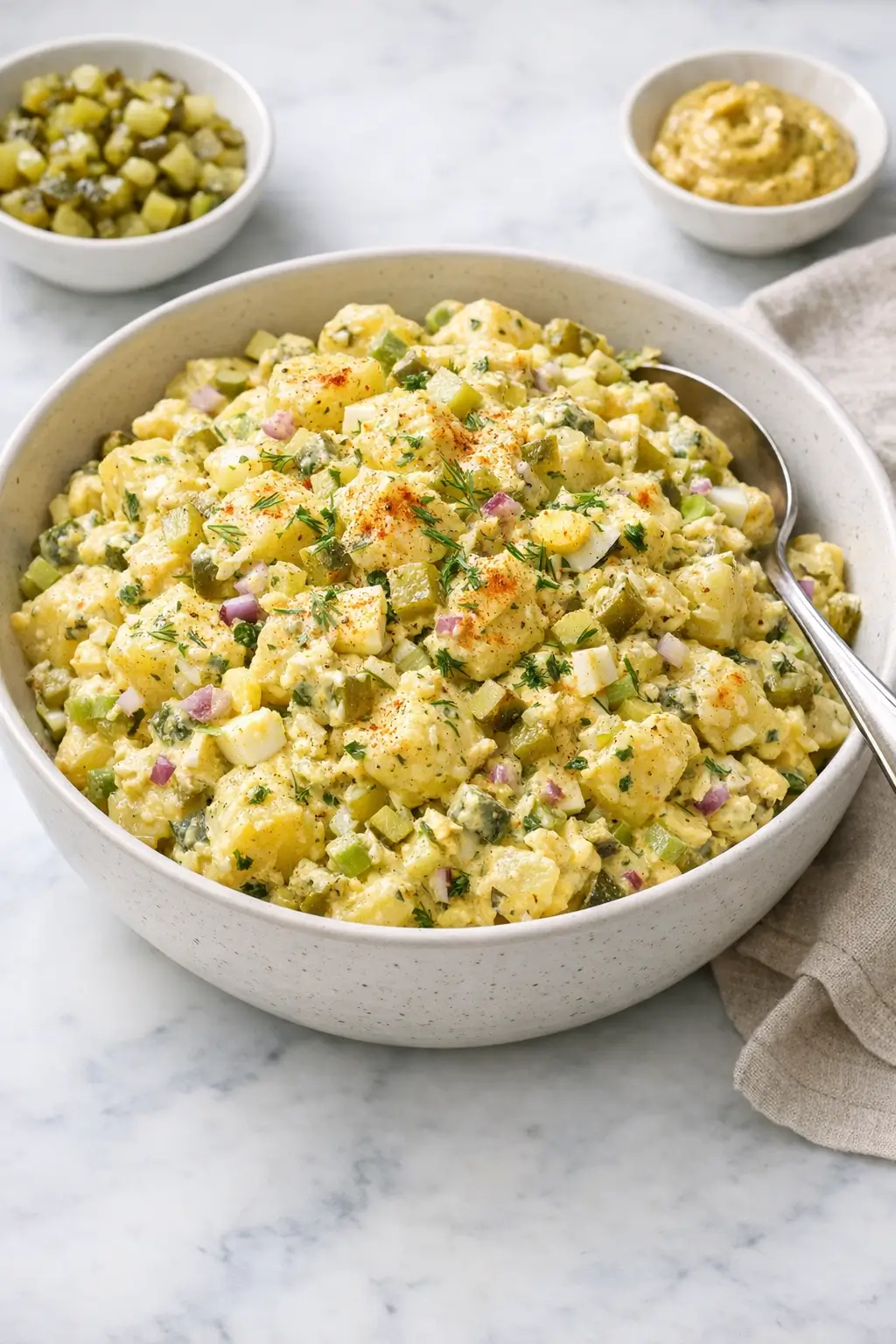
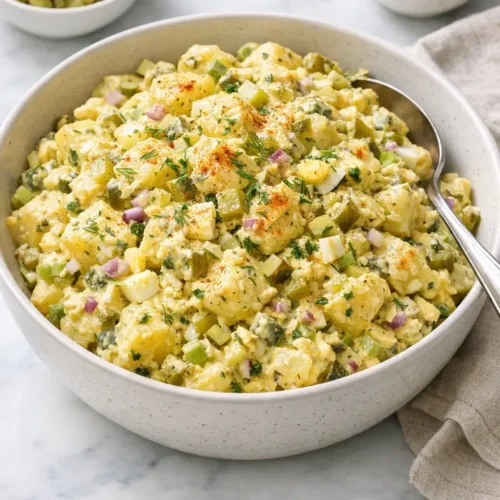
The finished salad should be creamy but not heavy, with potato pieces that mostly hold their shape and just a few edges softly breaking down.
Mustard brings a clear tang and slight heat, while the dill pickles and their brine cut through the richness of the mayo-based dressing.
Depending on your potatoes and how vigorously you mix, you may see some light “saucy” coating forming as starches mix with the dressing—that’s normal and helps the salad cling together.
The flavor balance will skew slightly more savory and tart than sweet, with the option to nudge it toward sweetness if you use bread-and-butter pickles or add a pinch of sugar.
Using different brands of mustard or mayonnaise can subtly change the saltiness and acidity, so always taste and adjust at the end rather than following measurements blindly.
Kitchen note: If your salad seems flat even after chilling, it usually needs either salt, a splash of pickle brine, or a small spoonful of mustard—add in that order, tasting as you go.
Ways to Change It Up
1. Simple vegetarian or vegan version
Skip the eggs and use all-plant mayonnaise to keep the salad egg-free and vegan. Add an extra stalk of celery and a few more chopped pickles for texture.
If you like herbs, a generous handful of chopped dill or parsley brightens the salad and replaces some of the richness you’d get from eggs.
For a vegan version, check that your mustard is free from honey or other animal products, if that matters in your kitchen.
2. Spicier, grill-friendly variation
For a bolder flavor that stands up to smoked meats, stir in 1–2 tsp of spicy brown mustard or a little prepared horseradish to the dressing.
You can also add a finely diced jalapeño (seeds removed for medium heat) or a pinch of cayenne for a gentle burn.
Smoked paprika instead of sweet paprika adds a subtle smokiness that pairs well with barbecue.
3. Faster weeknight shortcut salad
Use small baby potatoes and leave the skins on; they cook faster and require less chopping.
Skip the separate egg pot by using pre-cooked hard-boiled eggs from the store, or omit eggs entirely if you’re short on time.
You can also mix the dressing directly in the serving bowl, then add the drained, slightly warm potatoes on top and fold everything together in one place, saving dishes.
Kitchen note: For the quickest chill, spread the finished salad in a shallow container so it cools faster before you pack it into a serving bowl.
Serving and Storage
At a cookout, this potato salad fits naturally next to grilled burgers, hot dogs, sausages, chicken, or vegetables. Its tangy mustard and pickle notes balance smoky, fatty flavors nicely.
It also works as part of a cold lunch plate with sliced tomatoes, corn on the cob, and a green salad, or as a make-ahead side for baked chicken on a busy weeknight.
For serving, a shallow, wide bowl helps keep the salad evenly chilled; you can nestle it into a larger bowl filled with ice if it will sit out for a while.
Leftover potato salad keeps well in an airtight container in the refrigerator for up to 3 days. The flavor often improves on day two as the dressing fully penetrates the potatoes.
If the salad thickens too much after chilling, stir in a spoonful of mayonnaise, a small splash of pickle brine, or a bit of milk to loosen it just before serving.
Reheating is not recommended for this style of creamy potato salad; it’s meant to be served cold or at cool room temperature, both for flavor and food safety.
Cultural Context
Potato salads with mustard and pickles appear in many European and North American food traditions, often as part of everyday meals rather than special-occasion dishes.
German-style potato salads frequently use mustard and pickles or pickle brine, sometimes with a vinegar-and-oil dressing and sometimes with a creamy base, and they have influenced versions seen at many U.S. cookouts today. You can see one approach to this style in discussions of German potato salads in resources like this overview of potato salad in German cooking.
Other mixed vegetable and potato salads, such as Olivier salad in Eastern European and Russian cuisines, also combine potatoes, pickles, eggs, and a creamy dressing, showing how this flavor combination travels across borders. For more background, see this summary of Russian-style mayonnaise-based salads.
Common Questions and Troubleshooting
Why did my potatoes fall apart so much?
They were likely cooked a little too long or boiled too vigorously. Next time, start checking them earlier and aim for just-tender pieces, and keep the water at a steady simmer rather than a rolling boil.
If they’re already a bit soft, chill the potatoes completely before mixing with the dressing; cold potatoes are less fragile and will mash less as you fold.
My potato salad tastes bland even though I followed the recipe—what should I adjust?
Chilled foods need a bit more salt and acidity. Add a pinch of salt, then a small splash of pickle brine or vinegar, and finally a little more mustard if needed, tasting between each adjustment.
Remember that different brands of mayo and mustard have varying salt and acid levels, so small tweaks are normal.
Can I use sweet pickles instead of dill pickles?
Yes, sweet pickles or sweet pickle relish will make the salad noticeably sweeter and slightly less sharp. If you go that route, you may want to reduce or skip any added sugar in other dishes on the plate to keep the meal balanced.
You can also mix half sweet and half dill pickles to keep some tang while still getting that sweet crunch.
How far in advance can I make this for a cookout?
You can prepare the salad up to 24 hours in advance and keep it covered in the refrigerator. In fact, several hours of resting time help the mustard and pickle flavors meld.
Hold back a few spoonfuls of dressing until just before serving, then stir it in to refresh the texture if the salad has thickened or dried slightly.
Is it safe to leave potato salad out during a long barbecue?
For food safety, avoid leaving creamy potato salads at room temperature for more than 1–2 hours (or 1 hour if the weather is very hot). When in doubt, keep the bowl on ice and return leftovers to the fridge promptly.
If you expect it to sit out longer, consider keeping a smaller serving portion on the table and refilling from a chilled container as needed.
Kitchen note: If the salad has sat out in the heat for more than 2 hours, it’s safest to discard any leftovers rather than refrigerate them again.
Conclusion
This potato salad with mustard and pickles brings together familiar comfort and bright, tangy flavors that hold their own at any cookout table.
The method is forgiving, relies on supermarket ingredients, and rewards a little advance planning with a side dish that actually improves as it rests.
If you try it, consider leaving a comment and rating with any tweaks you make—extra pickles, different mustards, or herbs—so other home cooks can see how the recipe adapts.
Sharing what worked in your own kitchen helps others decide how to tailor the salad for their grills, families, and gatherings.
Potato Salad with Mustard and Pickles for Cookouts

Equipment
- Large pot
- Small pot
- Colander
- Medium mixing bowl
- Large mixing bowl
- Whisk
- Spatula
- Knife
- Cutting board
Ingredients
For the potatoes and mix-ins
- 900 g waxy or all-purpose potatoes (Yukon Gold or red potatoes) scrubbed
- 1 tsp fine salt for the cooking water
- 3 large hard-boiled eggs cooled and peeled (optional)
- 90 g dill pickles finely diced (about 3–4 small dill pickles)
- 30 ml dill pickle brine from the jar
- 60 g celery finely diced (about 2 small ribs)
- 40 g red or yellow onion finely diced
- 2 green onions thinly sliced (optional)
For the creamy mustard dressing
- 160 g mayonnaise
- 60 g sour cream or plain Greek yogurt
- 30 ml yellow mustard
- 10 ml Dijon mustard
- 15 ml apple cider vinegar or white wine vinegar
- 5 ml dill pickle brine additional, plus more to taste
- 3 g fine salt plus more to taste
- 1/4 tsp freshly ground black pepper
- 1/4 tsp celery seed optional
- 1/4 tsp smoked or sweet paprika plus more for garnish (optional)
- 2 tbsp fresh dill or parsley chopped (optional)
Instructions
- Boil the potatoes: Cut the potatoes into bite-size chunks (about 2–3 cm / 1 inch). Place in a large pot, cover with cold water by about 2.5 cm / 1 inch, and stir in 1 tsp fine salt. Bring to a gentle boil over medium-high heat.
- Cook just until tender: Lower heat to maintain a steady simmer and cook 10–15 minutes, until a knife slides in with a little resistance and the edges are not falling apart.
- Drain and steam-dry: Drain potatoes in a colander, return to the warm pot off the heat, and let sit uncovered 5 minutes to steam off excess moisture.
- Splash with pickle brine while warm: Drizzle 30 ml / 2 tbsp pickle brine over the warm potatoes and gently toss. Let cool to slightly warm or room temperature before adding the creamy dressing.
- Cook the eggs (if not already done): Place eggs in a small pot, cover with cold water, and bring to a boil. Once boiling, cover and reduce to a gentle simmer for 9–10 minutes. Cool in an ice bath or cold water, then peel and chop.
- Prep the mix-ins: Finely dice the dill pickles, celery, and onion. Slice the green onions if using.
- Whisk the dressing: In a medium bowl, whisk together mayonnaise, sour cream/Greek yogurt, yellow mustard, Dijon, vinegar, 5 ml / 1 tsp pickle brine, salt, pepper, celery seed (if using), and 1/4 tsp paprika. Taste and adjust with more brine, salt, or mustard as needed.
- Combine potatoes and dressing: Put cooled potatoes in a large bowl. Add about two-thirds of the dressing and gently fold to coat without mashing. Add more dressing as needed for a creamy (not soupy) consistency.
- Fold in pickles, celery, onion, and eggs: Add diced pickles, celery, onion, green onions, and chopped eggs. Fold gently until evenly distributed. Taste and adjust seasoning with salt, pepper, or pickle brine.
- Chill to let flavors develop: Cover and refrigerate at least 1–2 hours (or up to 24 hours) to thicken slightly and deepen flavor.
- Finish and serve: Stir gently, adding reserved dressing if needed. Garnish with extra paprika and chopped dill or parsley if using.



Leave a Reply