
If you crave a fall pasta night that feels special but doesn’t chain you to the stove, this one’s for you. Pumpkin Gnocchi with Sage Butter Sauce brings soft, pillowy bites, nutty butter, and crisp sage to the table in under an hour.
You’ll make a simple dough, roll it into ropes, and simmer until each piece floats. While the pot works, brown butter kisses sage leaves and turns aromatic and toasty. It’s a cozy, low-stress project suited to weeknights or small gatherings.
Expect tender gnocchi with a gentle pumpkin sweetness and a savory, aromatic finish. This recipe suits newer cooks who want a forgiving dough, as well as experienced home cooks chasing restaurant-style results without special tools. It’s inspired by Italian trattoria flavors and is right at home in autumn through winter.
INGREDIENTS
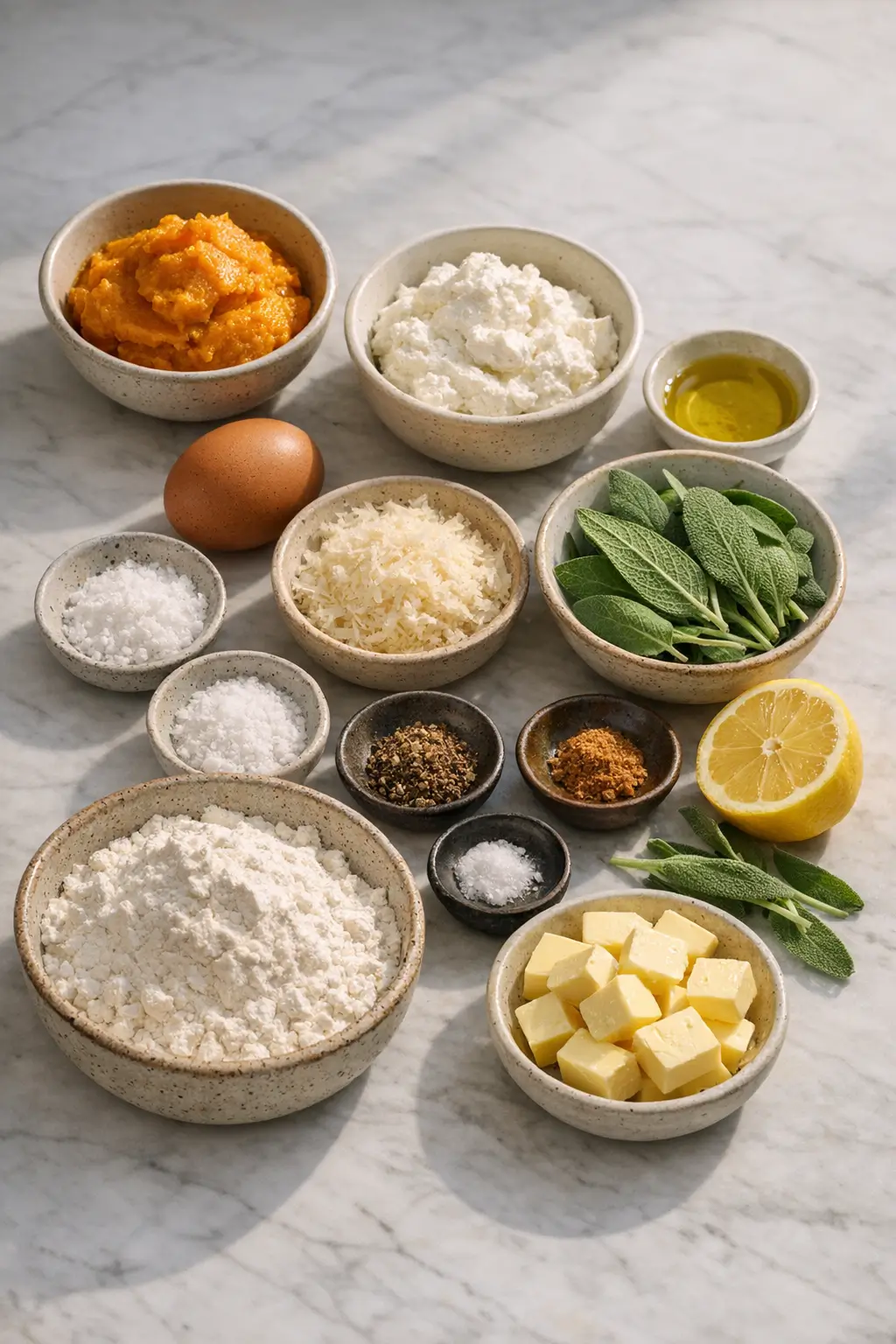
- 1/2 cup (120 g) pumpkin purée, well-drained (see Step 1)
- Purpose: color, mild sweetness, moisture.
- Substitute: mashed roasted winter squash.
- 1/2 cup (120 g) full-fat ricotta
- Purpose: tenderness and lightness.
- Substitute: whole-milk cottage cheese, well-blended and strained; dairy-free ricotta for vegan variation.
- 1 large (50 g) egg
- Purpose: binding.
- Substitute: For vegan variation, use 1 tablespoon ground flaxseed mixed with 3 tablespoons water; chill 10 minutes to gel.
- 1/3 cup (30–35 g) finely grated Parmesan, plus more to serve
- Purpose: umami and structure.
- Substitute: Pecorino Romano (saltier); plant-based Parmesan (vegan).
- 1 1/4 cups (155 g) all-purpose flour, plus more for dusting
- Purpose: structure.
- Note: You may need a tablespoon or two more depending on moisture.
- 1/2 teaspoon kosher salt, plus extra for the cooking water
- 1/4 teaspoon black pepper
- Pinch (1/8 teaspoon) nutmeg, optional
Sage butter sauce
- 4 tablespoons (56 g) unsalted butter
- 1 teaspoon (5 ml) olive oil (helps prevent scorching)
- 12–16 fresh sage leaves
- Additional salt and pepper to taste
For cooking and finishing
- 2–3 quarts (2–3 liters) water
- 1 tablespoon kosher salt for the pot
- Extra Parmesan for serving and a squeeze of lemon, optional
STEP-BY-STEP INSTRUCTIONS
- Drain the pumpkin purée (5–10 minutes).
- Line a colander with a double layer of paper towels. Spread the pumpkin in a thin layer and let excess moisture wick away. This single step reduces stickiness and keeps the gnocchi light rather than floury.
- Make the dough.
- In a medium bowl, combine the drained pumpkin, ricotta, egg, Parmesan, salt, pepper, and nutmeg (if using). Stir just to combine.
- Add flour gradually.
- Sprinkle in the flour in two additions, folding with a spoon until a soft, slightly tacky dough comes together and pulls away from the sides of the bowl. It shouldn’t feel dry.
- Beginner safeguard: if the dough smears heavily on your hands, dust your palms and the dough with a teaspoon or two of flour rather than working more flour into the bowl.
- Prepare the work surface.
- Lightly flour a board or countertop. Turn the dough out and pat into a thick rectangle. Dust the top with a whisper of flour.
- Divide and roll.
- Cut the dough into 4–6 pieces. Working with one piece at a time, roll into a rope about 2/3 inch (1.7 cm) thick. Use a light touch—pressing hard compacts the dough and makes dense gnocchi.
- Cut and (optionally) ridge.
- Cut ropes into 3/4–1 inch (2–2.5 cm) pieces. For ridges, press each piece gently against the back of a fork and roll away to create shallow grooves. It’s fine to skip the ridges if you prefer faster prep.
- Bring water to a boil.
- Heat 2–3 quarts (liters) of water to a rolling boil and salt it with 1 tablespoon kosher salt (use less if using fine table salt). Set a wide skillet nearby for the sauce.
- Cook the gnocchi in batches.
- Slip in a few handfuls at a time. Stir once to prevent sticking to the bottom. Cook until pieces float and look slightly puffed, 60–90 seconds for fresh dough. Lift out with a slotted spoon to a tray. Keep batches somewhat small to avoid crowding.
- Safeguard: if any pieces fray or break, dust the remaining uncooked gnocchi lightly with flour before the next batch.
- Start the sage butter.
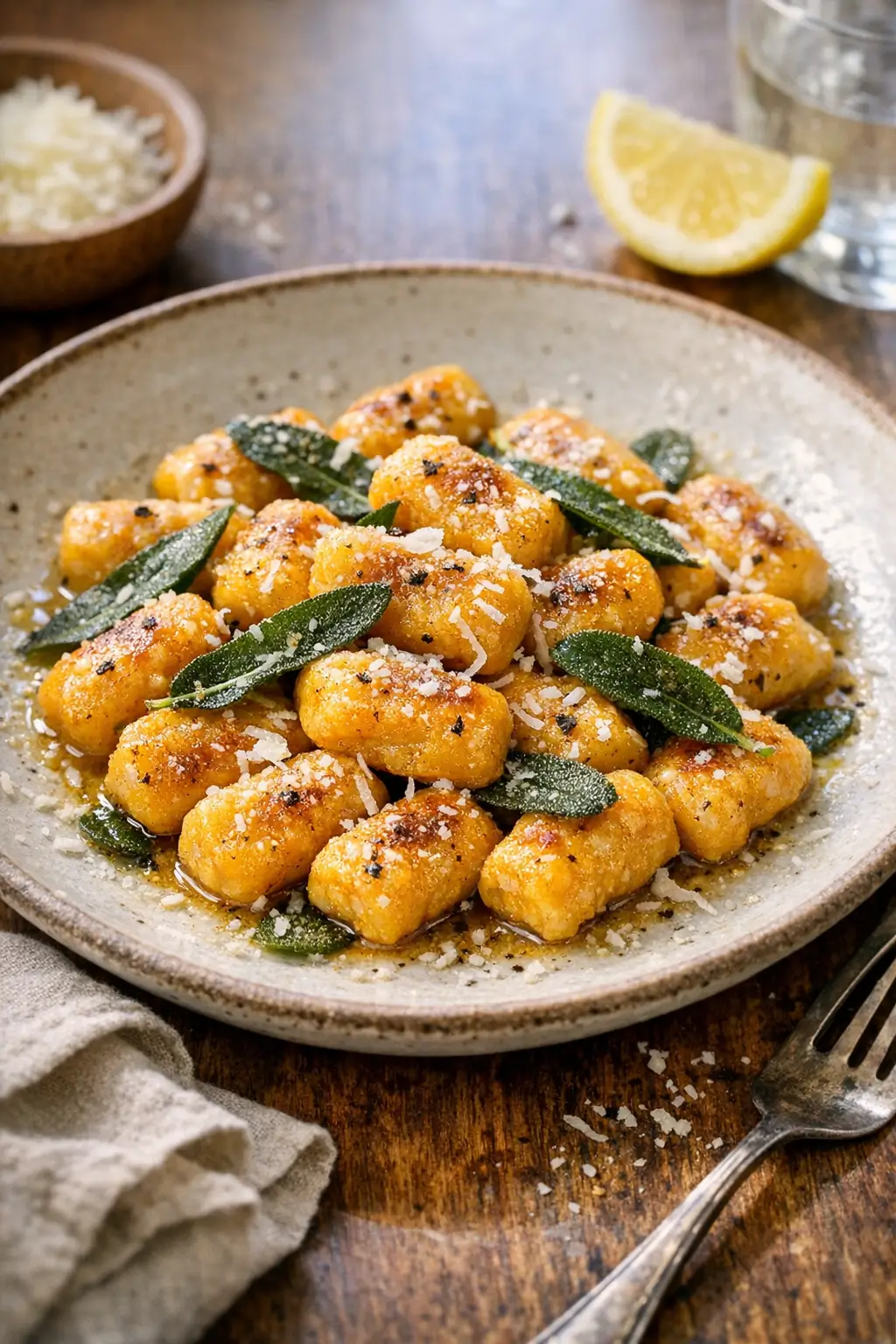
- In the skillet, melt butter with the olive oil over medium heat. When the butter foams and the milk solids turn light amber and smell nutty, add the sage leaves. They should sizzle gently and crisp in about 30–60 seconds.
- Warning: butter can tip from browned to burnt quickly. If it darkens too fast or smells acrid, pull the pan off the heat for 15–30 seconds, then return it to low.
- Pan-fry the gnocchi.
- Add the drained gnocchi straight to the sage butter. Toss or shake the pan to coat. Let them sit for 30–45 seconds, then gently turn until lightly golden on at least two sides, 2–3 minutes total.
- Season and finish.
- Taste and season with salt and pepper. If you like a little brightness, a small squeeze of lemon is welcome here. Sprinkle with extra Parmesan.
- Serve immediately.
- Gnocchi are at their best hot from the pan while the edges are crisp and the centers still pillowy.
WHAT TO EXPECT: Pumpkin Gnocchi with Sage Butter Sauce
-
Texture: soft and cushiony inside, with lightly crisped edges from the butter toss. Not every piece will brown evenly—don’t chase perfection. The goal is contrast, not crunch throughout.
-
Flavor: gentle sweetness from pumpkin balanced by savory Parmesan and nutty brown butter. Sage brings an unmistakable aroma and a subtle herbal bitterness that keeps the sauce from feeling heavy.
-
Natural variation: canned pumpkin brands differ in moisture; ricotta textures vary from scoopable to firm. Expect to adjust flour by a tablespoon or two. Ridges look nice and hold sauce, but smooth pillows taste just as good.
-
Visual cues: properly browned butter is golden with toasty milk solids and a hazelnut aroma—not dark brown or black. Cooked gnocchi float and look slightly puffed; overcooked pieces can turn waterlogged and mushy.
WAYS TO CHANGE IT UP
-
Vegetarian or vegan adapted
-
Use dairy-free ricotta and vegan butter; swap the egg for a flax “egg” (1 tablespoon ground flaxseed + 3 tablespoons water, chilled 10 minutes). Plan on adding 1–3 extra tablespoons flour to compensate for the wetter mixture. Texture will be slightly denser, so chill the formed gnocchi 15 minutes before boiling to help them hold.
-
Spicier or milder
-
For heat, add a pinch of red pepper flakes or Aleppo pepper to the butter when you add the sage. For a milder, cheesier profile, finish with extra Parmesan and skip the nutmeg.
-
Faster or simplified
-
Use store-bought shelf-stable gnocchi. Make only the sage butter sauce, then toss and serve. You’ll lose the pumpkin flavor in the dumplings, but gain speed—dinner in 15 minutes.
-
Pumpkin-potato hybrid
-
Swap the ricotta for 1 small boiled russet potato (about 200 g), riced and cooled, plus 1 cup (240 g) pumpkin purée. You’ll likely need a bit more flour; work in small amounts to keep the gnocchi tender.
-
Crunch topper
-
Toast a handful of chopped walnuts or hazelnuts in a dry pan and fold in at the end for texture.
SERVING AND STORAGE
-
How to serve it
-
Warm shallow bowls so the butter doesn’t set on contact. Top with extra Parmesan and freshly ground pepper. A crisp green salad with a tangy vinaigrette balances the richness. Roasted broccoli, sautéed kale, or pan-fried mushrooms make good sides. If you eat meat, a few shards of crispy prosciutto add salty contrast.
-
What pairs well
-
Bright, high-acid whites (Pinot Grigio, Verdicchio) or light reds (Valpolicella, Dolcetto). Sparkling water with lemon is excellent for a nonalcoholic option.
-
Storage and reheating
-
Best enjoyed immediately. Cooked gnocchi absorb sauce and soften as they sit. If you must store leftovers, refrigerate in a covered container up to 2 days. Reheat gently in a nonstick skillet with a teaspoon of water or a dab of butter, turning just until warmed; don’t microwave to piping hot or the centers can toughen.
-
For make-ahead, freeze uncooked gnocchi on a parchment-lined sheet until solid, then transfer to a freezer bag for up to 2 months. Boil directly from frozen; they’ll take 30–60 seconds longer to float.
CULTURAL CONTEXT
Gnocchi are small, dumpling-like pieces of dough cooked in water and dressed with sauces, commonly served as a first course in Italy. Variations are many—potato, semolina, ricotta—and butter with sage is one of the classic pairings described in reference sources. For a concise overview of gnocchi’s background and varieties, see this summary from an educational encyclopedia-style resource: Gnocchi.
In Rome, a weekly tradition known as “Giovedì Gnocchi” (Gnocchi Thursday) still pops up in homes and trattorie. It’s a practical custom with religious roots: a hearty Thursday meal ahead of Friday’s abstinence from meat. Learn more about that ritual here: Gnocchi Thursday – A Rather Roman Ritual.
COMMON QUESTIONS AND TROUBLESHOOTING
1) My dough is sticky. Should I add a lot more flour?
- Add flour in teaspoons, not handfuls. Slight tackiness is desirable and yields tender gnocchi. First, make sure the pumpkin was drained. Then dust hands and the board rather than kneading in extra flour. If you’ve already added too much, compensate with a teaspoon or two of ricotta to restore softness.
2) The gnocchi fell apart in the pot. What happened?
- The dough was likely too wet or overmixed. Dry the purée thoroughly, add a spoonful or two of flour to the remaining batch, and keep the boil to a lively simmer rather than a furious bubble. Slip the pieces into the water and give one gentle stir to free them from the bottom.
3) They taste dense and heavy. How do I fix that next time?
- Over-flouring and overworking are the usual culprits. Mix just until the dough forms and handle it lightly when rolling ropes. Aim for 2/3-inch thickness and don’t press hard when creating ridges. Also, avoid long boiling—lift gnocchi as soon as they float and look slightly puffed.
4) Can I use canned pumpkin?
- Yes—use plain pumpkin purée (not pumpkin pie filling) and drain it briefly on paper towels to remove excess moisture. Brands vary; some are firmer than others.
5) My butter burned. Do I need to start over?
- If it’s deeply brown with a bitter smell and black specks, start again—burnt butter will overpower the dish. Keep heat moderate, swirl the pan, and add the sage just as the butter reaches a toasty, amber stage. A teaspoon of olive oil in the pan gives a bit more buffer before scorching.
6) Can I swap out ricotta?
- Yes. For a slightly firmer, more rustic gnocchi, replace ricotta with 1 small boiled, riced potato and increase flour a touch as needed. The flavor leans more starchy and less creamy.
7) Can I make the dough ahead?
- Shape the gnocchi and freeze them uncooked on a tray. Cooking fresh dough later the same day is fine, but storing formed, uncooked gnocchi in the fridge for more than a few hours can lead to stickiness.
8) Do I have to brown the butter?
- Browning adds nuttiness and depth. If you prefer a lighter sauce, simply melt the butter with the sage until fragrant without browning, then toss with the gnocchi and finish with extra Parmesan.
CONCLUSION
If you make this, I’d love to hear how it went and what tweaks worked in your kitchen—flour adjustments, different pumpkins, or a creative garnish. Leave a comment with your results and any smart tips for fellow home cooks, especially what helped you keep the gnocchi light and the butter perfectly toasty.



Leave a Reply