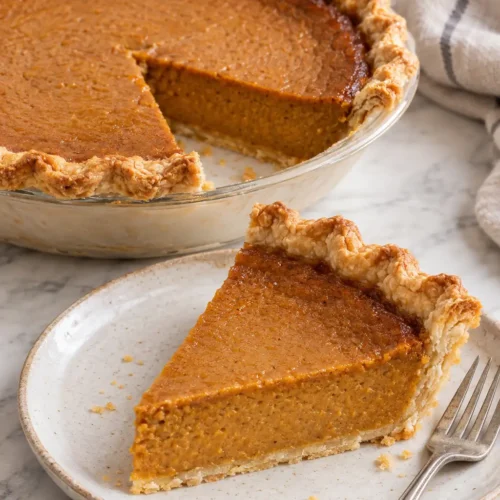
Pumpkin Pie From Scratch With Real Roasted Pumpkin

Pumpkin pie from scratch, made with a roasted sugar pumpkin and a hand-mixed butter crust. The custard tastes earthier and less like spice jar than pies made with canned puree.
Equipment
- Large rimmed baking sheet
- Parchment paper
- 7-inch pie plate
- Fine-mesh sieve
- Paper towel or cheesecloth
- Pie weights or dried beans
- Foil
- Fork
- Whisk
- Pastry cutter
- Blender or food processor
- Large bowl
- Wire rack
Ingredients
For the pumpkin
- 1 small sugar pumpkin (pie pumpkin) about 700–900 g / 1½–2 lb; you only need about 1 cup of puree
- 1 tsp neutral oil canola or vegetable, to rub on the cut sides
For the crust
- 1 cup (125 g) all-purpose flour
- 1/8 tsp salt
- 5½ tbsp (78 g) unsalted butter cold, cubed; keep it cold for flakiness
- 2–3 tbsp (30–45 ml) ice-cold water
For the filling
- 1 cup (about 245 g) fresh pumpkin puree drained
- 6 tbsp (75 g) granulated sugar
- 1/4 tsp salt
- 3/4 tsp ground cinnamon
- 1/2 tsp ground ginger
- 1/4 tsp ground nutmeg optional
- 1 pinch ground cloves optional; they are strong, so a pinch is enough
- 1 large egg
- 1 egg yolk extra yolk gives a richer set
- 3/4 cup (180 ml) evaporated milk
Instructions
- Roast the pumpkin. Heat the oven to 375°F (190°C). Cut the pumpkin in half from top to bottom, scrape out the seeds and stringy bits, and rub the cut sides with oil. Put the halves cut-side down on a lined baking sheet and roast for 45 minutes to 1 hour, until a knife slides through the skin with no resistance and the halves start to slump. Use a sugar or pie pumpkin, not a carving pumpkin, which is stringy, watery, and bland.
- Puree and drain. Let the halves cool until you can handle them, then scoop the flesh away from the skin. Blend or process until smooth. Scrape the puree into a fine-mesh sieve lined with a paper towel or cheesecloth and drain for 30 minutes. This step decides whether your pie sets or weeps, so do not skip it. Measure out 1 cup and keep the rest for later.
- Make the dough. Whisk the flour and salt together in a bowl. Add the cold butter and rub it in with your fingertips or a pastry cutter until the mixture looks like coarse crumbs with some pea-sized bits of butter showing. Sprinkle in the ice-cold water a tablespoon at a time, tossing with a fork. Stop as soon as the dough holds together when squeezed. Press it into a disk, wrap it, and chill for at least 30 minutes.
- Line the pan. On a floured counter, roll the dough into a circle about 2 inches wider than your 7-inch pie plate. Lay it in the plate and press gently into the corners without stretching, since stretched dough shrinks. Trim the overhang, fold it under, and crimp the edge. Chill the lined plate for 15 minutes.
- Blind bake. With the oven still at 375°F (190°C), line the crust with foil and fill it with pie weights or dried beans. Bake for about 12 minutes, until the sides look set and no longer shiny. Remove the foil and weights, then lower the oven to 350°F (175°C).
- Mix the filling. In a large bowl, whisk the egg, egg yolk, sugar, salt, and spices until smooth. Stir in the pumpkin puree, then the evaporated milk. The filling will look thin and almost soupy, which is normal for a custard before it bakes.
- Fill and bake. Set the pie plate on a foil-lined baking sheet for easier carrying. Pour in the filling. If the crust edges are already browning, cover them with a ring of foil. Bake for 35 to 45 minutes, starting to check at 30 minutes because ovens and small pies vary.
- Check for doneness. The edges should look set and slightly puffed, while the center still has a slight wobble when you nudge the pan. A knife inserted halfway between the edge and center should come out clean. Do not wait for the center to firm up completely, or it will overcook and crack while cooling.
- Cool it properly. Set the pie on a wire rack and let it cool for at least 2 hours. The custard keeps setting as it cools. Cutting it warm will cause the filling to slump across the plate.
